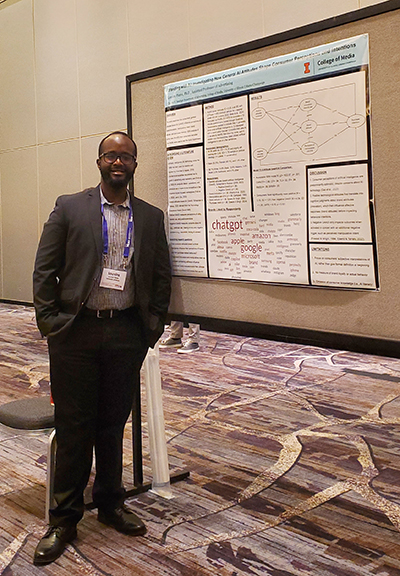
The Institute of Communications Research is excited to announce their newest cohort! Please learn more about the students’ research interests below and join us in welcoming them to the University of Illinois College of Media community this fall. For more information, see full student profiles.
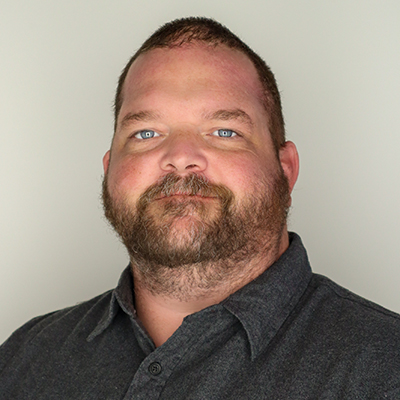
Thomas Farrenkopf earned his master’s degree in cinema and media studies at the University of Southern California. His research interests include new media and digital generosity; film theory, with a focus on Third and Fourth Cinema; Indigenous representation in film; media and sociology: representation, exploitation, and labor; intersectional approaches to media studies (race, class, gender, sexuality); and critical theory and media’s impact on empathy and social responsibility.
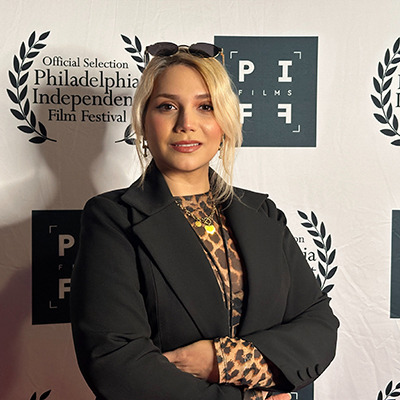
Azam Hasanpour is a multidisciplinary film and theatre artist with an MA in cinema from the University of Tehran and an MFA in film and media arts from Temple University. With over eight years of focused experience in filmmaking, she brings a rich background in both artistic practice and academic research. Her research interests include digital humanities, visual arts, mixed media, documentary studies, and critical visual and media studies.
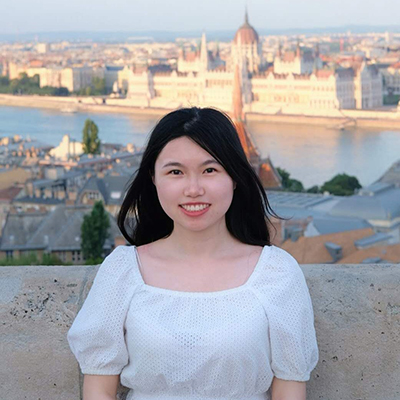
Xiaohua (Anthea) He earned her MSc in communication science from the University of Amsterdam, where she focused on persuasive communication. Her research interests include persuasion and information behaviors, with a particular focus on how consumers process and respond to health-related advertising crafted with persuasive strategies.
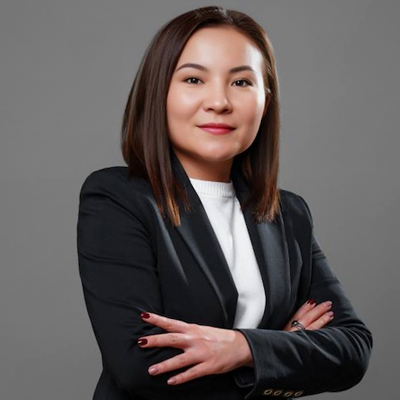
Aiman Kazybayeva previously served as dean of the School of Management at Almaty Management University (AlmaU). Before that, she was program leader for the marketing educational program and chair of the Department of Management, Marketing, and Logistics. She also founded and continues to head the Neuromarketing Laboratory at AlmaU, combining research and practice in consumer behavior studies. Her research focuses on advertising, consumer behavior, neuromarketing, and biometrics. She applies methods such as eye-tracking, facial recognition, and GSR to study how consumers process advertising messages and make decisions.
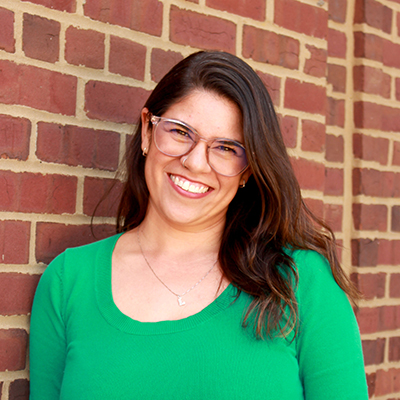
Seoyoung (Selene) Kim earned her MA in media and communication from Korea University. Her research interests lie at the intersection of consumer behavior and human–AI interaction. She examines how people interact with AI and how it shapes their decision-making, particularly in the music entertainment industry and other media contexts.
Luciana Salviano Marques da Silva earned her master’s in media studies at the Federal University of Rio Grande do Norte in Brazil. Her research interests include digital journalism, artificial intelligence, television studies, media literacy, quality television, and public journalism.
Seo-Young (Selene) Kim is a doctoral student at the Institute of Communications Research (ICR). Her research interests lie at the intersection of consumer behavior and human–AI interaction. She examines how people interact with AI and how it shapes their decision-making, particularly in the music entertainment industry.
Prior to joining ICR, Selene worked at CJ ENM as a strategist in Music IP Marketing and Artist Business. She earned an M.A. in Media & Communication from Korea University and dual degrees in International Studies (B.A.) and Business Administration (B.B.A.) from the Catholic University of Korea.
Recent Publications/Presentations
Lee, S. K., Park, H., & Kim, S. Y. (2024). “Gender and Task Effects of Human-Machine Communication on Trusting a Korean Intelligent Virtual Assistant,” Behaviour & Information Technology, 1-20.
Kim, S. Y., & Jung, Y. (2023). “Development of Semantic Differential Scales for Artificial Intelligence Agents,” The International Journal of Social Robotics, 15(7), 1155-1167.
Courses Taught
ADV 360: Innovations in Advertising
Awards and Honors
Bart A. Cummings Advertising Gift Fund, University of Illinois, 2025
Excellence Prize, Student-led Creative Research, Smart Media Service Research Center, 2021
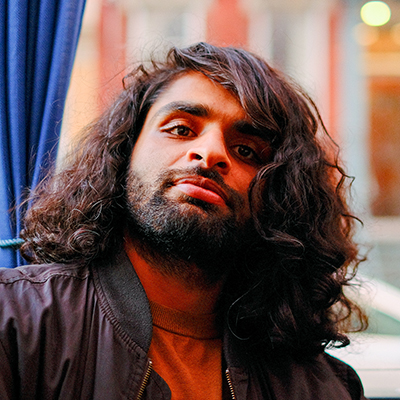
I am interested in the tools and techniques that have been used to manipulate images throughout history. My research investigates the technical and discursive formations that constitute film restoration. I hope to gain a deeper understanding of how the manipulation of images is framed through the intersecting histories of image generation, reception, and filmmaking.
I hold an M.Phil degree from Jawaharlal Nehru University, New Delhi, and have previously worked as a documentary filmmaker.
Recent Publications/Presentations
“Image Manipulation in Cinema: From Colorization to Restoration.” Presented at the Society for Cinema and Media Studies, Chicago, IL. 2025
“Upscaling the Past: The SD-to-HD Transition and Its Impact on Modern Video Processing.” Presented at the ‘Failing Media’ Graduate Student Conference, University of Chicago. 2025
Aiman’s research focuses on advertising, consumer behavior, neuromarketing, and biometrics. She applies methods such as eye-tracking, facial recognition, and GSR to study how consumers process advertising messages and make decisions.
Recent Publications and Presentations
Paltaratskaya, V., Zhang, J., Gupta, M., Kazybayeva, A., Peterson, M., & Wise, K. (2023– 2024). Visual attention, comprehension, and memory for visual metaphor in advertising. Submitted to the conference: The Association for Education in Journalism and Mass Communication (AEJMC).
Kazybayeva, A., Smykova, M., & Dushchanova, M. S. (2023). Investigating consumer behavior and psychotypes in the luxury real estate market. KazUEFIT Bulletin, 2(51)
Kazybayeva, A., Rakhimbekova, A., & Wise, K. (2024). Assessing educational potential of AI-generated content: Eye-tracking approach. Poster presentation at Bolashak 23.
Smykova, M., Orazgalieva, E., Abuzhalitova, A., & Kazybayeva, A. (2021). A study of consumer attitudes toward university advertising: A neuromarketing approach. Bulletin of the Karaganda University, 4(104). [In Russian]
Smykova, M., Kazybayeva, A., & Sokhatskaya, N. (2021). Neuromarketing studies of tourism service providers’ advertisements. Bulletin of Eurasian National University named after Gumilyov, Economics, 4. [In Russian]
Academic Roles
Aiman previously served as Dean of the School of Management at Almaty Management University (AlmaU). Before that, she was Program Leader for the Marketing educational program and Chair of the Department of Management, Marketing, and Logistics. She also founded and continues to head the Neuromarketing Laboratory at AlmaU, combining research and practice in consumer behavior studies. She has taught courses in marketing, marketing research, consumer behavior, and neuromarketing.
Currently, Aiman is a PhD student in Communication and Media at the University of Illinois Urbana-Champaign, specializing in advertising, where she also serves as a Teaching Assistant.
Awards and Honors
Scholar of the “500 Researchers” Bolashaq Program (2023)
The Best Teacher of Higher Education Institutions of the Republic of Kazakhstan (2020)
Member of the Presidential Personnel Reserve of the Republic of Kazakhstan
My primary research interests lie in persuasion and information behaviors, with a particular focus on how consumers process and respond to health-related advertising crafted with persuasive strategies.
Before joining ICR, I earned my MSc in Communication Science from the University of Amsterdam, where I focused on persuasive communication, and received my Bachelor of Economics from Renmin University of China.
Courses Taught
I am a Teaching Assistant for ADV 284: Consumer Insights and ADV 305: Advertising Technology and the Digital World for the Fall 2025 semester.
What Most People Don’t Know about Me
I am a huge fan of fantasy stories! I have written a total of over 100,000 words of fan fiction, with some stories still in progress.
Film Theory, with a focus on Third and Fourth Cinema
Indigenous Representation in Film
Media and Sociology: Representation, Exploitation, and Labor
Intersectional Approaches to Media Studies (race, class, gender, sexuality)
Critical Theory and Media’s Impact on Empathy and Social Responsibility
Recent Publications/Presentations
“Children of the Corn Sweats” (film in development)
Recipie for Revenge (2024): Director of Photography
“Indigenous Voices Reshaping Cinema: Native American Representation in Dances with Wolves (1990) and Montford: The Chickasaw Rancher (2021).” Oregon Undergraduate Research Journal: McNair Special Issue 21, no. 3 (August 2023): 29–45. https://doi.org/10.5399/uo/ourj.
Academic Roles
Thomas is a Graduate Teaching Assistant and Graduate Student Representative for the Society of Cinema and Media Studies. He previously served as a TA for “Billy Wilder’s Hollywood,” and was a Discussion Leader for “Introduction to Cinema” and “Introduction to Television.”
Awards and Honors
Shriram Fellow, USC School of Cinematic Arts (2023–2024)
McNair Scholar, University of Oregon (2023)
Cinema Studies Departmental Honors, University of Oregon (2023)
New Century Scholar, All-USA Academic Team (2021)
All-Oregon Academic Team (2021)
What Most People Don’t Know about Me
What most people don’t know about me is that my journey has taken me to some truly unexpected places—both geographically and professionally. During my years in the retail construction industry, I worked across 44 U.S. states and two territories, which gave me a deep appreciation for the sheer variety of American life and landscapes. But one of the most surreal experiences came years later: I stood within a football field’s distance of Reactor #4 at the Chernobyl Nuclear Power Plant—a place marked by tragedy, history, and myth. Just two days after that, I stood on the Potemkin Stairs in Odesa, the exact location where Sergei Eisenstein shot his iconic montage sequence. That moment was a strange and moving collision of history, media, and memory—one that reminded me why I’m drawn to cinema and its ability to shape how we understand the world.
To expand access to a University of Illinois education, the College of Media now offers an online Bachelor of Arts in Media programfor adult learners who have taken some college coursework but have not completed their undergraduate degree.
Targeting working adults who want to upskill or re-skill their media knowledge and advance in or change their careers, the BA in Media is one of the first online degree completion pathways offered by the University of Illinois Urbana-Champaign, along with a similar program at the College of Liberal Arts & Sciences.
“This new degree will give learners the advantage of earning their bachelor’s in media at their own pace. It comes at a time when valuable skills from advertising, journalism, and media and cinema studies are in high demand across industries,” said Tracy Sulkin, dean of the College of Media. “As we near 100 years at the College of Media, we’re pleased to offer an innovative, flexible option to access our world-class education, without disrupting learners’ work, family obligations, or other commitments.”
This offering reflects the university’s broader commitment to educational innovation, societal impact, and its land-grant mission to transform lives through education. The College of Media began developing the online BA in Media program in 2023. It’s designed to remove barriers for non-traditional students, across Illinois and beyond, providing an accessible, high-quality education that empowers graduates to contribute meaningfully to their communities and industries.
The interdisciplinary program will provide a broad foundation for understanding the contemporary media landscape, along with applied training in skills necessary for career success in media-related fields. Students will take courses from each of the College of Media’s three departments: the Charles H. Sandage Department of Advertising, the Department of Journalism, and the Department of Media & Cinema Studies.
This new degree will give learners the advantage of earning their bachelor’s in media at their own pace. It comes at a time when valuable skills from advertising, journalism, and media and cinema studies are in high demand across industries.
Tracy Sulkin
Dean of the College of Media
Students will learn media concepts, theories, and methods; use cutting-edge tools and technology to analyze and evaluate the media landscape; and create ethical and culturally relevant media content. Understanding that students will possess a wide range of experiences and coursework, the program culminates in a capstone experience where students will apply their knowledge to a significant project that highlights their skills to future employers.
Graduates of the program will be prepared for successful careers both inside and outside the media industry, including positions in the business, government, education, and nonprofit sectors that require media and communication skills, such as writing, editing, audio production, videography, strategy, and media research and analysis.
Unlike traditional undergraduate degree programs, students in the BA in Media program will not be required to enroll full-time, nor to reside on campus. Students must complete all classes online.
The BA in Media program is open to transfer students and to those applying for re-entry to the University of Illinois Urbana-Champaign. It is not available to first-year students or to current students seeking an inter-collegiate transfer.
The bachelor’s in media is the fifth bachelor’s degree offered by the college—which also offers master’s degrees and a doctoral degree—further expanding its academic portfolio to meet the needs of today’s learners. See all academic programs offered by the College of Media.
August 20, 2025 | Sharita Forrest, University of Illinois News Bureau
Teachers and high school students live in vastly different media worlds, and that’s one of several digital divides that undermine the efficacy of state-mandated media literacy instruction in Illinois high schools, a recent study suggests.
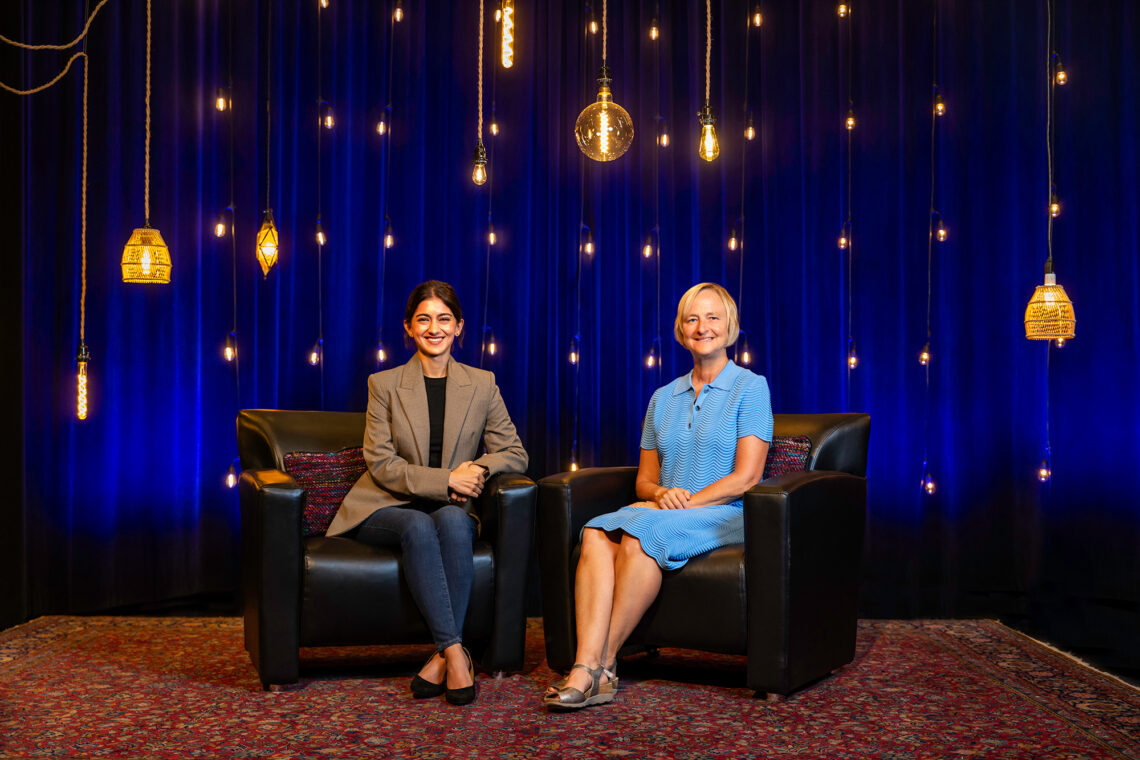
Professor and head of Advertising Michelle Nelson (right) and ICR doctoral student Sakshi Bhalla conducted a study that explored the state of Illinois’ mandate on media literacy instruction for high school students.
The researchers—Institute of Communications Research doctoral student Sakshi Bhalla and Michelle Nelson, professor and head of advertising, both of the University of Illinois Urbana-Champaign; and Michael A. Spikes, director of the Teach for Chicago Journalism Program at Northwestern University—interviewed 20 educators from across the state of Illinois about the nature and challenges of media literacy education in their schools. The findings, published in the Journal of Media Literacy Education, indicate that these efforts are undermined by differing media choices, skills, and perceptions of media literacy, as well as socioeconomic and political disparities.
Under a recent Illinois law, Public Act 102-0055, public high schools are required to provide at least one unit of media literacy instruction. However, a significant hurdle to effective instruction is the digital divide between the media experiences of teachers—whose media experiences are based on legacy media such as television and social media platforms with less relevance to youths, such as Facebook—and those of their students, whose worlds revolve around digital and social platforms such as TikTok and Snapchat, the researchers said.
“We discovered that there are a lot of differences in how teachers and students access the media, whether it is in terms of the platforms or more structural determinants such as teachers getting news from mainstream news media, for example, and students getting news from TikTok or partisan commentators on YouTube,” said Bhalla, the first author of the paper. “To foster meaningful media literacy, we must consider the role of students’ lived experiences, while extending lessons on media access, evaluation, and creation across a stratified population.”
Recruited from different regions of Illinois, the educators in the study represented a diverse group in terms of school size, socioeconomic profiles, and participants’ disciplines, which included art, English, and library sciences. Participants were interviewed about their awareness of the Illinois law, their understanding of the aptitudes that constitute media literacy, the challenges of teaching the subject in their schools’ settings, and the resources they need to support instruction, Nelson said.
Because the state mandate was passed without providing resources or much training, some teachers felt constrained because they did not want to navigate into political waters, and they were left wondering what to do.
Michelle Nelson
Professor and Head of the Charles H. Sandage Department of Advertising
The Illinois law, which took effect at the beginning of 2022-23 school year, defines media literacy as “the ability to access, analyze, evaluate, create, and communicate using a variety of objective forms, including print, visual, audio, interactive, and digital texts.”
However, the researchers said that this definition of media literacy presumes a single, shared media experience that is no longer accurate, and “the idiosyncrasies of unique media use—particularly in social and digital media—mean there may be no ‘common ground’ upon which to analyze, evaluate, or create.”
Accordingly, some teachers said they were unfamiliar with the platforms used by their students and relied on their pupils to teach them how to use these technologies, while others struggled to respond when students mentioned media or commentators they used for news and information.
Nearly half of those in the study worked in schools where at least 40% of the students were low income, and the researchers said that students’ socioeconomic profiles determine whether students are taught basic functional skills or higher-level analytical skills. In low-income schools, instruction focused on building functional skills such as keyboarding and other technical proficiencies associated with jobs, whereas teachers in more affluent school districts said that their curricula focused on higher-level skills such as critical analysis of the media landscape and assessing media’s credibility and accuracy.
With few resources for planning course content, some teachers based instruction on current events, with students discussing controversial issues such as gun violence and the war in Ukraine.
“Because the state mandate was passed without providing resources or much training, some teachers felt constrained because they did not want to navigate into political waters, and they were left wondering what to do,” Nelson said. Teachers grappled with maintaining neutrality during class discussions, which they said were often “hijacked” by students’ emotional responses to particular issues based on the types and political leanings of the media they consumed, along with those of the students’ parents and the broader community.
“Students are discovering themselves through different political ideologies. And teachers found students to be a lot more political following the 2016 presidential election, issues surrounding COVID-19, and movements such as Black Lives Matter and Blue Lives Matter, and how all of these things were entering the world of emerging adults,” Bhalla said.
But when teachers pointed out fallacious information in the media or pointed out credible sources to correct misinformation, they said their pupils perceived them as biased or responded in ways that indicated they were unconvinced by facts.
“Those in the study also struggled with the complexities of defining right-leaning or left-leaning media and evaluating media bias, because it’s multidimensional and changes with every article, news story, and political event,” Bhalla said.
Despite these many challenges, most of the teachers in the study believed that teaching media literacy and discussing controversial topics in today’s polarized climate are important. However, to be effective, media literacy education in Illinois schools must understand the media world that young people inhabit; provide better resources for them, their teachers, and schools; and provide learning for all students, honing functional skills as well as higher level proficiencies, the researchers said.
The team used their findings to develop media literacy workshops for Illinois teachers during the summers of 2022 and 2023 through the Initiative for Media Education Inquiry and Action. An initiative of faculty and students in the College of Media and College of Education, IMEDIA supports teachers in integrating media education into their classrooms. “We had participants work in groups to create lesson plans and then share those with other people, so when everybody left, we hoped that they would have at least one lesson that they could implement the following school year,” Nelson said.
This fall, the College of Media announces two new department heads, seven faculty promotions, and one new faculty member.
In the Charles H. Sandage Department of Advertising, Sang-Hwa Oh has been promoted to associate professor with indefinite tenure. Carrie Wilson-Brown has been promoted to senior lecturer. Penne Heede joins the department as a new lecturer.
In the Department of Journalism, Professor Jeffrey Magee has been named interim head. He previously served in the College of Media as associate dean for academic affairs from 2019 to 2022. Alison Davis and Josh Heuman have both been promoted to senior lecturer.
In the Institute of Communications Research, Amanda Ciafone, associate professor of media and cinema studies, will serve as interim director of graduate studies for Fall 2025. Derek Long, associate professor of media and cinema studies, will return as director of graduate studies in Spring 2026.
Continuing for a second term within the college administration, Jason P. Chambers, professor of advertising, will serve as associate dean for access and engagement, and Stephanie Craft, professor of journalism, will serve as associate dean for academic and faculty affairs.
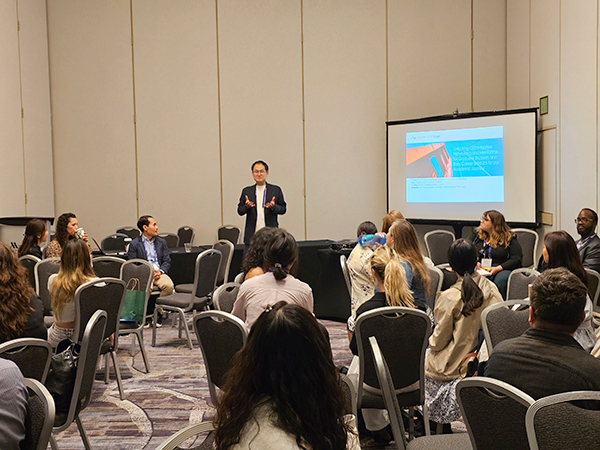
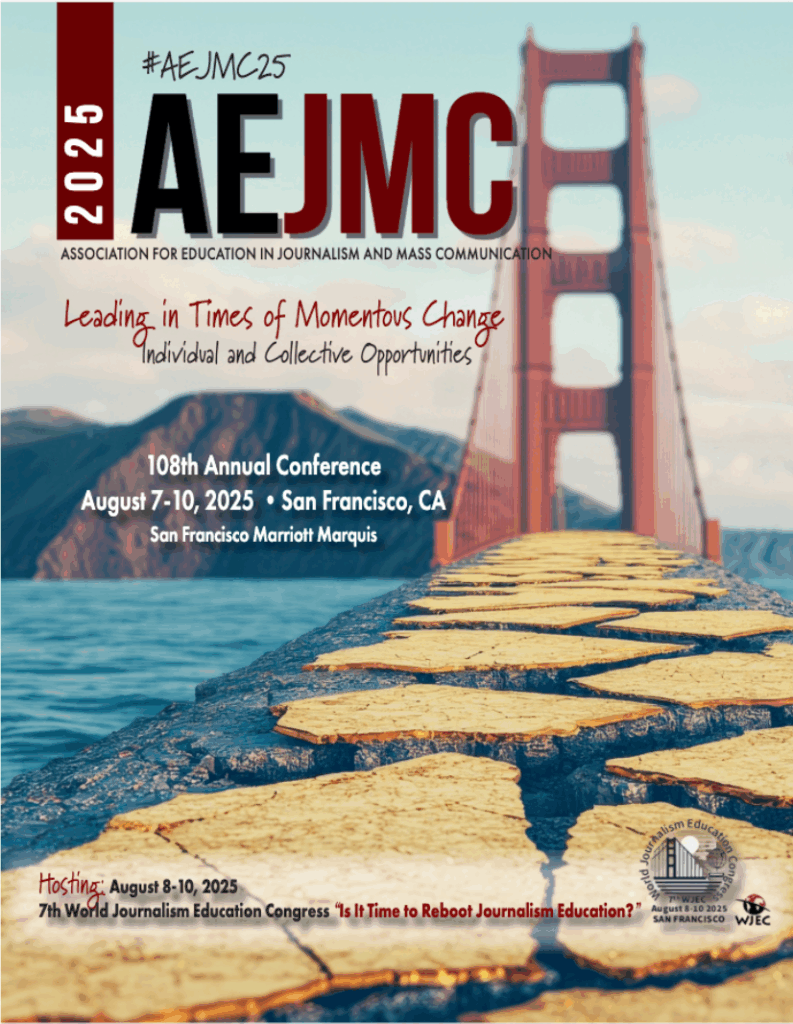
This year’s conference theme was “Leading in Times of Momentous Change: Individual and Collective Opportunities.” Presenters included faculty in the Institute of Communications Research, the Charles H. Sandage Department of Advertising, and the Department of Journalism; and graduate students in ICR’s PhD program and the MS advertising program.
The AEJMC aims to promote the highest possible standards for journalism and mass communication education, to cultivate the widest possible range of communication research, to encourage the implementation of a multi-cultural society in the classroom and curriculum, and to defend and maintain freedom of communication to achieve better professional practice and a better-informed public.
College of Media research presenters and presentations are listed below. (Please see the AEJMC conference program for complete listings and participants.)
Commission on the Status of Women, AEJMC Council of Affiliates, and Lillian Lodge Kopenhaver Center for the Advancement of Women in Communication, Florida International University
Workshop Session: Women Faculty Moving Forward: Pathways to Success
Washington Media Scholars Foundation Graduate Research Scholarship Winners
“Invisible Persuasion in LLM-Based Recommendation: How Flattery Style and Product Involvement Shape Intention to follow Recommendation and Click-to-Action via Consumer Judgment Confidence”
Seo-Jeong Heo, ICR doctoral student
“What makes generative AI ads persuasive? Regulatory Fit Theory Application”