MACS’ student-produced film special airs on WILL-TV’s ‘Prairie Fire’


Cetacean

Students in the Fall 2023 Cinematography and Sound Design course, taught by media and cinema studies lecturer Victor Font, produced a film special of Cetacean, which aired on WILL-TV’s Prairie Fire on April 18.

The one-hour episode includes interviews with Cetacean creators, Deke Weaver and Jennifer Allen, and excerpts from last fall’s live multimedia performance, which was made possible by a collaboration with the students.

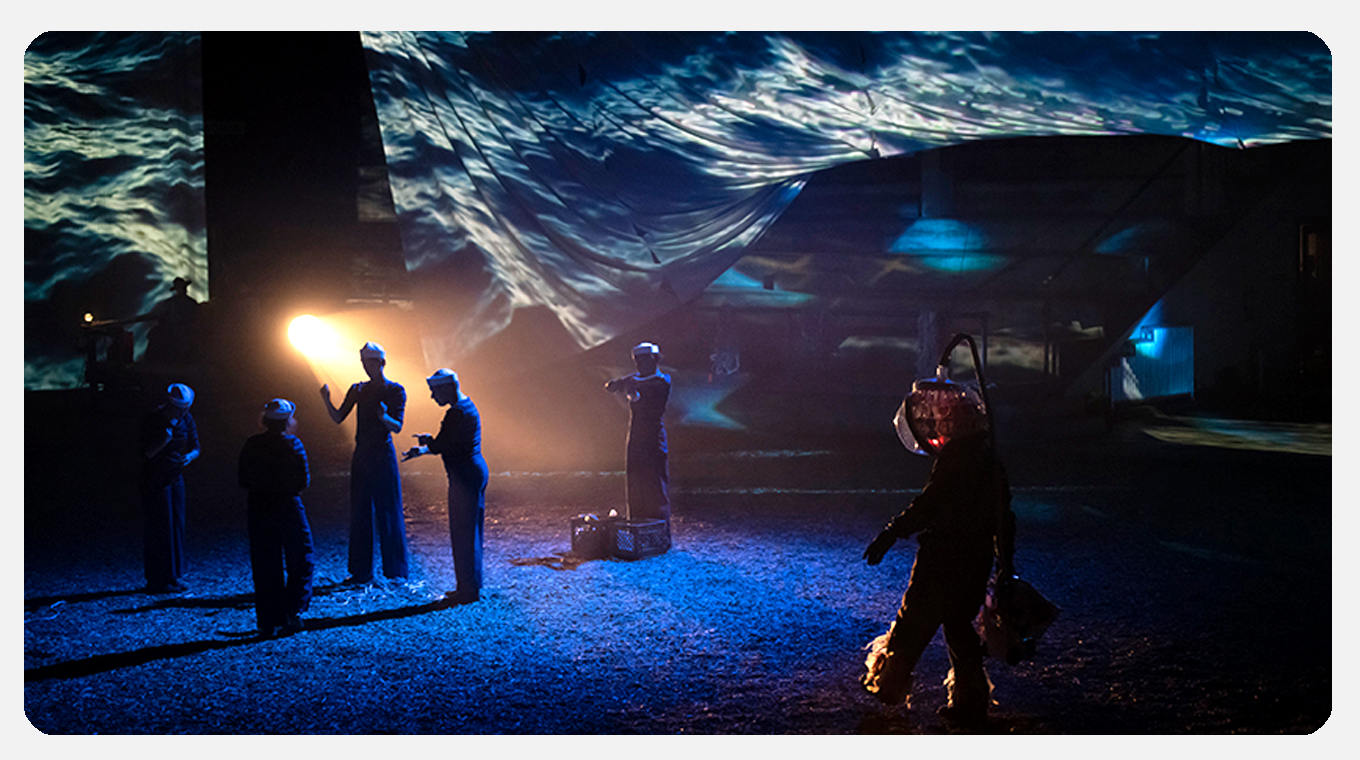
Part social practice, part visual art installation, part live event, Cetacean’s three years of research, rehearsal, and planning became a live public performance—a two- and-a-half-hour long living collage of story, dance, sound, video, lo-fi effects, and a colossal installation. 

Cetacean was the sixth interdisciplinary performance from “The Unreliable Bestiary”—a lifelong project presenting a performance for every letter of the alphabet, each letter representing an endangered animal or habitat.

Learn more.

Watch the episode:

Share on social

Second annual MACS Student Showcase


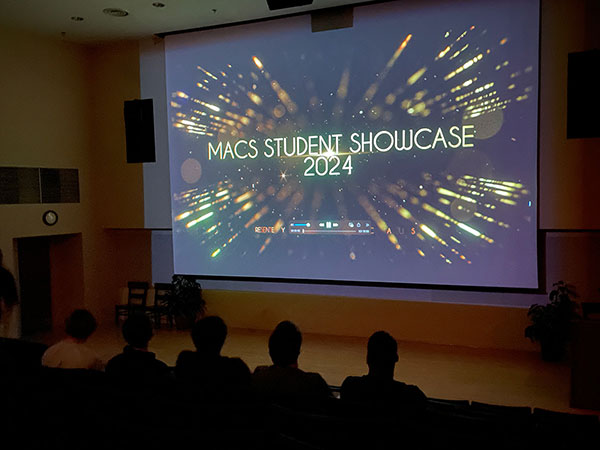
MACS Student Showcase audience

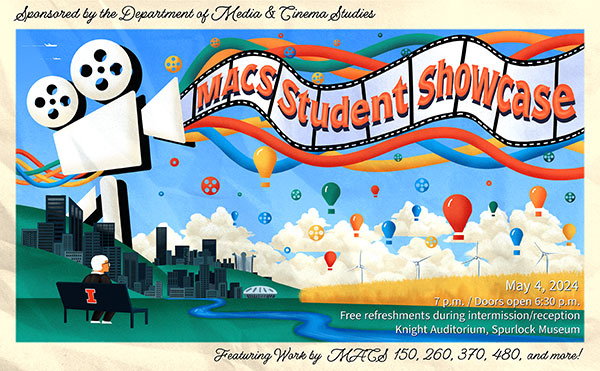
The second annual MACS Student Showcase on May 4, 2024, was a faculty-curated film screening featuring the work of students in media and cinema studies courses from Fall 2023 and Spring 2024—courses such as Smartphone Cinema to the Horror Film to Cinematography and Sound, and more. Faculty wanted students to have the chance to see their excellent work on a big screen and enjoy it with their friends and family!

Watch the program and see timestamps/credits below:

MACS 140: Smartphone Cinema

00:00:16 – Scene recreation from Quentin Tarantino’s Pulp Fiction (1994)
Jin Wang, Yue Wang, Qingyang Xia, Angela Ye, Ella Yoder, Mitchelle Zavala, Enxi Zhang, Yifan Zhao, and Yvonne Rose Smith

00:01:13 – Scene recreation from Doug Liman’s The Bourne Identity (2002)
Felicity Abbott, Cameron Alagna, Jane Baer, Emily Bautista, Oscar Benavides, Britney Chen, Louis Dalpoas, Monzerrat Degollado-Hernandez, and Stephany Diaz Espino

MACS 150: Intro to Digital Media Production

00:02:48 – Choke
Marilyn MacLaren

00:10:04 – Innovative Illini
Anthony Mojica, Mikolaj Wierzbicki, Thomas Marousek, and Justin Martin

00:15:08 – The Dodger
Nolan Duquaine, Katie Farrell, Judi Georges, Ziyu Liu, and Paul Rampersaud

00:20:42 – Snack Run
Chen Chili, Akkhiel Nambbiar, and Jacob Tidrick

MACS 282: The Horror Film

00:25:50 – The Conjuring: A History of Lies
Adrien Reetz

MACS 260: Film Production

00:35:49 – Ebertfest 25th Anniversary Trailer
Bridget Nolan

00:37:30 – Inescapable
Anthony Mojica and Paige Gaines

00:44:06 – Ghostbluffers
Chen Chili, Anna Dobrzyn, Kinzie Parsons, and Armando Garcia

00:54:50 – The Inter-view
Izabella Kleinfeldt

00:59:13 – My Dear, Watson
Kris Modi and Aidan Allenfort

[30-Minute Intermission]

MACS 485: Making Video Essays

01:40:20 – A Moving Poem
Jose Figueroa Díaz

01:47:33 – Walking
Jorge Mercado

MACS 590: Essential Digital Production for Graduate Students

01:49:34 – Being There: A Videographic Essay about the Camera as Presence
Robbie Sieczkowski

MACS 370: Cinematography and Sound Design

01:55:18 – Excerpts from Deke Weaver and Jennifer Allen’s CETACEAN (The Whale)
Filmed by MACS 370 and broadcast on Illinois Public Media’s Prairie Fire

MACS 480: Advanced Filmmaking

02:05:40 – Surprise
Max Szykowny

02:44:48 – Campus Services
Akkhiel Nambbiar and Hannah Herndon
Original Script by Nathan Carlberg and Emily Watson

MACS Student Showcase flier

Jenny Oyallon-Koloski considers the power of movement in film in her first book: ‘Storytelling in Motion’


Three vertical mirrors hang on the wall in the office of Jenny Oyallon-Koloski, assistant professor of media and cinema studies, where she keeps an open area that allows her the space to move. 

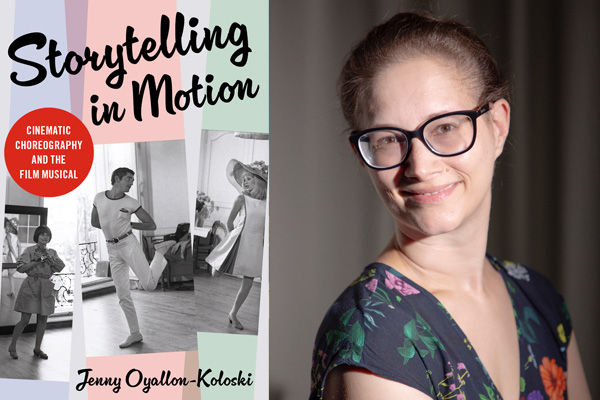
Jenny Oyallon-Koloski and new book

As a certified movement analyst and director of the movement visualization (mv) lab, she wants the space to serve as a research environment where she can use motion-capturing technology to study the manifestations of human movement in cinematic space.

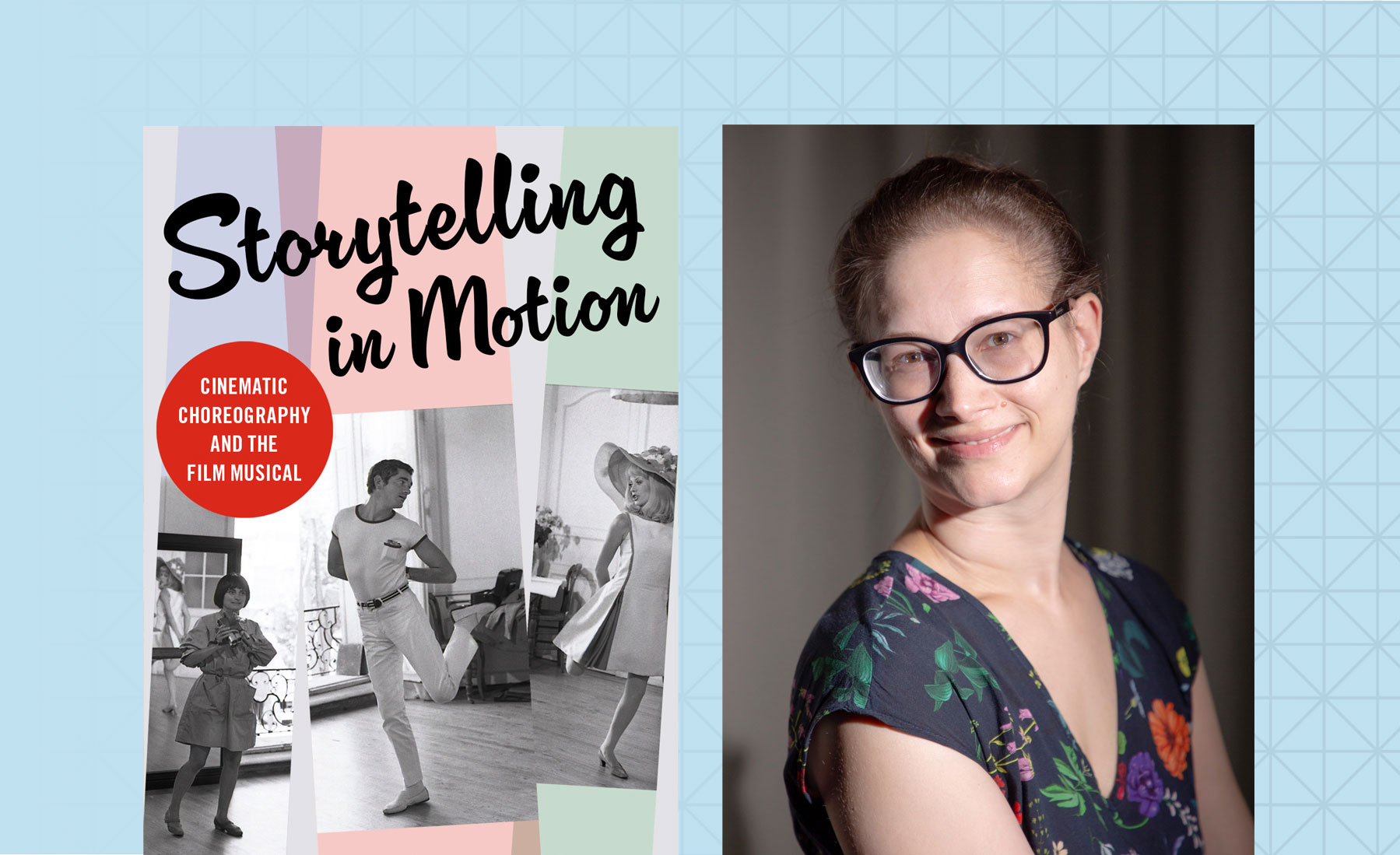
Her extensive research on how figure movement and dance create meaning in musical cinema is the subject of her first book, Storytelling in Motion: Cinematic Choreography and the Film Musical (Oxford University Press), which will be available May 17. 

Oyallon-Koloski’s idea for the book came out of her dissertation project, which tied her interest in dance and movement into her core work in film and film history. 

While her dissertation focused mainly on French filmmaker Jacques Demy, using his films as case studies, her book discusses broader ideas of how people can understand the significance of dance in film. 

“That’s one of the core questions [in the book]—how do filmmakers use movement to tell stories, and specifically in the musical genre,” she said.

Her book also compares French and American film production histories and considers the impact of time, money, and rehearsal space available to filmmakers. 

“What I found was really interesting between French and American musicals is Hollywood had a symbiotic relationship with Broadway, and those industries or artistic sectors kind of grew together. So there was all this culture around dance and musicals, at least in the Hollywood system. But in France, those artistic sectors were really separate,” she said.

That’s one of the core questions [in the book]—how do filmmakers use movement to tell stories, and specifically in the musical genre?

Oyallon-Koloski discovered an interest in dance and movement in college. While doing her dissertation research, she became a certified movement analyst at the Laban/Bartenieff Institute of Movement Studies in New York, an educational and research center that trains people in the language of movement. 

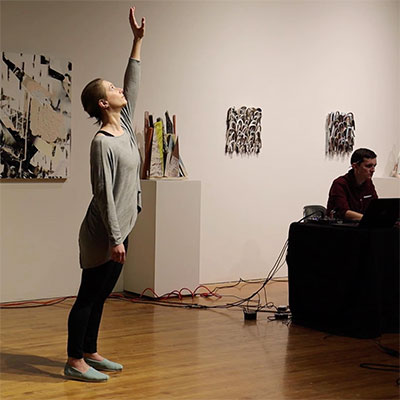
Oyallon-Koloski movement lab

“I was taking dance classes, but I wasn’t getting a specific degree in dance and I really wanted to be able to have credibility with the dance community,” she said. 

Oyallon-Koloski spent two years studying the Laban system—a method and language describing, visualizing, interpreting, and documenting human movement invented by Rudolf von Laban in the 1920s—alongside a wide range of students with interests in dance, therapy, academic research, and more. 

Using never-before-published interviews with filmmakers and choreographers, she applies the principles from the Laban/Bartenieff Movement Studies to analyze the impact of figure movement in cinema. 

Oyallon-Koloski also created three video essays to accompany her written chapters: Seeing Movement in Cinema: An Introduction to Laban Movement Analysis; Endless Conversations: Reflexive Musical Clusters; and Diegetic Flutters: Views from the bridge, which was accepted to the international Marienbad Film Festival to be held in the Czech Republic this June. 

Movement visualizations
Visualizations of movement traceforms from the mv lab.

Making video essays is one of Oyallon-Koloski’s course specialties, as well as digital media production, contemporary movies, and cinema theory. 

Although she doesn’t consider videographic criticism a substitute for writing, Oyallon-Koloski does believe audiovisual context is a way to help generate interest in films, particularly those people have rarely seen.

Oyallon-Koloski, a dual American-French citizen who speaks fluent French and lived in France her senior year of high school, says her familiarity with the culture enabled her to write a book about dance in French cinema, which some might consider a fringe topic.

After completing Storytelling in Motion, Oyallon-Koloski says she realized she still has more to say on the subject of French cinema.

“I think my next project will probably be about [Jacques] Demy and his filmography. He made about 13 films, so [the book would be] less focused on dance and movement and more film history and style,” she said. “I like working with archival collections … and I like the interplay between French cinema and international cinema.” 

Share on social

Media faculty and TAs make list of teachers ranked as excellent


Congrats!

Congratulations to all of the College of Media faculty and teaching assistants who were ranked as excellent by their students!

This list is based on Instructor and Course Evaluation System (ICES) questionnaire forms completed by students during the Fall 2023 semester. Only those instructors who distributed ICES forms at least once during this time period and who released their data for publication are included in the list. View the complete list. 

Note: * denotes that the instructor ratings were outstanding.


ADVERTISING

KENT BROWN – ADV 314 

STEVE HALL – ADV 150 

* CHANG-DAE HAM – ADV 581

* JACQUELINE HITCHON – ADV 350

TERRY KASDAN – ADV 409

* EVA MASLOWSKA – ADV 580 

* SHACHAR MERON – ADV 250, ADV 290, ADV 400

MICHELLE NELSON – ADV 550

SANG-HWA OH – ADV 587 

* MARISA PEACOCK – ADV 498 

AUGUST SCHIESS – ADV 491

PETER SHELDON – ADV 452

ALLISON VANCE – ADV 350


JOURNALISM

CHRISTOPHER BALL – JOUR 101, JOUR 451

* ALISON DAVIS – JOUR 215, JOUR 240

ALEXANDRE GONÇALVES – JOUR 102

* COLLEEN KING – JOUR 200

STEPHANIE CRAFT – JOUR 460

* VINCE LARA-CINISOMO – JOUR 210

CHARLES “STRETCH” LEDFORD – JOUR 215, JOUR 335

* CAROL LOMBARDI – JOUR 220


MEDIA

DANIEL ALMANZA – MEDIA 199

AMANDA MORLEY – MEDIA 100


MEDIA & CINEMA STUDIES

CL COLE – MACS 224, MACS 356

VICTOR FONT – MACS 140

JONATHAN KNIPP – MACS 101

RACHEL KUO – MACS 351 


STRATEGIC BRAND COMMUNICATION

SHACHAR MERON – SBC 500


TEACHING ASSISTANTS

* P. BATISTE – ADV 250 

N. FAISAL – ADV 150 

* M. FUKADA – ADV 250

S. HEO – ADV 360 

* S. PARK – ADV 250

* A. CANO – MACS 101

* T. CHEN – MACS 150

J. CINTRON – MACS 100

Y. GAO – MACS 101 

Y. KANG – MACS 101

Q. LUAN – MACS 100

J. ROBINSON – MACS 101

N. ZHOU – MACS 100

Projects involving College of Media faculty, doctoral students receive funding from Chancellor’s Call to Action Research Program


Campus

Two faculty members in the College of Media were named recipients of the 2024-25 Chancellor’s Call to Action Research Program to address system bias and social injustice through cross-disciplinary research. This year, the program focuses on areas that span domestic, international, and transnational spaces.

Victor Font, a lecturer in the Department of Media & Cinema Studies, is collaborating on a project called “Co-creating Knowledge for Antiracist and Transnational Solidarities through Radical Practices of Care, Hope and Human Urbanisms.” His team will receive $99,560.

Anita Say Chan, associate professor in the School of Information Sciences and in the Department of Media & Cinema Studies, received $100,000 for a project she leads called “Activating a Peer-to-Peer Train the Trainers Network for Digital Equity Network in East Central Illinois: Advancing Racial Justice in Non-Profit Digital Navigation Programs.” Doctoral students at the College of Media’s Institute of Communications Research, Jorge Rojas Alvarez and Jiwon Oh, will also work on this initiative.
In its third year, the Chancellor’s Call to Action Research Program will distribute $1.2 million in funding to 11 research projects that support the vision of the University’s Campus-Community Compact to Accelerate Social Justice and partner with community organizations to solve and/or understand historical and current social injustices as they intersect with race.

Learn more about the College of Media-affiliated projects below. Read a full list of the projects funded for 2024-25.


Co-creating Knowledge for Antiracist and Transnational Solidarities through Radical Practices of Care, Hope, and Humane Urbanisms

This project aims co-create non-hierarchical learning spaces for our long-time collaborators, working across campus-community and social-spatial divides, to share social justice pedagogies and digital media methods as pathways for realizing antiracist, transnational solidarities we wish to forge across global color lines.

We build on decades-long relations of trust that faculty members at University of Illinois Urbana-Champaign have nurtured with academics and community groups in the U.S., South Africa, and Brazil to co-create knowledge about everyday practices of care and reciprocity that marginalized urban communities use to struggle beyond dominant divisive lines of race, gender, class, ethnicity and nationality. We refer to such ideals as humane urbanism, where life, not profit, is centered.

Using traditional action research along with emerging digital humanities methodologies, we host digital stories online through a multilingual multimedia website and host activist-in-residence at the University of Illinois Urbana-Champaign campus to gather direct narratives and counter-narratives of urban activists, and uncover how concealed daily practices of radical care and reciprocity in marginalized communities nurture hope and activate imagination of an alternative just future.

The goal of this project facilitating knowledge co-production among academics and community-based organizers is to learn possible paths and pragmatic strategies toward shared ideals of transnational justice.

Project leaders include Faranak Miraftab, College of Fine and Applied Arts; Ken Salo, College of Fine and Applied Arts; Helen Neville, College of Liberal Arts and Sciences; Magdalena Novoa, College of Fine and Applied Arts; Victor Font, College of Media; Teresa Barnes, College of Liberal Arts and Sciences; Atyeh Ashtari University of Memphis; Ricardo Nascimento UNILABE, Brazil; Efadul Hug, Smith College; Sarah Bassett, Arizona State University; Koni Benson, University of Western Cape; Greg Ruiters, University of Western Cape; Clarissa Freitas, Federal University of Ceara; Jose Ricardo Vargas de Faria, Federal University of Paraná; Giselle Tanaka, Federal University of Rio de Janeiroc. Community Members: Rob Robinson, Partners for Dignity and Rights; Dawn Blackman, Randolph Street Community Garden; James Kilgore, First Followers; Ann Rasmus, University of YMCA.


Activating a Peer-to-Peer Train the Trainers Network for Digital Equity Network in East Central Illinois: Advancing Racial Justice in Non-Profit Digital Navigation Programs

The “Peer-to-Peer (P2P) Train-the-Trainers for Broadband Equity” Digital Navigators Program is a collaborative initiative jointly led by the Community Data Clinic at UIUC and the Urbana-Champaign Big Broadband (UC2B) non-profit to address persistent issues of Broadband and Digital Inequity in East Central Illinois EC-IL, particularly affecting historically marginalized and infrastructurally underserved populations.

Leveraging existing partnerships with five community organizations – the Housing Authority of Champaign County, Cunningham Township, Project Success of Vermilion County, Champaign-Urbana Public Health District and First Followers, this project aims to establish a Digital Navigators Network and seed a new EC-IL Broadband Equity Community Hub in Champaign Park District’s multi-purpose Martens Center.

The partnership network will support the development of a local Digital Navigators Program, training 36 new community-facing Digital Navigators, equipping them with new or refurbished laptops, and leveraging resources developed in two years of prior work around broadband equity education and programming with this network.

This project’s overarching goals will enhance affordable broadband adoption, empower community members with essential digital skills, and enhance access to community technology centers. By bringing together expertise from diverse organizations, the initiative seeks to bridge the digital divide and create opportunities for improved digital connectivity and inclusivity in EC-IL. This project was developed in alignment with and prior funding from the Illinois Office of Broadband’s Digital Equity + Inclusion Programming

In addition to Chan, project leaders include Tracy Smith, Technology Services; Paul Hixson, Urbana-Champaign Big Broadband Not-for-Profit; Julian Chin, School of Information Sciences; Jessica Black, Lead for America Fellowship Program. Doctoral students at the College of Media’s Institute of Communications Research, Jorge Rojas Alvarez and Jiwon Oh, will also work on this initiative.
Clifford Christians receives AEJMC’s Eleanor Blum Distinguished Service to Research Award


Christians wins AEJMC Blum Award

Clifford Christians, research professor emeritus of communications, and professor emeritus of media studies and of journalism, will receive the 2024 Eleanor Blum Distinguished Service to Research Award from the Association for Education in Journalism and Mass Communication. The award will be presented at AEJMC’s 107th annual conference in Philadelphia this August.

“I am convinced that Dr. Christians should get credit for creating, leading, and developing the entire subfield of media and journalism ethics, not just in the United States, but in the world. At the least, without his work and his inspiration, media ethics would be entirely impoverished and thin,” said Linda Steiner (PhD ’79, ICR), editor of Journalism & Communication Monographs.

The Blum Distinguished Service to Research Award was created to recognize people who have devoted substantial parts of their careers to promoting research in mass communication, and those who have spent much of their professional lives to mentoring students in areas of research. It is named in honor of the first recipient, Eleanor Blum, a long-time communications librarian at the University of Illinois Urbana-Champaign. 

Christians (PhD ’74, ICR) is a former director of the Institute of Communications Research at the College of Media and chair of the doctoral program in communications, positions he held from 1987-2001 and from 2007-2009. 

The Association for Education in Journalism and Mass Communication is a nonprofit, educational association of journalism and mass communication educators, students, and media professionals. AEJMC’s mission is to promote the highest possible standards for journalism and mass communication education, to cultivate the widest possible range of communication research, to encourage the implementation of a multi-cultural society in the classroom and curriculum, and to defend and maintain freedom of communication in an effort to achieve better professional practice and a better informed public.

Media students present at 2024 Undergraduate Research Symposium


Undergraduate Research Symposium

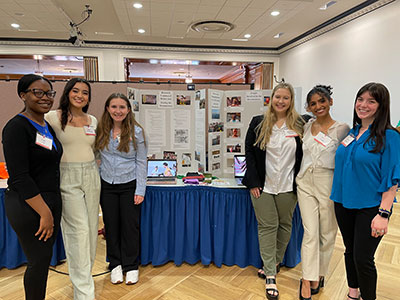
Update June 4, 2024: Congratulations to the students who presented “Exploring Period Poverty in Sierra Leone” (pictured below) for receiving an award for Outstanding Exhibit at the Undergraduate Research Symposium from the Office of Undergraduate Research! Learn more about their trip to Sierra Leone.


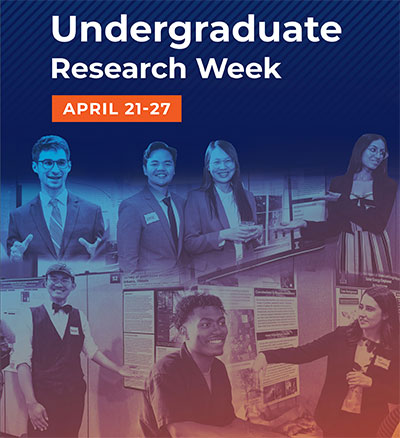
Students from the College of Media are participating in the annual University of Illinois Undergraduate Research Week, held April 21-27. The Undergraduate Research Symposium, the signature event held on April 24 at the Illini Union, features presentations, posters, and performances from students across campus. 

Media student presentations include:

Sierra Leone group presentation

On Exhibit: Robots & Medical Technology
“Exploring Period Poverty in Sierra Leone” 

  • Faith Lee, junior in journalism
  • Piper Pascarella, sophomore in journalism
  • Maggie Knutte, junior in journalism
  • Stephanie Wayda, senior in journalism
  • Nour Longi, junior, journalism
  • Elena Cleary, junior in agricultural communications (College of ACES)
  • Research Mentors: Alison Davis and Charles “Stretch” Ledford, Department of Journalism
     
Garima Sharma

CS Student Ambassadors/Research Scholars
Illinois Scholars Undergraduate Research Program Research Expo
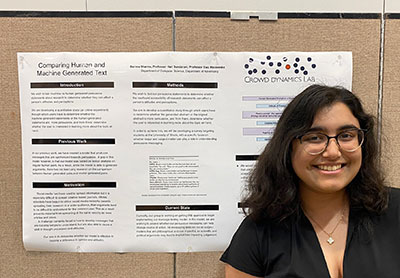
“Comparing Human Generated Text with Machine Generated Text”
Garima Sharma, senior in CS + advertising
 

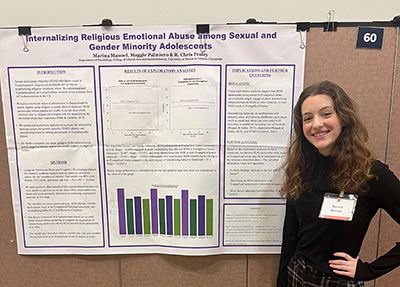
Marina Manuel

Poster Presentation: Social Science & Human Behavior 
“Mental Health and Wellbeing Outcomes among Gender and Sexuality Diverse Individuals Raised in Fundamentalist Religious Environments: Exploratory Analyses and Study Design”
Marina Manuel, senior in media and cinema studies
Research Mentor(s): Chris Fraley and Maggie Palmiero, Department of Psychology (College of LAS)

Pfeifer

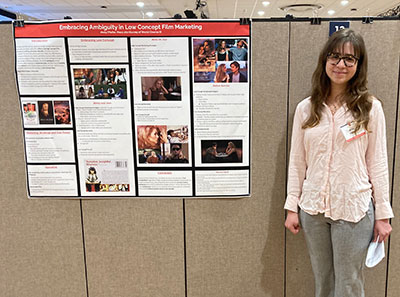
Jenny Oyallon-Koloski, assistant professor of media and cinema studies, was the research mentor for Molly Pfeifer, senior in psychology (College of LAS) and cinema studies minor, who is presenting “Embracing Ambiguity in Low Concept Film Marketing” as part of the Humanities, Arts & Social Sciences poster presentations. 

View the Undergraduate Research Week program.

College of Media collaborates with University, community partners to offer local children access to new opportunities in education, technology


Steve Hall with Boys & Girls Club
Steve Hall, senior lecturer in advertising, leads Boys & Girls Club students through a workshop on “Advertising for Good.” (Photos by Paige Duncan.)

The College of Media is collaborating with University of Illinois and community partners to present educational workshops to local children this spring as part of a new public engagement effort.

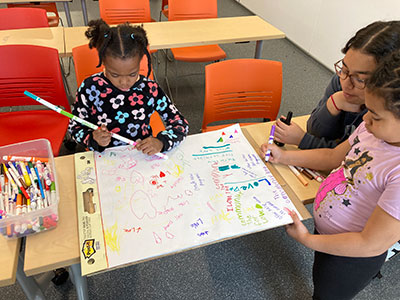
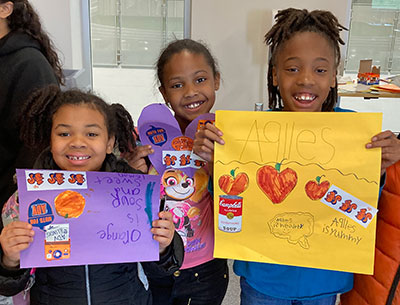
The collaboration between the College of Media and the Center for Social and Behavioral Science focuses on creating hands-on educational content appropriate for 3rd– and 4th-grade students in the Don Moyer Boys & Girls Club of Champaign, which is housed at the Martens Center in Champaign. 

“One of the College of Media’s priorities is to enhance our activities in public engagement and access,” said Jason P. Chambers, associate dean for diversity, equity, and inclusion, and professor of advertising. “Faculty and staff were eager to sign up to share their expertise in fun, engaging ways with schoolchildren.” 

College of Media faculty are leading four programs in April, offering new opportunities in education and technology and helping students understand different media topics.

Boys & Girls Club students

“This first-time collaboration between the University and the Martens Center is not just exciting but a big game changer for community outreach and education, providing a unique opportunity for the University of Illinois to deliver transformative experiences to our community,” said Paige Duncan, community engagement specialist at the Center for Social and Behavioral Science.

Duncan said the College of Media was selected as the pilot module for the CSBS area of programming because their goal is to give elementary school students an introduction to a breadth of science learning opportunities, including different concepts from the social and behavioral sciences.

“We are excited about the College of Media’s programming because it gives children a window into the making of different types of media, which is likely to increase their media literacy. We hope they will become better consumers of media—for example, in terms of judging the veracity of advertisements and movies,” Duncan said.

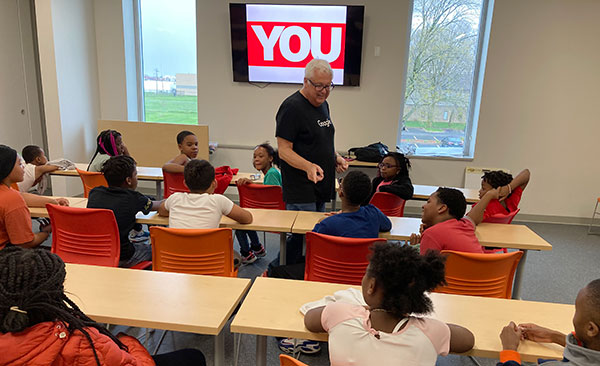
Steve Hall, senior lecturer in advertising, held the first workshop, about “Advertising for Good.”

“It was a remarkable opportunity to help [the children] learn how they have the ability to positively impact the world with their ideas, creativity, and advertising,” Hall said. “The kids were super energetic, enthusiastic, always asking questions, and full of insights.”

The joint effort between the University units, the Champaign Park District, and the Boys & Girls Club is part of the Chancellor’s Call-To-Action Campus-Community Compact to Accelerate Social Justice. 

The College of Media workshops include:

Advertising for Good
Steve Hall, senior lecturer in advertising
Students will learn how advertising and creativity can be used for public and social good through the power of storytelling. Plus, a fun, hands-on creative challenge will allow students to generate their own ideas to create a positive impact in their own schools and communities. 

Fly Like Harry Potter: How Green Screens Work
Victor Font, lecturer in media and cinema studies and Susan Muirhead, advertising staff and adjunct faculty
This hands-on workshop teaches students about the green screen process and how this technique is used in films. Students will be able to dress up in costume, pretend to fly on a broomstick, and then watch the editing process to remove the green background creating the final effect. 

Fruit campaigns

Advertising Literacy
Michelle Nelson, professor and head of the Charles H. Sandage Department of Advertising, and Marisa Peacock, lecturer in advertising
This session will provide students with an understanding of the purpose and fun one can have with advertising. Through discussion, brainstorming, and hands-on activities, students will create an ad promoting healthy food products. 

Interviewing Genesis Bryant

Introduction to Journalism and the Role of Reporters
Colleen King, director of the Richard and Leslie Frank Center for Leadership and Innovation in Media and clinical assistant professor in journalism, and Faith Lee, Mark L. Brandt Public Engagement Fellow and a junior in journalism
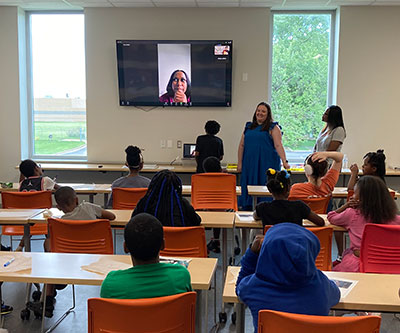
Following a presentation about what a journalist does, Genesis Bryant, a guard on the Illinois women’s basketball team will join the student group via Zoom for a Q&A. Using a guided worksheet, students will then write a story about the student athlete.

(Photos by Paige Duncan.)

Recent MACS alum reflects on film production ahead of Ebert Center screening

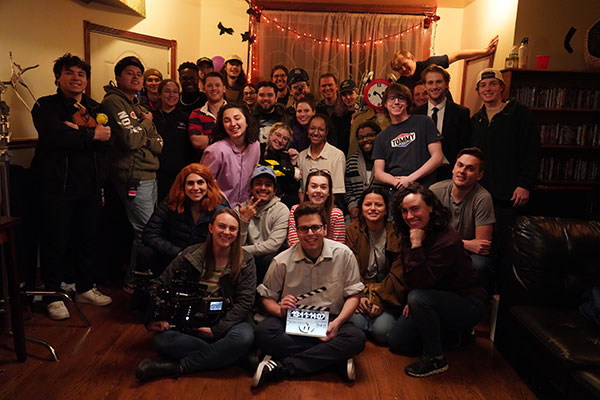
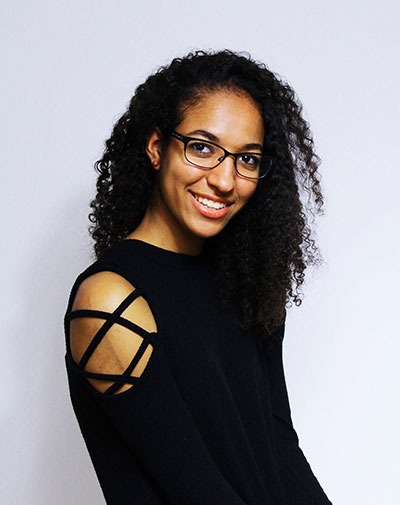
After Party cast+crew

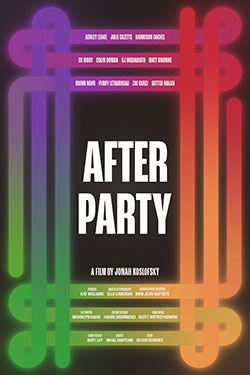
After Party, a short film produced by alum Kat Williams (BS ’22, media and cinema studies), will be featured on Thursday, April 4, at the Knight Auditorium of Spurlock Museum, as part of the screening series presented by the Roger Ebert Center for Film Studies. This year’s Ebert Fellows, who curated the evening’s films, chose the 20-minute short to be shown before the main film screening of Portrait of a Lady on Fire.

Williams worked as producer for After Party in her first major project since graduating in 2022. Based in Chicago, Williams has held various production assistant roles in the independent movie scene.

In a recent interview, Williams described the making of the film and what her time at the University of Illinois taught her about filmmaking. Director Jonah Koslofsky also shared insights on Williams’ impact on After Party and what he hopes viewers will take away from the film. 

Kat WilliamsWhat is After Party about?
Kat Williams
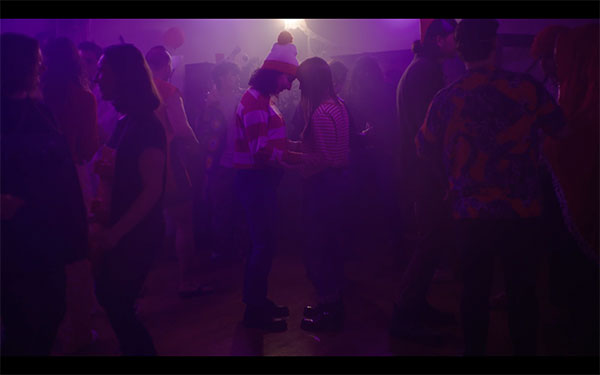
: After Party is a short film about a group of college friends who haven’t seen each other in a while, coming back together post-COVID when we all started hanging out again outdoors. It looks at the changes in their relationships, their dynamics, and how they figure those out and move forward. It’s about connection. It’s about people. It’s about shenanigans. 

What was the filmmaking process like?
Williams:
I first met with director Jonah Koslofsky about this project in October of 2022 and then we started shooting in April of 2023. It was one week of production—we shot for five days. Before that, it was a lot of coordinating, ordering things, finding our location, finding our crew, stuff like that. Then we shot for a week and spent the next several months going through editing, color, sound, and music. This was my first time producing a project front-to-back like that, so it was very fun for me to really explore that and find out what this job is like.

In your role as producer, what did you do for this film specifically?
Williams:
A producer really oversees the project from start to end. A lot of people, when they think of film production, think of just the days that you’re on set. But there’s so much more on the front end and on the back end of that. In the year that we spent working on this project, we were only on set for a week. As a producer, what I do on a day-to-day basis is start with doing a breakdown. You take the script and figure out what you need and then you have to figure out where to get things, and how much it’s going to cost. You start talking to potential crew members, people that you would trust to help you take this from page to screen. Things just kind of fall together. If you get the right people together, you can make anything happen and we were really lucky to have had a good group.

What did Kat Williams bring to the project?
Jonah Koslofsky:
She provided essential feedback and encouragement as I was writing the script. Once the writing was complete, she organized and constructed the budget for the project, and then she and I coordinated the crowdfunding of said budget. She set up our Backstage page and provided valuable input throughout the casting process. She helped assemble our incredible crew and communicated with our entire team so that our shoot was able to come together. Then she found our editor, post-sound editor, and composer so that our post-production could be completed in a timely manner, and now, she’s devising our festival strategy and building our website and press materials. 

This is by no means an exhaustive list of things Kat brought to the project, but more than anything else, she was a support for me and the whole movie when things became particularly stressful or uncertain. Whenever I found myself close to an edge, Kat was able to pull me back to stable ground and towards actually solving the problem. She always believed in the project, and worked day after day to make sure it did not fall apart. After Party would not exist without her.

After Party still

What do you hope students take away from the film? 
Koslofsky:
I hope students enjoy the film! I hope that they are able to see themselves in the ensemble; I hope students recognize the experience of re-entering the world as the pandemic ended and finding oneself increasingly confused. I hope that they read into the film and draw their own conclusions—we were very particular with where certain shots start and end, how certain characters reflect each other. And I hope they laugh at the jokes.

After Party posterHow do you feel about something that you worked on being screened in Champaign-Urbana?
Williams:
I’m so excited. I learned so much about what I do at the University of Illinois. It means a lot to me to get to share this with the campus community and to have the Ebert Fellows sharing this with Portrait of a Lady on Fire, which is one of my favorite movies and also a huge inspiration for the film. It means a lot to have this all coming together like this.

Koslofsky: Screening in Urbana is a huge honor. I love Champaign-Urbana, and I’m so excited to bring the film to the audience here. While the film is set in Chicago, it’s packed with Urbana DNA—in addition to Williams and myself, our director of photography Ella Lubienski is also an Urbana native. It’s a movie made by Urbana people, so it really makes sense to show it to Urbana people.

Are there any particular classes or experiences at the College of Media that helped you for this role? 
Williams:
I took MACS 100 with Dr. Amanda Ciafone, and realized I’m supposed to be studying movies and making them. That changed everything for me. I really loved all those MACS classes, and all of the professors were fantastic. Victor Font was also a huge help with teaching theory, and learning how to apply that on set, learning what all these positions are, what all the equipment is, and how to function on a set. I was also able to get a minor in critical film production, a minor in creative writing, and I got a certificate in international global studies. All of that has really come together in a way that I’m having a lot of fun with now and I get to use those skills all the time, which is exciting.

What advice do you have for MACS and College of Media students?
Williams:
I think the biggest thing is just talking to people—find your people, use your network, make friends. And just have fun with it. Because for me, the whole reason that I started doing this was because I wanted work to be fun and I wanted to enjoy what I’m doing and have something beautiful at the end of it that I can show people.

—Vivian La, Communications Intern

Students explore media industry in Chicago during inaugural spring break media tour


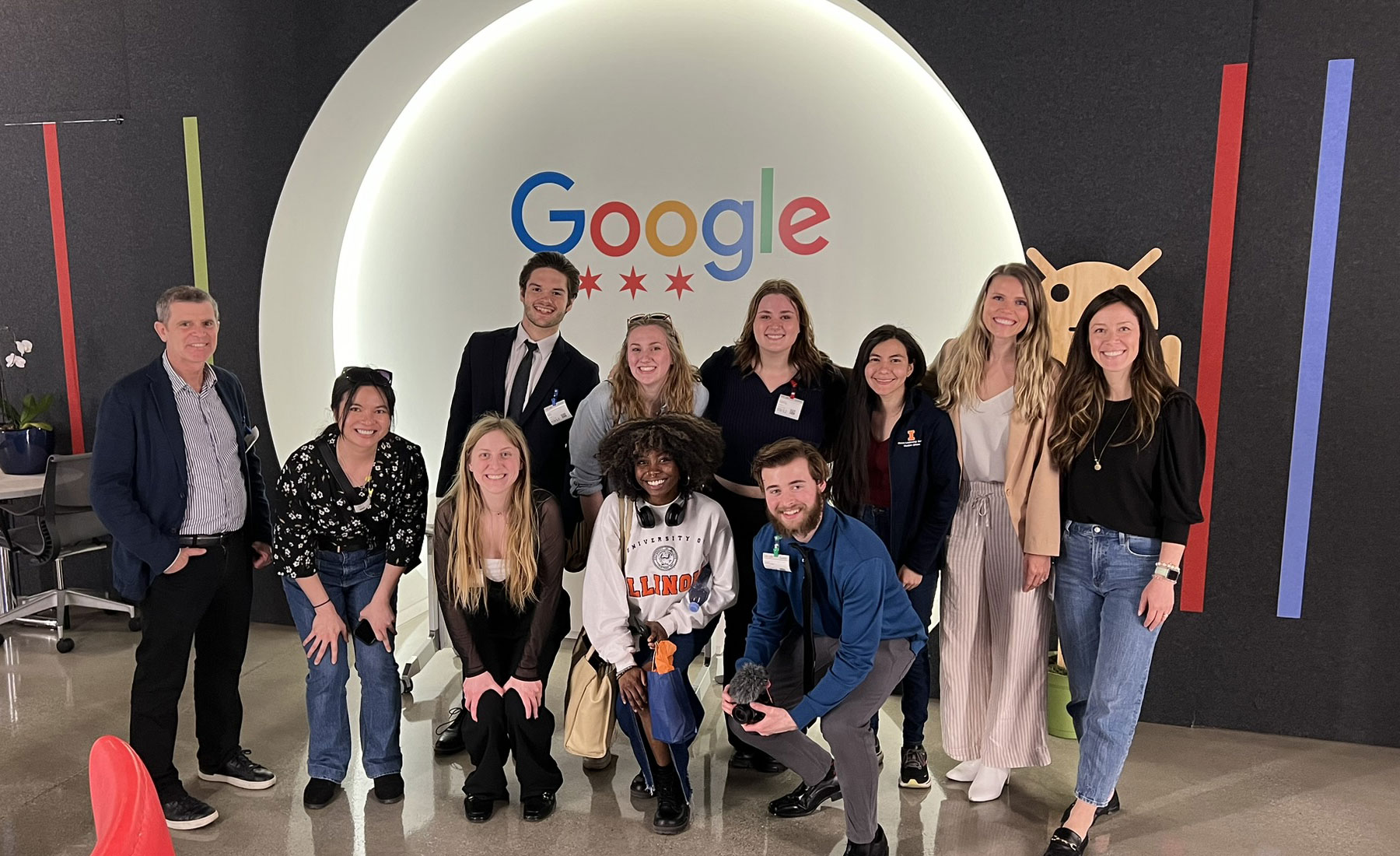
A group of College of Media students participated in a spring break media tour in Chicago, meeting Illinois alumni and visiting various industry sites including advertising agencies, news organizations, and a film studio.

Google

Led by faculty members Victor Font, lecturer in media and cinema studies, and Margaret Ng, assistant professor in journalism, seven students attended the three-day trip, held March 10-12.  

The inaugural trip was an experiential learning opportunity for students to discover more about media-related careers firsthand.  

Bekah Douglas, a junior in media and cinema studies, described the trip as a “once-in-a-lifetime journey” and credits her family and College of Media donors for making the trip possible. 

“I was so lucky to attend the College of Media’s spring break trip and have the chance to meet with the artists that make Chicago (and the world) a better place. The opportunity to travel outside of the classroom, to network, to explore the possibilities of media is priceless,” Douglas said. 

For Douglas, visiting the Lyric Opera of Chicago to participate in a press announcement for the 2024 season with Holly Gilson and her PR staff and touring the opera house, was her favorite memory.

“I have been a devoted opera fan for many years, so getting to learn the history behind the building and hearing from the artists who make the shows possible was very emotional for me,” Douglas said.

Ng also enjoyed the opera house, where students had the chance to sit on stage alongside professional journalists and watch brief vocal performances that previewed the upcoming season. 

“Witnessing the opera house’s level of preparation was a captivating experience. Additionally, observing reporters at work during a press conference taught us a great deal about media coverage of the arts,” Ng said.

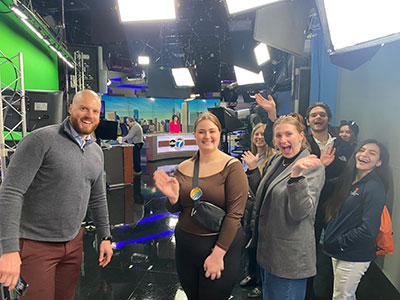
Group at ABC7 Chicago

Students also met alumna Judy Hsu (BS ’93, journalism), ABC7 evening news anchor, along with other anchors and hosts, and watched a live news broadcast (pictured at right). 

“We were right behind the camera, watching the entire hour-long program unfold,” said Ng. “[The anchors] interacted with the students during the short off-camera intervals. They were so friendly and easygoing, yet they could swiftly transition back to delivering news concisely and professionally within a few seconds. I was deeply impressed by their focus and professionalism.”

Gavin Schroeder, a senior in media and cinema studies, said the trip was not only fun but informative. He enjoyed meeting other Media students and talking with professionals in their respective fields.

“[The trip] opened my mind to the similarities that people in the workforce experience. What I took away most was the advice on how to assert yourself and stand out, along with knowing how to work in a team environment,” he said.

Kartemquin visit

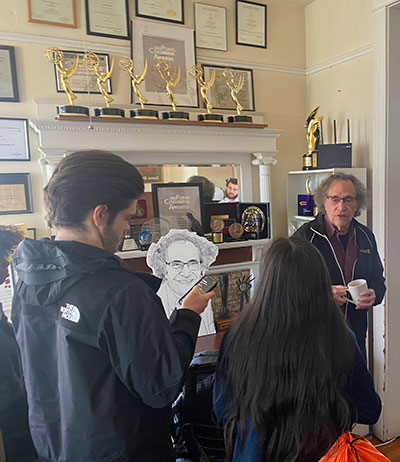
Schroeder said meeting with communications staff and touring McDonald’s International Headquarters was impressive. As an aspiring filmmaker, the highlight of the trip for him was a meet and greet with Gordon Quinn, founder of Kartemquin Films (pictured at right). 

Penny Bradford, a junior in journalism, was also inspired by a visit to the production studio. She said Quinn’s dedication to public media and storytelling allowed her to see a career she had not yet considered. 

“Overall, the trip brought unique experiences and allowed us to connect with [alumni] of the University, along with others that are currently in positions we may want to see ourselves [in],” Bradford said.

Payton Jarzyna, a senior in advertising, said the trip sparked excitement as she will soon enter the workforce.

“I learned about a lot of fields I didn’t even realize I could go into. I also learned more about the job application process, and how to stand out as a candidate,” Jarzyna said. “The businesses we visited and the people we talked to were super knowledgeable and helpful.”

The itinerary also included conversations with:

  • Michael Phillips, Chicago Tribune film critic and mentor to the College of Media Roger Ebert Fellows 
  • Geno Schellenberger (BS ’20, advertising), communications director at Havas Chicago 
  • Suheily Davis (BS ’04, journalism), vice president, global chief diversity officer, McDonald’s International Headquarters
  • Journalism alumni who work in nonprofit communications and fundraising, including Samantha Kiesel (BS ’13), marketing content manager at Boys and Girls Club of Chicago; Isabel Morales (BS ’13), media relations manager at the Nature Conservancy; and Rosie Powers (BS ’12), strategist for Mission Minded; along with Sarah Morris, Associate Vice Chancellor for Regional and International Advancement at the University of Illinois
WGN radio tour

In addition, students were invited behind the scenes to see:

  • A model and perimeter tour of the Barack Obama Presidential Library with UIC alumna Rebecca Silverman and the communications and content staff at the Obama Foundation
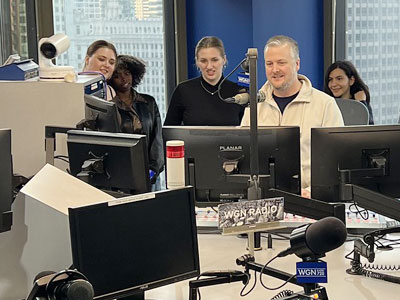
  • Blackhawks Live coaches show with Jon Hansen (BS ‘06, journalism) and Joe Brand at WGN Radio (pictured at right)
  • Google with advertising alumni Katelyn Pringle (BS ’09) and Stephanie Stewart (BS ’08, advertising), both senior account executives

See more photos from their trip.

DEV College of Media
119 Gregory Hall
810 S. Wright St.
Urbana, IL 61801
217-333-2350