Media faculty and TAs make list of teachers ranked as excellent


Updated 9/22/2025 to include Summer 2025 results.

Congratulations to all the College of Media faculty and teaching assistants who were ranked as excellent by their students!

Congrats image

This list is based on Instructor and Course Evaluation System questionnaire forms completed by students during the Spring 2025 and Summer 2025 semesters. Only those instructors who distributedย ICES forms at least once during this time period and who released their data for publication are included in the list.ย View the complete list.

Note: * denotes that the instructor ratings were outstanding.

ADVERTISING

KENT BROWN โ€“ ADV 314

*TERRY KASDAN โ€“ ADV 409

EWA MASLOWSKA โ€“ ADV 494

*SHACHAR MERON โ€“ ADV 222, ADV 333

*MICHELLE NELSON โ€“ ADV 582, ADV 590

*MARISA PEACOCK โ€“ ADV 290, ADV 498

CHARLOTTE PELOQUIN โ€“ ADV 290

LEONA YI-FAN SU โ€“ ADV 492

KEVIN WISE โ€“ ADV 483

MEDIA

CL COLE โ€“ MDIA 590

JOURNALISM

*CHRISTOPHER BALL โ€“ JOUR 430, JOUR 451

ALISON DAVIS โ€“ JOUR 215, JOUR 340, JOUR 440

MELITA GARZA โ€“ JOUR 310

ALEXANDRE GONร‡ALVES โ€“ JOUR 102

CAROL LOMBARDI โ€“ JOUR 220

MEDIA & CINEMA STUDIES

*VICTOR FONT โ€“ MACS 371, MACS 480, MACS 481

JONATHAN KNIPP โ€“ MACS 282

JENNY OYALLON-KOLOSKI โ€“ MACS 262

STRATEGIC BRAND COMMUNICATION

EWA MASLOWSKA โ€“ SBC 505

RICH PIECZYNSKI โ€“ SBC 504

TEACHING ASSISTANTS

J. CHANG โ€“ ADV 250

C. CHICK โ€“ ADV 150

*K. COOK โ€“ ADV 250, ADV 490

A. GOODREAU โ€“ ADV 150

H. JI โ€“ ADV 250

M. KHOWAJA โ€“ ADV 250

N. OSHODI โ€“ ADV 150

S. PARK โ€“ ADV 360

R. SUN โ€“ ADV 284

T. CHEN โ€“ MACS 260

J. CINTRON โ€“ MACS 100

G. DUTRA GUEDES โ€“ MACS 100

S. GOMEZ- PEREZ โ€“ MACS 101

W. HELMKE โ€“ MACS 101

Y. HONG โ€“ MACS 100

Y. KANG โ€“ MACS 100

*G. PAXTON โ€“ MACS 100

J. ZHANG โ€“ MACS 260

N. ZHOU โ€“ MACS 101

Share on social

I on the Media: Mike Yao discusses dependence on AI


Recently, there has been heightened media attention around the potential misuse of generative AI tools like ChatGPTโ€”ranging from stories about individuals using it in harmful ways to concerns about people becoming overly dependent on it for companionship or therapy. While these accounts may represent extreme cases, they raise important questions about the role of AI in everyday life and how society should think about its limitations.

The College of Media spoke with artificial intelligence expert Mike Yao to learn more.

About the Media Expert

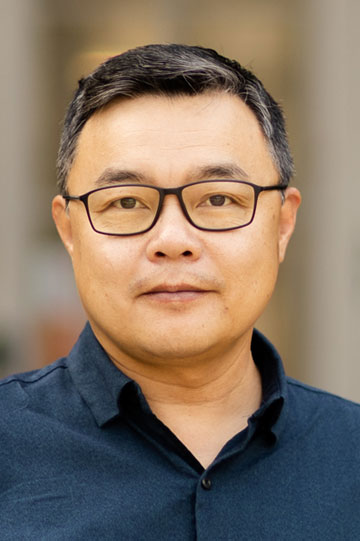
headshot of Mike Yao

Mike Yao is a professor of digital media in the Charles H. Sandage Department of Advertising and director of the Institute of Communications Research. He also oversees the Media, Technology, and Social Behavior Research Lab at Illinois and is a contributor to campus’s Generative AI Solutions Hub. Yao’s research delves into the interplay between media, technology, society, and human communication. He examines how people engage with emerging technologies like AI and immersive multimedia across diverse social settings and how these interactions influence social behavior and human communication in digitally mediated spaces.


What have you learned about artificial intelligence so far through your research?

At the Media Technology and Social Behavior Research Lab, we study not only what AI can do technically, but also how people actually communicate with it. Our research looks at the dynamics and social processes embedded in humanโ€“AI dialogue. Instead of treating AI as just a tool that performs specific functions, we focus on the communicative side, examining biases, stereotypes, expectations, linguistic patterns, and conversational styles that emerge when people interact with AI in social or interpersonal contexts.

What we are increasingly finding is that much of the challenge stems from the interface itself. Generative AI systems like ChatGPT are conversational by design. They allow people to use natural language to give instructions or ask for support. This seems simple, but it represents a profound departure from earlier technologies. In the past, users had to click with a mouse or write a line of code, actions that were purely instrumental and utilitarian, to โ€œcommunicateโ€ with technological systems. Once the interface begins to mimic human conversation, it introduces an entirely new layer of social, cultural, and psychological meaning into the interaction.

This conversational affordance makes AI feel more like a partner than a tool, opening the door to emotional connection, dependency, and even relationship-like dynamics. People begin to apply the same relational scripts they use with other humansโ€”seeking empathy, validation, or intimacy. That is why the risks around reliance, especially in friendship or therapeutic contexts, are so pronounced.

At the same time, this is still a very new and rapidly growing area of research. We are only beginning to gather empirical evidence about how these relationships form, what they mean, and how they might shape human-to-human communication. What is clear, however, is that AIโ€™s conversational design fundamentally changes how people use and think about technology, creating opportunities but also raising complex questions about boundaries, responsibility, and human well-being.

Where should we draw the line between what AI tools can do (brainstorming, tutoring) versus what should remain in the hands of trained professionals (mental health counseling, medical advice)?

AI illustration

The line between AI use and human expertise is not fixed; it has to be negotiated. Historically, the affordances of technology were clear: a hammer looks like itโ€™s meant to hit nails, and it is intended to be used for performing that task. Generative AI is different. Itโ€™s a general-purpose system whose applications vary enormously depending on how a person first encounters it; one user sees a math tutor, another a coding partner, another a conversational companion. Because we donโ€™t yet have stable โ€œmental prototypesโ€ of what AI is for, people project many different expectations onto it.

This makes it risky to rely solely on instinct or isolated stories when deciding what AI should or shouldnโ€™t do. Instead, these boundaries should be informed by empirical evidence and social science research studying how people actually use AI, what benefits and harms emerge, and in what contexts.

My own view is that AI should be framed as a complementary tool rather than a replacement. Professionals, doctors, counselors, and teachers may use it to extend their capacity, but accountability for accuracy, safety, and judgment must remain with the human expert. The stakes are different for students or learners, who are still building the very skills AI might perform for them. Outsourcing too much to AI in those contexts risks undermining education and development.

And hereโ€™s where creativity offers an important example. Human creativity has multiple dimensions: idea generation, originality, and the craft of execution. AI can assist in implementation, but it cannot substitute the human act of judgmentโ€”deciding whether something is good, meaningful, or valuable. A piece of art, for instance, isnโ€™t only about technical execution; itโ€™s about interpretation in a social and cultural context. That value judgment is inherently human. If we let AI replace that instead of empowering it, we risk reducing creativity to production rather than meaning-making.

What responsibility should companies like OpenAI have in building safeguards against harmful usage, and what responsibility falls on society, parents, educators, or policymakers?

Responsibility here is shared. Companies like OpenAI clearly need to build technical safeguards, set limits, and be transparent about risks. But society as a whole also has a role: parents, educators, and policymakers must help set the norms and guardrails.

Weโ€™ve faced similar challenges before. Think about movie ratings, Internet protocols, or even electricity and railroad standards. These were not set by companies alone. They emerged through collective debate, negotiation, and regulation. AI is no different.

So, while developers must act responsibly, it is also vital that we, as a society, engage in open dialogue about values; what kind of transparency, respect, and agency we want to guarantee. Only through democratic processes and evidence-based policymaking can we create the appropriate boundaries for AI use.

What strategies can educators, media professionals, and advertisers use to encourage positive, productive uses of chatbotsโ€”while discouraging harmful or unhealthy reliance?

I think the guiding principle should be this: AI should empower humans and enrich human experience, not replace it. Technology should extend human capacity, not lead us away from it.

For educators, this means being clear about boundaries. Young people and students are especially vulnerable because they may not yet have the knowledge to judge AIโ€™s output. They might outsource their learning without realizing what theyโ€™re losing. Educators need to frame AI as a support tool, for brainstorming, practice, or feedback, while keeping the responsibility for understanding and critical thinking with the learner.

For professionals such as journalists, marketers, or advertisers, the principle is similar. AI can make processes faster or more efficient, but the responsibility for quality, accuracy, and ethical judgment always lies with the human communicator. A writer might use AI to refine a draft, but the accountability for whatโ€™s published belongs to the writer, not the machine.

In terms of messaging, media and advertisers can help by highlighting these responsible uses and reinforcing that AI is a tool to support, not substitute, human creativity, empathy, and expertise.

What risks emerge when users turn to ChatGPT for friendship, therapy, or even romantic companionship? How might this affect human-to-human relationships in the long term?

The risks are real, but theyโ€™re also complicated. Humans are creativeโ€”we often use technologies in unintended ways. Some people are turning to AI chatbots for companionship, therapy, or even romantic connection. The conversational style of these systems makes them feel supportive, echoing patterns we know from parasocial relationships with media or even earlier technologies.

The danger is that overreliance on AI could weaken human-to-human relationships. If people begin substituting machine companionship for the effort and vulnerability required in real human connections, that could have long-term social costs.

But thereโ€™s also an opportunity here: AI functions as a mirror. Instead of only asking โ€œwhat is AI doing wrong?โ€, we might ask โ€œwhat is missing in peopleโ€™s lives that makes AI companionship so appealing?โ€ Loneliness, lack of empathy, strained family dynamicsโ€”these are human issues, and AI is simply revealing them in a new way.

So, the real risk is not just technological misuse, but a failure to reflect on ourselves. If we treat every problem as โ€œAIโ€™s fault,โ€ we miss the deeper lesson: what human needs are being unmet, and how can we as a society address them?

If companies promote or integrate ChatGPT into their products, what ethical obligations do they have in framing its limits? How can advertising balance highlighting its benefits without overselling its role?

Ethics can be debated, but some principles are broadly shared: transparency, respect, and human agency. Companies have an obligation not to oversell AI as a replacement for human expertise or care. They should present it as a supportive tool while being clear about what it cannot do.

Advertising should highlight real benefits, efficiency, accessibility, assistance, while also being explicit about limits. The obligation is honesty: to frame AI as a powerful supplement, not a magical replacement.

โ€œI on the Mediaโ€ย is a series from the University of Illinois College of Media in which faculty at the college address current issues and research.

2025-2026 student award and scholarship recipients


Alma Mater

Updated May 19, 2026

Congratulations to these College of Media students who received campus and college awards and honors, and scholarships and fellowships that were made possible thanks to our donors.

HONORS

Bronze Tablet
Inscription on the Bronze Tablets in the Main Library recognizes students ranking in the top three percent of their graduating class.

  • Amanda Barry
  • Christina Kivarkis
  • Hailey Kotowski
  • Mallory Miller
  • Adelyn Mui
  • Layli Nazarova
  • Sydney Populorum
  • Konrad Przeczek
  • Lauren Redenius
  • Benjamin Shlau
  • Kara Yoo
  • Jiaying Zhou

Highest Honors
Highest Honors status in the College of Media is awarded to graduating seniors in the top five percent of their graduating class.

  • Audrie Ballard
  • Amanda Barry
  • Emily Chen
  • Christina Kivarkis
  • Hailey Kotowski
  • Jenny Lin
  • Mallory Miller
  • Adelyn Mui
  • Layli Nazarova
  • Sydney Populorum
  • Konrad Przeczek
  • Lauren Redenius
  • Yingying Ren
  • Benjamin Shlau
  • Kara Yoo
  • Jiaying Zhou

High Honors
High Honors status in the College of Media is awarded to graduating seniors in the top 10 percent of their graduating class.

  • Nicole Amrhein
  • Samantha Barajas
  • Sam Brody-Goldberg
  • Ruoxuan Chen
  • Reis Glover
  • Lauren Keith
  • Mattie Kennel
  • Ava Kolodziej
  • Caitlyn Land
  • Christopher LaPorte
  • Rory McFadden
  • Justin Meyers
  • Charles Michaels
  • Kendall Oโ€™Keefe
  • Caroline Pulford
  • Katherine Ratke
  • Heejae Shin
  • Lillian Paige Walk
  • Zhuoyi Wu

Honors
Honors status in the College of Media is awarded to graduating seniors in the top 20 percent of their graduating class.

  • Thanistha Bisalputra
  • Natalie Circolone
  • Li Deng
  • Elie Dixon
  • Kyle Ehrenhaft
  • Rawan El-Bawab
  • Siyi Gao
  • Lillian Garski
  • Raegan Gooding
  • Jillian Grabowski
  • Megan Harding
  • Macy Hull
  • Eunsung Koh
  • Kate Lamb
  • Shirley Ma
  • Maria Mancero
  • Haley Maser
  • Ryan McGee
  • Connor Micklos
  • Drew Mutchnik
  • Kaitlyn Nichols
  • Kyu Ha Nick Park
  • Piper Pascarella
  • Mary Piacente
  • Humza Qazi
  • Mariana Quezada Marquez
  • Eduardo Quintana
  • Chen Tu
  • Sofia Walters

James Scholars
This university-wide honors program encourages James Scholars to develop skills in leadership and service, research or honors coursework, service learning and global studies, and professional development.

  • Samantha Barajas
  • Amanda Barry
  • Diyosa Funk
  • Reis Glover
  • Raegan Gooding
  • Sofia Kanda
  • Eunsung Koh
  • Hailey Kotowski
  • Megan Krok
  • Christopher LaPorte
  • Peirong Li
  • Jenny Lin
  • Haley Maser
  • Mallory Miller
  • Nathan Murphy
  • Layli Nazarova
  • Kaitlyn Nichols
  • Kendall Oโ€™Keefe
  • Humza Qazi
  • Katherine Ratke
  • Madeline Santori
  • Sydney Spotts
  • Megan Ashley Wood

Kappa Tau Alpha
This college honor society recognizes academic excellence and promotes scholarship in journalism and mass communication.

  • Jenny Lin
  • Mallory Miller
  • Layli Nazarova
  • Lauren Redenius
  • Jiaying Zhou

Senior 100 Honorary
This campus honor recognizes academics, leadership, service, and engagement at the University of Illinois.

  • Emma Biallas
  • Sofia Kanda
  • Shivam Patel
  • Katerina Souleles
  • Sydney Spotts

AWARDS, SCHOLARSHIPS, & FELLOWSHIPS

A-Mark Journalism Masterโ€™s Scholarship

  • Kaniz Fatema

American Advertising Federation Most Promising Students

  • Odinakachukwu (Odi) Ogbuefi
  • Claire-Michelle Sweet
  • Kara Yoo

Anthony J. Petullo Endowment in Design and Advertising Fund

  • Alexandra Ehrhart
  • Zixuan (Zia) Lu

Barton A. Cummings Graduate Assistantship / Richard and Audrey Christian Graduate Assistantship

  • Tunga Jois
  • Michelle Martinez

Betty Hinckle Dunn Memorial Fund in Journalism

  • Annisyn Krebs-Carr

Bill Geist Broadcast Journalism Writing Prize

  • Mary Piacente

Brett Lerner Memorial Scholarship in Journalism

  • Sijie (Jenny) Lin

C&U Poster Advertising Company Scholarship

  • Tomi Dugbo

C. Arthur and Eleanor Hemminger Scholarship

  • Karys Boeriu
  • Yueming Gong
  • Yash Jagtap
  • Sofia Kanda
  • Tiffany Liu
  • Rory McFadden
  • Diego Miranda
  • Konrad Przeczek
  • Claire-Michelle Sweet

 C.O. โ€œDocโ€ Erickson Scholarship in Journalism

  • Eunsung (Anna) Koh

Calvin Hugy Scholarship

  • Gabriella Blangiardo
  • Nevin McVicar
  • Kris Modi

Cardiss Collins Scholarship for Advertising Studies Fund

  • Kayla Robinson

Carl and Ruth S. Stephens Scholarship

  • Brendan Gallian
  • Isabella Lazansky
  • Maraya Petrova
  • Liliana Rodriguez
  • Madison (Maddie) Shaw

Charles G. Sotir Journalism Scholarship

  • Michael Sweeney

Clifford G. Christians Institute of Communications Research Career Advancement Fund

  • Tingyu Chen

College of Media Alumni Scholarship

  • Eduardo Quintana

College of Media Annual Fund Scholarship

  • Brianna Alvarado
  • Eli Kennel
  • Danielle Mitchell
  • Sophia Negrete
  • Livia Nigro
  • Josslyn Ostrom
  • Isabella (Izzy) Phillips
  • Rein Phone
  • Mary (Molly) Sloan
  • Elianna Williams

College of Media Deanโ€™s Honors Scholarship

  • Thea Abang
  • Denise Aguilar
  • Maya Brito
  • Samantha (Sammy) Hernandez
  • Laila Hinton
  • Allison Ibarrientos
  • Jaelynn Isbendy
  • Quinn Isberg
  • Calli Kraft
  • Aria Manfroi
  • Jocelyn Melchor
  • Gabriel Montano
  • Noor Najjar
  • Isaiah Rohn
  • Yoselin Sanchez-Miran
  • Jenna Sissom
  • Joseph Tempel
  • Megan Weiss

College of Media Endowed Scholarship

  • Yufan Du
  • Elena Janeva
  • Ella Yoder

Cynthia Browne Placek Endowed Scholarship

  • Kennedy Caldwell

Daily Illini Journalism Scholarship Fund

  • Sofia Boddy
  • Qyler Bowie
  • Adam Edwards
  • Mariana Quezada Marquez
  • Alexandra Murphy
  • Emily Nnodi
  • Mary Piacente
  • Lillien Salas
  • Zachary Shapero
  • Evelyn (Evy) York

Daniel and Nancy Balz Endowed Fund in Journalism

  • Edgar Nava Garcia
  • Josephine (Richelle) Gunawan
  • Evelyn (Evy) York

David Shaul Endowed Scholarship in Journalism

  • Mariana Quezada Marquez

Dawn M. Turner and Kim D. Turner Endowed Scholarship in Media

  • Taya Brown

Deanna Frautschi and Alan Bedell Scholarship

  • Ben Shlau

Department of Journalism Scholarship

  • Faith Routley

Donald E. Chamberlain Journalism Scholarship

  • Prayse Odomes

Donald P. Mullally Internship at Illinois Public Media

  • Grace Merki

Ed Wilks Memorial Scholarship in Journalism

  • Giuliana Means

Florence Hood Miner Scholarship in Journalism

  • Jahzara Norris

Florence J. Johnson Scholarship

  • Yidan (Lisa) Hu
  • Peirong (Zoe) Li
  • Yuechen (Bonnie) Li
  • Nathaniel Murphy
  • Odi Ogbuefi
  • Atharva Sindwani
  • Zakk Wolovich
  • Megan Wood

Forsyth Family Endowed Scholarship

  • Karys Boeriu

George Will Endowed Scholarship

  • Emily Chen

Gerald P. Johnson Scholarship

  • Gabriel Alpher
  • Andrew Burkey
  • Eli Mitzenmacher

Gerald Robert Bland Scholarship

  • Amelia Benson

Glenn Hanson Scholarship in Visual Communication

  • Knox Mynatt

Glenn Holman Roberts Journalism Scholarship

  • Piotr Fedczuk

Goldie Maxine Cord and Marcus Franklin Cord Scholarship

  • Anthony Geritano

H. Maxine Gladding Greenwood Scholarship

  • Temitola (Temi) Akinyemi

Harold E. and Dorothy Johnson Sortor Journalism Scholarship

  • David Lyle

Harold Gustave Roettger Memorial Award

  • Amanda Barry
  • Mallory Miller
  • Adelyn Mui
  • Layli Nazarova
  • Sydney Populorum
  • Konrad Przeczek
  • Jiaying Zhou

Helen C. and Theodore B. Peterson Scholarship

  • Sarah Slattery

Hugh M. Hefner First Amendment Scholars Graduate Fellowship

  • Dwayne Banks
  • Rocio de la Rosa Vasquez
  • Kaniz Fatema
  • Reed Lofstedt

Ian Fleming Foundation Undergraduate Research Scholarship

  • Yufan Du
  • Yidan (Lisa) Hu
  • Yuhan Zhou

Illinois Broadcasters Association Scholarship in Broadcast Journalism

  • Liliana Rodriguez

Iris Chang Journalism Award

  • Katie Dalton

J. Christopher and Robin N. Kaler Scholarship

  • Jonathan Mathew

James Webb Young Travel Fund

  • Jiyeon Chang
  • Kirby Cook
  • Yujin Lee
  • Jiayi (Joy) Wang

Jay Lin Scholarship

  • Valerie Oviedo

Jenny Lenzini Memorial Scholarship

  • Adelyn Mui

Joe Sutton Honorary Scholarship

  • Evelyn (Evy) York

Joel D. and Analee Weisman Scholarship

  • Nathan Gonzalez
  • Megan Krok

John R. Foreman Scholarship

  • Emily Burciaga
  • Ashley Howerter
  • Layli Nazarova
  • Cooper Oโ€™Kelly
  • Ella Peterson
  • Fernanda Romero
  • Alyssa Thomas

John H. and Sylvia N. Schacht Memorial Scholarship

  • Paige Walk

John Russell Heitman Fellowship

  • Farah Bassyouni

Jonathan Laxamana Award in Student Filmmaking

  • TBD

Jonathan Laxamana Endowment Fund

  • Kris Modi

Judy Blasdell Bligh Journalism Endowed Scholarship

  • Jonathan Mathew

Jules and Jody Anne Becker Scholarship

  • Eunsung (Anna) Koh

Karen Lucas Petitte Endowed Scholarship in Journalism

  • Brendan Gallian
  • Megan Krok
  • Mallory Miller

Klues Scholars

  • Mia Avila
  • Andrea De La Torre
  • Kamron King
  • Larimar Rivera
  • Alanna Ross
  • Evita Zimmerman

Lulu Kelly Nardine Awards

  • Elissa Eaton
  • Mallory Miller
  • Mary Piacente

Lynne Blanton Student Travel Fund

  • Jiyon Chang
  • Jennifer Cintron
  • Haochen Ji
  • Youngin Kang
  • Ji Won Oh
  • Se Il Park
  • Wei Xiao

Marian and Barney Brody Creative Feature Article Writing Awards in Journalism

  • Adelyn Mui โ€“ 1st place โ€“ โ€œMore than a holiday tradition: Reindeer are a way of life at the Hardy Ranch in Rantoulโ€
  • Mackenzie (Mack) Jones โ€“ 2nd place โ€“ โ€œHorses Nap on their Farmโ€
  • Sijie (Jenny) Lin โ€“ 3rd place โ€“ โ€œUrbana will explore alternatives to mental health crisis intervention without police involvementโ€

Marilyn Miller Kaytor Fellowship

  • Colae Eason
  • Claire McDaniel

Marilyn Miller Kaytor Scholarships

  • Felicity Abbott
  • Sonja Aghakhan
  • Chloe Barbarise
  • Amelia Benson
  • Taylor Casey
  • Jean-Luc Charles
  • Kathryn Dalton
  • Edgar Nava Garcia
  • Mackenzie Jones
  • Haley Maser
  • Giuliana Means
  • Kyle Murry
  • Amanda Muscia
  • Layli Nazarova
  • Cooper Oโ€™Kelly
  • Jude Panlilio
  • Addison Petrinos
  • Humza Qazi
  • Ford Quaintance
  • Samuel Rink
  • Liliana Rodriguez
  • Penelope Roewe
  • Fernanda Romero
  • Riley Shankman
  • Tristan Starzec
  • Cora Steele
  • Alexandria Tatman
  • Paige Whiteside

Mark L. Brandt Public Engagement Fellows Program Fund

  • Andrei Badulescu
  • Mariah Brooks
  • Ruoxuan (Christina) Chen
  • Kaitlyn Devitt
  • Oluwatomi Dugbo
  • Paige Gaines
  • Megan Harding
  • Kris Modi
  • Adelyn Mui
  • Ektarit (Gus) Nophaket
  • Joy Wu

Mary Fulton Rothermel Fellowship

  • Yi (Sarah) Lin

Maureen Moore Memorial Fellowship in Advertising

  • Seo Jeong Heo
  • Tianxuan (Nikki) Wu

Murray Kalis Awards for Creativity in Advertising

  • Paige Walk โ€“ Best Single Ad
  • Christina Kivarkis โ€“ Best Portfolio
  • Jacklynn Cartwright โ€“ Best Campaign

Nancy Ronald and Ronald L. Hartshorn Internship Fund

  • Felicity Abbott
  • Nathan Gonzalez

Neil and Lynn Gissler Experiential Learning Fund

  • Brooke Babbington
  • Vanessa Benavides
  • Taya Brown
  • Ange Chang
  • Madelyn (Maddy) Collier
  • Yosef Fissahye
  • Gracieanna (Gracie) Gordon
  • Cooper Haynes
  • Alayna Irby
  • Eli Kennel
  • Hailey Kotowski
  • Madeline (Maddie) Kraus
  • Sara Kulesza
  • Mora Lozar
  • Alessandra Lugo
  • Valery Mayorga
  • Odinakachukwu (Odi) Ogbuefi
  • Sarah Page
  • Emma Roedder
  • Kathryn San Roman
  • Sydney Spotts
  • Kambyl Stipes
  • Georgia Sussenbach
  • Claire-Michelle Sweet

Nelio A. Florio and Patricia M. Florio Scholarship in Journalism

  • Sarah Slattery

Paul C. Fulton Scholarship

  • Hailey Kotowski
  • Christopher LaPorte

Paul Schrage-McDonaldโ€™s Fellowship in Advertising

  • Seo Jeong Heo

Raymond O. Torr Memorial Scholarship in Journalism

  • Cooper Oโ€™Kelly

Richard Hildwein Memorial Photojournalism Award

  • Samuel Yohnka

Richard Tuttle and Lois Marie Orr Endowment Scholarship

  • Grace Bernstein
  • Jaedynn Clark
  • Chloe Plyler
  • Katherine Ratke
  • Samuel Rink
  • Abby Timm
  • Samuel Yohnka

Robert N. and Lorraine M. Wilt Scholarship

  • Mariah Brooks

Robert O. Endres Endowed Internship at Illinois Public Media

  • Stephanie Orellana

Roger Ebert Fellows in Media Criticism

  • Paige Gaines
  • Amir Rehab
  • Jin Wang

S. Watson and Elizabeth S. Dunn Fellowship

  • Kirby Cook

Schlueter Family Endowed Fund for Internships in Journalism

  • Mariana Quezada Marquez

Veronica Pontarelli Toussaint and Dr. Paul Toussaint Scholarship

  • Justin Meyers

Wilkey Scholarship for Print Journalism

  • Olivia Dvorak

College of Media offers new online degree completion program: BA in Media


To expand access to a University of Illinois education, the College of Media now offers an online Bachelor of Arts in Media program for adult learners who have taken some college coursework but have not completed their undergraduate degree.

Person taking notes and using a laptop

Targeting working adults who want to upskill or re-skill their media knowledge and advance in or change their careers, the BA in Media is one of the first online degree completion pathways offered by the University of Illinois Urbana-Champaign, along with a similar program at the College of Liberal Arts & Sciences.

โ€œThis new degree will give learners the advantage of earning their bachelorโ€™s in media at their own pace. It comes at a time when valuable skills from advertising, journalism, and media and cinema studies are in high demand across industries,โ€ said Tracy Sulkin, dean of the College of Media. โ€œAs we near 100 years at the College of Media, weโ€™re pleased to offer an innovative, flexible option to access our world-class education, without disrupting learnersโ€™ work, family obligations, or other commitments.โ€

This offering reflects the universityโ€™s broader commitment to educational innovation, societal impact, and its land-grant mission to transform lives through education. The College of Media began developing the online BA in Media program in 2023. Itโ€™s designed to remove barriers for non-traditional students, across Illinois and beyond, providing an accessible, high-quality education that empowers graduates to contribute meaningfully to their communities and industries.

The interdisciplinary program will provide a broad foundation for understanding the contemporary media landscape, along with applied training in skills necessary for career success in media-related fields. Students will take courses from each of the College of Mediaโ€™s three departments: the Charles H. Sandage Department of Advertising, the Department of Journalism, and the Department of Media & Cinema Studies.

This new degree will give learners the advantage of earning their bachelorโ€™s in media at their own pace. It comes at a time when valuable skills from advertising, journalism, and media and cinema studies are in high demand across industries.

Tracy Sulkin

Dean of the College of Media

Students will learn media concepts, theories, and methods; use cutting-edge tools and technology to analyze and evaluate the media landscape; and create ethical and culturally relevant media content. Understanding that students will possess a wide range of experiences and coursework, the program culminates in a capstone experience where students will apply their knowledge to a significant project that highlights their skills to future employers.

Graduates of the program will be prepared for successful careers both inside and outside the media industry, including positions in the business, government, education, and nonprofit sectors that require media and communication skills, such as writing, editing, audio production, videography, strategy, and media research and analysis.

Unlike traditional undergraduate degree programs, students in the BA in Media program will not be required to enroll full-time, nor to reside on campus. Students must complete all classes online.

The BA in Media program is open to transfer students and to those applying for re-entry to the University of Illinois Urbana-Champaign. It is not available to first-year students or to current students seeking an inter-collegiate transfer.

The bachelorโ€™s in media is the fifth bachelorโ€™s degree offered by the collegeโ€”which also offers masterโ€™s degrees and a doctoral degreeโ€”further expanding its academic portfolio to meet the needs of todayโ€™s learners. See all academic programs offered by the College of Media.

Share on social

Mandatory media literacy education in Illinois schools impaired by digital divides


Teachers and high school students live in vastly different media worlds, and thatโ€™s one of several digital divides that undermine the efficacy of state-mandated media literacy instruction in Illinois high schools, a recent study suggests.

Sakshi Bhalla and Michelle Nelson
Professor and head of Advertising Michelle Nelson (right) and ICR doctoral student Sakshi Bhalla conducted a study that explored the state of Illinoisโ€™ mandate on media literacy instruction for high school students.

The researchersโ€”Institute of Communications Research doctoral studentย Sakshi Bhallaย andย Michelle Nelson, professor and head ofย advertising, both of the University of Illinois Urbana-Champaign; andย Michael A. Spikes, director of theย Teach for Chicago Journalism Programย at Northwestern Universityโ€”interviewed 20 educators from across the state of Illinois about the nature and challenges of media literacy education in their schools. The findings, published in the Journal of Media Literacy Education, indicate that these efforts are undermined by differing media choices, skills, and perceptions of media literacy, as well as socioeconomic and political disparities.
Under a recent Illinois law, Public Act 102-0055, public high schools are required to provide at least one unit of media literacy instruction. However, a significant hurdle to effective instruction is the digital divide between the media experiences of teachersโ€”whose media experiences are based on legacy media such as television and social media platforms with less relevance to youths, such as Facebookโ€”and those of their students, whose worlds revolve around digital and social platforms such as TikTok and Snapchat, the researchers said.  

โ€œWe discovered that there are a lot of differences in how teachers and students access the media, whether it is in terms of the platforms or more structural determinants such as teachers getting news from mainstream news media, for example, and students getting news from TikTok or partisan commentators on YouTube,โ€ said Bhalla, the first author of the paper. โ€œTo foster meaningful media literacy, we must consider the role of studentsโ€™ lived experiences, while extending lessons on media access, evaluation, and creation across a stratified population.โ€

Recruited from different regions of Illinois, the educators in the study represented a diverse group in terms of school size, socioeconomic profiles, and participantsโ€™ disciplines, which included art, English, and library sciences. Participants were interviewed about their awareness of the Illinois law, their understanding of the aptitudes that constitute media literacy, the challenges of teaching the subject in their schoolsโ€™ settings, and the resources they need to support instruction, Nelson said.

Because the state mandate was passed without providing resources or much training, some teachers felt constrained because they did not want to navigate into political waters, and they were left wondering what to do.

The Illinois law, which took effect at the beginning of 2022-23 school year, defines media literacy as โ€œthe ability to access, analyze, evaluate, create, and communicate using a variety of objective forms, including print, visual, audio, interactive, and digital texts.โ€

However, the researchers said that this definition of media literacy presumes a single, shared media experience that is no longer accurate, and โ€œthe idiosyncrasies of unique media useโ€”particularly in social and digital mediaโ€”mean there may be no โ€˜common groundโ€™ upon which to analyze, evaluate, or create.โ€

Accordingly, some teachers said they were unfamiliar with the platforms used by their students and relied on their pupils to teach them how to use these technologies, while others struggled to respond when students mentioned media or commentators they used for news and information.

Nearly half of those in the study worked in schools where at least 40% of the students were low income, and the researchers said that studentsโ€™ socioeconomic profiles determine whether students are taught basic functional skills or higher-level analytical skills. In low-income schools, instruction focused on building functional skills such as keyboarding and other technical proficiencies associated with jobs, whereas teachers in more affluent school districts said that their curricula focused on higher-level skills such as critical analysis of the media landscape and assessing mediaโ€™s credibility and accuracy.

With few resources for planning course content, some teachers based instruction on current events, with students discussing controversial issues such as gun violence and the war in Ukraine.

โ€œBecause the state mandate was passed without providing resources or much training, some teachers felt constrained because they did not want to navigate into political waters, and they were left wondering what to do,โ€ Nelson said. Teachers grappled with maintaining neutrality during class discussions, which they said were often โ€œhijackedโ€ by studentsโ€™ emotional responses to particular issues based on the types and political leanings of the media they consumed, along with those of the studentsโ€™ parents and the broader community.

โ€œStudents are discovering themselves through different political ideologies. And teachers found students to be a lot more political following the 2016 presidential election, issues surrounding COVID-19, and movements such as Black Lives Matter and Blue Lives Matter, and how all of these things were entering the world of emerging adults,โ€ Bhalla said.

But when teachers pointed out fallacious information in the media or pointed out credible sources to correct misinformation, they said their pupils perceived them as biased or responded in ways that indicated they were unconvinced by facts.

โ€œThose in the study also struggled with the complexities of defining right-leaning or left-leaning media and evaluating media bias, because itโ€™s multidimensional and changes with every article, news story, and political event,โ€ Bhalla said.

Despite these many challenges, most of the teachers in the study believed that teaching media literacy and discussing controversial topics in todayโ€™s polarized climate are important. However, to be effective, media literacy education in Illinois schools must understand the media world that young people inhabit; provide better resources for them, their teachers, and schools; and provide learning for all students, honing functional skills as well as higher level proficiencies, the researchers said.

The team used their findings to develop media literacy workshops for Illinois teachers during the summers of 2022 and 2023 through theย Initiative for Media Education Inquiry and Action.ย An initiative of faculty and students in theย College of Mediaย andย College of Education, IMEDIA supports teachers in integrating media education into their classrooms. โ€œWe had participants work in groups to create lesson plans and then share those with other people, so when everybody left, we hoped that they would have at least one lesson that they could implement the following school year,โ€ Nelson said.


Editor’s note:

To reach Michelle Nelson, email nelsonmr@illinois.edu.
To reach Sakshi Bhalla, email sakshib3@illinois.edu.

The paper โ€œClassroom contexts: Teachers talk teaching media literacyโ€ is available online or from the News Bureau.
DOI: 10.23860/JMLE-2025-17-2-3

See original press release.

Share on social

College of Media welcomes Fall 2025 with faculty promotions and leadership appointments


This fall, the College of Media announces two new department heads, seven faculty promotions, and one new faculty member.

University of Illinois campus with fall leaves and Block I banner

In the Charles H. Sandage Department of Advertising, Sang-Hwa Oh has been promoted to associate professor with indefinite tenure. Carrie Wilson-Brown has been promoted to senior lecturer. Penne Heede joins the department as a new lecturer.

In the Department of Journalism, Professor Jeffrey Magee has been named interim head. He previously served in the College of Media as associate dean for academic affairs from 2019 to 2022. Alison Davis and Josh Heuman have both been promoted to senior lecturer.

In the Department of Media & Cinema Studies, Professor James Hay has been named interim head. Anita Say Chan has been promoted to full professor. Jenny Oyallon-Koloski has been promoted to associate professor with indefinite tenure. Josh Heuman, Jonathan Knipp, and Carrie Wilson-Brown have each been promoted to senior lecturer.

In the Institute of Communications Research, Amanda Ciafone, associate professor of media and cinema studies, will serve as interim director of graduate studies for Fall 2025. Derek Long, associate professor of media and cinema studies, will return as director of graduate studies in Spring 2026.

Continuing for a second term within the college administration, Jason P. Chambers, professor of advertising, will serve as associate dean for access and engagement, and Stephanie Craft, professor of journalism, will serve as associate dean for academic and faculty affairs.

Share on social

Media faculty, students present research at 2025 Association for Education in Journalism and Mass Communication annual conference



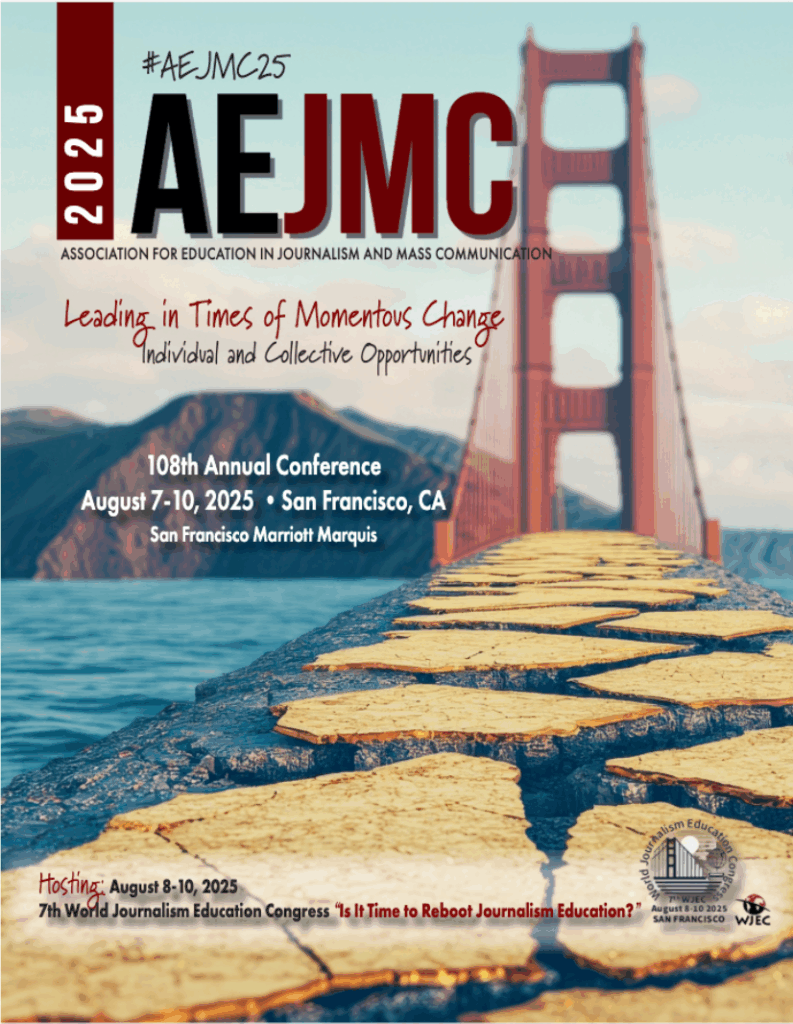
2025 AEJMC conference program cover

Faculty and graduate students from the College of Media co-presented various topics of research at the 108th annual conference of the Association for Education in Journalism and Mass Communication on August 7-10, 2025, in San Francisco, California.
This yearโ€™s conference theme was โ€œLeading in Times of Momentous Change: Individual and Collective Opportunities.โ€ Presenters included faculty in the Institute of Communications Research, the Charles H. Sandage Department of Advertising, and the Department of Journalism; and graduate students in ICRโ€™s PhD program and the MS advertising program.

The AEJMC aims to promote the highest possible standards for journalism and mass communication education, to cultivate the widest possible range of communication research, to encourage the implementation of a multi-cultural society in the classroom and curriculum, and to defend and maintain freedom of communication to achieve better professional practice and a better-informed public.
College of Media research presenters and presentations are listed below. (Please see the AEJMC conference program for complete listings and participants.)

2024-25 AEJMC Elected Standing Committee Members

Research

Publications

Scholar-to-Scholar (Poster) Refereed Research Paper Sessions

Navigating Trust and Authenticity in AI-Generated Advertising Content

โ€œEvaluating Consumer Perceptions of AI-Suggested Brands: Insights from the FCB Grid Frameworkโ€

Discussant

AI in Advertising: Emotional Appeals, Trust, and the New Creative Frontier

โ€œThe Influence of โ€˜Artificial Intelligenceโ€™ as a Persuasive Hook and Persuasion Knowledge on Consumer Evaluationsโ€

Perceptions, Persuasion, and Authenticity in AI-Driven Advertising

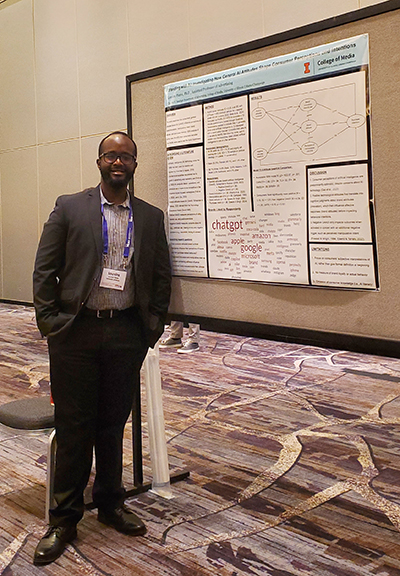
Louvins Pierre poster presentation at AETMC

โ€œBranding with AI: Investigating How General AI Attitudes Shape Consumer Perceptions and Intentionsโ€

Algorithmic Experiences

โ€œEphemeral Visibility and Real-Time Monitoring: How Algorithmic Rankings Amplify Fansโ€™ Data Labor for Idolsโ€™ Publicityโ€

  • Anna Yan Liu, ICR doctoral student

Current News Strategies

โ€œTargeting Against Disinformation: An Experimental Test of Generic and Microtargeted Corrections in Social Mediaโ€

Emerging Technology Diffusion

โ€œUsing the Technology Acceptance Model to Understand College Studentsโ€™ Intentions to Use Mobile Applications to Change Their Behaviorsโ€

Environmental Communication

โ€œPerceptions of Climate and Diversity Advocacy in Politically Trying Times: Examining Responses to Companies That Abandon, Maintain, or Expand Csaโ€

Media Literacy and Information Consumption

โ€œFrom Knowledge to Intentions: Testing a Model of News Literacy Behaviorsโ€

Refereed Research Paper Sessions

Histories from Inter and Intra-National Perspectives

โ€œFrom Piรฑata Factories to the Pandemic: Latino Media Survived with Community Focus”

Advancement in Crisis Communication and CSR research

โ€œTell Me More: Curiosity and Engagement with CSR Messagingโ€

โ€œAI in Advertising: Collaboration, Creativity, and Consumer Perceptionโ€

Moderating/Presiding

PFR Panel Sessions

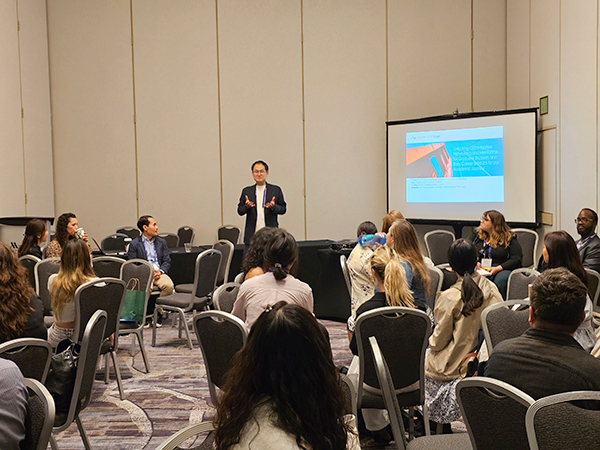
Chang-Dae Ham presenting at AEJMC

โ€œUnlocking Opportunities: Networking and Mentorship for Graduate Students and EarlyCareer Scholars for your Academic Journeyโ€

Moderating/Presiding

Panelists

โ€œThe Privacy-Personalization Dilemma: Crafting Ethical Data Strategies in Advertisingโ€

Panelist

Research Panel Sessions

 โ€œDeveloping Research Agendas for Advertising and Visual Communication: Insights from Professionals in an Ever-Changing Media Landscapeโ€

Panelist

โ€œHow to Arm Your Students with Just Enough Business Skills to Cover Anythingโ€

Panelist

Teaching Panel Session

โ€œEthical Leadership and Journalism Education Amid, Well, Everythingโ€
Panelist

Commission on the Status of Women, AEJMC Council of Affiliates, and Lillian Lodge Kopenhaver Center for the Advancement of Women in Communication, Florida International University

Workshop Session: Women Faculty Moving Forward: Pathways to Success

Panelist

AEJMC Elected Standing Committee on Research

Research Award Panel Session: James A. Tankard/AEJMC-Knudson Latin-America Prize Book Awards

Discussant

Award Panel Session: Nafziger-White-Salwen Dissertation Award

Panelist

Washington Media Scholars Foundation Graduate Research Scholarship Winners

“Invisible Persuasion in LLM-Based Recommendation: How Flattery Style and Product Involvement Shape Intention to follow Recommendation and Click-to-Action via Consumer Judgment Confidence”

  • Seo-Jeong Heo, ICR doctoral student

“What makes generative AI ads persuasive? Regulatory Fit Theory Application”

  • Boram Cho, MS Advertising student

Share on social

Associate professor of advertising Leona Yi-Fan Su selected for 2025-26 Emerging Research Leaders Academyย 


Leona-Yi-Fan-Su

Leona Yi-Fan Su, associate professor of advertising and a faculty affiliate at the Institute of Communications Research, was selected by the Interdisciplinary Health Sciences Institute for the 2025-2026 Emerging Research Leaders Academy.

The ERLA allows mid-career researchers to refine their goals, make connections, and develop skills to strategically lead collaborative, multi-investigator research teams, and pursue center-level or large-scale, collaborative research funding.

Su, who was one of 15 Illinois researchers chosen for this yearโ€™s cohort, engages in a range of interdisciplinary and collaborative research projects on science and health issues.

Her key research areas include studies on social norms, humor, incivility, social media, engagement metrics, virtual assistants, big data, machine learning, brand communication, science communication, health communication, and environmental communication.

ERLA candidates are nominated by a dean, department head, or director, and evaluated by a campuswide selection committee. Factors such as their commitment to the program, future leadership potential, and how their participation will benefit their career as well as that of the Illinois research enterprise, are all considered before the final selection is made.

Throughout the Fall 2025 and Spring 2026 semesters, ERLA members will engage in reflection and personal assessment, clarify their vision and goals, and develop five-year action plans that they will present at the ERLA graduation in April 2026.

Share on social

Penne Heede

Lecturer

Affiliations

  • Charles H. Sandage Department of Advertising

No posts found.

Gregory Hall lower-level renovation photos


Thanks to a $2.5M gift from Richard and Leslie Frank in 2024โ€”who endowed the Richard and Leslie Frank Center for Leadership and Innovation in Media in 2020 and enabled the renovation of Richmond Studioโ€”exciting upgrades in the lower level of Gregory Hall began in Spring 2025. 

Gregory Hall Room 1 architect rendering overview

This will result in the creation of a new hybrid/flexible, state-of-the-art classroom (see architectural rendering above), which will open in Spring 2026, and a renovated main corridor, plus updated flooring throughout, including in faculty offices.

See photos depicting the original spaces, the renovation process, and the architectural renderings.

Gregory Hall Lower-Level Corridor

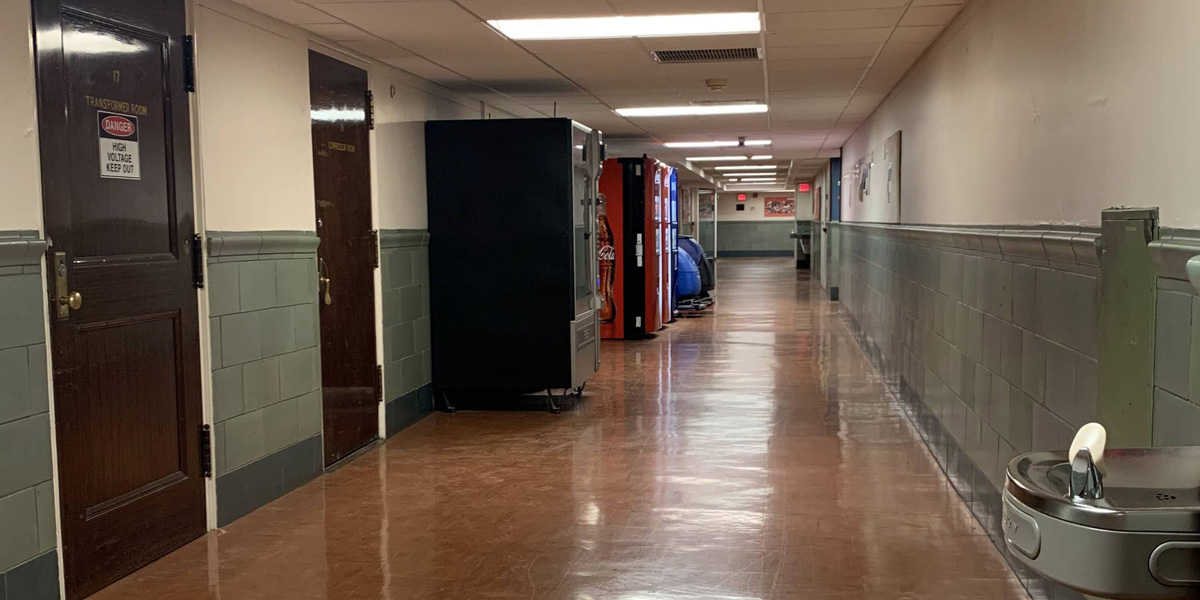
Before Renovations

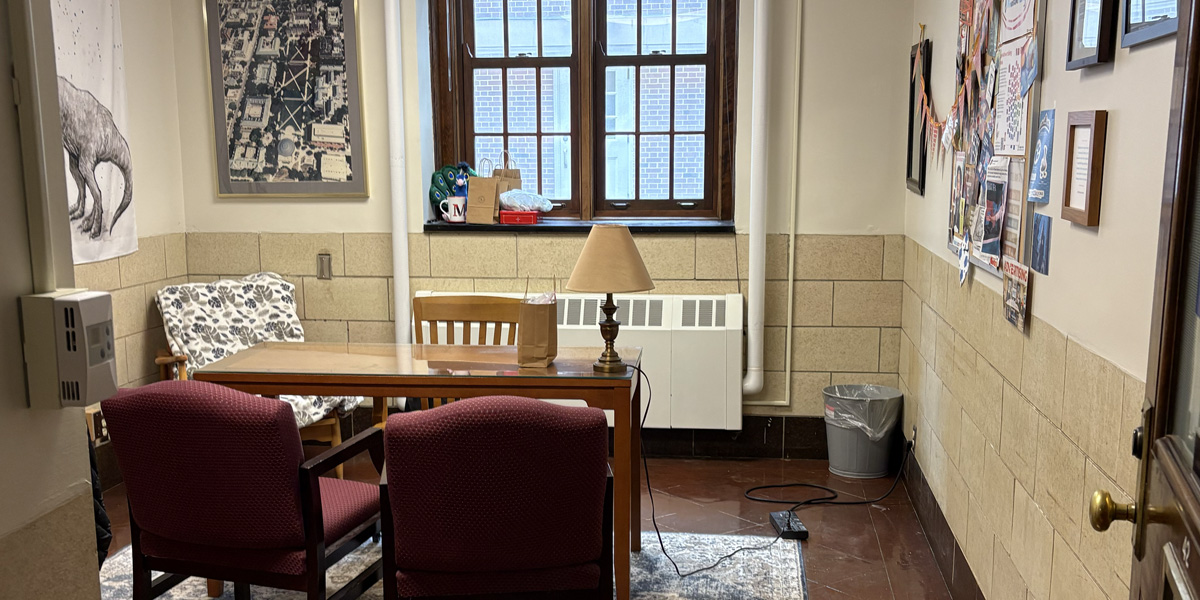
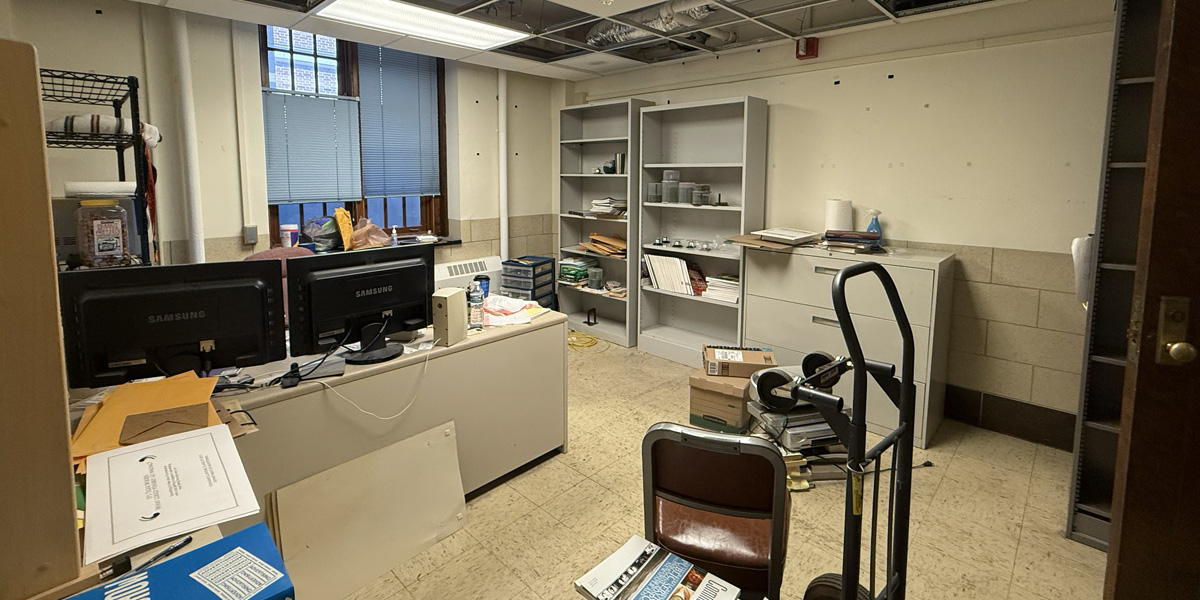
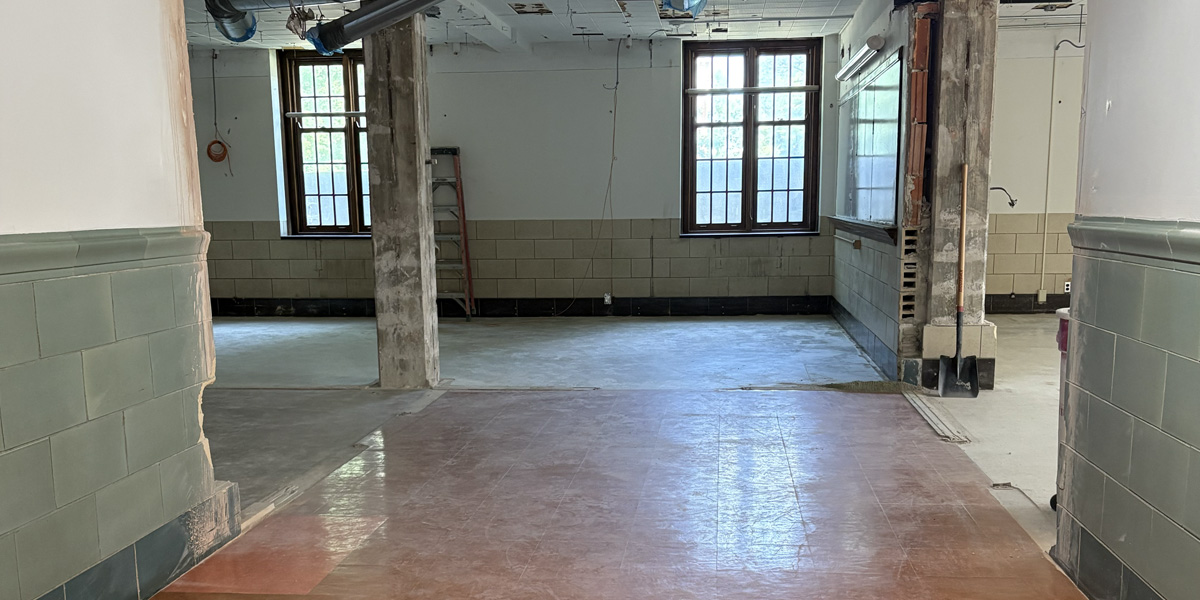
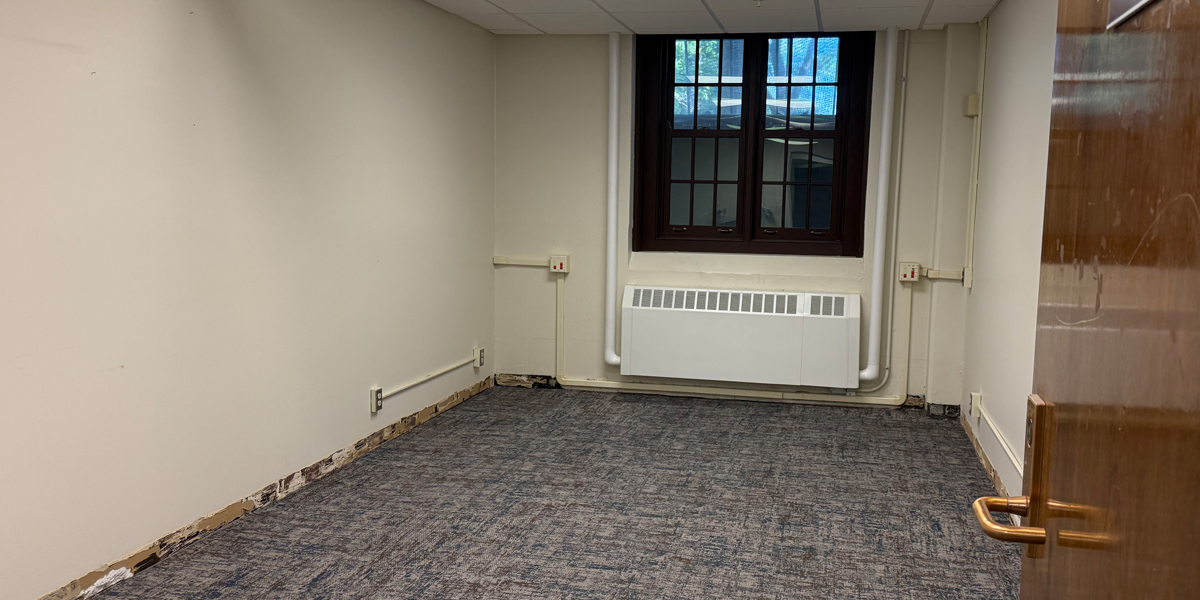
Substantial work in the lower level of Gregory Hall has not occurred since the 1990s. See photos of the original corridor and a faculty office.

  • Gregory Hall lower level corridor before from west
    Gregory Hall lower level corridor before renovations

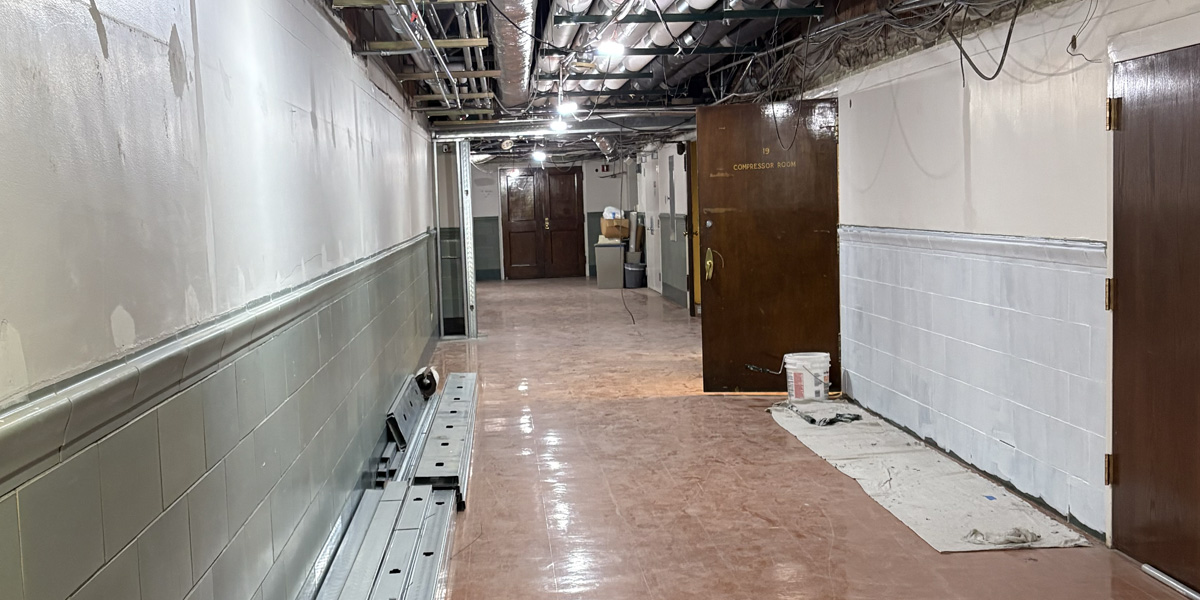
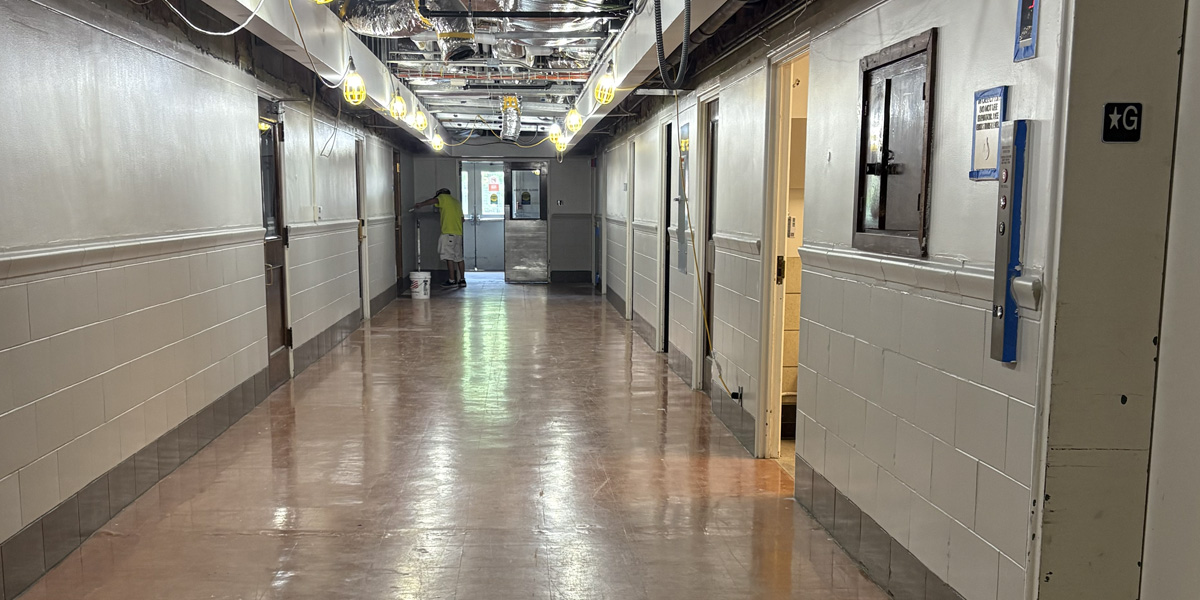
Renovation Progress

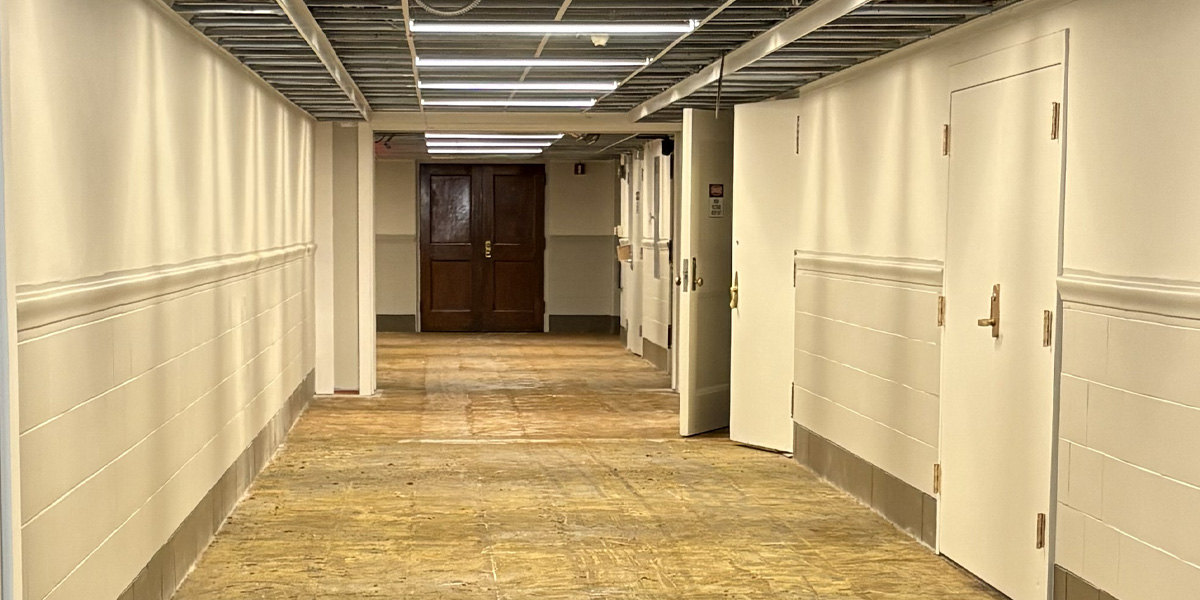
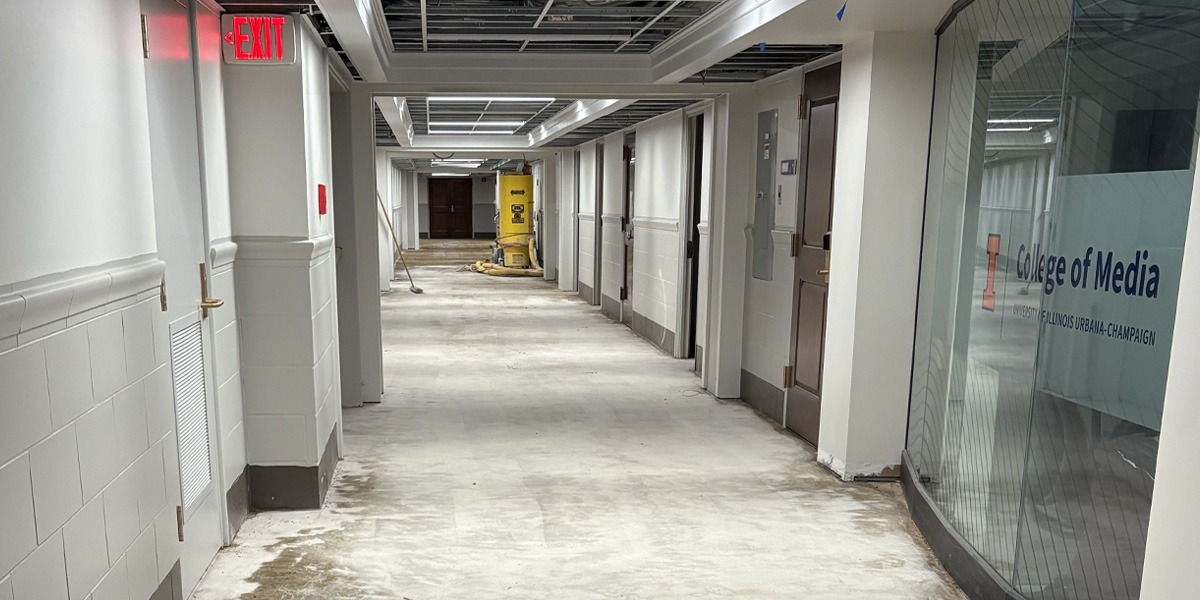
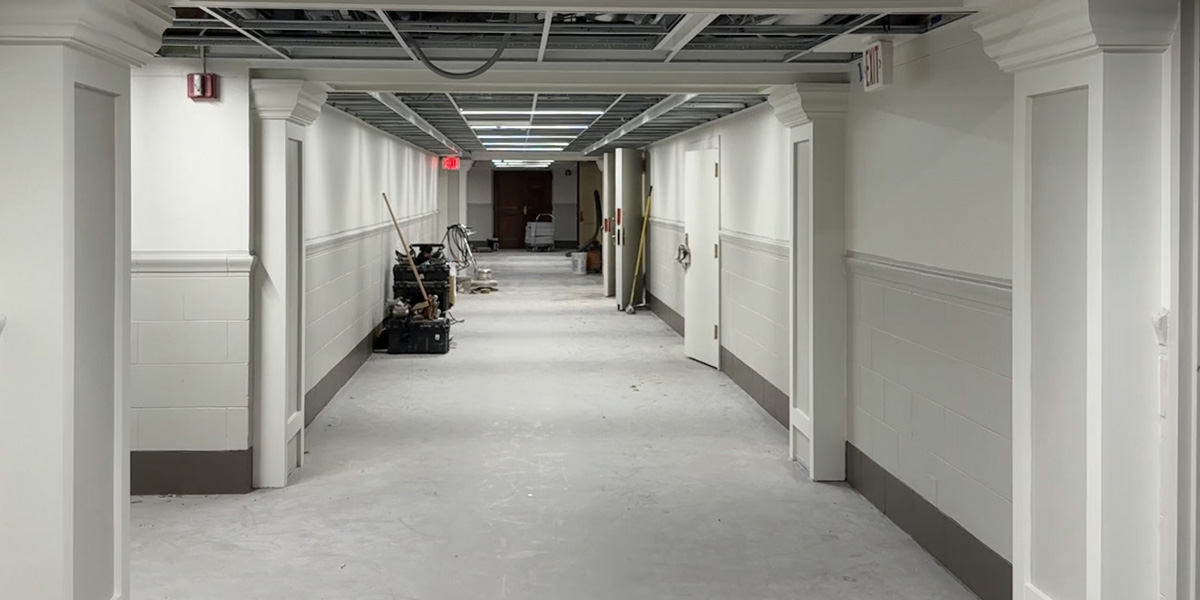
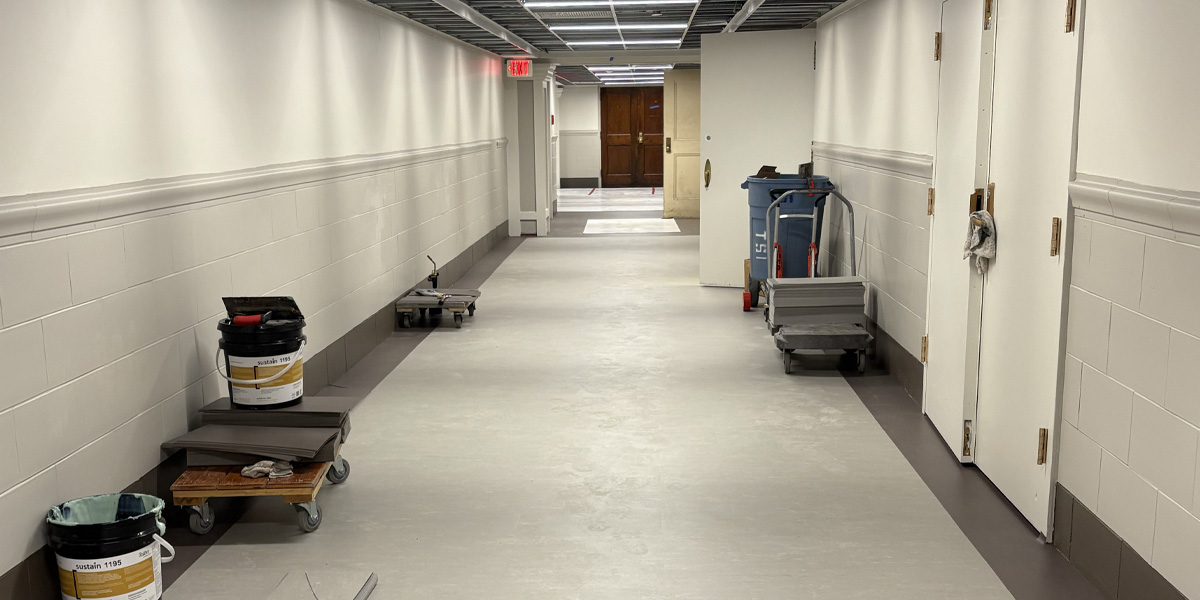
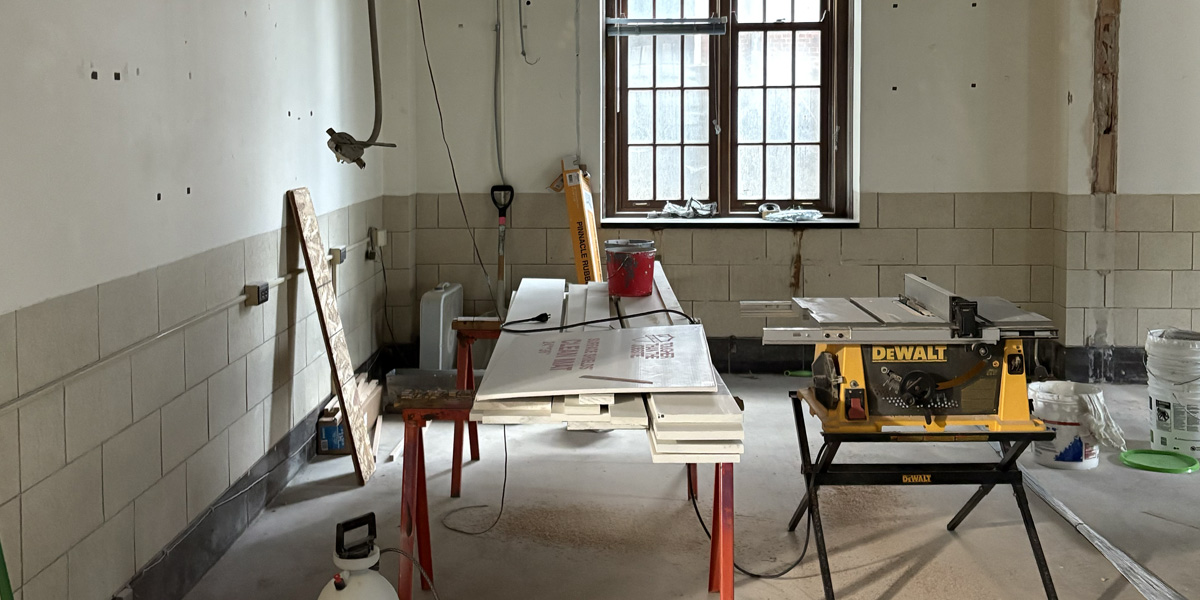
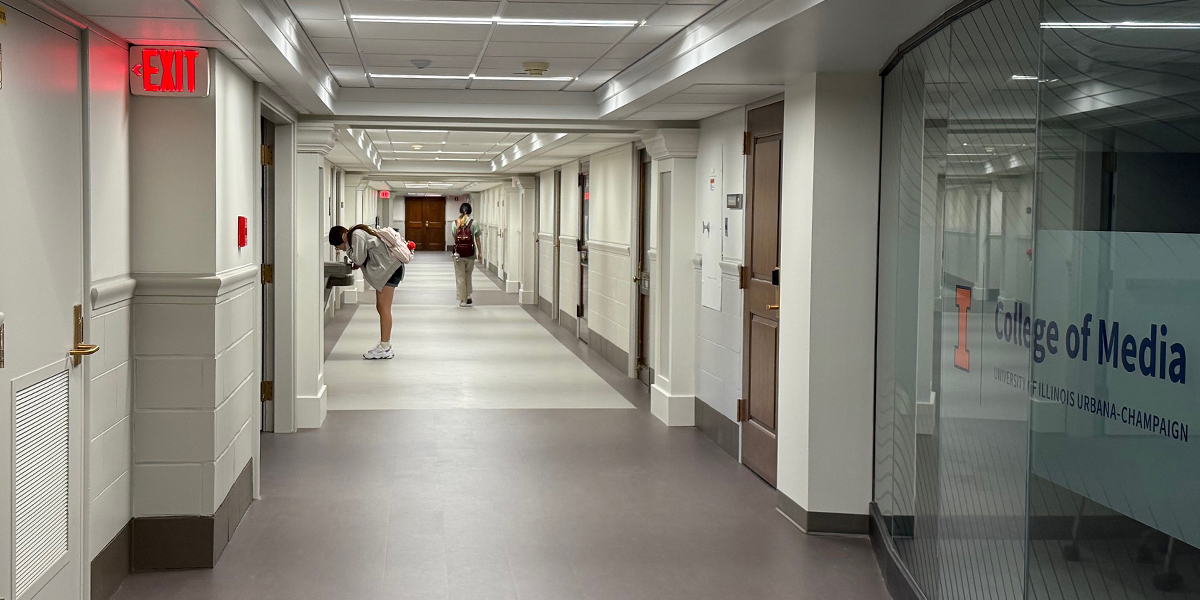
Renovations included painted walls throughout the entire hallway, including the east and west wings, new lighting, and new flooring, including in faculty offices.

  • Gregory Hall lower level hall east painting and primer
    Painting primer in the hallways

Architectural Rendering

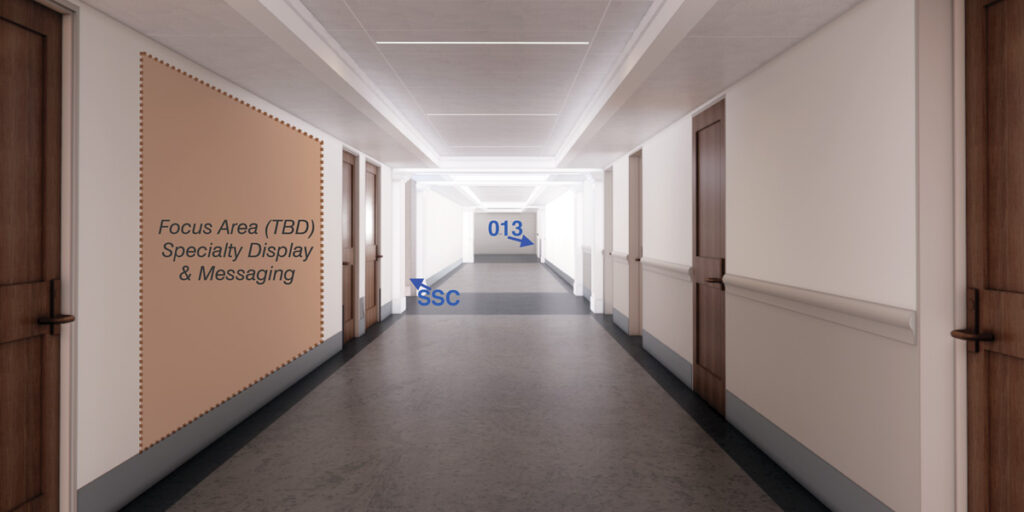
The corridor renovations will be complete by the start of Fall 2025. By Spring 2026, new digital signage will be installed in place of bulletin boards that previously lined the walls.

Architectural rendering of Gregory Hall lower level display area

Gregory Hall Room 1

Before Renovations

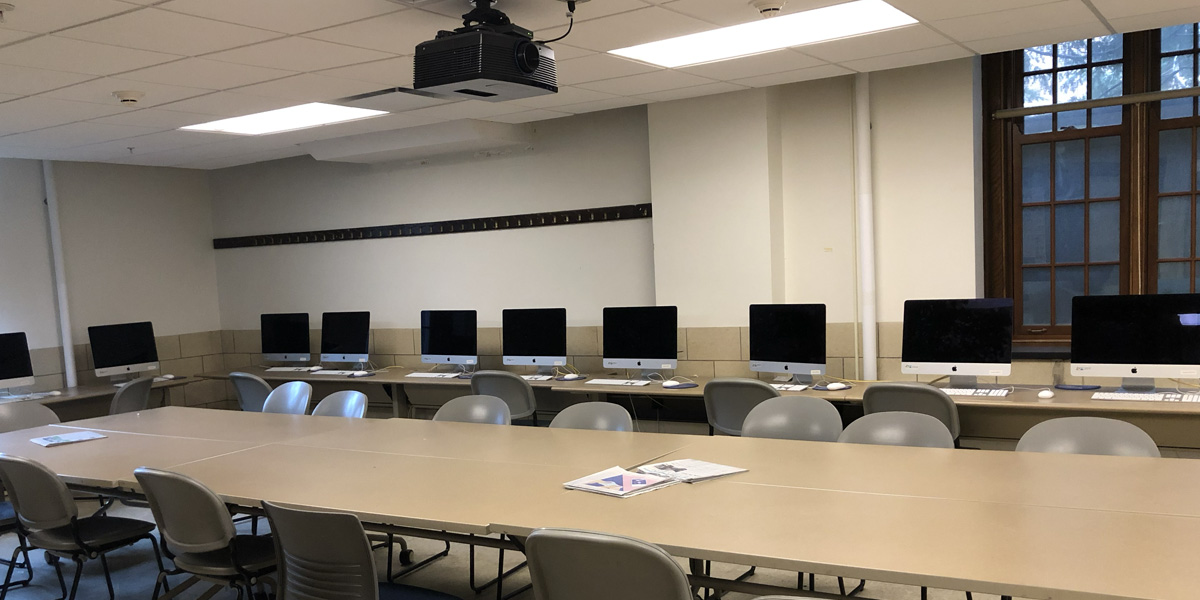
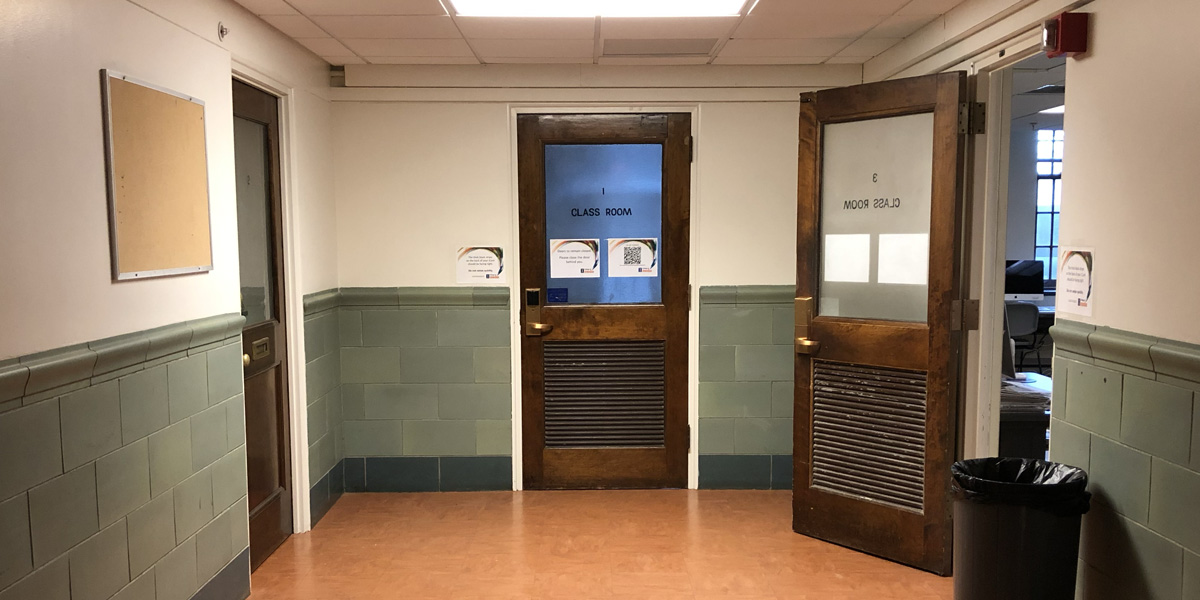
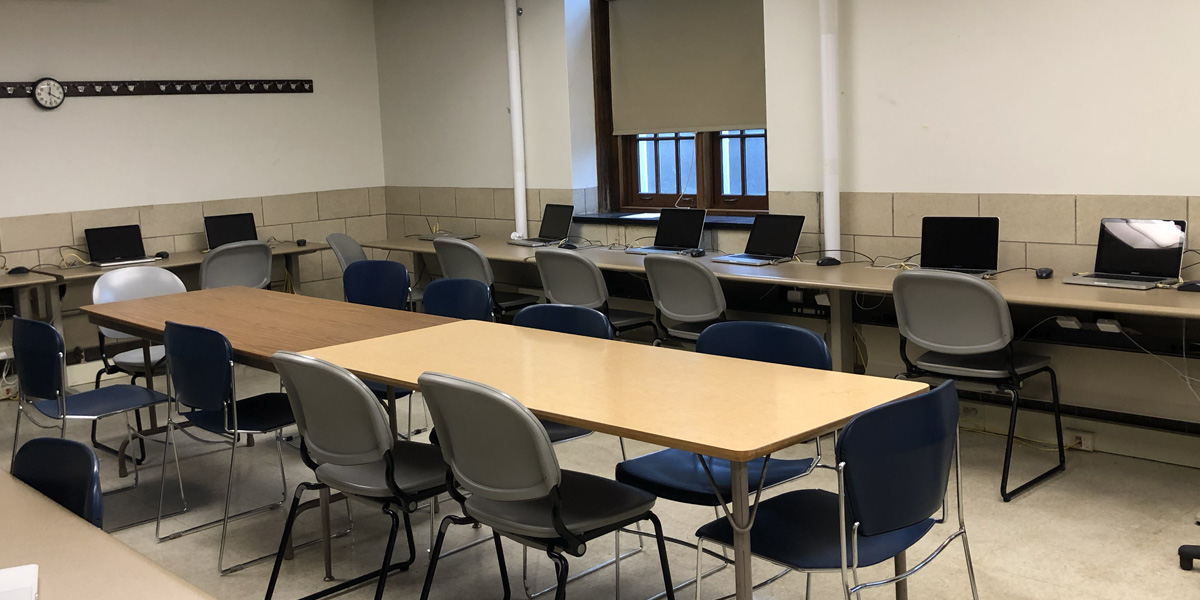
Rooms 1, 2, and 3 on the east wing were two smaller classrooms and a faculty office.

  • Gregory Hall Rooms 1, 2, 3 before
    Gregory Hall Rooms 1, 2, and 3 before renovation

Renovation Progress

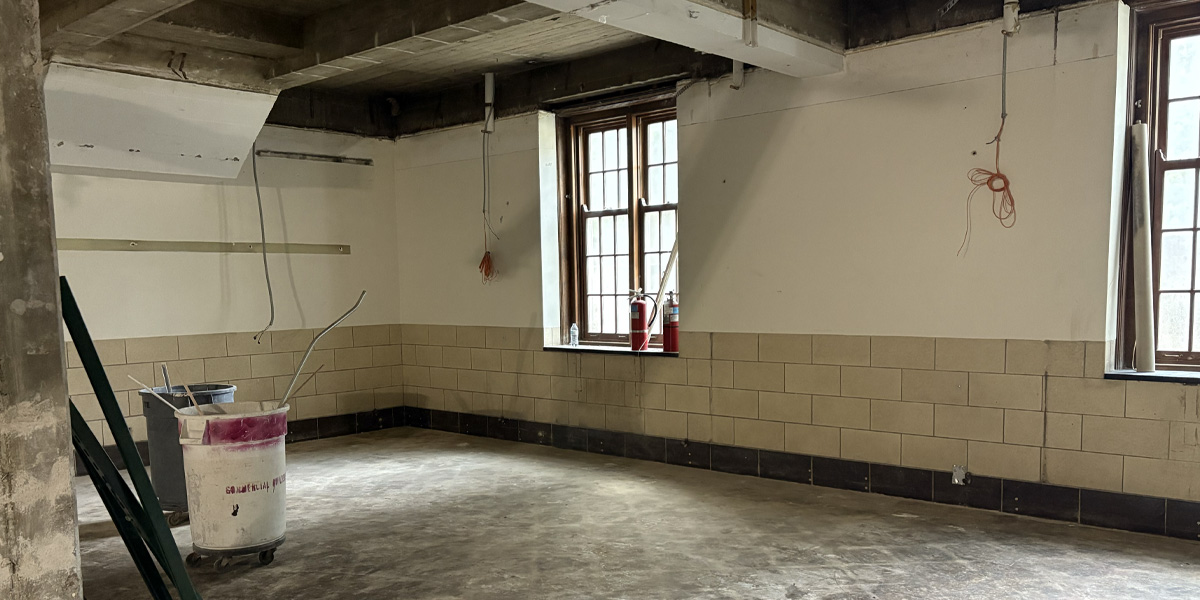
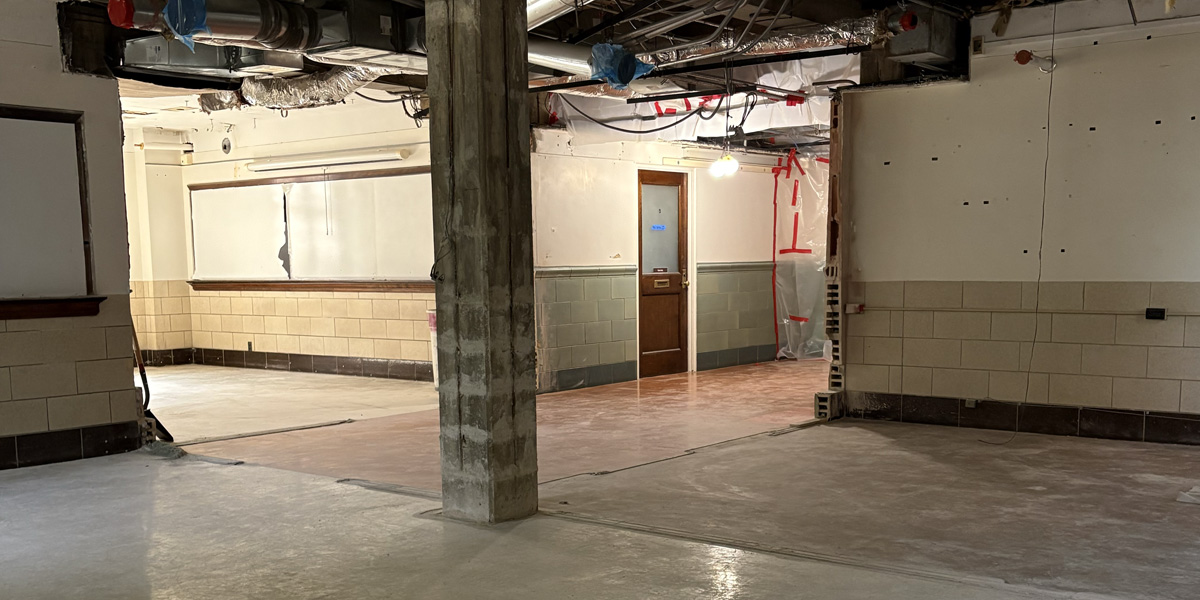
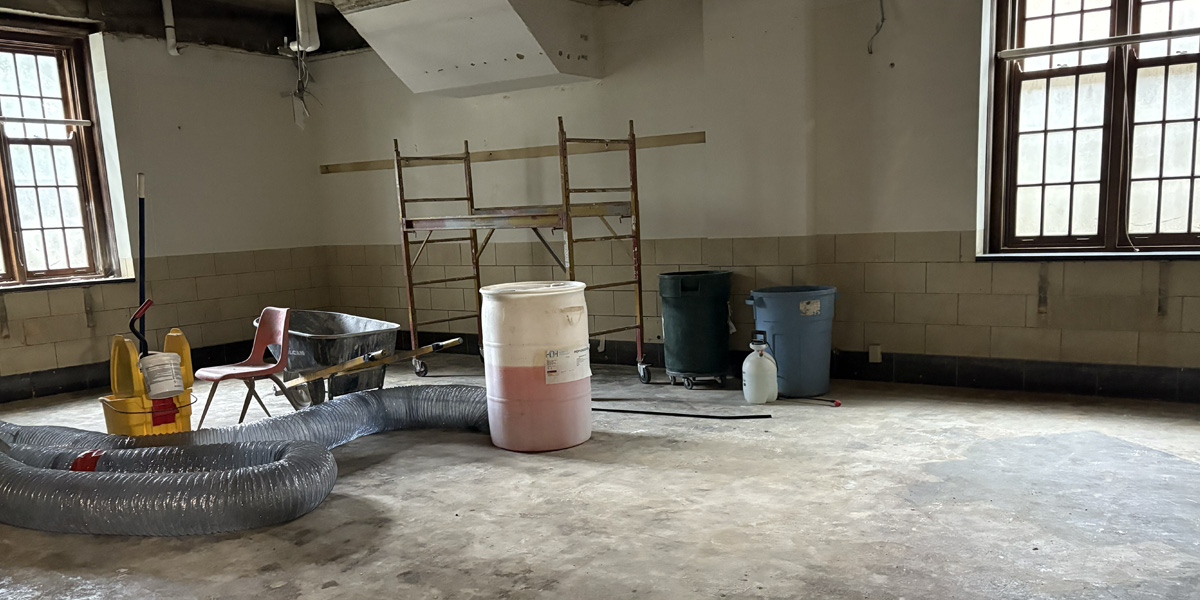
Renovations included knocking down walls to combine Rooms 1, 2, and 3 into a new hybrid/flexible, state-of-the-art classroom.

  • Gregory Hall Room 1 after demo
    Gregory Hall Room 1 after demo

Architectural Renderings

By Spring 2026, Room 1 will offer classes by all three departments in the College of Media, supporting activities such as advertising brand consultations, journalism press conferences, and media and cinema studies production, and will enable hybrid teaching and conferencing.
Architectural rendering of the entrance to Gregory Hall Room 1
Architectural rendering of Gregory Hall Room 1

โ€”Photos by Meghan Burnett and Holly Rushakoff. Architectural renderings by Reifsteck Wakefield Fanning.

Share on social

DEV College of Media
119 Gregory Hall
810 S. Wright St.
Urbana, IL 61801
217-333-2350