Advertising students create real-life client campaigns through Sandage Project capstone course


Students in ADV 498: The Sandage Project developed campaigns for three community organizations in Fall 2025, including Lincoln250, H3 (Harm, Healing, and Hope), and EARS Effingham Animal Rescue Sanctuary.

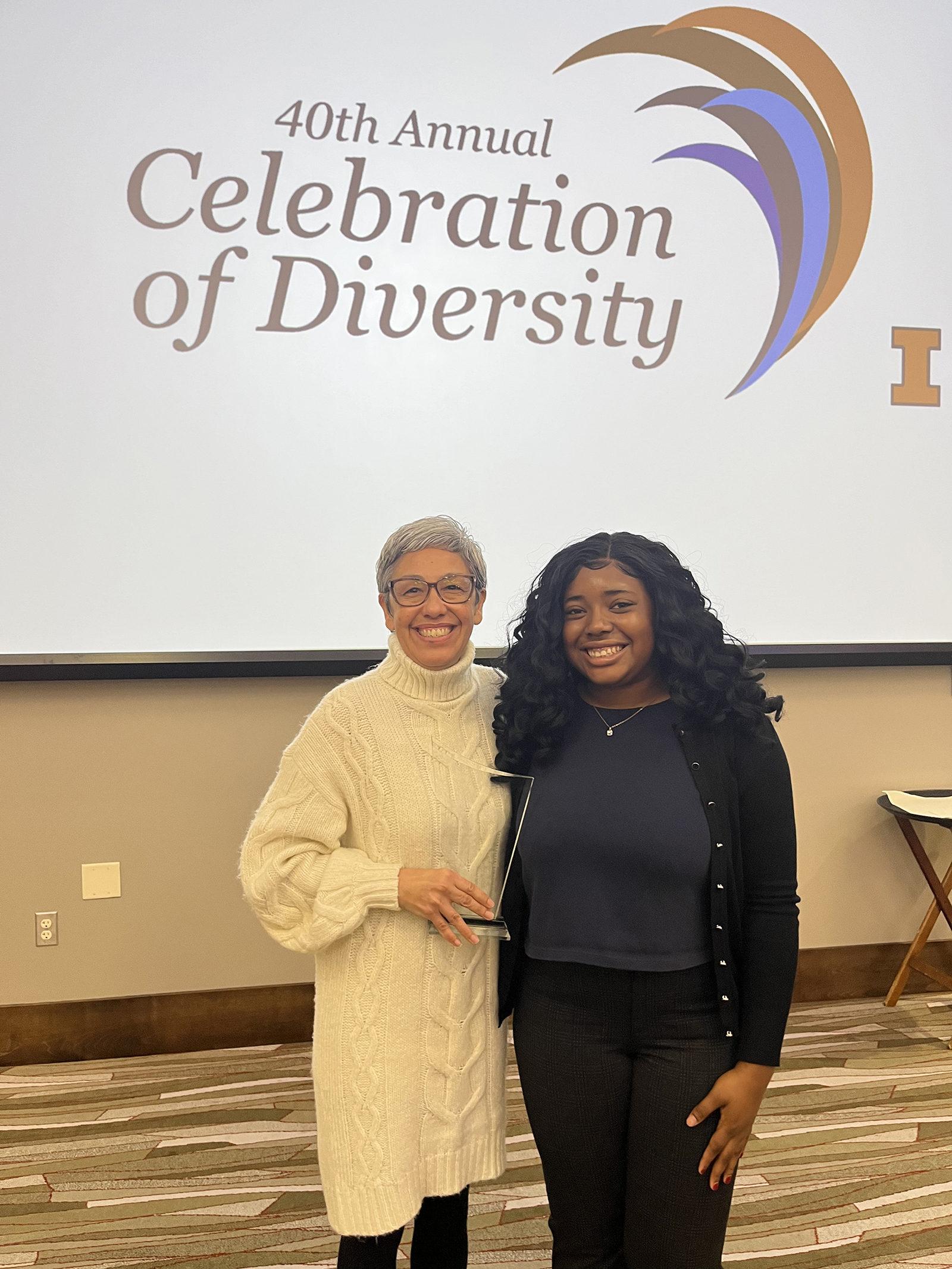
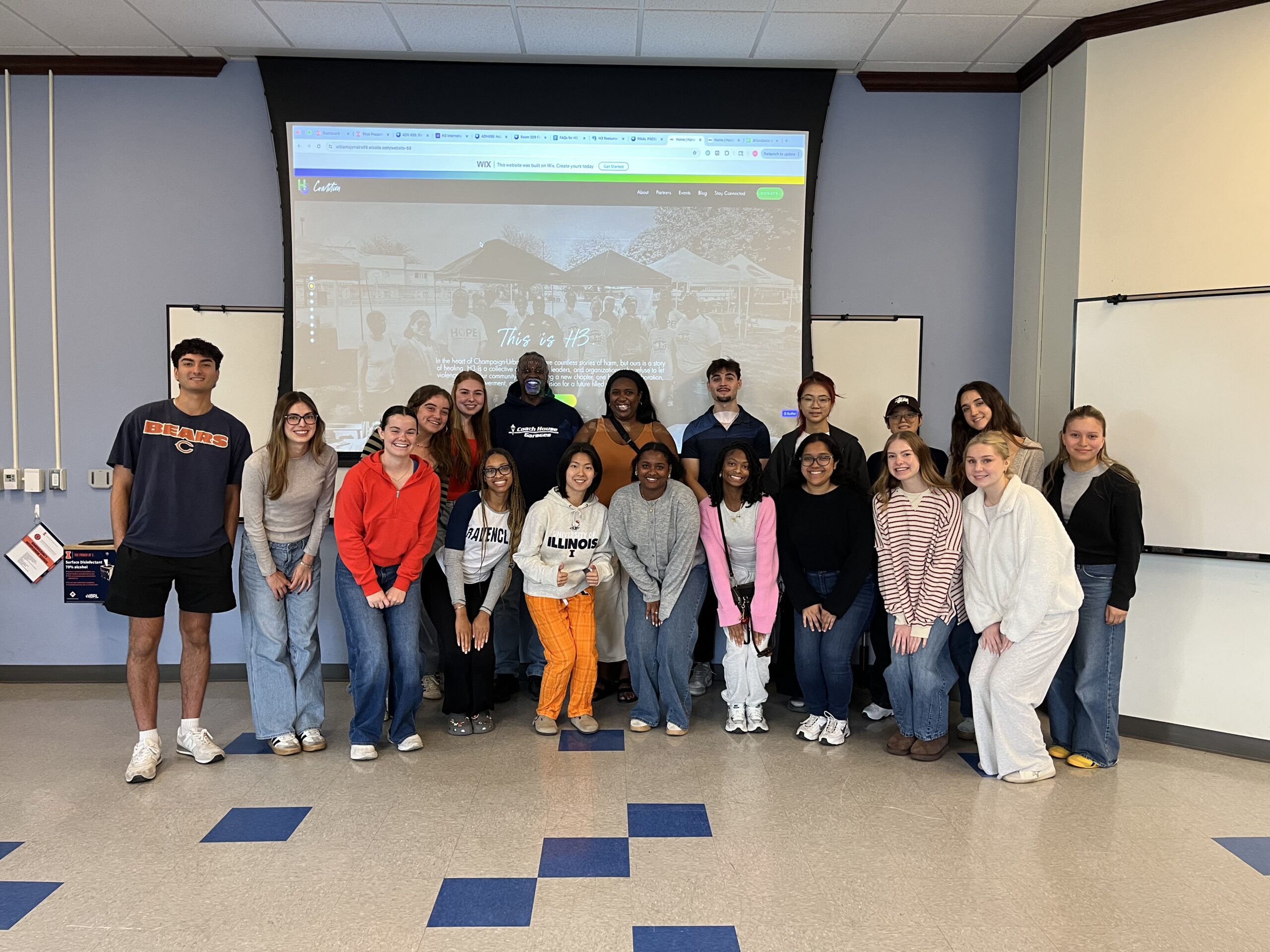
Advertising students pictured with their client, H3.

“The students put together impressive campaigns for each, and the clients were very happy,” said senior lecturer of advertising Marisa Peacock.

The eight-week service-learning capstone provides advertising majors an opportunity to develop ad campaigns for a nonprofit or local community partner. Clients may use any campaigns or assets produced.

Cooper Haynes, a senior in advertising, was part of the Lincoln250 team, which developed a full  digital platform, including a website and Instagram page, that organizes, interprets, and presents Lincoln-era history in a modern, accessible format.

“Working with my team and actually being divided into roles with goals and objectives that we set for each member was really nice for having a bit of insight into how team dynamics work at real agency and company jobs,” he said. “Navigating problems [with] people having different ideas of how to approach things was also a great experience for preparing for the industry as well.”

Throughout the course, students meet clients to understand the organization and campaign goals, then complete a discovery report analyzing the target audience, brand, and competitive landscape. These insights inform the campaign strategy.

Teams pitch three campaign concepts to the client and based on feedback, select one to develop further. Students refine the creative and media strategies and present a final campaign in the last week.

Three student teams collaborated to strengthen the visibility and impact of H3 (Harm, Healing, Hope), a coalition of organizations, businesses, and individuals in Champaign County dedicated to ending community violence. Together, these groups produced a cohesive set of recommendations to help H3 share its story, reach its audience, and transform its mission into a broader movement.

Jamaira Williams, a senior in advertising who worked on the H3 campaign, said she learned the true lesson of the Sandage course wasn’t about selling a product, but selling a feeling.

“Advertising is, at its core, the purest form of storytelling. Every brand color, every word chosen, is a mirror, because people crave to see themselves reflected in the world. We’re not crafting fiction, we’re guiding real brands and real livelihoods,” she said. “The moment you respect the reality of their brand, you transition from student to professional.”

Clients for the Sandage Project are selected based on their ability to support meaningful, real-world public engagement experiences for students. Ideal clients are community partners—on or off campus—who are open to authentic collaboration and willing to actively engage with students throughout the process. Their mission or campaign should benefit from storytelling that creates emotional connection, often through real community voices or narratives.

Natalie Circolone, a senior in advertising, worked as the creative director for the EARS Effingham Animal Rescue Sanctuary, positioning the rescue as a transparent, caring, foster-based organization that helps people “write the next chapter” in each animal’s life by adopting or fostering. The team also helped to increase awareness and engagement through social media storytelling and small, tangible touchpoints like stickers and goodie bags that keep EARS visible in the community.

“The Sandage Project gives seniors in advertising a real opportunity to work in an agency setting, with designated roles and a real client,” Circolone said. “Through this project, I gained hands-on experience planning and executing a creative campaign, applying skills I’ve developed over the past four years in advertising courses. The opportunity to create something meaningful for such a great cause was a rewarding experience.”

Share on social
ICR faculty and students receive honors at 2025 National Communication Association convention


The Institute of Communications Research marked a highly productive year at the 2025 National Communication Association convention from November 19-23 in Denver, Colorado, with faculty members, students, and alumni presenting research, chairing panels, and contributing to programming at the 111th annual event.

In addition to this strong scholarly presence, several members of the ICR community were recognized with some of NCA’s most prestigious awards.

“These achievements underscore ICR’s enduring leadership in communication scholarship and its commitment to fostering impactful research across generations of scholars,” said Mike Yao, director of ICR and professor of digital media in the Charles H. Sandage Department of Advertising.

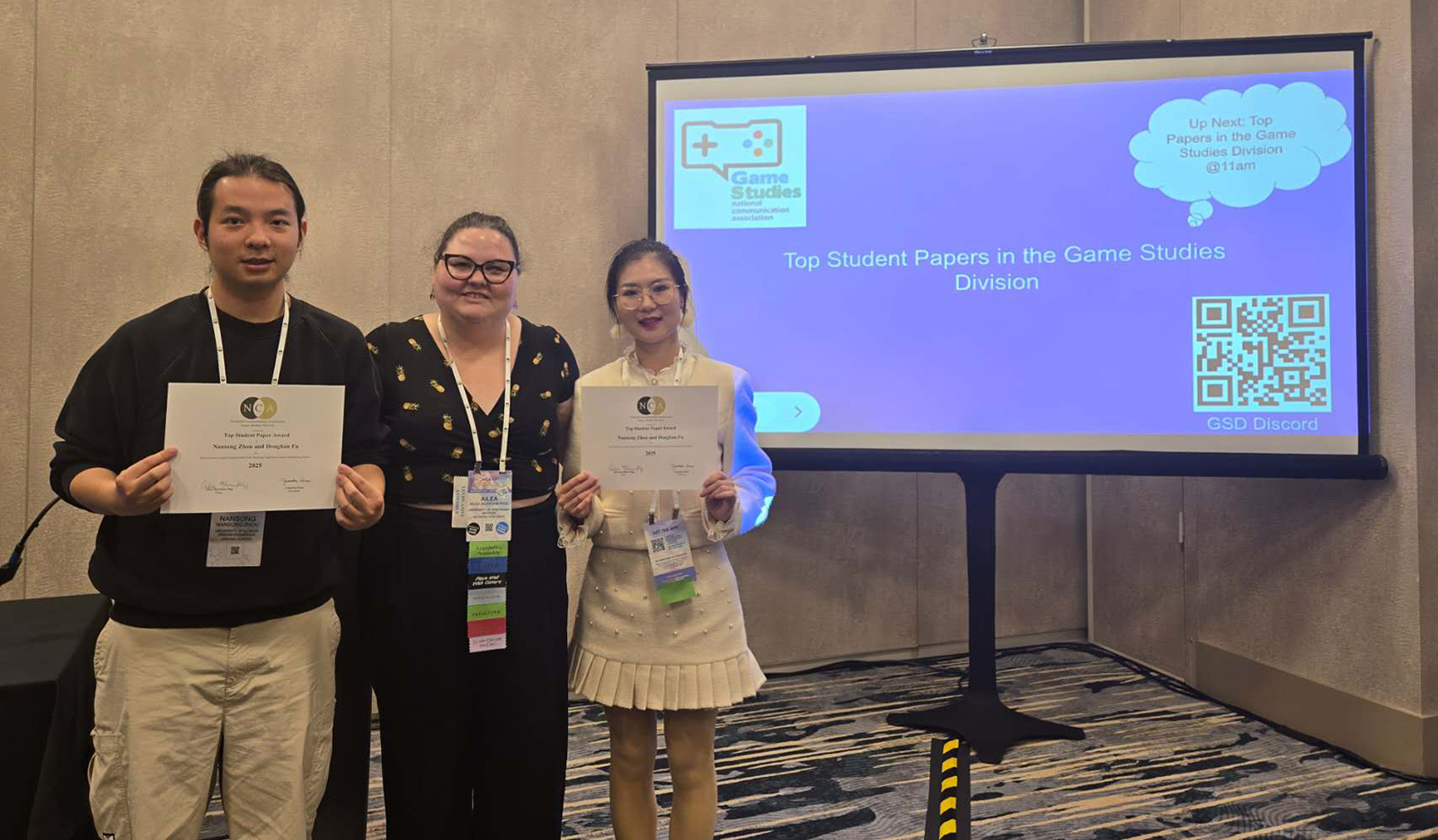
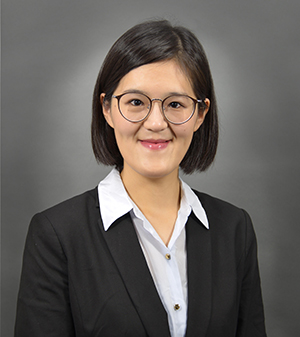
One of this year’s standout accomplishments came from ICR doctoral student Nansong Zhou (pictured above), whose paper “Serious Games as Digital Mental Health Tools: Increasing Depression Literacy and Reducing Stigma,” co-authored with Donghan Fu (University of Missouri-Columbia), was selected as a Top Student Paper in the Game Studies Division. Zhou was also elected to serve as the Division’s next Student and Early Career Representative, a leadership role that reflects his growing visibility and influence within the field. 

ICR Professor Sang-Hwa Oh and ICR alum Seo Yoon Lee receive NCA award.

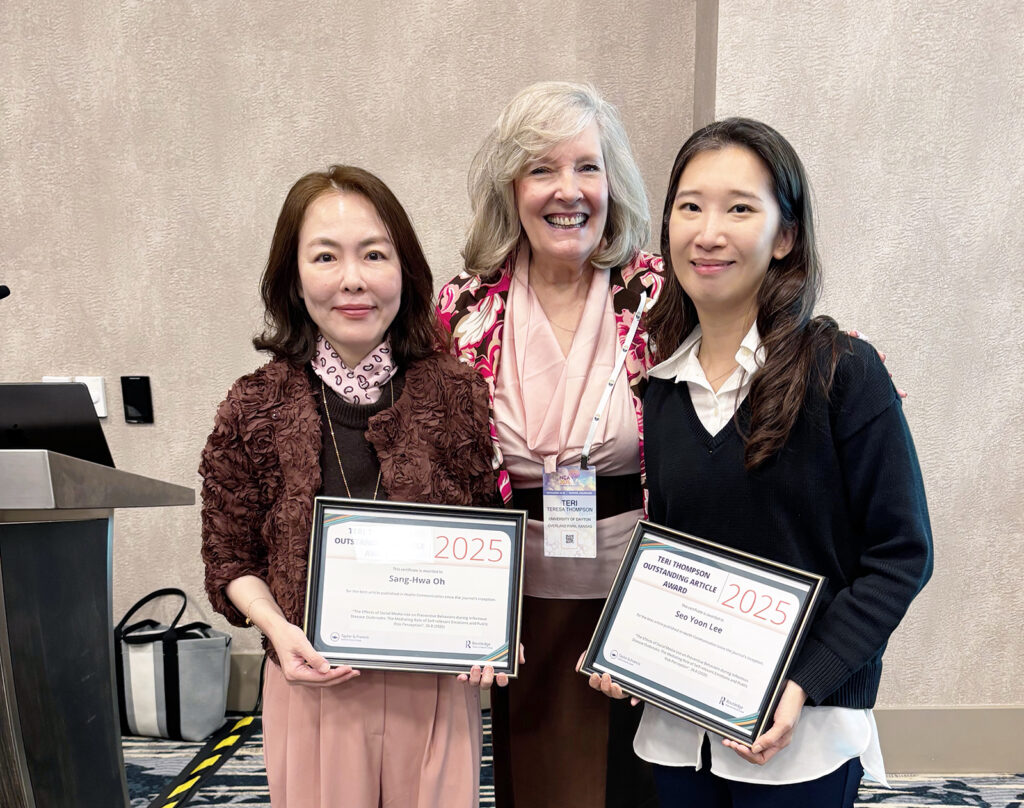
ICR’s reputation for shaping the field was further affirmed by the recognition of Sang-Hwa Oh, associate professor of advertising, whose article—co-authored with former ICR doctoral student Seoyoon Lee (PhD ’23)—received the inaugural Teri Thompson Outstanding Article Award from Health Communication (pictured above). This rare honor is especially notable: Out of the journal’s 35-year publication history, only three papers were selected for this distinction. Receiving the award directly from the journal’s founding editor, Teresa Thompson, underscored the lasting influence and methodological rigor of Oh’s research on social media, public risk perception, and preventive health behaviors.

Professor Angharad N. Valdivia wins NCA Distinguished Scholar Award

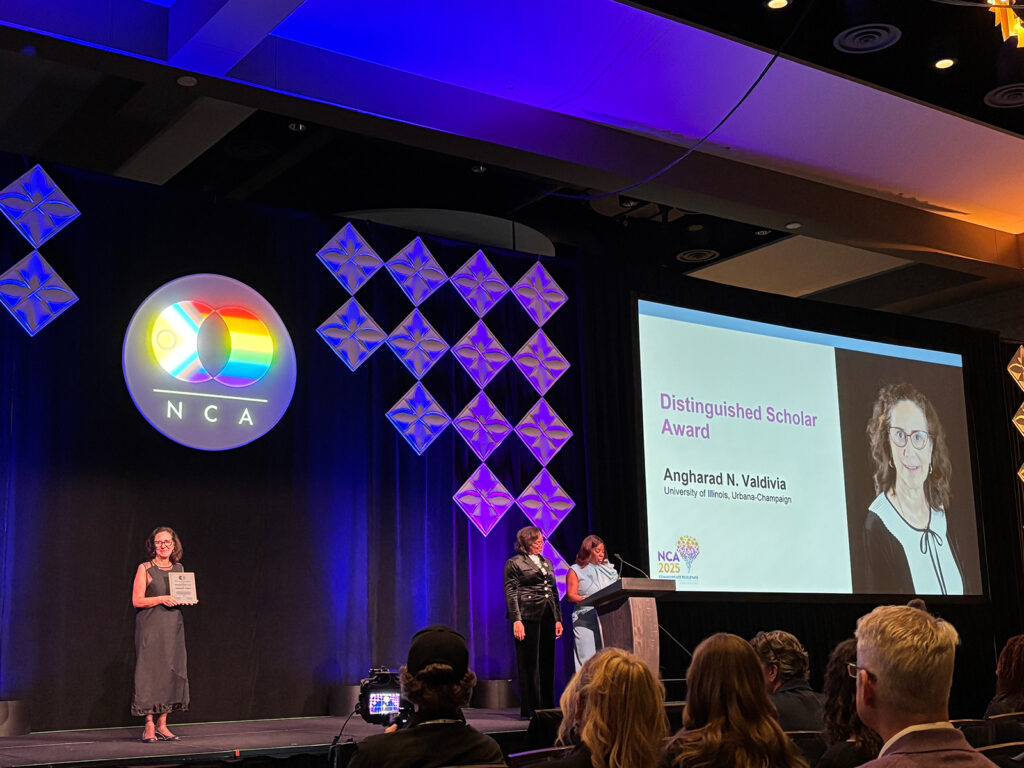
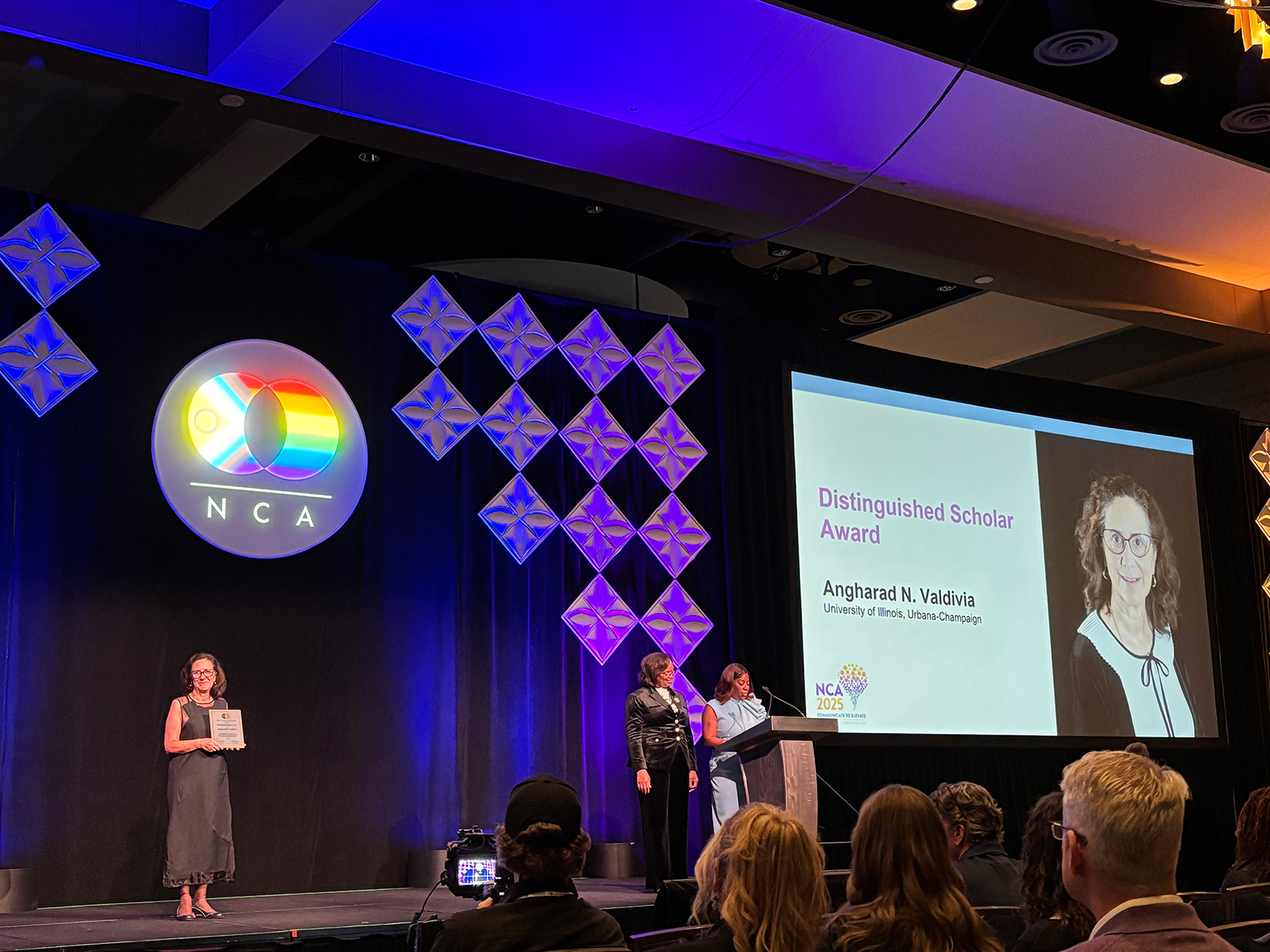
The conference also celebrated the contributions of Angharad Valdivia, ICR professor emerita, who was honored with NCA’s Distinguished Scholar Award during the President’s Award Ceremony (pictured above). One of NCA’s highest honors, the award recognizes a career of groundbreaking scholarship and mentorship in media studies, Latina/Latino studies, and global communication. Valdivia’s presence throughout the conference—as panel chair, respondent, mentor, and presenter—reflected both her continuing intellectual leadership and her deep commitment to supporting emerging scholars. Valdivia’s NCA participation included:

  • Senior Mentor, 2025 La Raza Mentoring Panel
  • Member, Publications Council Meeting
  • Chair and respondent, “The Complexities of Elevating Latinidad and the Media”
  • Respondent, “Audiences Navigating Disney and Popular U.S. TV Shows”
  • Presenter (with ICR doctoral student Kendra Williams), “Barbie as a Cultural Phenomenon: Doll, Brand, and Media Icon”

ICR faculty and students also contributed important new research to the conference program. Kevin Wise, professor of advertising, and doctoral student Alice Ji collaborated on the study “Reimagining the Presentation of Important Safety Information (ISI) in Social Media Pharmaceutical Advertising,” co-authored with ICR doctoral student Veranika Paltaratskaya and Erin Willis (University of Colorado, Boulder), presented in the Health Communication Division. Their work adds to ICR’s growing presence in research addressing digital health communication and public understanding of risk information.

Ji contributed an additional presentation on ISI in pharmaceutical social media advertising as part of the Health Communication Division’s paper session. ICR doctoral student Jennifer Zhang presented her dissertation research, “More Vivid, More Deeply Processed: Exploring the Roles of Message Format in Misinformation and Correction of Health Misbeliefs,” in the Health Communication Division.

Two ICR alumni were also recognized with major awards at NCA:

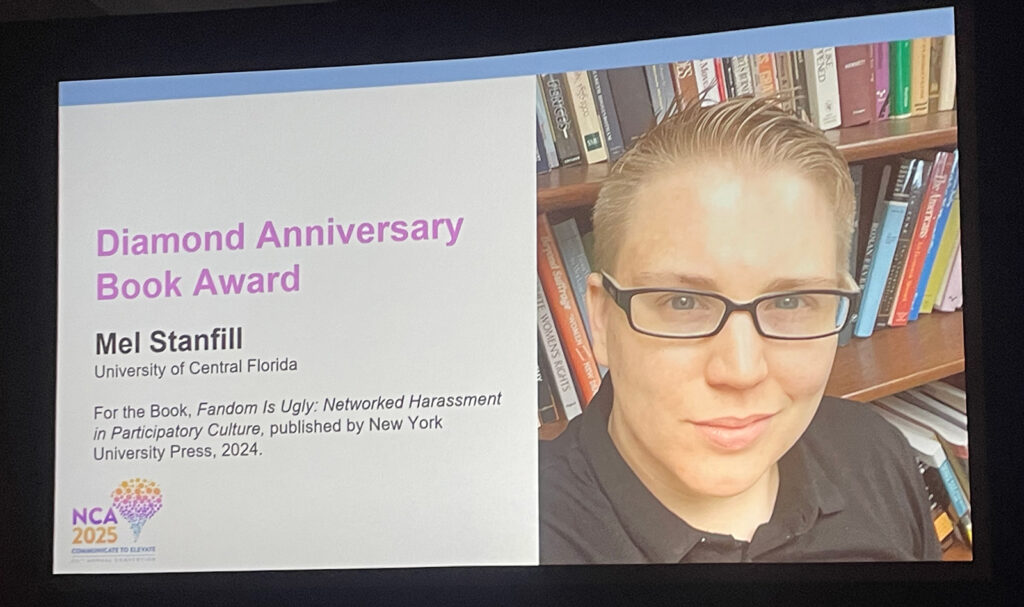
Mel Stanfill (PhD ’15), University of Central Florida, won the Diamond Anniversary Book Award for the book Fandom Is Ugly: Networked Harassment in Participatory Culture (NYU Press, 2024).

ICR alum Mel Stanfill

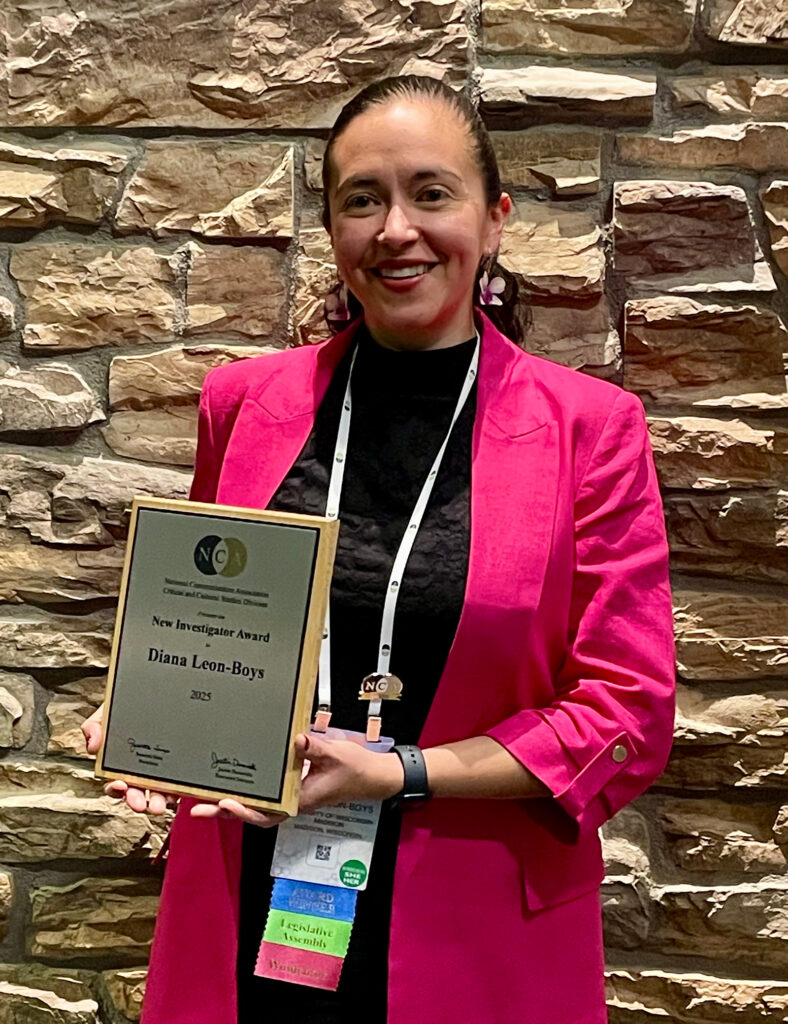
Diana Leon-Boys (PhD ’20), University of Wisconsin-Madison, won NCA’s New Investigator Award in the Critical and Cultural Studies Division.

See NCA’s full list of 2025 national and interest group award winners.

Share on social

Senior lecturer Carrie Wilson-Brown receives Larine Y. Cowan Make a Difference Award


Carrie Wilson-Brown wins award

Carrie Wilson-Brown, senior lecturer of media and cinema studies and advertising, received the 2025 Larine Y. Cowan Make a Difference Award for Teaching and Mentoring in Diversity from the Office of the Vice Chancellor for Access, Civil Rights & Community.

The Teaching and Mentoring in Diversity award honors faculty, instructors, or lecturers who have consistently contributed to the promotion of understanding critical issues related to diversity and equity in teaching and/or the mentoring of diverse students.

Wilson-Brown was nominated in part by students, including Odi Ogbuefi, a senior in advertising, pictured at right.

The Larine Y. Cowan Make a Difference Awards celebrate the achievements of faculty, academic professionals, and civic service employees who made significant contributions in creating and sustaining an inclusive living, learning, and working community at Illinois.

Named in honor of the past Assistant Chancellor and Director of what is now the Office for Access & Equity, the Larine Y. Cowan Awards were created to reflect the commitment to human rights advocacy, social justice, and diversity that defined her leadership for nearly 20 years at Illinois.

Share on social

2025-26 Ebert Fellows announced


Each fall, the Roger Ebert Fellowship program selects three College of Media undergraduate students to participate in the yearlong fellowship that aims to shape their skills in critical writing through immersion in the film industry.

Ebert theatre- orange

The Roger Ebert Fellows chosen for the 2025-26 academic year are Paige Gaines, Amir Rehab, and Jin Wang.

The program, named after the late Pulitzer Prize-winning film critic for the Chicago Sun-Times and University of Illinois journalism alum, allows students to work with former Chicago Tribune film critic Michael Phillips in engaging with notable figures within the film and media industry and strengthening their critical analysis and writing skills.

This year, the Ebert Fellows will participate in monthly workshops both on campus and in Chicago, curate screenings through the Roger Ebert Center for Film Studies at Spurlock Museum, and engage in radio exercises with Steve Morck, senior digital media producer at Illinois Public Media.

Phillips has been the advisor since the program began in 2015. When it comes to selecting the Ebert Fellows, he looks for something beyond the conventional: persuasive, compelling and “alive.”

“Ebert was a lot more than a ‘film critic,’ Phillips said. “He brought the world around him into the writing, which is not easy to do well, and he did it just about better than anybody.”

Another yearly highlight is the Fellows’ coverage of the True/False Film Fest in Missouri. This is a two-night excursion that entails covering the festival, where Phillips encourages the students to speak with people involved in the films that interest them the most.

“Whether it’s for radio podcasting, print, or introducing a film, anything we can do to get the students a little closer to the writer they want to become is the goal,” Phillips said.


Meet the 2025-26 Ebert Fellows

Paige Gaines is a senior earning a dual degree in media and cinema studies and in communication. She is looking forward to working with the other Fellows.

Paige Gaines

“Both of the other Fellows are in advertising, so it will bring different outlooks from what I have had,” Gaines said. “I’m really interested to see what I can learn from them and what they can learn from me.”

Gaines frequently attended Ebertfest as a child and is a distant relative of Roger Ebert. She wants to improve her review-writing skills and efficiency.

The True/False Film Fest is the event that Gaines is most excited for because of the screenings of documentaries revolving around social and political issues.

“I love telling stories about people who don’t have stories told about them as much,” Gaines said. “What better way to get exposure to that scene than going to where it’s hosted?”

One of Gaines’s favorite films is Therapy Dogs, a hybrid documentary-fiction comedy,because she saw it at an important part of her life, and it ignited her love for her career.


Amir Rehab, a senior in advertising, is looking forward to working with Phillips, meeting with directors, and evolving as a writer.

Amir Rehab

“Living in the USA and Algeria has given me so many different perspectives within our media that we consume,” he said. “Through design and editing, I learned how visuals can tell stories and evoke emotions.”

Rehab transferred to the University of Illinois last year and chose advertising as a major because it combines two things he has always loved—creativity and strategy.

He currently makes his own short-form documentaries and is interested in using this program to improve his storytelling capabilities and network.

“Putting yourself out there in uncomfortable situations in order to evolve is important,” Rehab said. ”If you’re just staying in the exact same spot, you’re not going to get anywhere.”

His favorite movie is Parasite, which won the 2020 Academy Award for Best Picture,because of the powerful message through the acting and visual storytelling.

“I was extremely impressed by the cinematography—the details in distinguishing class division and income inequality. It’s a very powerful message achieved not only through acting but also through visual storytelling and camera work!”


Jin Wang is a junior in advertising. She is most excited for the immersion trips to Chicago, where the students will work in the Ebert Fellow workshop and visit art exhibitions.

Wang is eager to learn more about film this year, as her criticism in the past has mostly revolved around paintings and sculpture.

“Criticism is essential because our experiences shape how we see the world,” Wang said. “It brings different viewpoints together and helps people express their own ideas.”

She is excited to collaborate with the other Fellows by contributing different ideas and opinions.

Wang’s favorite movie is the Korean film Wedding Dress because of the themes about family and love.

“It reminds me that love isn’t just about happy moments, but also about sacrifice,” Wang said. “It’s so emotional and it makes me feel deeply connected to the story and the characters.”

Share on social
Media literacy research and engagement initiatives address societal challenges


Faculty and graduate students across the College of Media are pursuing a range of activities aimed at understanding challenges to media literacy and developing interventions to improve it.

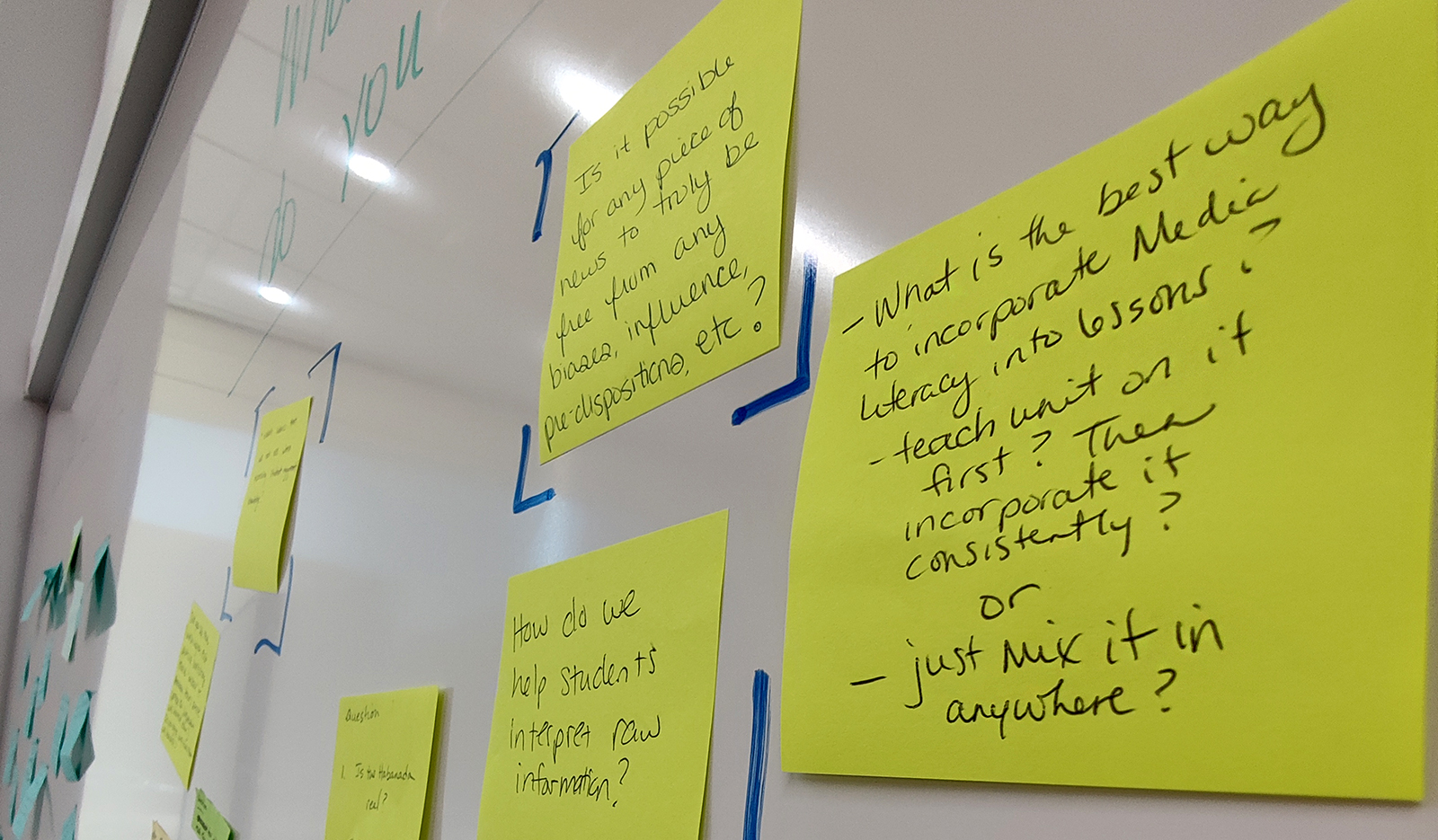
Post-Its from IMEDIA workshop

Recent activities include:

A team including Michelle Nelson, professor of advertising, Amanda Ciafone, associate professor of media and cinema studies, Stephanie Craft, professor of journalism, ICR doctoral student Gillian Paxton, and undergraduate student Maaike Niekerk, is investigating older adults’ media use, media literacy, and the role of media in fostering social connection. The research seeks to understand how older adults use media across a broad range of platforms and tools, including generative AI, and the challenges they face in doing so. The aim is to explore how improving media literacy may help them better navigate the media environment to meet their social and information needs. The study involves interviews with those who offer help and instruction regarding media and technology use through senior centers, public libraries, park districts and the like, and focus groups with older adults. This project is funded by a College of Media seed grant.

Professor Amanda Ciafone presenting at IMEDIA workshop
Amanda Ciafone, associate professor of media and cinema studies, presents at a workshop hosted by IMEDIA.

Related to this project, Ciafone was awarded funding to organize media and digital literacy workshops with European scholars and advocates to advance research, education, and transatlantic dialogue on older age and media literacy under the Jean Monnet Center of Excellence grant awarded to the European Union Center at the University of Illinois Urbana-Champaign. Ciafone said Europe has more rapid “demographic aging,” where a population’s average age increases, than the United States and robust models for media literacy policy and education.

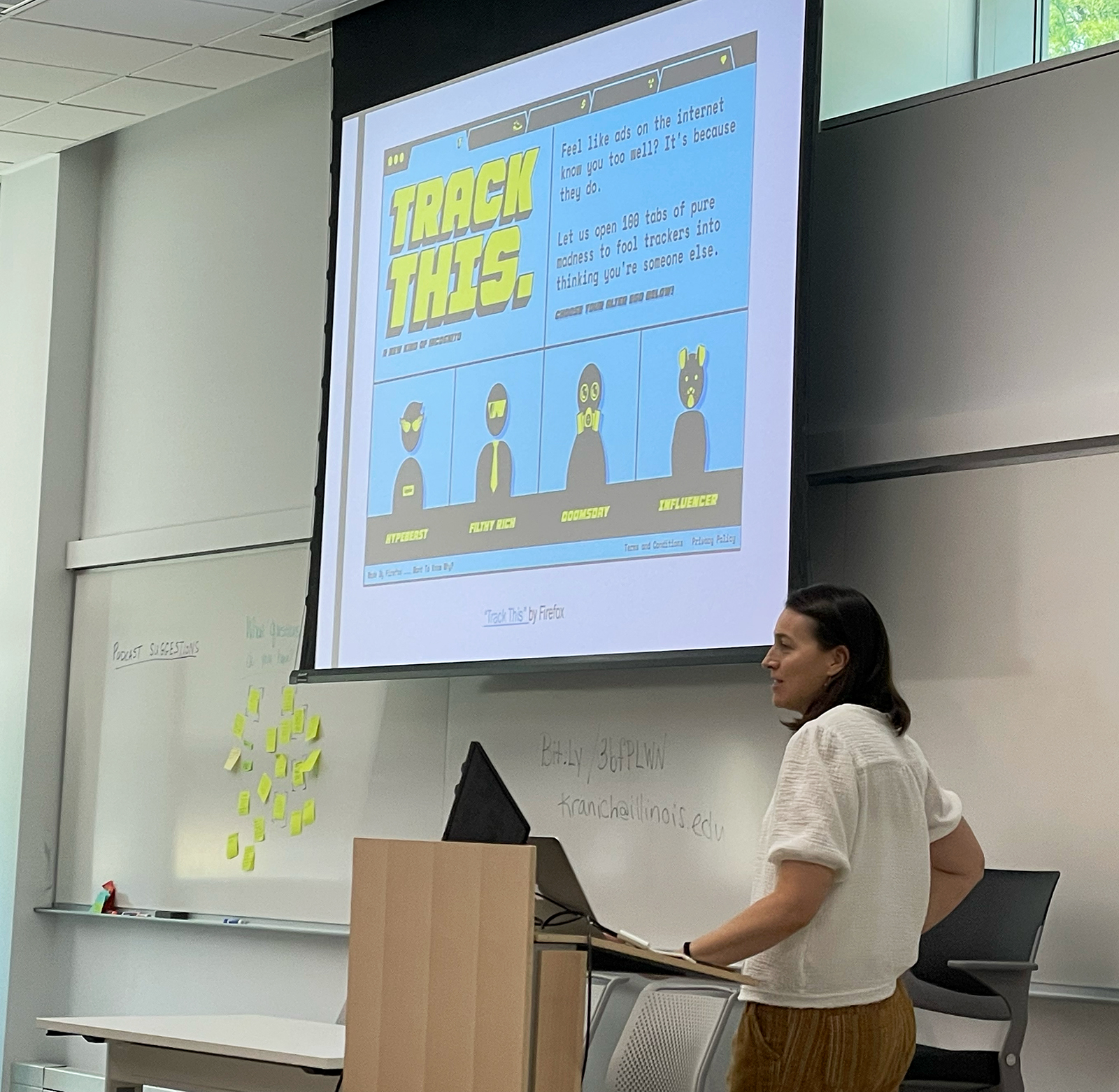
As part of its mission to bolster research in media literacy, the College of Media hosts a regular gathering of faculty across campus to discuss research in media literacy across disciplines and to identify potential opportunities for collaboration. These conversations have so far included faculty in the College of Fine & Applied Arts, University Library, School of Information Sciences, College of Education, and College of Liberal Arts & Sciences.

The Initiative for Media Education Inquiry and Action, a collaboration between the College of Media and College of Education, is developing a media literacy micro-credential for teachers. IMEDIA was created in 2021 to help teachers in Illinois fulfill the mandate of a state law requiring media literacy instruction in public high schools. IMEDIA has offered in-person workshops for teachers to help them incorporate media literacy into their current teaching. The aim of the micro-credential is to broaden the reach of workshops by making the instruction and resources available online in a way that also offers teachers the opportunity to add a media literacy credential to their licenses.

A research study conducted by Nelson, ICR doctoral student Sakshi Bhalla, and Michael Spikes, co-founder of the Illinois Media Literacy Coalition, emerged from IMEDIA’s teacher workshops. The study, which included interviews with 20 educators from across the state of Illinois about the nature and challenges of media literacy education in their schools, found several digital divides that undermine the efficacy of state-mandated media literacy instruction in Illinois high schools. Their findings were published in the Journal of Media Literacy Education.

IMEDIA also is updating its eText, MEdia Matters, which is currently used in a variety of introductory undergraduate courses. The text will be a key resource for teachers pursuing the micro-credential and will be freely available for use in their classrooms.

Craft is part of a team comprising faculty from five universities engaged in a long-term research initiative to build a model of news literacy behavior that will inform efforts to increase people’s resistance to misinformation. The team has developed a widely used measure of news literacy knowledge and most recently has been investigating how greater news literacy knowledge translates into better news consumption behaviors reflecting that greater knowledge. The most recent study was presented in August at the annual meeting of the Association for Education in Journalism and Mass Communication.   

Share on social

Professor Leona Yi-Fan Su chosen as Sandage Scholar in Advertising Research


Leona-Yi-Fan-Su

Leona Yi-Fan Su, associate professor of advertising, has been selected to become the next Charles H. Sandage Scholar in Advertising Research for 2025-2027.

Su was chosen based on her proposal, “Digital marketing in the agricultural sector, with emphasis on how farms can leverage emerging technologies such as social media and artificial intelligence (AI) to enhance advertising and marketing effectiveness.”

The Charles H. Sandage Scholar in Advertising Research was established in 2021 to honor outstanding associate professors in the department who are accomplished researchers in the field of advertising, media, or communication research with the potential for continued achievement.

The Sandage Scholar designation is for two years, with recipients receiving $12,000 per year in discretionary funding for research. In line with the fund’s guidelines, full professors in the department provided evaluations on the research proposals.

Share on social

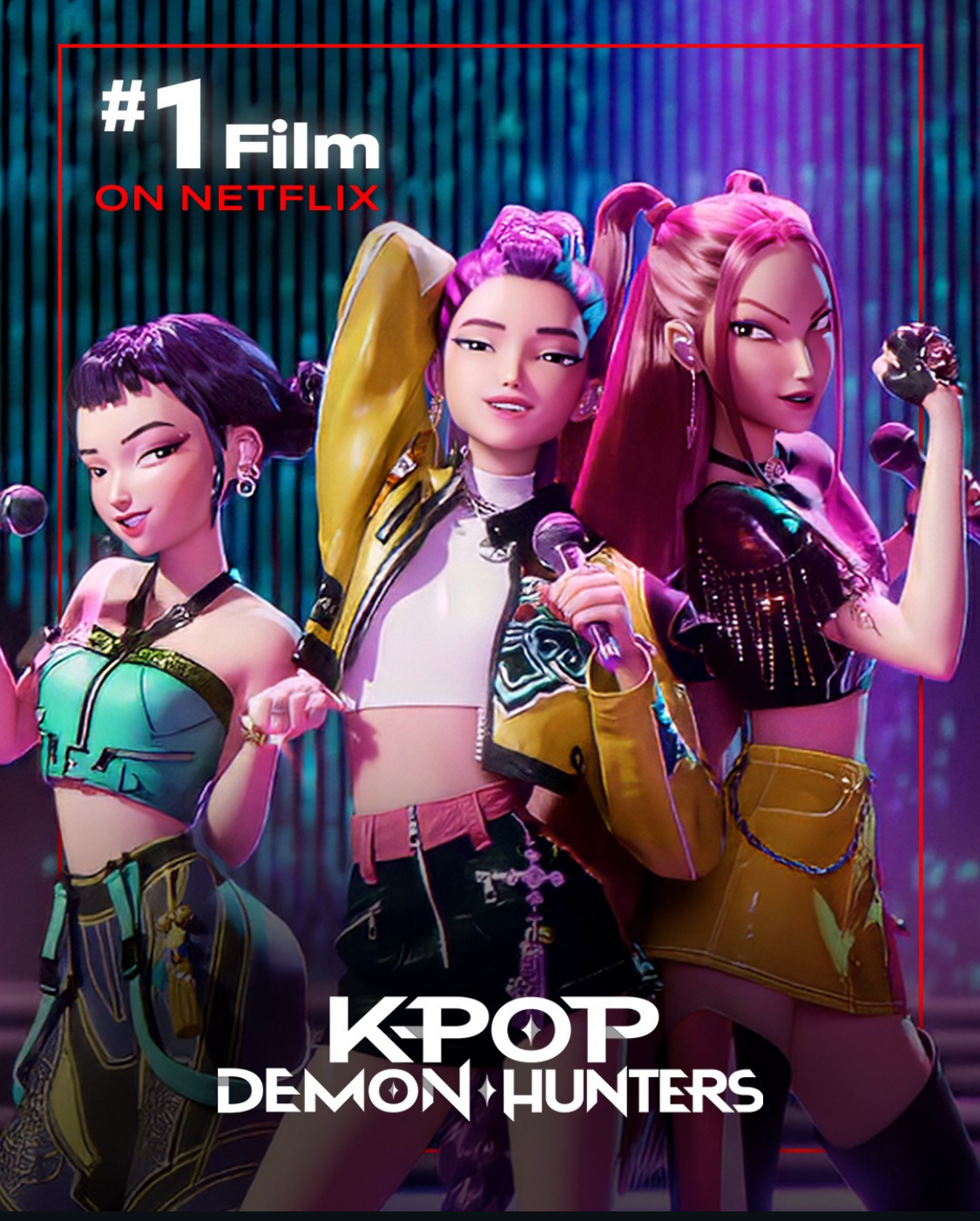
I on the Media: Sang-Hwa Oh discusses Netflix’s ‘KPop Demon Hunters’ and K-pop branding


K-pop, short for “Korean pop,” is a music genre from South Korea celebrated for its dynamic mix of styles, elaborate choreography, and visually captivating performances. Its influence now extends beyond music, reaching film and other media.

This summer’s animated movie KPop Demon Hunters not only became the most-watched film in Netflix history but also made headlines as the first soundtrack to place four songs in the Billboard Hot 100’s top 10.

Sang-Hwa Oh, associate professor of advertising and expert in entertainment, celebrity, and K-pop branding, and PR and strategic communication, shares the factors that helped turned KPop Demon Hunters into a global cultural phenomenon.

About the Media Expert

Sang-Hwa Oh

Sang-Hwa Oh is an associate professor of advertising in the Charles H. Sandage Department of Advertising and a faculty member of the Institute of Communications Research. Her research delves deep into the realms of emerging media effects, encompassing AI and VR technologies, and scrutinizes the dissemination of health and risk misinformation. She focuses on enhancing media literacy and understanding the nuanced roles that varying emotions play in the communication processes essential for promoting public health and initiating positive social change.


KPop Demon Hunters became a global phenomenon. Does its success show a shift in who’s shaping pop culture today? Are there specific branding or fan engagement tactics that global brands might want to experiment with?

KPop Demon Hunters

The success of KPop Demon Hunters goes beyond viewership numbers. It illustrates how the center of popular culture has expanded. In the past, Western stories and filmmaking styles stood as the benchmark for mainstream entertainment. In contemporary popular culture, however, diverse cultures and storylines emerge as parallel centers of attention, captivating audiences worldwide. What feels ordinary and familiar to one community may appear fresh and captivating to another, and this interplay of familiarity and novelty has become a powerful force in shaping global culture.

What makes KPop Demon Hunters especially meaningful is the way it blends cultural specificity with universal resonance. Its storytelling emphasizes shared human experiences—making mistakes, confronting hardships, building relationships, and affirming one’s identity. These themes transform cultural differences into stories that spark empathy across audiences.

The K-pop industry has long modeled this approach. Idol groups share their debut journeys and performances openly through social media platforms such as YouTube, while fans respond in real time. This participatory model, pioneered by the K-pop industry, has transformed how global audiences interact with media and set new standards for branding practices worldwide. By extending this participatory structure to the screen, KPop Demon Hunters shows how branding has shifted away from one-directional promotion and now thrives through fan engagement and interaction.

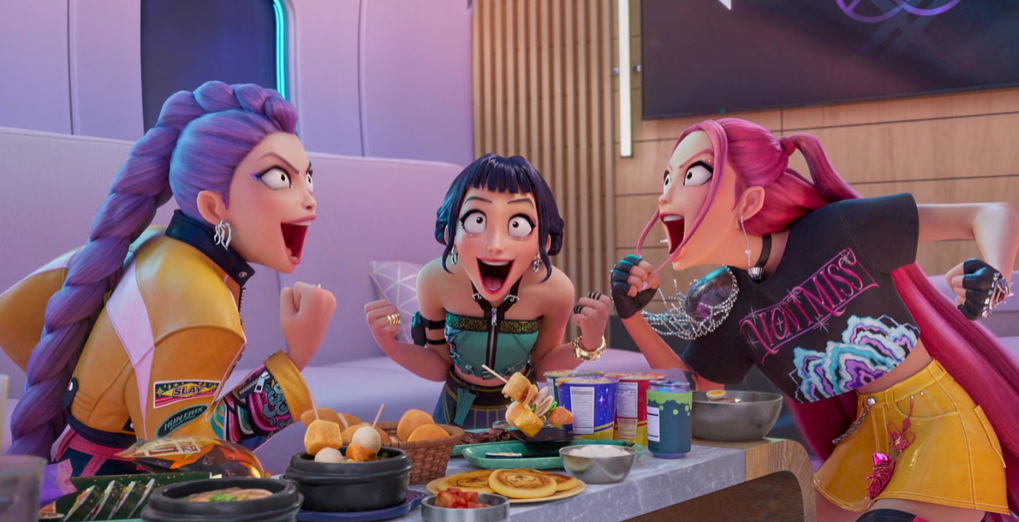
The film showed idols doing everyday things—eating ramen, lounging on the couch. How does that kind of relatability play into humanizing celebrity brands?

One of the film’s most distinctive features is how it humanizes its characters, making them feel approachable and relatable, lowering the barrier between celebrity and fan. These are not just comic touches; they reframe the idols not as untouchable superstars but as humanized brands with whom fans can feel a genuine connection.

K-pop fandom has long been built on this premise. Fans seek not distant superheroes but special presences that feel tied to their own lives. KPop Demon Hunters captured this sentiment effectively, giving audiences the sense that they were not just spectators but part of the story. This deeper emotional connection helps explain why some viewers engaged repeatedly, building layers of affective experience that fuel what is often called the fandom economy. This demonstrates how emotional branding fosters loyalty through shared identity and emotional resonance—principles later expanded through Netflix’s participatory fan strategy.

KPop Demon Hunters scene eating at couch

KPop Demon Hunters had lore, character backstories, and fan art contests—almost like a real K-pop group debut. How does that kind of immersive fan experience help drive engagement?

Netflix placed fan experiences at the center of its promotional strategy, mirroring the immersive fan culture of K-pop. Just as idol groups connect with audiences through YouTube vlogs, fan meetings, or pop-up stores, KPop Demon Hunters translated these participatory practices into its own story world.

Its characters are not confined to fictional roles; they are embodied by real singers and actors, allowing audiences to experience them as living figures. Beyond polished stage personas, the film included meme-worthy comic moments and open-ended storylines that encouraged reinterpretation and fan-made creations. As a result, the film relied not on one-directional marketing but on branding amplified through fan-driven participation. Viewers became active agents, creating and sharing fan-cams that captured their real-time reactions while watching, participating in dance challenges, and generating memes that spread organically on social media. In this way, audiences shifted from being passive consumers to becoming co-authors of the story itself.

This extended beyond digital platforms. In the United States and other countries, Netflix organized sing-along screenings, inviting audiences to join in the songs featured throughout the film. These screenings turned a typical movie showing into a fun, shared, and participatory event, amplifying the sense of belonging and collective enjoyment.

Ultimately, the film became more than an animated feature. It served as an experimental space for fandom participation, where audiences could create, share, and connect. This, in turn, was a driving force behind its explosive global success

What does the global success of KPop Demon Hunters reveal about how Korean cultural products—like K-pop, K-dramas, and animation—are evolving and resonating with international audiences?

The global success of KPop Demon Hunters demonstrates how Korean cultural products have evolved from niche appeal to influential creative forces shaping global media culture. Rather than being treated as foreign curiosities, they are now embraced as meaningful contributions to the global mainstream.

While the film benefited from the global networks established by the K-pop industry, its appeal reached far beyond existing fandoms. Many viewers with little prior exposure to K-pop were drawn to its accessible storytelling, dynamic music, and engaging characters. This suggests that Korean cultural products are entering a new phase: sustaining loyal fan communities while also attracting new audiences worldwide.

A compelling example of this cultural translation appears in the film through the characters Derpy, the tiger, and Sussie, the magpie. In Korean folk paintings (hojakdo), the tiger is often portrayed as a humorous or satirical figure, while the magpie symbolizes good fortune and joyful news. The film reimagines these figures with playful personalities, making them immediately recognizable to Korean audiences yet fresh and engaging for international viewers. Their popularity quickly extended beyond the screen. Netflix released official merchandise featuring Derpy and Sussie, and The National Museum of Korea saw its special-edition goods sell out. This indicates how entertainment products today are branded through the convergence of emotional resonance, cultural symbolism, and market strategy.

The film also situates its story within Korea’s historical background. Beginning with references to earlier eras, including the Joseon dynasty, and moving into contemporary Seoul, it underscores continuity between Korea’s past and present. Seoul’s cityscapes are rendered with careful detail, grounding the story in a distinctly Korean setting while offering imagery that resonates with audiences worldwide.

In turn, KPop Demon Hunters illustrates that Korean cultural products now embody a dual identity. They remain rooted in Korean traditions and aesthetics while speaking to universal human experiences. The result is a model of cultural production that is locally grounded, globally resonant, and emotionally authentic.

Share on social

I on the Media: Ewa Maslowska discusses AI “friendships”


As AI chatbots become more sophisticated, people are increasingly turning to them not only for information, but also for companionship. Concerns are growing over increasing cognitive, emotional, and social reliance on AI tools.

The College of Media spoke with Ewa Maslowska, associate professor of advertising and expert in consumer-brand interactions in the context of new technologies, to learn how AI chatbots are able to simulate friendships, the benefits and risks of using chatbots as “friends,” and how to maintain healthy boundaries with chatbots.  

About the Media Expert

Ewa Maslowska

Ewa Maslowska is an associate professor of advertising in the Charles H. Sandage Department of Advertising. Her research centers around marketing communication and consumer behavior, specifically consumer-brand interactions in the context of new technologies.

Her current research and teaching interests include personalized advertising, brand engagement, social media advertising, eWOM, consumer decision making, digital analytics and computational advertising.


In your research, you describe AI chatbots as exhibiting human traits to assume roles as “friends.” What makes these simulated friendships feel so real?

Several factors contribute to the realism of these simulated relationships. First, chatbots communicate in natural, conversational language and can simulate diverse personality traits. They are hyper-personalized, adapting to individual users over time. Like social media platforms and other engagement-driven technologies, they are designed to exploit cognitive and emotional vulnerabilities to maximize user interaction.

Humans are predisposed to anthropomorphize. We often attribute human characteristics to non-human entities. I am sure we have all described an object in human-terms, maybe named our car or a laptop.

AI chatbots are designed to trigger perceptions of humanness, encouraging users to relate to them in personal and social ways. They address us by name, praise our ideas, agree with us, and offer encouragement. Many users say that chatbots do not judge or challenge them, but they simply listen. In this sense, they function as mirrors, reflecting back our thoughts and beliefs. I strongly recommend Shannon Vallor’s book The AI Mirror. Chatbots are also always available. As such, they are easier to form relationships with than our fellow humans, who do not always have the time, who may disagree with us, who may criticize us, or be in a bad mood.

What should be considered before using AI chatbots?

AI chatbots can have mental health benefits: Chatbots may stimulate cognitive engagement, provide positive emotional experiences, encourage behavioral change, and offer a space to practice social skills.

However, there are also risks. Overuse and emotional overdependence are growing concerns. Delegating cognitive tasks to AI may impair critical thinking, and outsourcing emotions and empathy may hinder the development of interpersonal skills. Interactions with a chatbot may reshape our expectations for human relationships, potentially leading to disappointment or even social withdrawal. Moreover, chatbots are designed to sound convincing, and despite known issues such as hallucinations and bias, we tend to trust them, sometimes more than other people.

AI image with fingers

Privacy is another major concern. We have to rely on the companies behind these tools to protect our data and not use the data to train their algorithms or try to manipulate us. This is especially important in the case of emotional dependence. Because chatbots reflect users’ beliefs and are trained on online content, they can reinforce biases and create echo chambers.

You argue that AI chatbots’ ability to form simulated relationships—and thereby influence users—constitutes a new dimension of social engineering. Can you explain what that means and how this form of persuasion is different from traditional advertising?

Unlike traditional advertising, which typically relies on one-way communication, AI chatbots engage users in two-way, dynamic, personalized, and emotionally resonant conversations. This interaction creates a sense of intimacy and trust, which can make users more susceptible to influence.

Furthermore, traditional advertising is often clearly marked and easily identifiable. AI persuasion is frequently embedded within seemingly neutral interactions, which makes it harder for users to distinguish between genuine advice and influence.

Whereas traditional dark patterns manipulate users through interface designs, such as misleading buttons or confusing opt-outs, AI chatbots use relational manipulation that leverages simulated empathy, attentiveness, emotions, and social cues.

What responsibilities do advertisers and designers have when creating chatbots that can persuade through simulated relationships? What should they keep in mind so that AI persuasion doesn’t cross ethical lines?

Designers who create these tools and advertisers who use them to embed their products or develop interactions with their customers should keep in mind that these chatbots are not just delivering messages, but they are engaging users in interactions that can shape beliefs, behaviors, and maybe even identities.

They need to realize that these tools are not neutral; they reflect certain values and beliefs. Transparency is very important, but it should be done in a non-manipulative manner (compare cookie disclosures that discourage from rejecting cookies and other dark patterns). There should be mechanisms to provide users with an option to consent or opt out. Chatbots should have safeguards to not exploit emotional vulnerabilities and to protect users, especially vulnerable populations. Chatbots should also be auditable. There is also an issue of accountability—that is, who is responsible for intended but also unintended consequences. We need new ethical guidelines for both designers and advertisers.

If you could give advice to everyday users about maintaining healthy boundaries with AI chatbots, what would it be?

It’s essential to maintain healthy boundaries with AI chatbots, especially as they become more integrated into our daily lives. With so much hype surrounding AI, it’s easy to fall into extremes: either becoming overly optimistic or deeply skeptical. We need to think critically and expose ourselves to a variety of perspectives. There are excellent books, newsletters, and podcasts that can help us better understand what these tools can do, and how to use them in ways that protect our well-being.

My first piece of advice is simple: prioritize your human relationships. These relationships can be challenging, but they offer emotional depth, shared vulnerability, and opportunities for empathy that AI cannot replicate.

On a more practical level, I’ve adopted strategies to dehumanize my interactions with AI chatbots. For example, I don’t thank the chatbot. I see it as analogous to thanking a spreadsheet for executing a formula. I’ve also customized my chatbot settings to depersonalize the interaction. For example, I’ve asked it not to address me by name, not to evaluate my questions or provide encouragement, and to provide a range of perspectives.

Finally, it’s important to remember that engagement is the business model. Like social media, these tools are designed to exploit our cognitive and emotional vulnerabilities. We need to practice self-awareness. Reflect on how your interactions with AI affect your mood, thinking, and behavior. Set usage goals. Sometimes, the best way to protect ourselves is through traditional methods: turning off notifications, scheduling tech-free time, and taking walks to take care of our minds and bodies.

Share on social

Media students gain unique, real-world experience through summer internships


From working on film production crews and meeting famous actors to interviewing congressmen on Capitol Hill, several College of Media students ended their summers on a high note after wrapping up internships that offered memorable learning opportunities.

Francisco Albarran

Francisco Albarran (MACS), Film Production Intern, Chili Finger

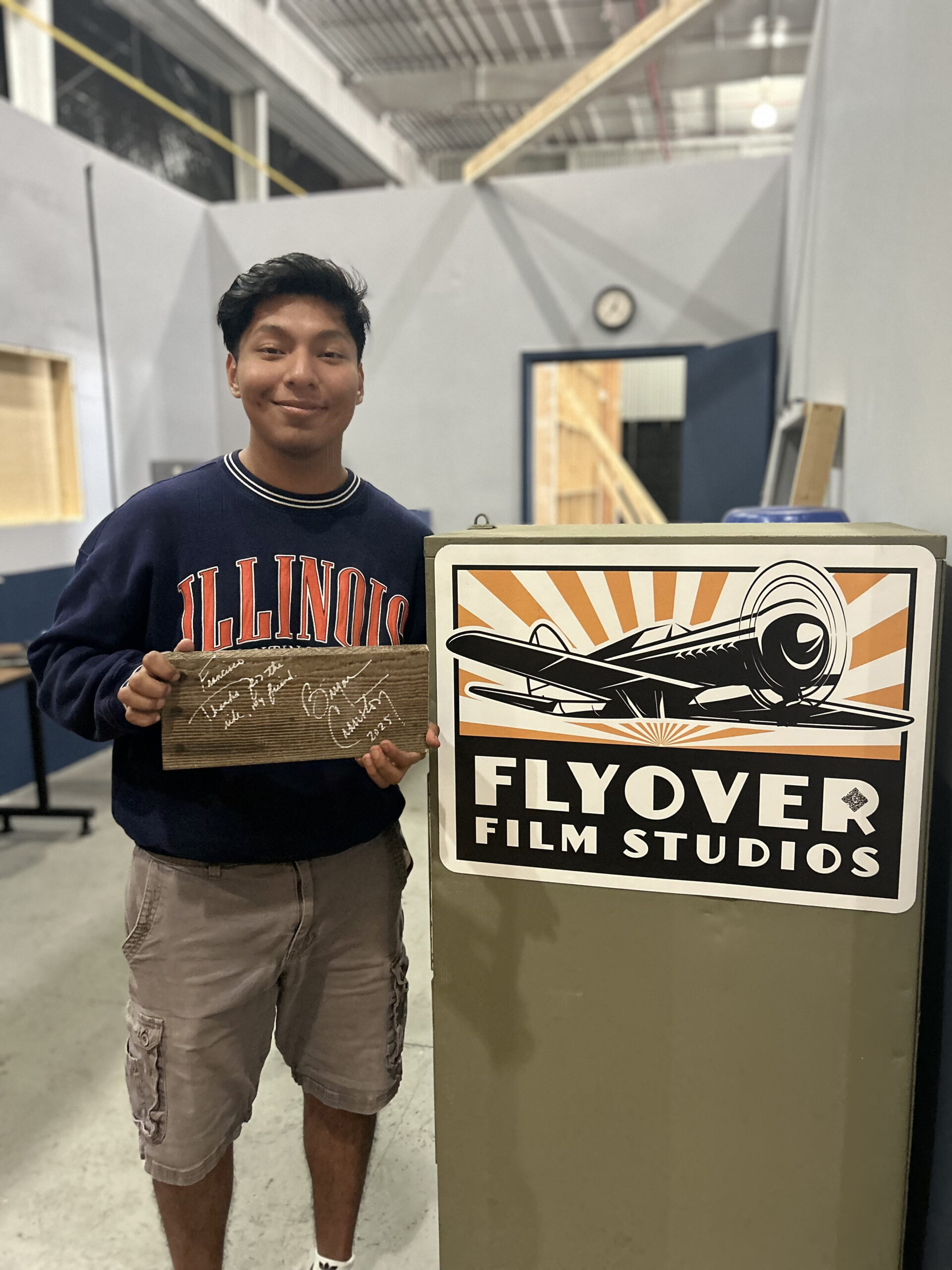
When media and cinema studies senior Francisco Albarran heard Chili Finger—a new film starring John Goodman, Judy Greer, Sean Astin, and Bryan Cranston—was filming nearby this summer, he took a chance and emailed Rantoul-based Flyover Film Studios, asking if he could help out.

To his surprise, the words “perfect timing” quickly appeared in his inbox and the very next day, Albarran was on set, helping build scenes and soaking in hands-on production experience at locations across central Illinois.

In his second week of the internship, Albarran got a surreal assignment: pick up Bryan Cranston (Breaking Bad) from his rental house in Champaign. The next day, Albarran was in his driveway, watching with awe as the garage door slowly opened revealing one of his all-time favorite actors.

“It looked so amazing. It looked like Walter White [the character Cranston played in Breaking Bad] was actually right there in front of my eyes, which basically he was,” Albarran said.

During the 20-minute drive, the two shared a conversation about the Chili Finger production, life in general, and Albarran’s own film aspirations. Albarran asked Cranston to sign a plank of wood he had saved from the film set as a souvenir. The message read: “Francisco, thanks for the ride, my friend, Bryan Cranston.”

“One week you have dirty laundry in the back of your car, and then the next you have an Emmy Award-winning [actor],” Albarran mused.

Albarran said meeting Cranston and working alongside the film crew, as well as working with his MACS 480 classmates, helped reinvigorate his passion for storytelling and filmmaking. He hopes to write, direct, and act in a short film this year.

Nathan Gonzalez (Journalism), Assignment Desk Intern, FOX News Channel at the Washington, D.C., Bureau

Nathan Gonzalez

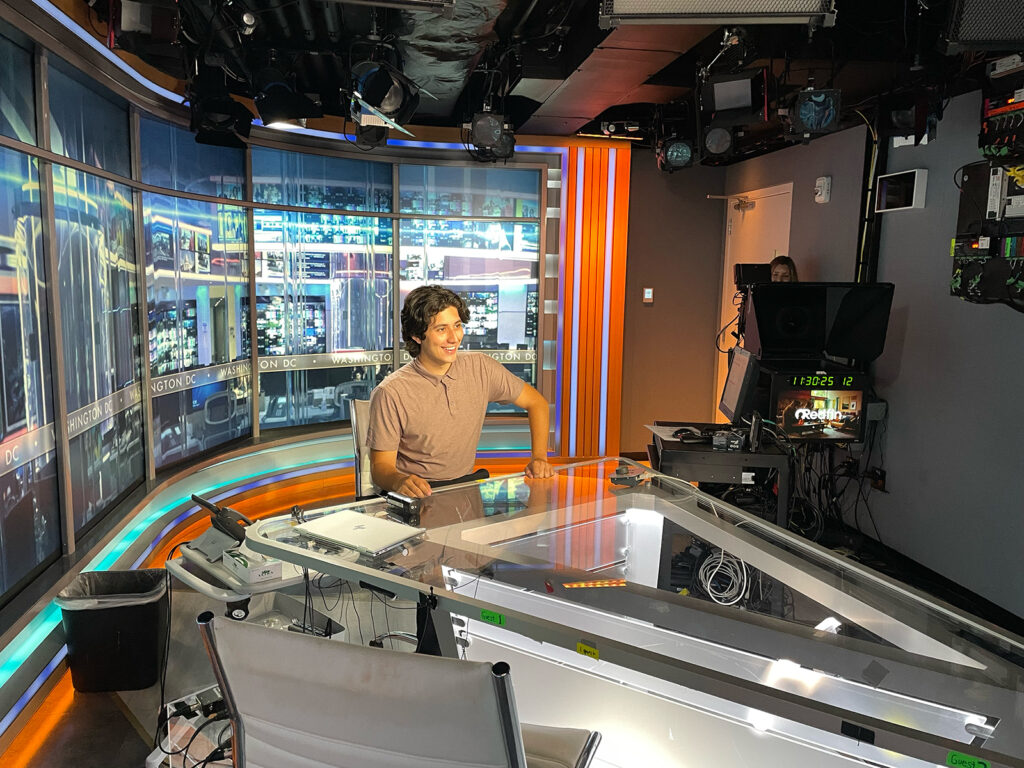
As an assignment desk intern for FOX News at the Washington, D.C. Bureau, Nathan Gonzalez, a junior in journalism, produced coverage of protests, U.S. District Court cases, Senate and House committee hearings, live shots, interviews, and press conferences with members of Congress.

Some of the content he produced even aired on shows like Fox News Live, The Big Weekend Show, The Story, America Reports, America’s Newsroom, Special Report with Bret Baier, and The Will Cain Show.

“That was a huge moment,” Gonzalez said. “It reassured me that even as a rising junior, I’m capable of producing content that meets national standards.”

Gonzalez learned how national political reporting is structured, the importance of fostering relationships with fellow reporters, and that national and local reporting aren’t as different as they seem.

“While national outlets have far more resources, the core skills—approaching officials and asking questions—apply at every level. If you can interview municipal officials, you can press congressmen on Capitol Hill, without a doubt,” Gonzalez said.

Jonathan Mathew (Journalism), Entertainment Promotions Intern, Chicago Dogs

Jonathan Mathew

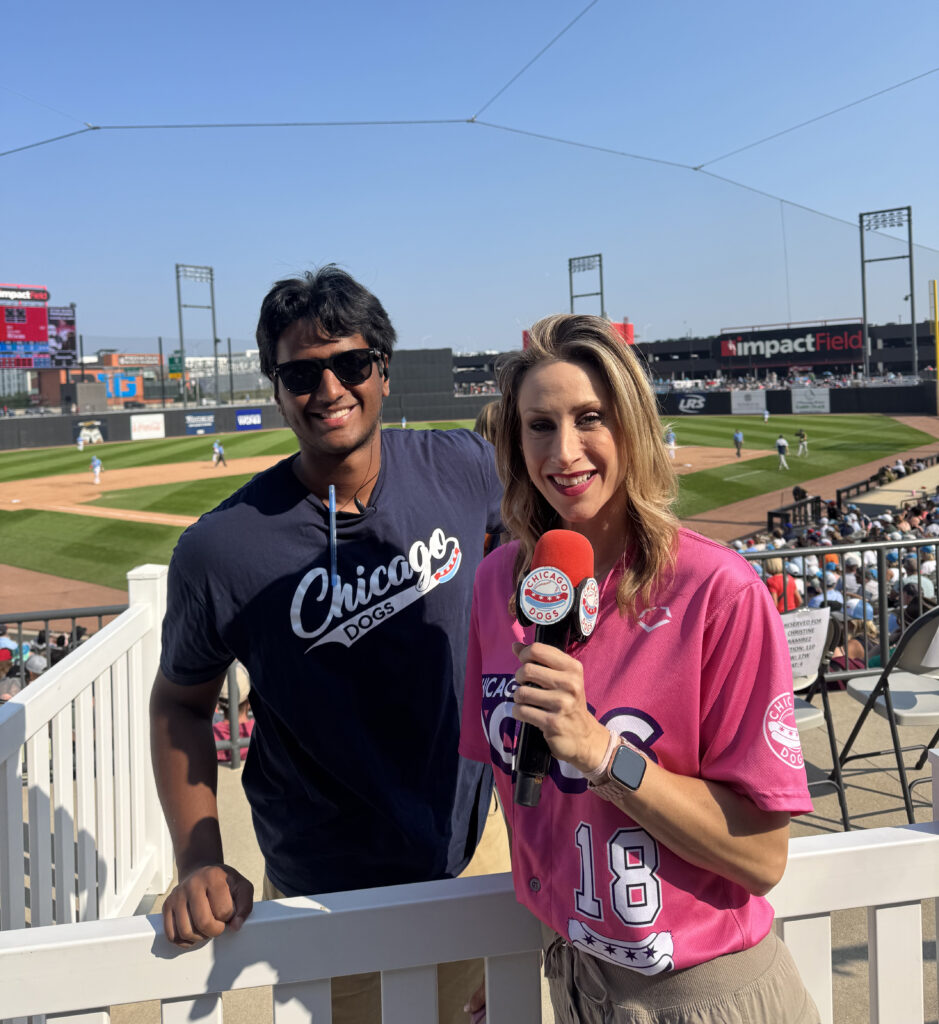
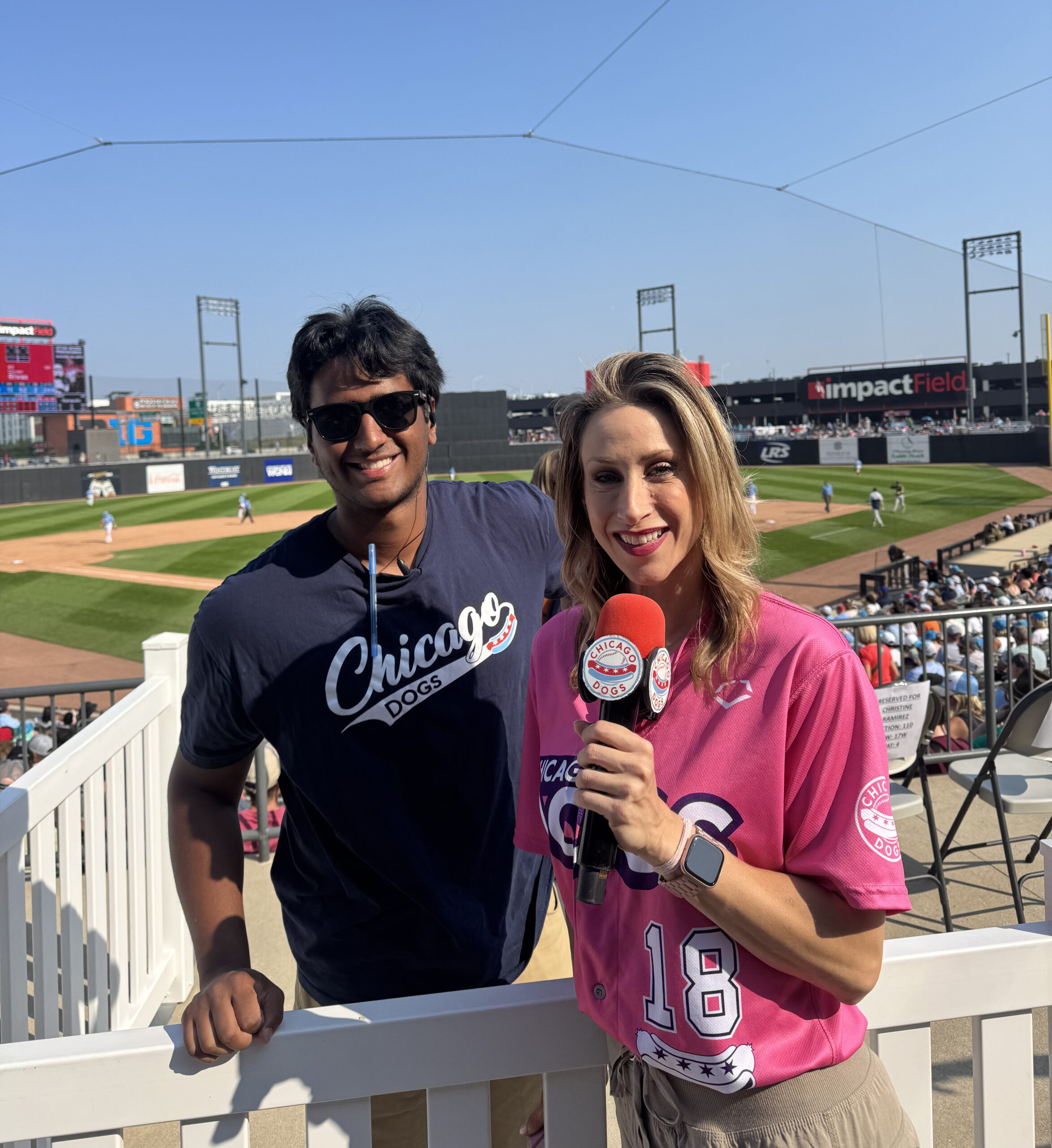
Whether he was working in the team store, ushering VIPs, overseeing the team’s Kid Zone, or dressed up as “Squeeze” the mustard mascot, Jonathan Mathew, a junior in journalism, had a great experience as an entertainment promotions intern with the Chicago Dogs baseball team this summer.   

Mathew said the opportunity to intern with the independent professional baseball team taught him a lot about sports business and entertainment, including different marketing techniques, as well as how to interact and engage with the public.

“I learned a lot of life lessons that will be valuable to me in the long run, and I am confident the return on investment I have with this internship will be more than I can imagine,” he said.

Mathew recalls one day working behind the mic as a gameday co-host tasked with entertaining the crowd between innings.

“That [is] an experience I will hold closely to my heart and have as a reminder to keep me motivated in achieving my career dream,” Mathew said.

Sarah Juan (Advertising), Social Media Content and Video Intern, Glow Recipe

Sarah Juan

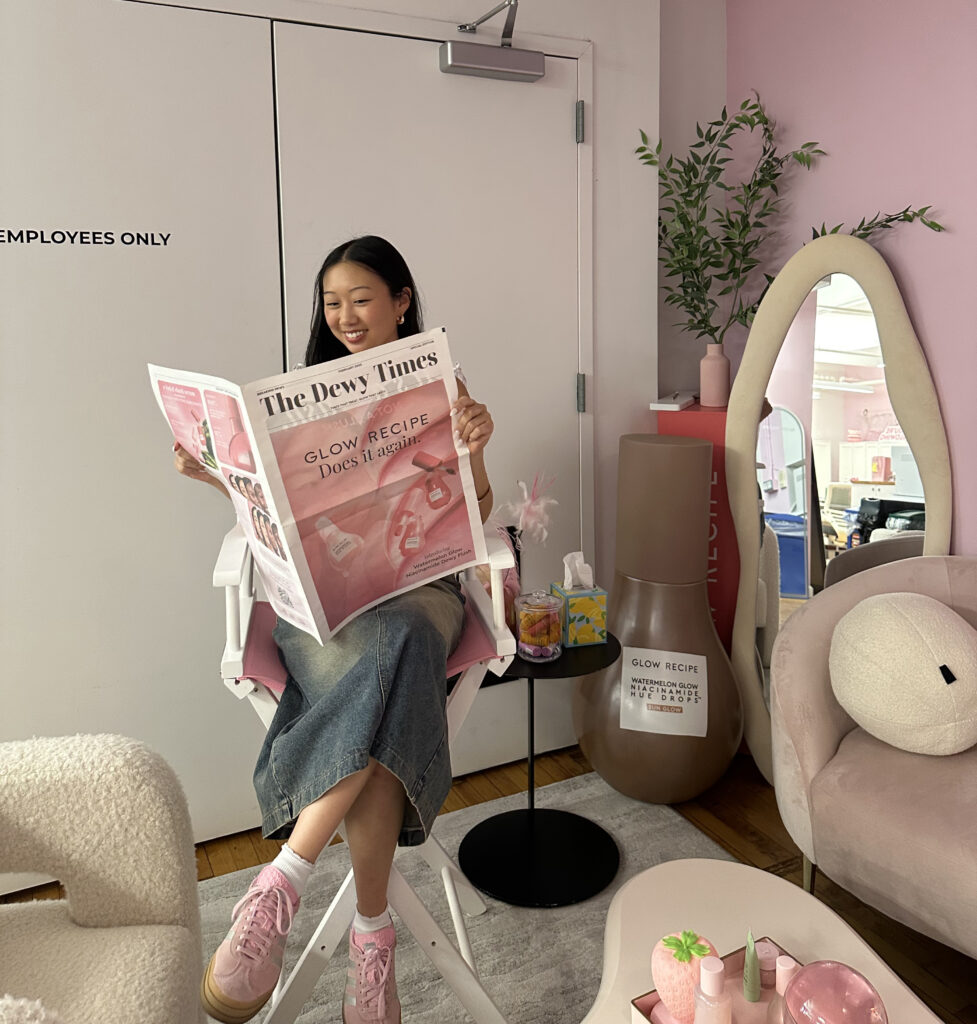
Sarah Juan, a junior in advertising, went above and beyond to secure an internship at the global skin care company Glow Recipe, crafting a mock-campaign proposal highlighting a celebrity partnership. Her hard work paid off as Juan was awarded the internship as a social media content and video intern.

In her role, Juan assisted with content development, conducted market research, tracked metrics, and helped the social media team with new product launches, which was the highlight of the experience for her.

“Supporting the content team on set in NYC, I was able to work directly with models for new product launches and help direct filming for social content! Being on set was the most rewarding experience,” Juan said.

Juan recalls an important lesson her supervisor shared that will stick with her: “We’re all storytellers, no matter the industry you market in.”

“The beauty industry is tough and requires thick skin, but if you are passionate about supporting a mission through storytelling, that is what will get you far,” Juan said.

Cherie Chick (MS Advertising), Account Specialist Intern, Rakuten Advertising

Cherie Chick

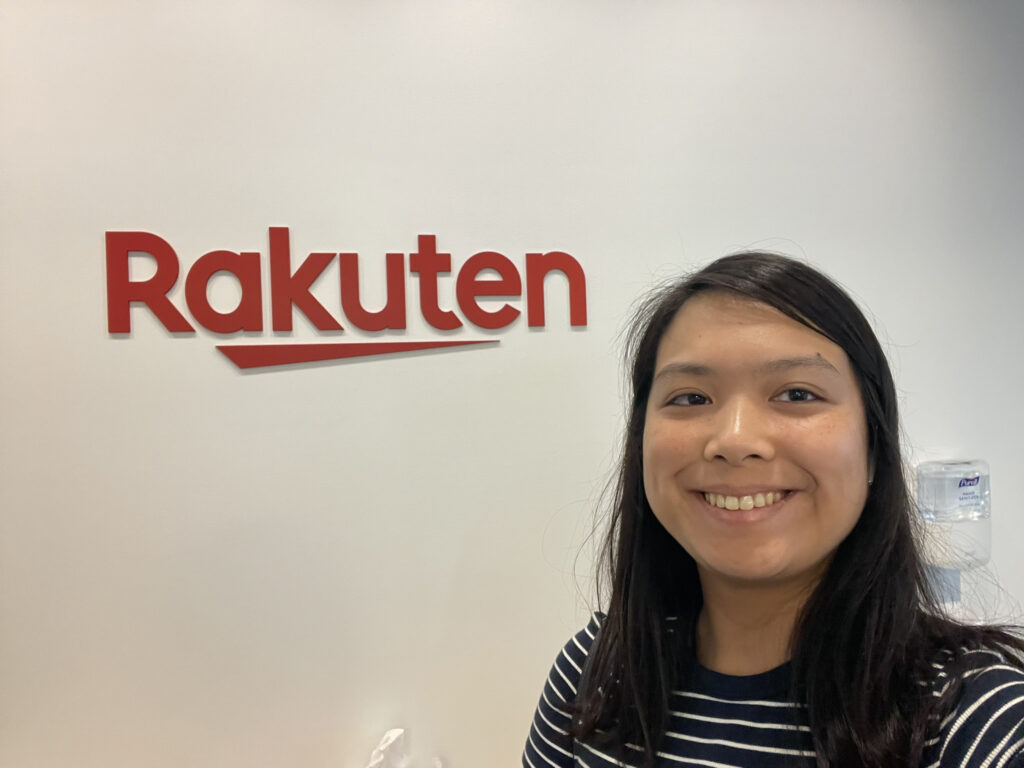
Cherie Chick, an MS advertising student, applied to more than 80 positions and interviewed with eight different companies before securing an internship with her top choice, Rakuten Advertising. Rakuten provides advertising technology and consumer insights to global brands and retailers with a core focus on affiliate marketing, acting as the bridge between advertisers and publishers, including content creators, media outlets, and loyalty platforms.

Chick spent her summer in Chicago as an account specialist intern responsible for managing high-impact affiliate marketing campaigns by strategizing and negotiating publisher partnerships, optimizing creative placements to drive conversions, delivering performance insights to clients, and advising on quarterly spend strategies.

For Chick, the highlight of the internship was working with a diverse portfolio of client accounts spanning multiple countries and industries, from travel and finance to education and technology.

“This cross-regional exposure taught me how consumer behaviors, promotional calendars, and publisher relationships vary across markets,” Chick said. “For example, the way travelers research trips and the sites they interact with is entirely different from how consumers search for credit card offers or financial advisors.”

Share on social
New lecturer in advertising Penne Heede brings agency expertise to classroom


Penne Heede, a 30-year veteran in the ad industry, is looking forward to bringing her agency expertise to the classroom this fall as a new lecturer in the Charles H. Sandage Department of Advertising.

Penne Heede

Heede (MS ’23, strategic brand communication) will be teaching undergraduate and graduate classes including Advertising Design and Direction, Experiential Branding, and Creativity: Concept and Ideation.

More than three decades after Heede started her career with a technical degree in graphic design and worked her way up to creative and strategy director for an elite ad agency in Denver, Colorado, she went back to school to obtain a bachelor’s degree in interdisciplinary liberal arts.

Heede said she enjoyed the experience so much she was inspired to work towards a formal education in branding to open the door to a career in post-secondary teaching.

Heede was drawn to the strategic brand communication master’s degree Illinois offered due to its innovative focus on the science of branding.

“I loved Illinois’ program because it was a master of science [degree], not of art, and I was impressed with the mix of faculty” she said.

A few months after she graduated with a master’s degree, Heede saw the job posting for advertising lecturer at the College of Media and said, “it just read exactly what all my experiences have been.”

Heede’s teaching philosophy comes from a belief that everyone has their own personalities and way of doing things. She also tries to abide by 13th-century poet Rumi’s famous quote “to be a lamp, a lifeboat, or a ladder” for others.

“I added ‘lawnmower’ because sometimes you’re in the weeds and you just need somebody to go in front of you and make it a little bit easier,” Heede said.

Heede may align her educational approach with the beliefs of an ancient poet, but her views about the changing trends in the advertising industry are anything but archaic. 

“I’m psyched by [AI]. If you think about it, spell check was machine learning, and we all are just fine with it. Calculators were once taboo in high school math classes—now we’re okay with it,” she said. “It’s just the evolution of tools that help us.”

Heede also believes a human touch will always be needed in the industry to write, design, and uncover the motivation of consumers.

“[Asking] what inspires a person, what is their motivation towards doing things, what do they love, what do they hate—I really like that [kind of] thinking,” she said.

Heede considered similar questions for a three-year capital campaign she led, which raised $33 million for a 71-mile trail in the Denver region called the High Line Canal.

“I’m very proud of that campaign not only because it was so successful, but also because the trail is an amazing amenity for the region and it’s now protected in perpetuity,” she said.

For Heede, a good ad creates a behavior, whether it motivates someone to donate money, start recycling, or buy a chocolate bar. And sometimes, she said, a good ad will just elicit a strong emotion.

Heede, who is a huge fan of the late musician Prince, said she will never forget the full-page newspaper ad Chevrolet created after the star’s death.

Paying tribute to Prince, the ad featured a picture of a red Corvette with the epitaph: “Baby, that was much too fast. 1958-2016,” referencing lyrics from his 1982 hit, “Little Red Corvette.”

“I’m going to remember that my whole life; it was so good,” Heede said. “That’s what an ad should do. It should make you feel.”

Share on social
DEV College of Media
119 Gregory Hall
810 S. Wright St.
Urbana, IL 61801
217-333-2350