Journalism alum Doug Isbell combines passion for science, writing as NASA JPL risk communication coordinator


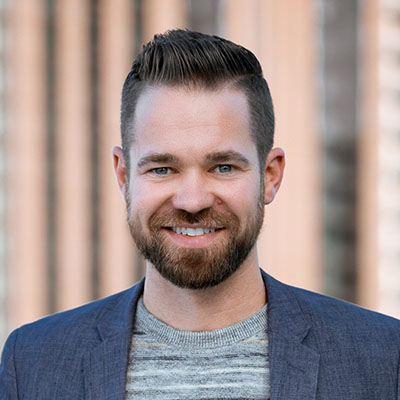
Doug Isbell
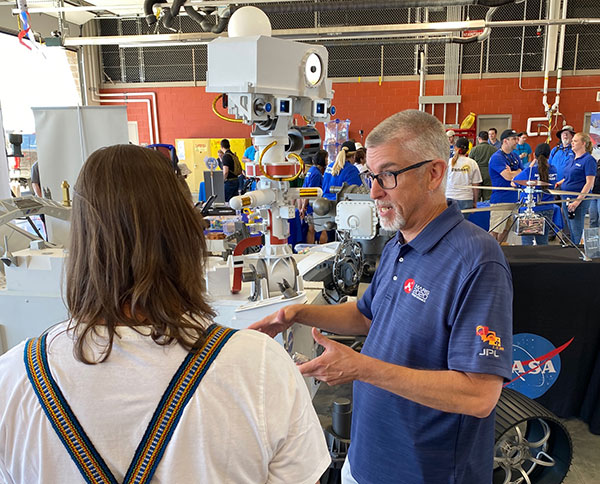
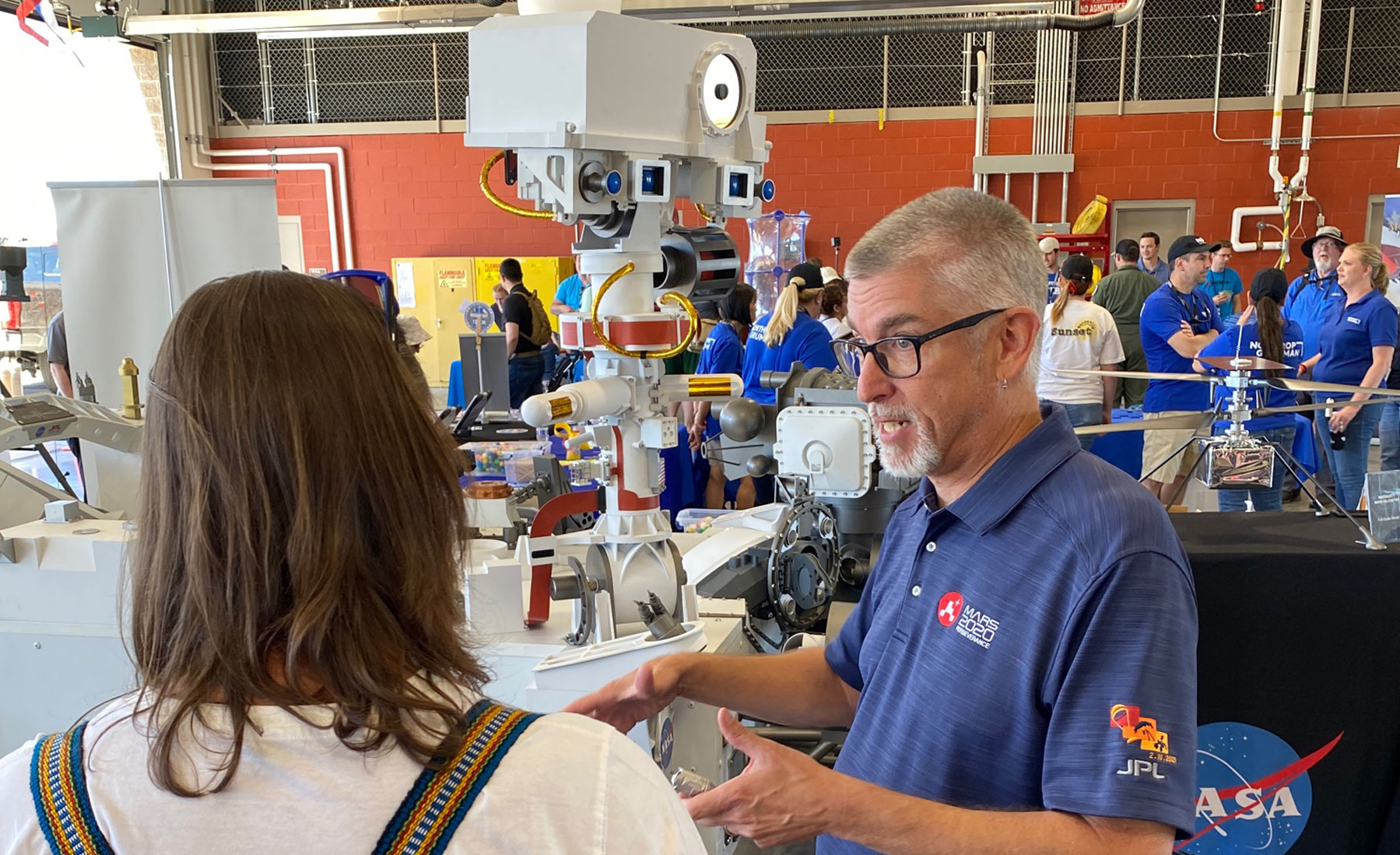
Doug Isbell (BS ’87, Grainger engineering; MS ’88, journalism) looks for opportunities to talk directly with the public whenever possible, such as at this NASA JPL exhibit booth at a popular summer air show at Hill Air Force Base in Utah, near where samples from Mars may one day land on Earth.

After 36 years in aerospace communications, Doug Isbell still thanks those lucky stars he’s always admired for the opportunity to create a successful career that combines his passion for science and his love of writing. 

Isbell’s fascination with space began when he was eight years old, around the time the last few Apollo missions landed on the moon. From then on, Isbell knew he wanted to be involved in space one day.

“Those [missions] made a big impression on me,” said Isbell, who grew up in the suburbs of Chicago.

Isbell (BS ’87, Grainger engineering; MS ’88, journalism) set his sights on becoming an astronautical engineer, but as he worked his way through the program and the upper-level courses, he started to have some doubts.

“I felt a little like I was not going to be an outstanding engineer and I wondered, how can I still be involved in aerospace? And I thought about writing,” he said.

Isbell did finish his bachelor’s degree in aerospace engineering but went on to get a master’s degree in journalism. Moving to Washington, D.C., to seek a start to his career, his first job was working as a writer for a business technology newspaper, Washington Technology, and then a reporter covering NASA for a weekly newspaper, Space News. 

Four years later, he decided to shift from journalism to the communications side and landed a job at NASA headquarters, eventually becoming a public affairs officer for planetary science. 

During that time, he helped with communications surrounding the Mars Pathfinder mission and the launch of the legendary mission of the Cassini spacecraft to Saturn.

“That was in the middle of a sort of renaissance of planetary science,” Isbell said. “[The Mars Pathfinder mission] was a huge global hit and kind of the first mission of the Internet age.” 

Isbell then spent nearly 10 years as a public affairs officer and director of educational outreach for the National Optical Astronomy Observatory in Tucson, Arizona, and the National Solar Observatory when it was in Tucson (now in Boulder, Colorado). 

He also served as the United States single-point-of-contact for the International Year of Astronomy 2009—a global celebration recognizing the first astronomical observation with a telescope by Galileo Galilei more than 400 years ago. 

Since 2010, Isbell has served as the cross-program risk communication coordinator at NASA’s Jet Propulsion Laboratory in Pasadena, California, working on issues related to space nuclear power and sample return, including the most recent two ongoing Mars rover missions, Curiosity and Perseverance. 

Isbell develops communications materials related to “spacecraft that would carry nuclear materials and nuclear power, and then kind of a growing area of interest is something called planetary protection,” he said. 

Planetary protection is the idea of protecting planets from potential biological contamination during a mission so they can be studied in their original state. It also involves protecting Earth’s biosphere when samples are brought back from other planetary bodies. 

“A lot of what we’re working on now is planning for Mars sample return,” he said. “Looking at my career overall, I’ll probably spend almost half of it on Mars missions and leading up to this idea of returning samples, and the value that can be provided by bringing them into Earth-based laboratories.” 

At the Jet Propulsion Laboratory (which is operated for NASA by Caltech), his group focuses on launch approval engineering, which means helping on the front end with aspects of the environmental reviews needed before a project can proceed and, on the back end, sharing public safety information around the launches and landings of missions. 

Whether it’s writing fact sheets about a mission or training spokespeople on how to share information with the public in engaging ways, Isbell said most of his job is behind-the-scenes, preparing for the tough questions and explaining the “why” behind each project.

“A lot of what I do is to try to explain potential hazards and how we’re handling them,” he said. “My job is to frame these things correctly and train people to talk about them effectively, and anticipate what people’s questions might be. It’s a lot of strategy—what might people be concerned about with this mission or this activity, and how can we address those concerns with as much detail as people can absorb.”

It’s been many years since Isbell was a journalism student at Illinois, learning from professors like Bob Reid and Tom Littlewood, but their teachings about investigative reporting and journalism ethics remain useful in his career today. Isbell also credits Michael Lembeck, an associate professor in the University’s Department of Aerospace Engineering, and a graduate student in the department at the time, for helping kickstart his writing career by encouraging a story on a student design project that led to Isbell’s first published story.

Isbell enjoys staying involved with the University, sharing his knowledge with students as a guest panelist for one of the first virtual Media Career Nights in 2020 and consulting with faculty about the structure of the new master’s in journalism track with a focus on science and technology. 

His passion for science doesn’t disappear at the end of a workday. Every couple of months, he hosts a family-friendly “space night” at a nearby brewery, where he brings out a telescope to view the moon and planets with the community. 

Isbell or a colleague talk about recent scientific accomplishments and exciting developments in space. About 30 to 40 people usually show up, filled with excitement and interest about the various topics.  

“I think [space exploration] is inspirational to people. It’s why I have the career that I have, and do what I do,” he said. 

Isbell is still captivated by space and feels grateful his job as a science writer allows him to be immersed in that world every day. 

“It is amazing to be involved in this stuff,” he said. “The science questions are the biggest ones that we can ask. ‘Are we alone in the universe, or least in the solar system?’ It’s kind of an interesting answer either way.”
Angela Aguayo selected as 2024-25 Humanities Research Institute Faculty Fellow


Angela Aguayo

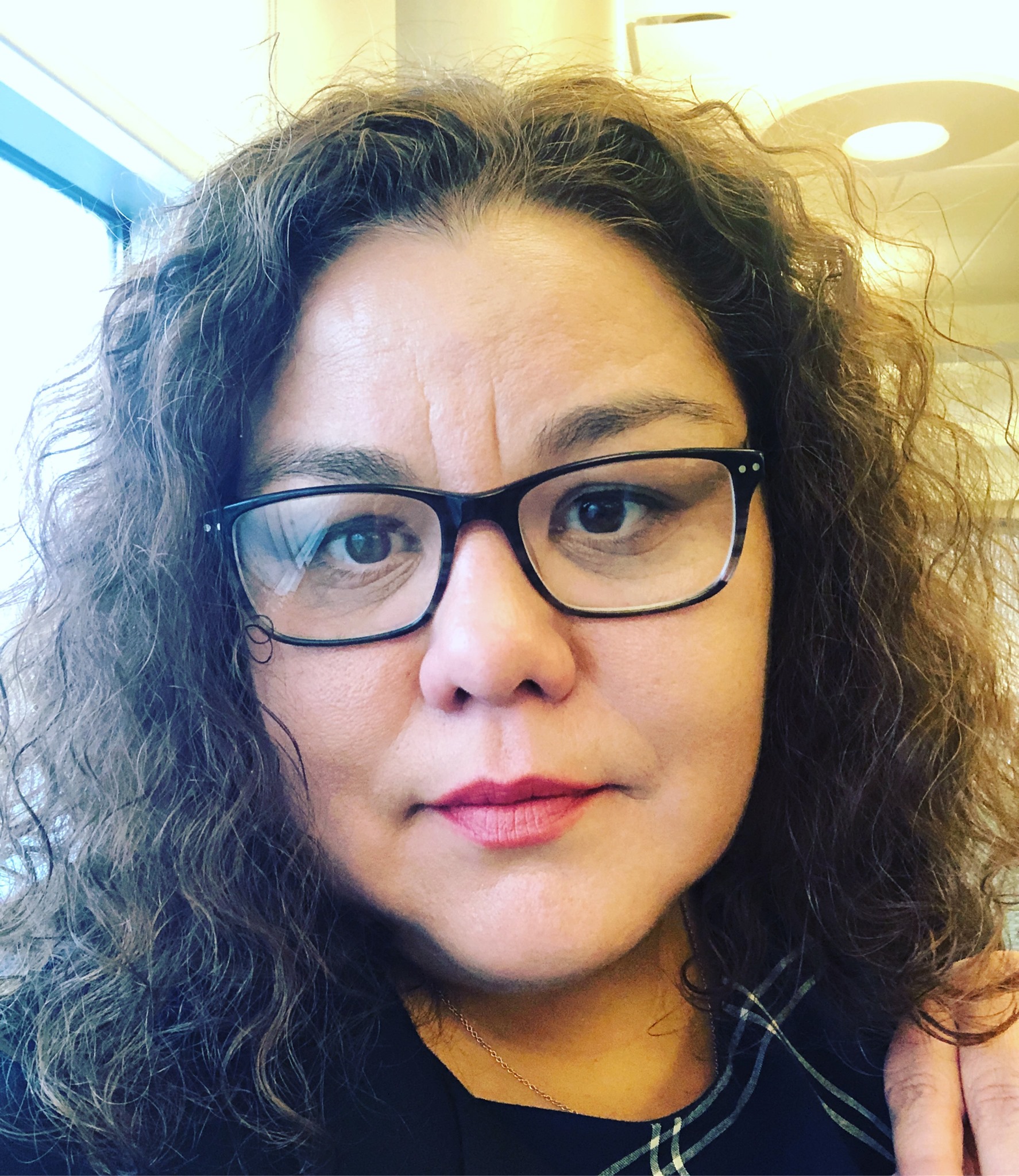
Angela Aguayo, associate professor of media and cinema studies and acting director of the Roger Ebert Center for Film Studies, has been selected as a 2024-25 Humanities Research Institute Faculty Fellow.

As an HRI Faculty Fellow, Aguayo will be provided with research funds and one semester of release time to work on a new book, titled Collective Matters: Documentary Film Practice and Public Engagement in the US, 1970-Present.

Her book will address the micro-practices of public engagement with documentary production that have led to sustained media culture. When the larger culture is deeply divided, the traditions and strategies of community-centered documentary storytelling build connections between people.

“There is a long tradition of communities representing themselves, acquiring equipment, pinning a sheet to a wall, and projecting images made by the community for the community,” Aguayo said. “These early films addressed social problems, local needs, and aspired to compel hearts rather than turn profits. This tradition had evolved over the years, shaped by technological innovation and years of connecting media-making with communities who need validation, visibility, and representation.”

Drawing upon research in media, communication, and cultural studies, and informed by interviews with media workers, filmmakers, and activists, the book will consider how community-centered documentary storytelling provides frameworks for larger civic-sector conversations.

“These are the types of media that start and sustain conversations in the world, beyond the screening room, about what could and should be done to activate the conditions for a more equitable and just world,” Aguayo added.

Aguayo will join six other faculty members and seven graduate students who will meet at the Humanities Research Institute throughout the year to address how they are rethinking research paradigms. She will take leave from teaching for the Fall 2024 semester.

The upcoming project will be Aguayo’s third book. Her first book was a reader on theories of public argumentation. Her second book, Documentary Resistance, addressed the possibilities for documentary and social change.

HRI grants fellowships to Illinois faculty and graduate students, who spend the year engaged in research and writing. All HRI Fellows participate in HRI activities, including the yearlong Fellows Seminar.

HRI’s 2024-25 theme, “Think Again…,” is an invitation to revisit well-known texts, to upend dominant narratives, to historicize what appears self-evident in the present, and/or to ask what happens when we juxtapose x with y in ways never been done before. “Think Again” underscores the opportunity to think across diverse interdisciplinary formations, and to identify when, how, and under what conditions new ones may be happening.

25th anniversary of Ebertfest announces ‘Star 80’ as opening night film, ‘The Best Man’ as centerpiece

Ebertfest 25th logo

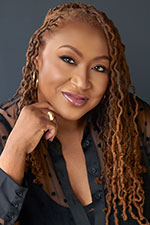
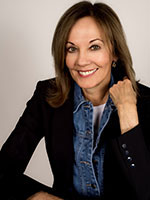
Directors Malcolm D. Lee and Lisa Cortes, actors Eric Roberts and Mariel Hemingway to attend celebration   

Additional filmmaker guests include director Diane Moore with conductor Roderick Cox

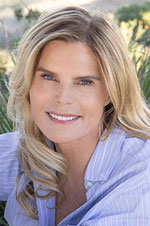
Star 80  Eric Roberts Mariel Hemingway

Roger Ebert’s Film Festival, also known as Ebertfest, announced today the 25th anniversary, running April 17-20, 2024, at the Virginia Theatre in downtown Champaign, will kick off with an opening night screening of Bob Fosse’s critically acclaimed film Star 80 with stars Eric Roberts and Mariel Hemingway in attendance. Roger praised the film with a glowing 4-star review, calling it “an important movie…. Devastating, violent, hopeless, and important, because it holds a mirror up to a part of the world we live in, and helps us see it more clearly.”  Roger has praised performances by both Hemingway and Roberts over the years.

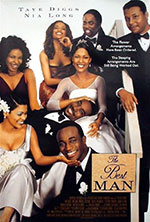
The Best Man Malcolm D. Lee

Ebertfest will showcase the 25th anniversary of writer-director Malcolm D. Lee’s wedding-themed, reunion romantic comedy The Best Man as this year’s centerpiece film with Lee coming to celebrate. 

“We are thrilled to welcome Lee with his first film which was produced by his cousin Spike Lee, in 1999, the same year as our inaugural festival,” said Ebertfest co-founder, producer and host, Chaz Ebert. “The Best Man has become a classic and introduced stars we all know today including Taye Diggs, Nia Long, Morris Chestnut, Terrence Howard and Regina Hall, among others.” 

Lee has directed numerous crowd-pleasing comedies including Girls Trip and The Best Man Holiday.

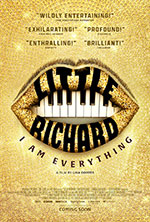
Little Richard Lisa Cortes

Lisa Cortes, Academy Award-nominated and Emmy-winning producer and director, will attend Ebertfest to discuss her film Little Richard: I Am Everything, a documentary about Little Richard, the unique, flamboyant, rock ‘n’ roll icon who shaped the world of music with hits like “Tutti Frutti” and “Long Tall Sally.”

Ebertfest will continue its illustrious tradition of music in films and on stage. Chaz Ebert reminds us that Ebertfest was born out of Roger’s conviction that movies can be a machine that generates empathy. 

“That conviction has evolved to what I call my FECK Principles: Forgiveness, Empathy, Compassion, and Kindness. Movies, combined with music can have a profound effect on encouraging more compassion in the world,” said Ebert. “The films and musical performances we have chosen for our 25th anniversary are ones that would make Roger proud.”  

She will introduce her new book, It’s Time to Give a FECK: Elevating Humanity Through Forgiveness, Empathy, Compassion and Kindness, which will be released on May 7, 2024.

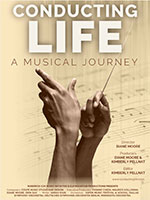
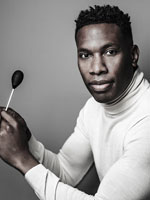
Conducting Life Diane Moore Roderick Cox

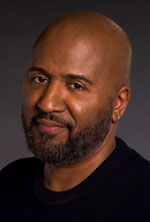
Director Diane Moore, a filmmaker who has worked in the visual arts field for more than 15 years, and Roderick Cox, a world-renowned orchestra conductor and winner of the 2018 Sir Georg Solti Conducting Award, will join the stage to discuss Conducting Life, a documentary that follows the remarkable journey of Cox as he pursues his dream to secure a top position with a major orchestra. Maestro Cox will come in from Berlin to join Ebertfest.

Additional updates to the festival program will be announced in the coming weeks.

Ebertfest passes are currently available to purchase online or by calling the box office at 217-356-9063. Individual festival passes to see all films cost $200, which includes reserved seating. New this year are 4-film passes for $70: choose between an Evening Pass or a Saturday Pass.

Roger Ebert was a Pulitzer Prize-winning film critic for the Chicago Sun-Times, University of Illinois journalism alumnus, and Urbana native. Ebertfest is a collaboration between his widow, Ebert Digital CEO Chaz Ebert, and the University of Illinois College of Media.

For additional information, please visit ebertfest.com and follow Ebertfest on social media:

To become a supporting Festival Sponsor please contact Molly Cornyn, the Festival Coordinator, at mcornyn2@illinois.edu.

###

PRESS CONTACT: Molly Cornyn, mcornyn2@illinois.edu, 217-333-1590 

View Variety’s exclusive coverage.

(Photo of Eric Roberts by Frazer Harrison, Getty Images.)

Amanda Ciafone lends Coca-Cola expertise to new TV series ‘A History of the World in Six Glasses’


Amanda Ciafone filming
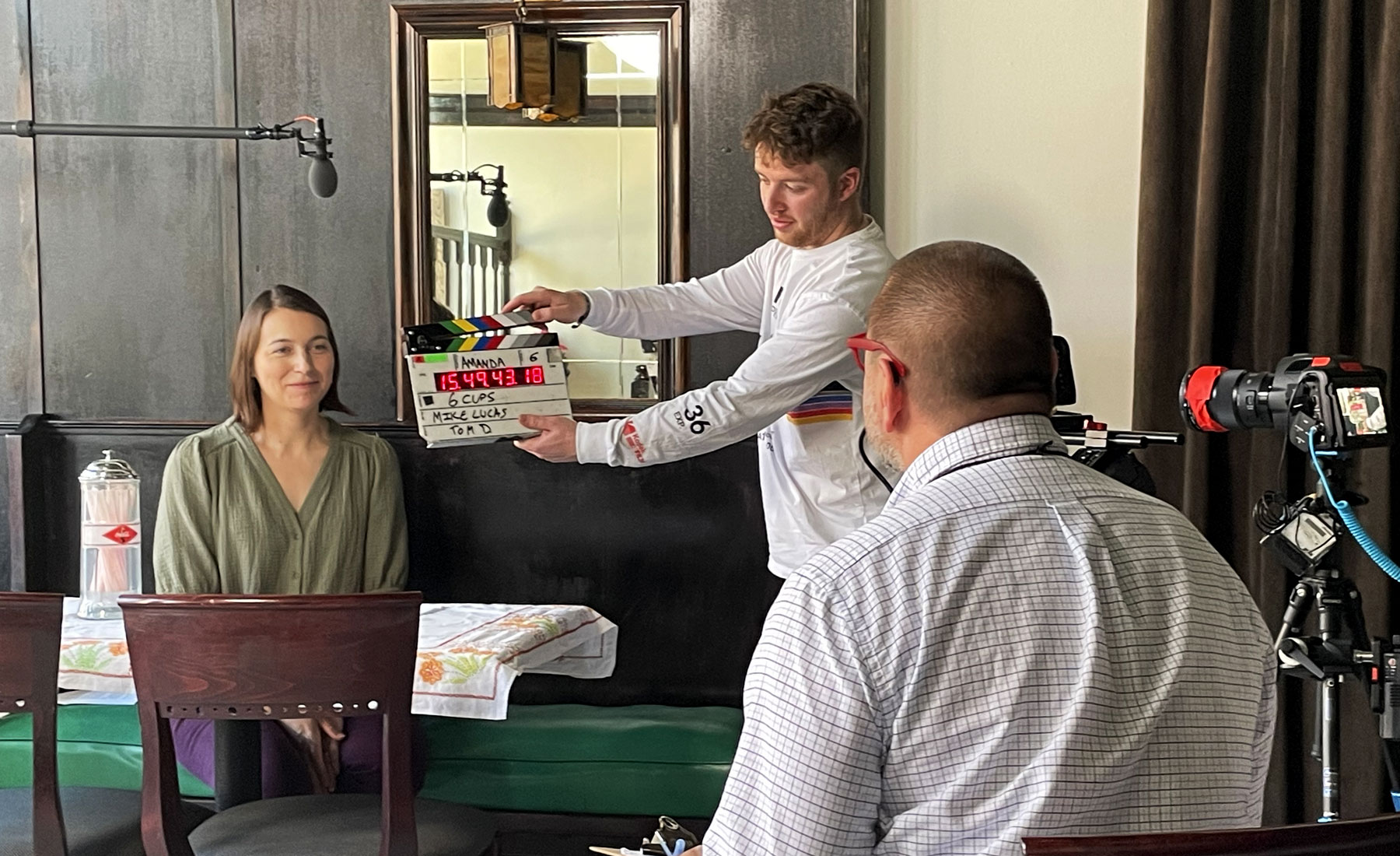
Amanda Ciafone, associate professor of media and cinema studies with an appointment in the Institute of Communications Research, was interviewed on August 19, 2022, at Flesor’s Candy Kitchen in Tuscola, Illinois, for the soda episode of the new TV series ‘A History of the World in Six Glasses.’ 

From a corner table in the Coca-Cola-branded brick building of Flesor’s Candy Kitchen (est. 1901) in Tuscola, Illinois—with a nostalgic Coca-Cola straw canister positioned nearby—Amanda Ciafone, associate professor of media and cinema studies, shared stories about Coca-Cola’s origins with producers of the new TV series A History of the World in Six Glasses.

Streaming on Fox Nation, the six-episode series stars comedians Dan Aykroyd, co-host Jim Belushi, and their friends Kevin Nealon, Jon Lovitz, and George Wendt. It’s based on a book of the same title by Tom Standage, who is interviewed in the broadcast among other authors and historians, where the history of beer, spirits, soda, wine, tea, and coffee are explored. The episodes are peppered with retro stock footage and ads, bubbly animations, as well as anecdotes, trivia, and taste tests around the bar from the chummy cast. 

Ciafone is featured in episode three—”Soda: American Fizz Goes Global”—drawing upon her research of Coke from her first book, Counter-Cola: A Multinational History of the Global Corporation (University of California, 2019). Ciafone’s book examines the Coca-Cola Company and the politics, cultural representations, and social movements around the multinational corporation’s impact on the environment, consumer health, workers’ rights and conditions, and international cultures and economies. She also has an appointment in the Institute of Communications Research and is ICR’s director of graduate studies.

“With the rising temperance movement in the late 19th century, [pharmacist and inventor] John Pemberton realized taking the red wine out will allow his drink to be marketable to a wider consumer base,” Ciafone explained in the episode. “So he’s seeking ingredients that will give you that kind of buzzy uplift without the alcohol, and he turns to coca and kola and puts them together to make this drink: Coca-Cola.”

Ciafone also described how social concerns, such as kids drinking caffeine, affected Coca-Cola.

“While the temperance movement, and eventually Prohibition, was a great boon to Coca-Cola because it didn’t have alcohol, those same forces of concern about people’s consumption of drinks that had ingredients that were potentially risky or unknown eventually brought Coca-Cola under the focus of both popular movements and government regulators.”

But of course, Coca-Cola survived court cases, brand wars, sugar substitutions, and other sticky situations.

Ciafone paraphrased a famous management guru, Peter Drucker, who said that “Coca-Cola is fundamentally an advertiser with access to a distribution system,” she said. “And it’s true. So much of their business is the production of the image around the drinks.”

To learn more about the popularity of soda (or pop), its place in American history, and its global impact, watch A History of the World in Six Glasses on Fox Nation.

Margaret Ng selected for 2023-24 James W. Carey Faculty Fellowship and AEJMC Emerging Scholar Award


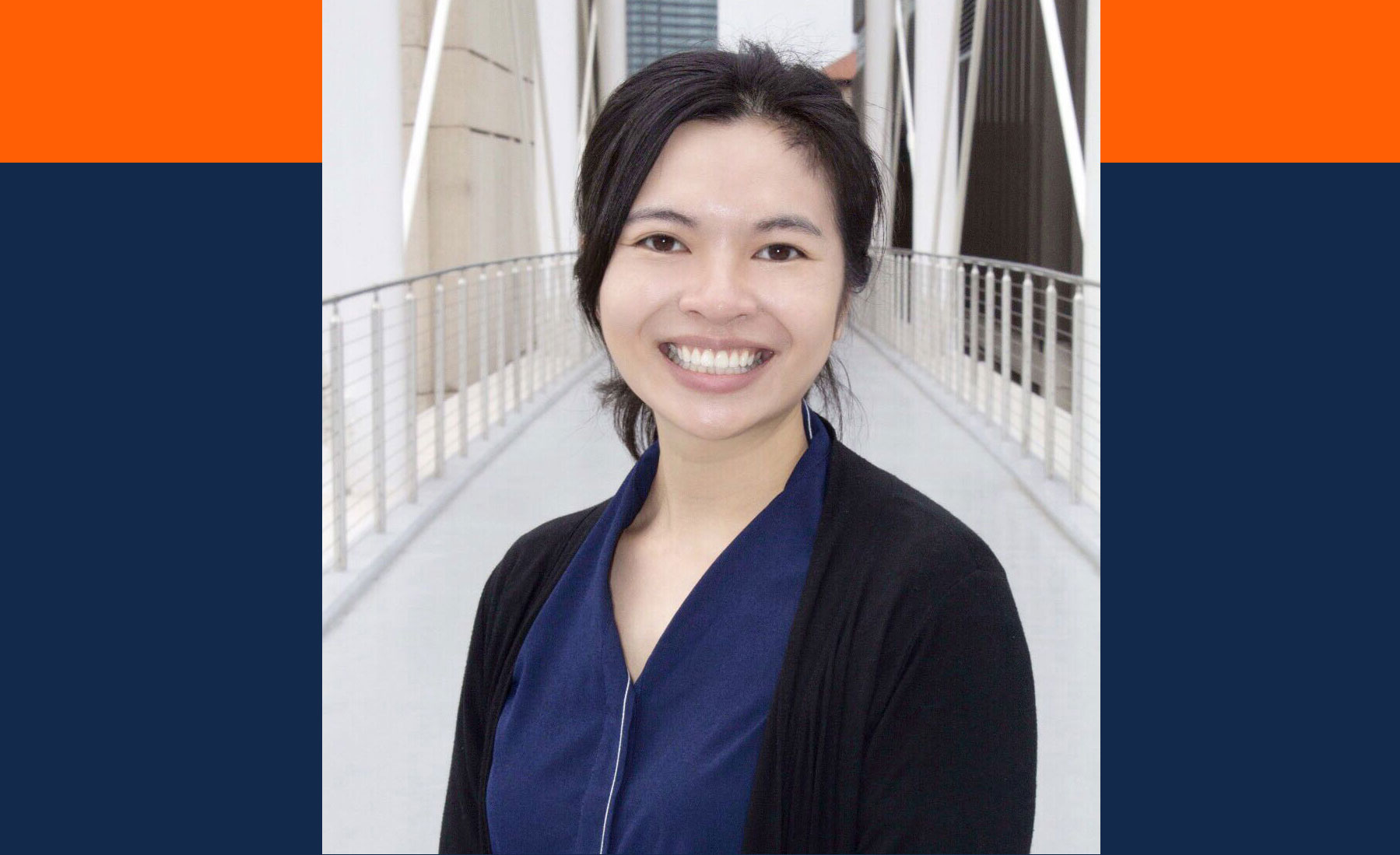
Margaret Ng

Margaret Ng, assistant professor of journalism with an appointment in the Institute of Communications Research, has been selected for 2023-24 James W. Carey Faculty Fellowship. She was also recognized with the Association for Education in Journalism and Mass Communication Emerging Scholar Grant.

Ng will receive stipends to support her research on social media platform migration, within broader shifts in digital communication culture. The recognitions support her pioneering inquiry into this contemporary phenomenon in journalism.

The James W. Carey Fund for Faculty Excellence, established in 2021 through the generosity of the Carey family, is a prestigious recognition designed to bolster the research activities of faculty in ICR, the world’s oldest program for interdisciplinary research and doctoral education in communication and media studies. At ICR, Carey earned his doctoral degree, was a research professor, and served as director (1969-76); he also served as dean of the College of Media.

Ng said the Carey Faculty Fellowship’s research support will assist her to explore the social and cultural implications of the platform migration phenomenon. 

“It would detail, for instance, how circumstances like voluntary and forced platform discontinuance (a platform closing due to financial reasons or the de-platforming of notable figures) are influenced by a complex interplay of factors like culture, economics, and social identity,” she said. 

Ng was also recently awarded a $3,500 grant from the Association for Education in Journalism and Mass Communication. The AEJMC Emerging Scholar Award will enable Ng to study how journalists are grappling with platform migration in the wake of Elon Musk’s Twitter takeover in October 2022. 

She will hire a research assistant and administer a mixed-method approach that encompasses computational analysis of activities by 900 journalists on Twitter (now X) and Mastodon and qualitative interviews of 10 to 15 active journalists. The new knowledge helps journalists assess the risks and benefits of platform changes, facilitating smoother transitions and audience maintenance in the future.The results will appear in a journal publication and a chapter in her book, setting the scholarly discourse around the topic.  

“Both the James W. Carey Faculty Fellowship and AEJMC Emerging Scholar Award, along with the opportunity to bring on board the Mark L. Brandt Public Engagement Fellows, focus largely on the topic of my scholarly book project—platform migration,” Ng said. 

Ng will also team up with a student Brandt Fellow to engage with journalists and the public, potentially through a webinar, to provide a better understanding of the experiences, challenges, and strategies journalists employed following Musk’s Twitter takeover. The Mark L. Brandt Public Engagement Fellows program was established to support Media students assisting faculty and staff with public engagement projects.  

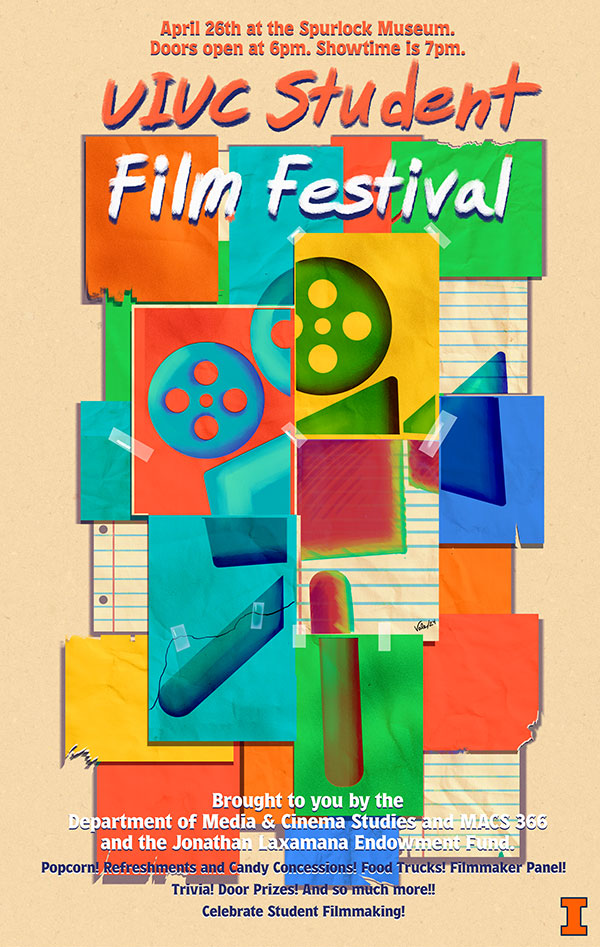
UIUC Student Film Festival 2024


UPDATE: Watch a recording of the 2024 UIUC Student Film Festival, featuring 13 film selections created by students at the University of Illinois. 

UIUC Student Film Fest 2024 poster

Join us for a celebration of student filmmaking at the 15th annual UIUC Student Film Festival, featuring the work of students from across the University of Illinois campus. Programming will include roughly 2 hours of student shorts, a filmmaker panel, and some trivia and door prizes!

Doors open at 6 p.m.

This event is produced, programmed, and curated by students in MACS 366: Film Festivals. 

Sponsored by the Department of Media & Cinema Studies and the Jonathan Laxamana Endowment Fund.


Advertising alum Ben Behrman promoted to CEO of major Chicago ad agency

Ben Behrman (BS ’09, advertising) was recently promoted to chief executive officer of Schafer Condon Carter, a major ad agency based in Chicago. 

Behrman, a 14-year SCC veteran, joined the independent company as an intern in May 2009. He worked his way up from there, holding a variety of positions including account executive, director of digital strategy, and president and chief operating officer before being named CEO in January 2024. 

At SCC, Behrman has led campaigns for notable clients including Redbox, Kerrygold, and National Pork Board.

Behrman

Journalism students published in ‘The News-Gazette’


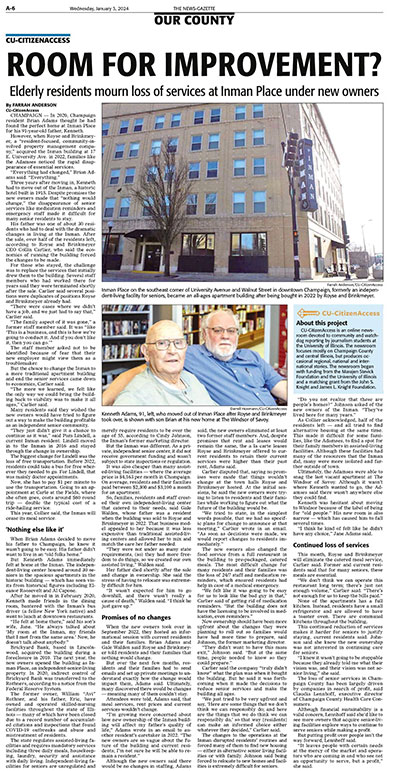
Several journalism students wrote investigative pieces that were recently featured in The News-Gazette.

Students in JOUR 315: Advanced Public Affairs Reporting and JOUR 483: Investigative Reporting classes, taught in Fall 2023 by Professor Brant Houston, Knight Chair Professor in Investigative and Enterprise Reporting, had work originally published in CU-CitizenAccess, an online newsroom devoted to community and watchdog reporting. Houston also teaches a Spring 2024 section of JOUR 400: Newsroom Experience that focuses on CU-CitizenAccess.

Articles by Farrah Anderson, Grace Brinkman, Ben Crane, Ethan Holesha, and Stephanie Wayda, all seniors in journalism, had stories picked up and re-published by The News-Gazette.

Read the students’ original articles here:


Anderson in paper

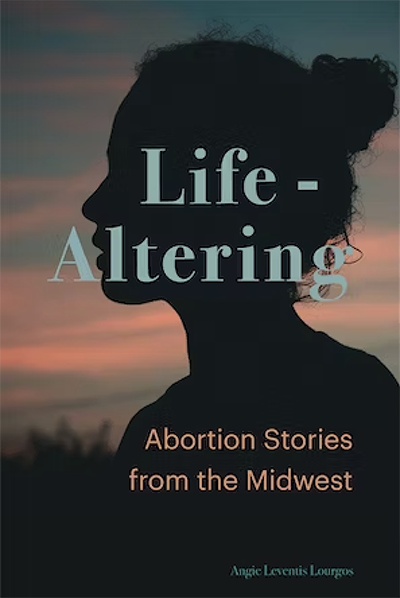
Journalism alum Angie Leventis Lourgos publishes ‘Life-Altering: Abortion Stories from the Midwest’

Angie Leventis Lourgos (BS ’03, journalism) has published a new book, Life-Altering: Abortion Stories from the Midwest, with the University of Missouri Press.

Based on pieces that originally appeared in the Chicago Tribune, each chapter imparts one person’s experience with abortion. By looking at myriad factors that influence the decision to abort a pregnancy—whether socio-economic, religious, legal, or medical—the accounts collected in this volume challenge the conventional labels of “pro-life” and “pro-choice.”

Leventis Lourgos has been a Chicago Tribune staff writer since 2009. Her work has won two Lisagor awards and one Sarah Brown Boyden award. She previously reported for the St. Louis Post-Dispatch and the News Tribune in Tacoma, Washington.

Life-Altering book cover

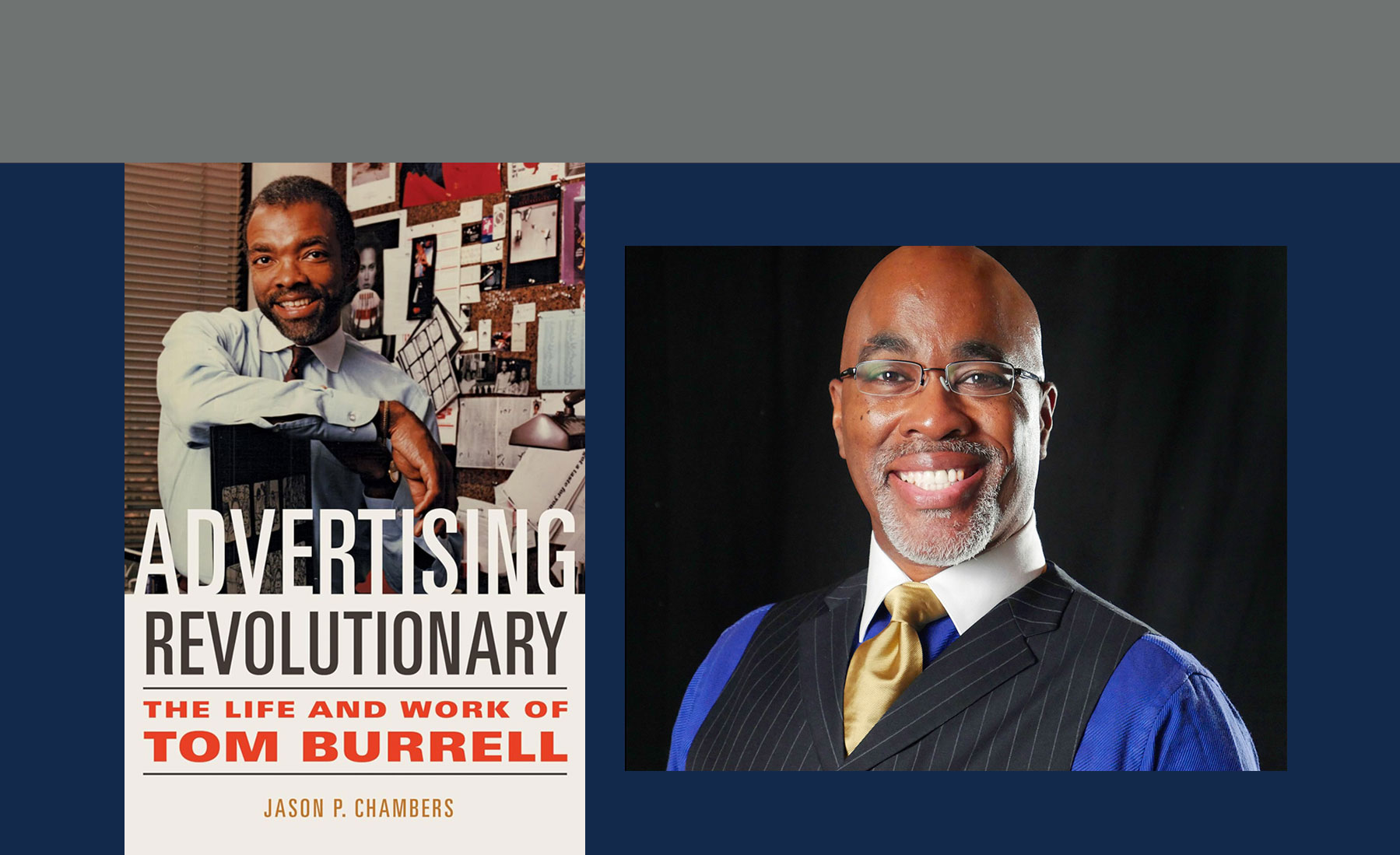
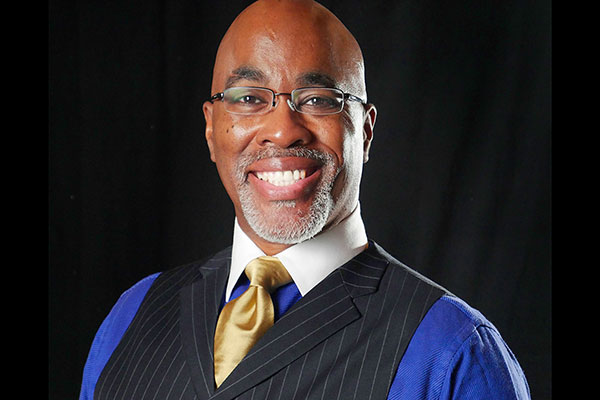
Jason P. Chambers’s new book ‘Advertising Revolutionary: The Life and Work of Tom Burrell’ details ad exec’s influence on industry’s approach to African Americans


Jason P. Chambers

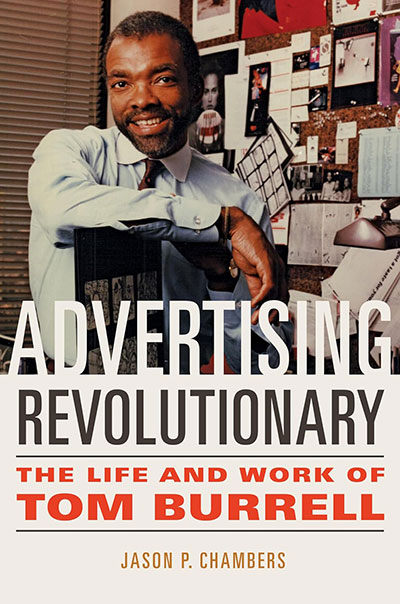
Advertising Professor Jason P. Chambers’s new biography about Tom Burrell, a renowned Black visionary who changed the face of the ad industry for African Americans, will be published on February 6. 

While Advertising Revolutionary: The Life and Work of Tom Burrell (University of Illinois Press) will appeal to those interested in advertising and its history, Chambers said it’s written for a broad audience to enjoy.

“If you have an interest in biographies, Chicago, Chicago stories, Chicago entrepreneurs, African American entrepreneurs, what goes into the creation of an advertising campaign, and client relationships, I think you’d be interested in this story,” Chambers said. 

Chambers, who is also the associate dean for diversity, equity, and inclusion at the College of Media, describes Burrell as his “favorite person in the history of the [advertising] industry.”

“He started in advertising at a time in which the number of African Americans operating in a professional capacity could have been measured in the dozens,” Chambers said, adding that Burrell was the first Black copywriter at a mainstream agency in Chicago. “He is one of the people who is singularly responsible for helping to get African Americans on TV.”

Burrell not only created a place for African Americans within the advertising industry, but he also changed their representation in advertisements. His concept, known as “Positive Realism,” was relatively simple—present realistic and positive images of African Americans using products and brands—yet it was considered revolutionary at the time. 

"Advertising Revolutionary: The Life and Work of Tom Burrell"

Chambers said if you saw a television ad for McDonald’s or Coca-Cola in the 1980s or 1990s that depicted African Americans, Burrell’s agency probably created it.

Thanks to Burrell’s early pioneering efforts, there’s a greater breadth of representation in advertising today, Chambers said. More Hispanic Americans, Asian Americans, LGBTQ community members, and people with different physical abilities are included in current brand messaging than ever before. 

Despite a more inclusive environment, Chambers still questions how much of advertising today is culturally sensitive and how much is culturally representative.

“It’s one of those things that can have two steps forward and a step back,” he said. “It’s not linear progress, but it’s nonetheless, progress.”

Chambers, who also co-edited Building the Black Metropolis: African American Entrepreneurship in Chicago in 2017, said the catalyst for his second book occurred while doing research for his first book, Madison Avenue and the Color Line: African Americans in the Advertising Industry, published in 2009. 

Chambers had the opportunity to interview Burrell on several occasions during that time. He also spent two weeks at Burrell’s ad agency in Chicago through the Advertising Education Foundation Visiting Professor Program, which Chambers says, “deepened my admiration for him.”

The AEF Visiting Professor Program allows professors to visit advertising agencies to enhance their understanding of current developments and practices in advertising and marketing to inform their teaching and research. 

Spending one-on-one time with the industry legend before he retired, coupled with a desire to write a biography, is what led Chambers to call Burrell one day in 2011. Chambers recalls standing in his kitchen, calling Burrell’s office, and thinking “it was a long shot because I was fairly certain that he would try to write his own book.” 

After some consideration, Burrell opted not to write his autobiography, opening the door for Chambers to write the book. 

Chambers spent the next few years interviewing Burrell, mostly at his home in Chicago, along with several other sources who knew him well. 

Challenges did arise throughout the process as Chambers soon realized writing a biography, which relies heavily on oral interviews alongside extensive archival research, can prove difficult. There was even a point when Chambers stepped away from writing the book, having concerns about not being able to interview some key figures in Burrell’s life, such as his original business partner who had passed away before Chambers could interview him.

But Chambers found a renewed motivation after an encounter with two of his professional academic heroes at an event in Chicago. 

Christopher Robert Reed, professor emeritus at Roosevelt University, and Darlene Clark Hine, professor emerita at Michigan State University, both African American historians, gave him the push he needed to get back to writing the book.

“After I told them about the struggles that I was having in terms of deciding to move on from the book, they both said the same thing,” Chambers said. “They said write it anyway. Just tell the readers what happened and write it anyway.”

His experience has taught him a few lessons about courage and writing that he shares with his students. 

“I think the thing that students have to be reminded of is a lack of confidence in work that you’re going to publish is just part of it, and you have to give yourself a license to have those feelings,” he said. “But ultimately the difference between a writer and somebody who writes is that a writer has to make their work public. They have to try and publish.”

DEV College of Media
119 Gregory Hall
810 S. Wright St.
Urbana, IL 61801
217-333-2350