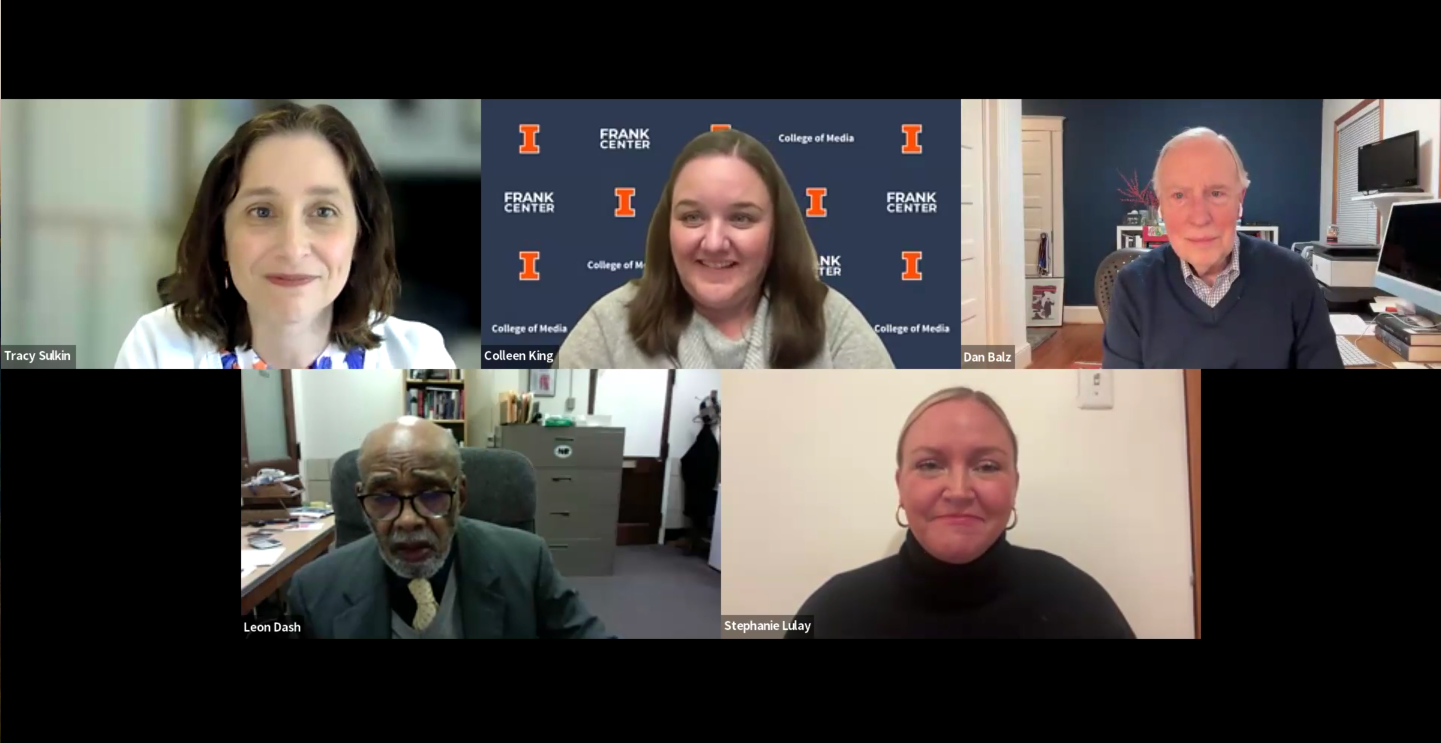
Excerpts from ‘Engaging in a Divided Society’


On February 25, 2025, the Suburban Illini Club hosted the College of Media for “Engaging in a Divided Society: Lessons from Journalism,” a panel discussion on how to engage with others in an age of polarization.
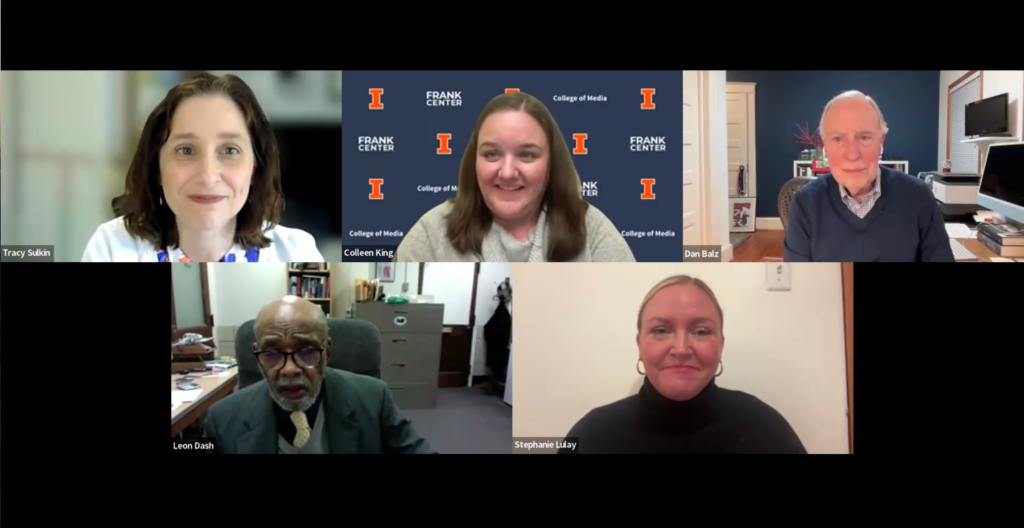
Panelists from Engaging in a Divided Society

Moderated by College of Media Dean Tracy Sulkin, panelists included journalism faculty and alumni: 

  • Leon Dash, Professor and Swanlund Chair, Department of Journalism; 1995 Pulitzer Prize Winner for Explanatory Reporting while at The Washington Post
  • Colleen King, Clinical Assistant Professor, Department of Journalism; Director of the Richard and Leslie Frank Center for Leadership and Innovation in Media; former Executive Producer for MSNBC’s The 11th Hour with Brian Williams  
  • Dan Balz (BS ’68, MS ’72, journalism), Chief Correspondent at The Washington Post covering national politics, the presidency and Congress
  • Stephanie Lulay (BS ’08, journalism), Executive Editor and Co-Founder, Block Club Chicago, an award-winning, reader-funded nonprofit newsroom focused on Chicago’s neighborhoods

The webinar was a continuation of a College of Media series launched in Fall 2024 called “Bridging Divides: Conversations on Media and Disagreement.” 

Read excerpts from “Engaging in a Divided Society” below. Note: Answers have been condensed for length and clarity.


Sulkin: It strikes me that a threshold that we discuss a lot is the lines between news versus commentary. And many see the lines between those two as becoming increasingly blurred. I wonder what your thoughts are about the extent to which that seems a useful theoretical divide, and then what the consequences are of the blurring of those lines.

Dash: News columns are very clear that they are news columns, and I try to point that out to the students, in terms of understanding what a news column is. An opinion column is very, very different from a news column, in which you have a lot of leeway to express your opinion. I think social media has blurred the lines between what is considered news and what is considered an opinion. But I think the conventional publications have continued to distinguish between the two and keep them separated.

Lulay: I think Twitter/X and TikTok are full of opinions. We’re in a period where newsrooms are rapidly disappearing and we’re in an era that the world really needs more truth tellers. Something I’ve seen, engaging with readers for a long time, is that readers on the whole really aren’t able to distinguish between news-driven reporting and opinions on the Op-Ed page, and I think that that damages trust.

Balz: One of the things we’ve noticed is that commentary and opinion writing draws a huge audience. And we know that because of the siloed nature of how people get their news, that people seek out opinion journalism that conforms with their points of view. And in the in the digital age, particularly when you’re looking at a homepage for—whether it’s the Washington Post or the New York Times or the Wall Street Journal—the commentary pieces are right there smack next to the news pieces. In a printed paper, the opinion pages are in a separate place. They’re clearly marked. But in a sense the, the presentation has helped to blur the lines.

Sulkin: We’ve been talking about the public’s trust in the news and looking at polling about what people think about the media. There’s been a slow decline in trust in all sorts of institutions over the past several decades, with the news media being part of that. Pew reports that over three-quarters of Americans and majorities from both political parties think that news organizations tend to favor one side or the other. Yet large majorities also say that news coverage keeps politicians from doing things that they shouldn’t. So that scrutiny, that watchdog role, still holds. What are your views about what would help the public to regain trust, if we think it’s been lost, or where could we build on some of those pockets of trust?

Lulay: I’m really happy to be in a local newsroom these days. I think we can make a real impact in terms of trust. Trust is built from the ground up and there’s no better place to build relationships with readers than in a local newsroom. Rebuilding trust in our city is key to why Block Club was founded.

When we started this newsroom, there was a study that trust, particularly on the South and West sides of our city—these are under-resourced areas of our city—trust was at an all-time low with the media. And that was because of generations of the media either only reporting on crime or chaos that happened in those neighborhoods, if they ever showed up at all. At Block Club, instead of covering a traditional beat like courts and education in such a big city where there’s too much going on, our reporters are assigned to two to three contiguous neighborhoods. And when they’re covering a smaller area like that, they really are able to build close relationships with readers, which we believe ensures the news that we’re reporting not only reflects what they most care about, but also leads to a more accurate portrayal of their neighborhood.

King: I would say it’s very tricky because the skills that we teach our students to cover Chicago and maybe go work for Stephanie [Lulay] are not different than skills I would teach up-and-coming reporters to go work with Dan [Balz]. I think people are turning off the news in large part because it always seems like bad news right now. So perhaps we can be more creative in our angles, but I also think transparency is a big part of reporting. And being honest in what we know and what we don’t is a big part of it, too. You know, it is our job to hold people accountable; that’s why we do what we do. Hopefully over the course of time, people can see that our reporting holds up and is fact-based and we’re just trying to report the truth as best we know it.

Balz: Repairing the decline in trust is a very difficult job that we can’t do in and of ourselves as news organizations. What’s happened in terms of the decline of trust is a societal-wide problem. Just as the polarization of the country is a societal-wide problem. And it will take time to begin to overcome that. We have a role to play in that. There are things we can do about that. Colleen [King] is exactly right. Transparency is important. The idea of being open about what we know and what we don’t know is important. But we also have to do what we’ve always done, which is to be aggressive in our reporting and follow that wherever it leads us and live with the consequences of that. Our first obligation is to find the truth to the best that we can find it on any day or week.

Sulkin: We had Chuck Todd visit the College of Media in December right before he announced that he would be departing NBC News after a long career there. I think a narrative thread he was pulling was that local news is the cure to what ails the news ecosystem. I think part of the argument was that maybe if folks have the opportunity to engage with local news, that helps with some spillover to how they think about national news. But the growing news deserts mean a lot of folks don’t have local news. As we are preparing students and launching them out into their careers, Colleen and Leon, what are we doing to correct some of these news desert issues?

Dash: My emphasis with my students is fact-based reporting. It’s a no-no in my classes when they say, ‘I assume’ or ‘I think.’ I say you shouldn’t be ‘assuming’ and you shouldn’t be ‘thinking’ anything. You should know. If you don’t know, you should say you don’t know.   And transparency is a big part of that. Being honest and upfront. I don’t even know how you overcome this divide in this society today. But in terms of conventional journalism, fact-based reporting is very, very important and transparency is also very important.

King: And I would say we’re training our student journalists to learn all kinds of skills. Our students are leaving our universityknowing how to podcast and write, do audio and video journalism, and write online or for print news outlets. So they could really drop in anywhere and cover any community they want to. While we’ve got many who want to return home to the Chicagoland area, or make it big in New York or LA or Washington, we do encourage them to think about covering smaller communities— at least getting a start there—and understanding what it’s like to cover a community where you do get to know your audience and the people you’re covering and in government as well.

Share on social
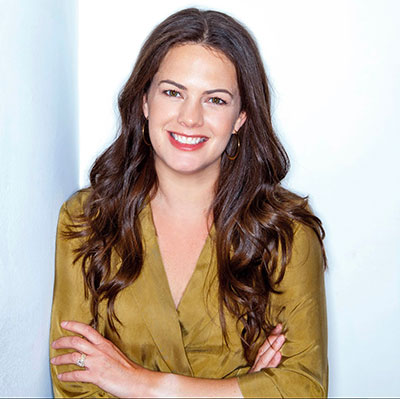
Netflix director Emma Miller to be alumni speaker at Media Convocation


Netflix director Emma Miller (BS ’08, media studies) says returning to campus to speak at the 2025 College of Media Convocation ceremony feels like a full-circle moment for her.

Emma Miller

As a Media student at Illinois, she remembers renting DVDs through Netflix’s mail subscription service for her film classes.

“I could watch films on my own time, which was really exciting because there was one video shop in town and all the film students would race to check out the film,” she said.

While Netflix was a lifesaver for her as a student, her current role at the global streaming service has proven to be an even more incredible opportunity.

“It’s amazing and I’m having the best time. I really love it, and I have to say [my job] has exceeded my expectations in a lot of ways,” she said.

Miller, who was named one of The Hollywood Reporter’s “35 Rising Executives 35 and Under” in 2018, joined Netflix in 2023 as director of overall deals in the series division.

I appreciate everything Illinois did to get me here and hopefully I can give something back and inspire at least one student.

Since then, her title has changed to director of the studio scripted series division, but her role has essentially stayed the same.

Part of her job is to oversee deals with certain creative entities. For example, she covers Aggregate Films, founded by Jason Bateman (Ozark), and 21 Laps Entertainment, founded by Shawn Levy (Stranger Things).

Miller also works on ground-up development, doing first-reviews of projects and pitches from writers and producers.

“I’m basically one of the people at Netflix who buys projects and then supervises the creative development of those projects from the pitch to all the way out when it’s on the air,” she said.

Most of her work is reading first-episode scripts and giving notes to guide the writers, “almost like an editor would do in publishing.”

If Netflix picks up the series, Miller will do the same for all the episodes at the script level. While most of her work is in the creative domain, Miller also handles some business responsibilities as well. She oversees the production of projects, including budget management, hiring of actors and directors, and traveling to shoots on location to get shows up and running. She also covers technical aspects like editing sound mixes, visual effects, and film cuts. 

As Miller approaches her two-year anniversary at Netflix, she’s looking forward to the release of a few exciting projects she’s managed.

Forever, a reimagination of the 1975 novel by Judy Blume, premieres on Netflix on May 8. Black Rabbit, starring Jason Bateman and Jude Law, is awaiting an air date. Miller is also working on post-production of Man on Fire, a television remake of the 2004 film starring Denzel Washington.

“I love Netflix and I’m really enthusiastic about what we’re doing,” Miller said. “I will say it’s just really fun to know that a lot of people are going to watch your work and the kind of impact you can have on culture is thrilling.”

Miller says she first learned about the power of media and how it can shape the way you experience the world as a student at Illinois. She credits a Women in Film class for changing the course of her academic career from English to media studies (now called media and cinema studies).

Miller, who serves on the College of Media Alumni Leadership Council and won the 2023 Emerging Leader Award, continues to engage with the college as a panelist for Media Career Nights and soon, to address the College of Media’s Class of 2025.

“I appreciate everything Illinois did to get me here and hopefully I can give something back and inspire at least one student,” she said.

Share on social

Media studies scholar Denise Bielby inspired to support Ebert Center through blended gift


It’s no surprise that renowned media studies scholar and two-time University of Illinois alum Denise Bielby (BS ’71, MA ’72, ACES), Distinguished Professor of Sociology, Emerita, at the University of California, Santa Barbara, was interested in fellow alum Roger Ebert’s work and helping preserve his legacy.

Bielby, whose research focuses on the culture-producing industries of film and television, has had a long appreciation for the scholarly value that the late Roger Ebert, Pulitzer Prize-winning film critic and journalism alum, brought to film criticism.

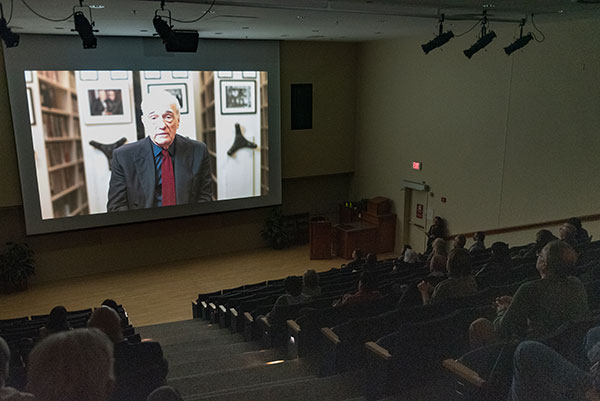
As a major donor to the Roger Ebert Center for Film Studies—which launched in 2022 with a special video message from Martin Scorsese—Bielby offered a blended gift, which includes a multi-year current use cash gift as well as deferred estate gifts.

Bielby said it was important to support the research of faculty in the College of Media, and the training of their graduate and undergraduate students.

“Denise Bielby’s generosity is a distinct example of a transformative gift,” said Tracy Sulkin, dean of the College of Media. “The Ebert Center cements the College of Media as a supportive and enriching destination for academics pursuing film studies.”

After attending Ebertfest regularly, Bielby observed that “Roger’s thematic programming for each festival was not only intriguing, it was culturally important, and over time the scholarly value of that came into focus and relevant to how scholars understand and analyze the social value of film.”

Martin Scorsese message about Ebert Center
At the launch of the Roger Ebert Center for Film Studies at the University of Illinois on October 28, 2022, legendary filmmaker Martin Scorsese shared a recorded message. (Photo by J. Sidney Malone.)

Bielby’s own research on media fandom developed as an outgrowth to her research on the film industry.

“Because Hollywood produces culture through its products, I wanted to better understand the process of audience reception that made media so engaging,” she said. She has co-authored two books, Global TV: Exporting Television and Culture in the World Market (2008) and Soap Fans: Pursuing Pleasure and Making Meaning in Everyday Life (1995).

Since its inception, the Ebert Center has offered robust programming, including the annual Ebert Lecture in the fall, the annual Ebert Symposium in the spring with a keynote and roundtable discussions, and a curated screening series throughout the academic year. 

It also supports Ebert Center research grants and travel grants for film studies as well as the long-running Ebert Fellows Program, which selects three undergraduate students from the College of Media each year for an in-depth experiential learning opportunity.

Ebert Fellows work with advisor and mentor Michael Phillips, the film critic at the Chicago Tribune. They hone their writing and interviewing skills, sharpen their critical skills, attend film festivals, develop their podcasting skills with Chicago Public Radio and Illinois Public Media, and participate in other workshops and activities, including those in conjunction with the Ebert Center. 

In addition to supporting Media faculty and students, Bielby hopes the Ebert Center is set up to accomplish another goal: “To advance the scope of the college more broadly as it engages related disciplines, the campus at large, and society as a whole.”

The Ebert Center programming is free and open to the public. Learn more and watch recordings of past events at media.illinois.edu/ebertcenter.

Share on social

Senior lecturer of advertising Marisa Peacock wins two campus awards


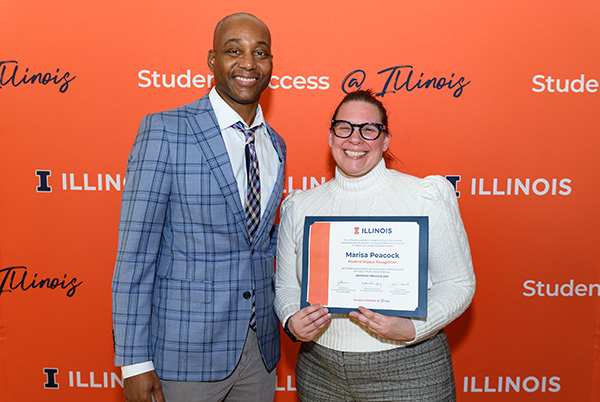
Marisa Peacock wins campus awards

Marisa Peacock, senior lecturer of advertising, won both a Campus Award for Excellence in Undergraduate Teaching and a Student Success Impact Award.

Campus Awards for Excellence in Instruction, sponsored by the Office of the Provost, are given for sustained excellence and innovation in undergraduate and graduate teaching, undergraduate and graduate advising and mentoring, online teaching, and research guidance.

For this award, Peacock was cited as “using principles of universal design for learning, offering several ways for her students to learn and succeed. Her innovative, supportive, active-learning teaching methods and commitment to student success have left a lasting impact on students in the classroom and beyond.”

The Student Success Impact Award recognizes faculty and staff who have made a lasting difference in the lives of Illinois students, given to those who were mentioned 10 or more times in the Chancellor’s Senior Survey.

Share on social

Media faculty and TAs make list of teachers ranked as excellent


Congratulations to all the College of Media faculty and teaching assistants who were ranked as excellent by their students!

Congrats!

This list is based on Instructor and Course Evaluation System questionnaire forms completed by students during the Fall 2024 semester and Winter 2024-25. Only those instructors who distributed ICES forms at least once during this time period and who released their data for publication are included in the list. View the complete list.

Note: * denotes that the instructor ratings were outstanding.

ADVERTISING

KENT BROWN – ADV 314

STEVE HALL – ADV 150

JACQUELINE HITCHON – ADV 250

SHACHAR MERON – ADV 290, 390

MICHELLE NELSON – ADV 598

*MARISA PEACOCK – ADV 491, 498

SELA SAR – ADV 550

PETER SHELDON – ADV 452

JOURNALISM

CHRISTOPHER BALL – JOUR 101, 451

LEON DASH – JOUR 482

*ALISON DAVIS – JOUR 215, 240, 340

JOSH HEUMAN – JOUR 311

ED KIESER – JOUR 427

VINCE LARA-CINISOMO – JOUR 361

CHARLES “STRETCH” LEDFORD – JOUR 215

CAROL LOMBARDI – JOUR 220

MEDIA

*DANIEL ALMANZA – MEDIA 199

EDDIE NJOROGE – MEDIA 100

MEDIA & CINEMA STUDIES

CL COLE – MACS 356

VICTOR FONT – MACS 260, 370

DORIE GEISSLER – MACS 224

JOSH HEUMAN – MACS 391

DEREK LONG – MACS 211

*JENNY OYALLON-KOLOSKI – MACS 485

STRATEGIC BRAND COMMUNICATION

*SHACHAR MERON – SBC 500

STEVE RAQUEL – SBC 502

TEACHING ASSISTANTS

C. CHICK – ADV 150

*K. COOK – ADV 250

*A. GOODREAU – ADV 150

M. KHOWAJA – ADV 150

J. LIN – ADV 360

A. LIU – ADV 250

M. LYERLA – ADV 284

*Z. RANDOLPH – ADV 360

M. ZHAO – ADV 150

*D. CARRILLO-FUCHS – MACS 101

T. CHEN – MACS 150

*J. CINTRON – MACS 101

*Y. GAO – MACS 101

W. HELMKE – MACS 260

Y. HONG – MACS 100

A. JI – MACS 100

*Y. KANG – MACS 101

K. KRISHNA – MACS 101

*G. LEONARDO – MACS 375

J. OH – MACS 100

A. PENG – MACS 101

J. ZHANG – MACS 150

Share on social

Ebertfest announces remaining films and special guests attending the 2025 festival

Director Francis Ford Coppola to participate in a virtual Q&A

Actress Jane Levy and Critics Michael Phillips, Richard Roeper, Matt Zoller-Seitz, Nell Minow, Brian Tallerico, Eric Pierson, Dion Metzger, and Brenda Butler will be attending in person


CHAMPAIGN, IL (April 1, 2025) — Roger Ebert’s Film Festival, also known as Ebertfest, announced today the final three films screening at this year’s festival, to be held April 23-26 at the Virginia Theatre in downtown Champaign:

  • Francis Ford Coppola’s MEGALOPOLIS
  • Walter Salles’ Academy Award-winning I’M STILL HERE
  • Lotte Reiniger’s THE ADVENTURES OF PRINCE ACHMED 

Coppola will participate in a virtual Q&A immediately following the screening of MEGALOPOLIS; Michael Barker, Co-President of Sony Pictures Classics, will discuss the Oscar-winning film I’M STILL HERE, which Sony Pictures Classics distributed domestically; and back by popular demand, The Anvil Orchestra will perform during THE ADVENTURES OF PRINCE ACHMED. 

“It is incredible that Nate Kohn and I are just as excited to present the lineup for this 26th Ebertfest as we were for the first!” said Chaz Ebert, CEO of movie review site Rogerebert.com and cofounder of Ebertfest. “What Roger said about movies being a machine that generates empathy is so true. My heart swells with emotion in anticipation of the films and guests who will join us. And I look forward to sharing this communal film experience with our Ebertfest audience. Roger, we thank you!”

“Echoing Chaz, this year’s lineup is one of the most exciting we’ve ever had,” said Nate Kohn. “There will be lots to celebrate in Champaign this year, and I know Roger would be very proud to see how his festival continues to grow.”

Megalopolis poster

MEGALOPOLIS is a Roman Epic set in an imagined Modern America. The City of New Rome must change, causing conflict between Cesar Catilina (Adam Driver), a genius artist who seeks to leap into a utopian, idealistic future, and his opposition, Mayor Franklyn Cicero (Giancarlo Esposito), who remains committed to a regressive status quo, perpetuating greed, special interests, and partisan warfare. Torn between them is socialite Julia Cicero (Nathalie Emmanuel), the mayor’s daughter, whose love for Cesar has divided her loyalties, forcing her to discover what she truly believes humanity deserves.

The film was nominated for multiple awards and had its world premiere at the 77th Cannes Film Festival in 2024. 

“Francis Ford Coppola has once again given us big ideas to digest,” said Chaz Ebert, “Are the characters in Megalopolis akin to those in Rome before its collapse, or can we find some redemption in acts seemingly small, but that portend hope for the future. Does Coppola’s film hold a mirror up to today’s society? And if so, does this master director give us a roadmap to avoid similar obstacles? We will eagerly pose these questions and others when he appears after the screening of this gorgeously shot film.”

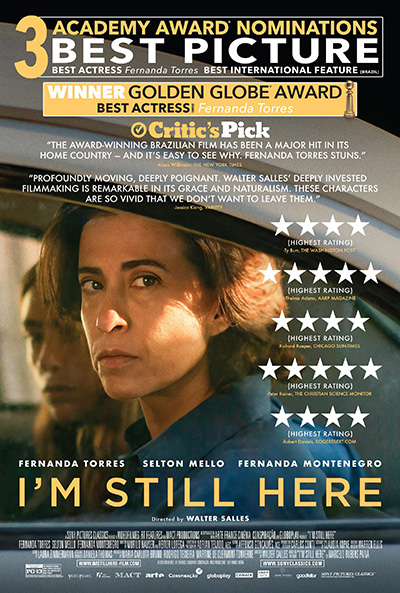
I'm Still Here poster

I’M STILL HERE is set in Brazil, 1971, as it faces the tightening grip of a military dictatorship. Eunice Paiva, a mother of five children, is forced to reinvent herself after her family suffers a violent and arbitrary act by the government. The film is based on Marcelo Rubens Paiva’s biographical book and tells the true story that helped reconstruct an important part of Brazil’s hidden history.

The film had its world premiere at the 81st Venice International Film Festival in 2024 where it was critically acclaimed and received the Best Screenplay Award. I’M STILL HERE, which is certified fresh on Rotten Tomatoes with a score of 97%, has continued winning over audiences globally and earned 69 nominations and 49 awards including a Golden Globe Award and the Best International Feature Film Academy Award, the first-ever Brazilian produced film to win an Academy Award. 

“Through Fernanda Torres’ formidable presence, the deliberate I’M STILL HERE, a film that locates further meaning in the face of Brazil’s present Far-Right wave, remains in the heart long after the picture fades,” said Robert Daniels in his 4-star review for RogerEbert.com.

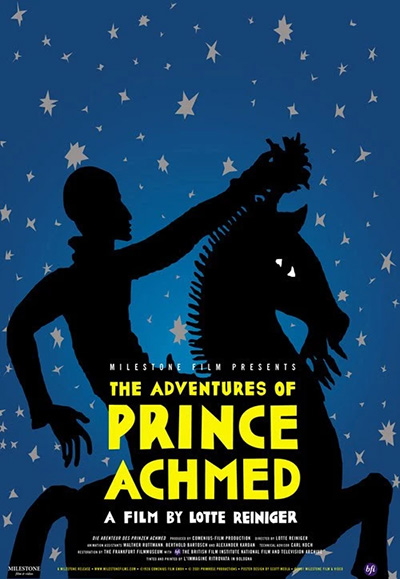
The Adventures of Prince Achmed poster

THE ADVENTURES OF PRINCE ACHMED is a fantasy animated film from 1926 that tells the story of a handsome prince with a flying horse who befriends a witch, meets Aladdin, and battles demons to win a princess’ heart. The screening will feature a performance from Ebertfest’s audience favorite group The Anvil Orchestra. 

Newly announced guests include actress Jane Levy (A LITTLE PRAYER), and critics Michael Phillips, Richard Roeper, Matt Zoller-Seitz, Nell Minow, Brian Tallerico, Eric Pierson, Dion Metzger, and Brenda Butler.

As previously announced, the 2025 Roger Ebert’s Film Festival will open with a new 70mm print of the Western classic THE SEARCHERS (1956), starring John Wayne and Natalie Wood on Wednesday, April 23. Additionally, Guy Maddin’s RUMOURS will screen, and Todd Phillips’ THE HANGOVER will close out the festival on Saturday, April 26. The festival recently announced a 40th anniversary screening of Susan Seidelman’s DESPERATELY SEEKING SUSAN, 35MM screenings of both Azazel Jacobs’ HIS THREE DAUGHTERS and Barbara Kopple’s HARLAN COUNTY U.S.A., and screenings of Baltasar Kormákur’s TOUCH, Angus MacLachlan’s A LITTLE PRAYER, and David Fortune’s COLOR BOOK.

Ebertfest tickets and passes are currently available to purchase online or by calling the Virginia Theatre box office at 217-356-9063. Individual tickets to each film cost $20, while festival passes to see all films cost $200, with both including reserved seating. Four-film bundles are available for $65.

2025 Ebertfest Film Schedule

WEDNESDAY, APRIL 23
6:30 p.m.: The Searchers

THURSDAY, APRIL 24
9:00 a.m.: Megalopolis
1:30 p.m.: Desperately Seeking Susan
5:00 p.m.: Harlan County U.S.A.
9:30 p.m.: His Three Daughters

FRIDAY, APRIL 25
10:30 a.m.: A Little Prayer
2:30 p.m.: I’m Still Here
7:30 p.m.: Rumours

SATURDAY, APRIL 26
9:00 a.m.: The Adventures of Prince Achmed
11:30 a.m.: Color Book
4:00 p.m.: Touch
9:00 p.m.: The Hangover

Roger Ebert was a Pulitzer Prize-winning film critic for the Chicago Sun-Times, a University of Illinois journalism alumnus, and an Urbana native.

Chaz Ebert is also the author of the indie bestseller It’s Time to Give A FECK: Elevating Humanity through Forgiveness, Empathy, Compassion, and Kindness.

Ebertfest is hosted by Chaz Ebert and Nate Kohn, the festival director since the very beginning, in collaboration with the College of Media at the University of Illinois Urbana-Champaign.

For additional information, including the full festival schedule, please visit https://ebertfest.com/, and follow us on social media:

To become a supporting Festival Sponsor please contact Molly Cornyn, the Festival Coordinator, at mcornyn2@illinois.edu. 

###

PRESS CONTACTS:

Molly Cornyn
mcornyn2@illinois.edu
217-333-1590

Lee Meltzer
Lee@LeeMeltzerConsulting.com
551-208-8617

Share on social

Editor’s Note: Although originally announced as attending, unfortunately, actress Carrie Coon had to cancel attending Ebertfest with her film His Three Daughters. Director Azazel Jacobs will still be participating in the post-screening discussion.

How can science literacy help people better understand the news?


In today’s rapidly evolving media landscape, the spread of misinformation and disinformation regarding scientific topics such as natural disasters, vaccines and climate change can pose a risk to public health. Nancy Averett, a University of Illinois Urbana-Champaign lecturer of journalism and expert in science and environmental journalism spoke with News Bureau physical science and media editor Lois Yoksoulian about how science literacy can help the American public make more informed choices.

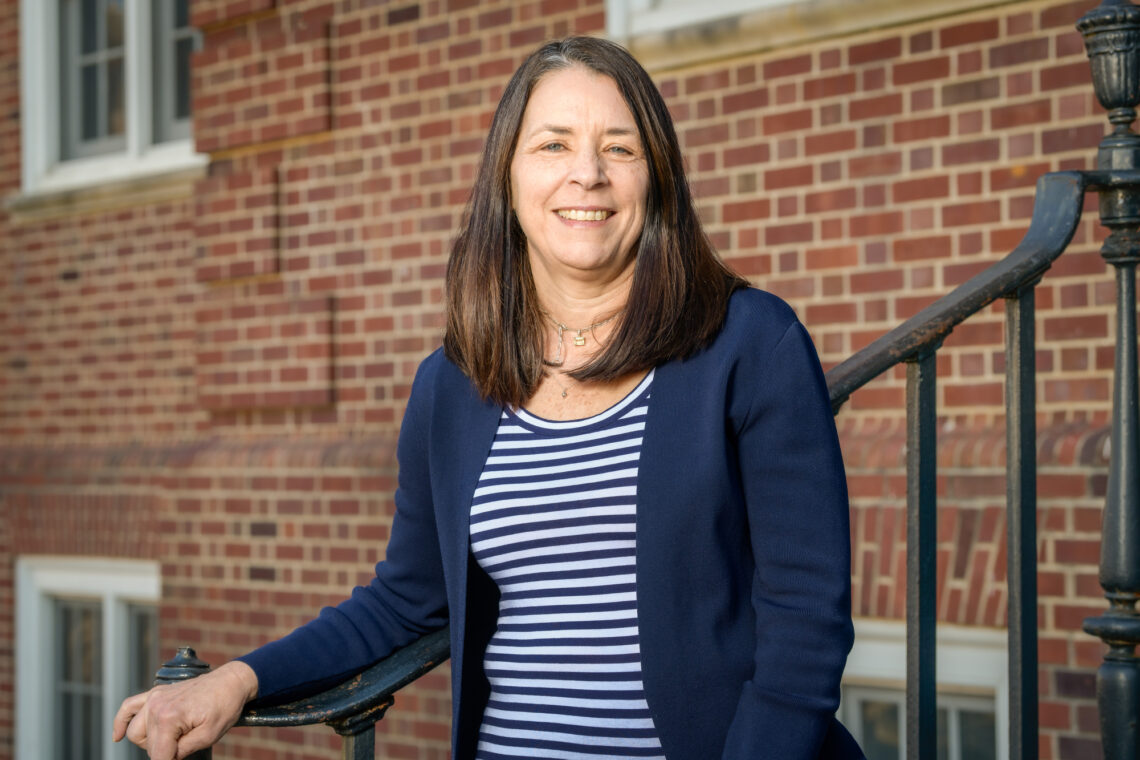
Nancy Averett
Photo by Craig Pessman

What is science literacy?

Scientific literacy means using the scientific method to create a systematic process, free of as many biases as possible, to uncover evidence to answer a question.

A scientifically literate person understands that science rarely deals in absolutes. If a study shows there’s a 95% chance that smoking and cancer are linked, then most scientists would say the link is real — even though there’s a small amount of room for doubt. And any scientifically derived result should be reproducible by independent researchers using the same methods.

A scientifically literate person also should understand that scientific knowledge evolves as younger scientists build upon, or occasionally tear down, the theories of the scientists that came before them.

Why is it important for the average American to keep up to date on science news?

We’ve thrived as a nation, in part, because of the incredible scientific breakthroughs that have happened in the past century. For example, most of us don’t wake up in the morning worried about contracting smallpox or having to light a candle to illuminate our bedroom.

But our way of life was built for a world in balance, and now we are out of balance with nature and drastically changing the world. Our warming planet is amping up weather-related disasters like Hurricane Helene and the Los Angeles wildfires. We’re also experiencing incredible technological advances that could lead to more scientific breakthroughs but that also threaten our humanity.

These problems impact our food, our health and our economic stability. Rather than turning away from science at this time, we should embrace it. Science is unique in that it can uncover the truth or at least the truest version of the truth, and information is power.

What are some potential problems with consuming science news in today’s media environment?

People get their news from a wide range of sources that may or not be trustworthy. For example, popular podcaster Joe Rogan told his viewers that he wasn’t going to get the COVID-19 vaccine because he worried about its safety. This undoubtedly led to some people deciding not to get the vaccine even though Rogan had zero evidence that it was unsafe.

Even journalists in more traditional media are notorious for disliking math and not understanding things like statistics. They tend to shy away from science or fail to explain it in a way that helps people understand why it’s important. They’re also intimidated by scientists, so they don’t press the scientists to explain their work in an understandable way.

There are ways for journalists and scientists to combat these problems. For example, one acclaimed environmental health researcher went on Joe Rogan’s podcast to talk about her research looking at how certain chemicals are disrupting fertility. She wanted to get her message about the dangers of these chemicals to as many people as possible, so she didn’t just stick to more mainstream media outlets.

I think scientists are getting better at recognizing that if they want the public to understand and appreciate what they do, they need to communicate better. And when students take classes like my science journalism class, they gain confidence that they can cover science.

How can readers fact-check scientific claims in the media?

Readers can always look at the original source. Any scientific claim should have been published in a reputable scientific journal. That means it has gone through peer review — scientists, who were not involved in the research, have examined how the study was organized, the methods used, the sample size, how it dealt with various biases that might creep into the research, and the statistical analysis.

In one of my journalism classes, I show students an Instagram post from a lifestyle influencer who posts about the “health benefits” of drinking raw milk. The influencer quoted part of a study, so I asked my students to look up the study and read the abstract. They found that while the influencer had quoted part of the study accurately, she’d left out another part that described the dangers of drinking raw milk.

Another issue is reproducibility. If scientists from different institutions and parts of the world are in general agreement with a scientific claim, it’s more likely to be true. For example, a consensus of the world’s scientists agree that fossil fuel use is linked to the warming of Earth’s surface.

Another approach is to go to a reputable fact-checking source such as Snopes, Mediawise and Politifact.

Is there any way readers can spot potential author/media outlet bias in science stories?

Yes. Be aware of headlines that claim absolutes such as a scientific study had 100% effectiveness. Science just doesn’t work that way. The most a study can show is that there’s a strong chance that something works or is true.

A good science news story will include an outside source — someone in the same field as the scientist who was not involved in the research. This source may offer criticism of, or skepticism about, the study, or they may praise it. I would be skeptical if a news story doesn’t include an outside voice.

Consider the scientist who led the study. Are they affiliated with an institution known for producing good science? The journal Nature just published an analysis of the universities with the most retracted journal articles in science. You can also check the website Retraction Watch and type in a researcher’s name to see if they’ve published any studies that were later retracted.

There are also some simple things to think about when evaluating a study or a story about a study. How many subjects were part of the experiment? The smaller the number, the less robust the findings. What type of study is it? There are observational studies, where the scientist carefully observes something and makes conclusions; experimental studies where scientists manipulate two or more variables to find an answer; and randomly controlled trials. The latter is the gold standard.

The media is supposed to present the news without taking sides, but that doesn’t mean they should give equal weight to both sides. Going back to the example of fossil fuels and global warming, there’s very strong evidence gathered from many scientists that the two are linked. So I think journalists should be able to report on climate change or vaccines as a way to stop the spread of disease without giving equal support to climate change deniers or anti-vaxxers.

There is also a potential for journalists to put scientists on a pedestal and never question their findings. That’s a more subtle kind of bias. Scientists do make mistakes; they can have implicit biases or their funding may support research that’s not necessarily in the public’s best interests. Journalists should approach their work with some healthy skepticism.

Editor’s note:

To reach Nancy Averett, email naverett@illinois.edu.

View original press release.

Share on social

Advertising and ICR faculty, students present research at 2025 American Academy of Advertising Conference


Advertising faculty and graduate students in the MS advertising and ICR doctoral programs, as well as several alumni, participated in the 2025 annual conference of the American Academy of Advertising, held March 6-9 in Pittsburgh, Pennsylvania.

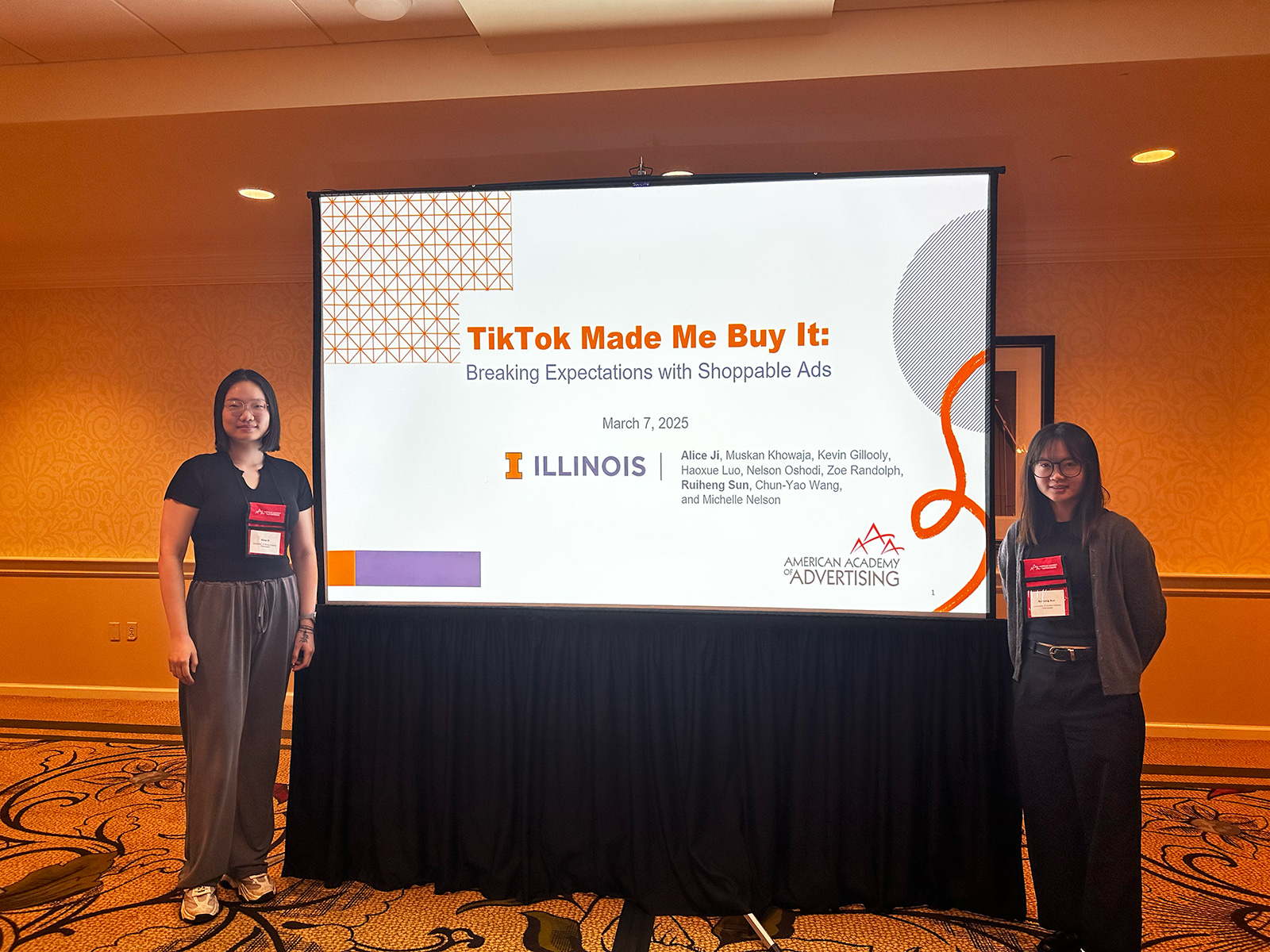
ADV and ICR students at 2025 AAA
ICR doctoral student Alice Ji and advertising graduate student Ruiheng (Rachel) Sun co-present “TikTok Made Me Buy It” at the 2025 AAA conference.

Faculty and graduate students participated in eight paper presentations and three panels, discussing research and ideas related to teaching AI and advertising, disability, ethics and data, and more.

As vice president of AAA, Chang-Dae Ham, professor of advertising and associate head of graduate studies, organized the research paper reviews and conference program and Kevin Wise, professor of advertising, served as chair of AAA’s graduate student committee.

The full list of Illinois papers and authors included:

“Finessing Realism: Harmonizing Behavioral Realism and Message Framing in Virtual Influencer Advertising – Mind Perception Theory Application”
Seo Jeong Heo, Se Il Park, Floria Yujin Lee

“Does Authenticity Matter? The Impact of Visual Realism and Humanlike Expressions on the Effectiveness of Virtual Influencers”
Jinping Wang (University of Florida), Assistant Professor Guolan Yang

“Navigating Consumer Acceptance of Cultured Meat: An Exploratory Narrative Review of Communication Strategies”
Ziyang Gong, Tianli Chen, Yan (Anna) Liu, Associate Professor Leona Yi-Fan Su, Jingen Xuan

“In Watermark We Trust? Exploring How Consumers Cope with AI Influencer Advertising: Multidimensional Persuasion Knowledge and Construal Level Approach”
Se Il Park, Floria Yujin Lee, Seo Jeong Heo

“TikTok Made Me Buy It: Breaking Expectations with Shoppable Ads”
Alice Ji, Muskan Khowaja, Kevin Gilloly, Haoxue Luo, Nelson Oshodi, Zoe Randolph, Ruiheng Sun, Chun-Yao Wang, Professor and Head Michelle Nelson

“Exploring How Consumer Evaluation of Social Justice Issues Influence Brand Activism Effectiveness”
Assistant Professor Louvins Pierre, Carolyn Lin (University of Connecticut)

“Understanding Consumer Engagement with Vertical Farming Brands on Twitter: An Approach Using Guided Latent Dirichlet Allocation for Topic Modeling”
Junqi Shao, Tianli Chen, Associate Professor Leona Yi-Fan Su

“When Virtual (vs. Human) Celebrity Voice Matters: Interplay between Celebrity Type and Endorsing Message – Construal Level Theory Application”
Floria Yujin Lee, Seo Jeong Heo, Se Il Park

Panels

“Teaching Data Ethics in Advertising: Pedagogical Approaches That Meet Industry Demand“
Natalie Brown Devlin (University of Texas at Austin), Associate Professor Ewa Maslowska, Daniela Molta (Syracuse University), Associate Professor Harsh Taneja

“Generative AI and the Future of Advertising Creativity: Bridging the Gap Between Academia and Industry”
Weizi Liu (Texas Christian University), Yanyun (Mia) Wang (University of Boulder), Assistant Professor Louvins Pierre, Tripp Westbrook (Firehouse Agency), Linda Groendyke (Digital Insights Labs), Jon Irwin (Liquid Agency)

“Disability DEI in Advertising: Preparing Future Advertising Professionals to Embrace Disability Authentically in Their Work”
Cathy Chan Butler (American Association of Advertising Agencies), Josh Loebner (VML), Professor and Head Michelle Nelson, Edward Timke (Michigan State University), Beth Haller (Towson University), Erin Whiteside (University of Tennessee), Summer Shelton (Limelight Insights by Shugoll), Maria DeMoya (University of Tennessee), Eric Haley (University of Tennessee)

Share on social

Advertising, ICR alum receives prestigious 2025 Erwin Ephron Demystification Award


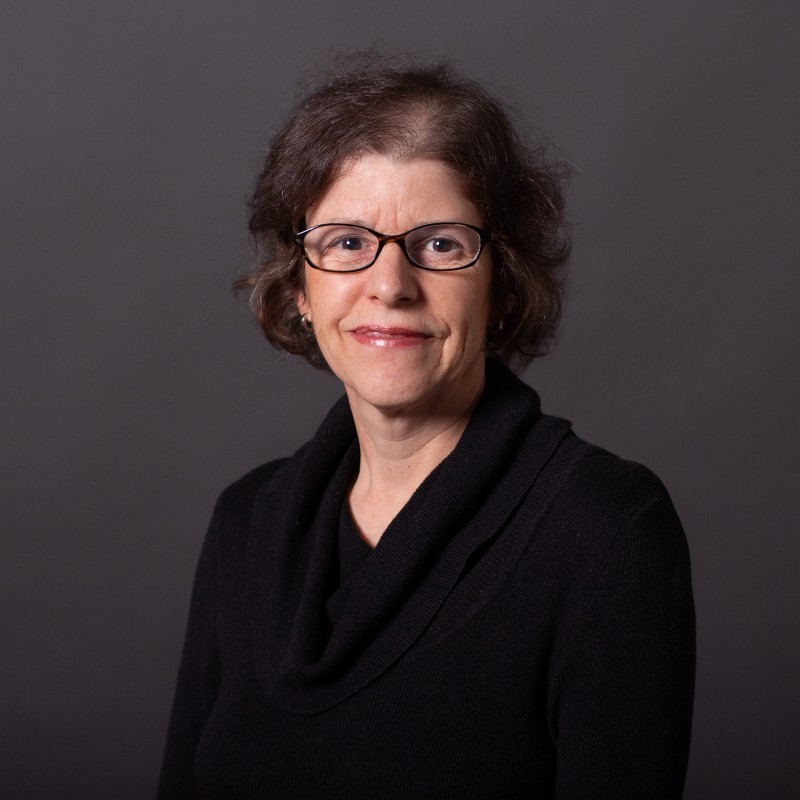
hlen Katz

Helen Katz (MS ’86, advertising; PhD ’88, ICR), EVP of Research at Publicis Media, has been named the recipient of the prestigious 2025 Erwin Ephron Demystification Award. This lifetime achievement award honors industry leaders who are exceptional communicators and excel in making complex subjects accessible, embodying the spirit of legendary advertising research guru Erwin Ephron.

Katz, the 11th recipient of this esteemed award, has had a significant impact throughout her career, most recently leading the global data intelligence practice at Publicis Media. In her speeches and writings, Katz has consistently and passionately argued that effective media selection requires reliable measurement based on high-quality data.

She has also distinguished herself as a teacher, serving as an adjunct professor at both DePaul University and New York University. In addition to numerous articles in industry publications and academic journals, Katz has authored three textbooks on advertising and media, including the widely acclaimed The Media Handbook, now in its 8th edition. 

Katz is a member of the U.S. Joint Industry Committee on alternative currencies, a member of the Media Rating Council, and of the ARF Board of Trustees. She served on the James Webb Young Advisory Board and continues to support the Charles H. Sandage Department of Advertising through case studies for classes. 

Read more.

Share on social

Advertising alum Armando Sanchez-Monsivais chosen for AAF’s Most Promising Rising Star Award


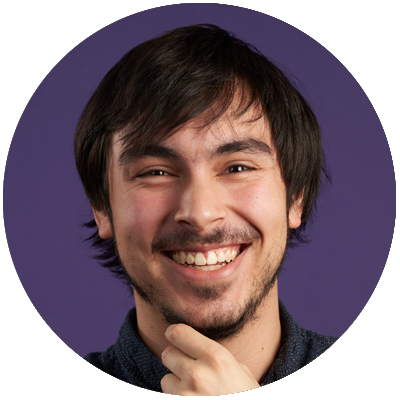
Armando Sanchez Monsavais

Armando Sanchez-Monsivais (BS ’19, advertising), integrated marketing manager at Discord, received the American Advertising Federation’s Most Promising Rising Star Award for 2025.

The Most Promising Rising Star Award recognizes alumni who have made notable contributions to the advertising industry within five to eight years of graduating from the Most Promising program.

This accolade celebrates individuals who have demonstrated exceptional talent, leadership, and innovation in their careers, making a significant impact on the field and championing an inclusive industry along the way.

Recipients of this award embody the values and excellence that the Most Promising program instills in its inductees and serve as inspiring role models for current students and aspiring advertising professionals.

At Discord, Sanchez-Monsivais’sjob is to ensure the platform’s features, partnerships, and brand reach gamers in an impactful way that makes them excited to hang out and game with their friends. 

He has served on the advisory board for We Are Next, where he spearheaded the Brand Ambassador Program, the Young Talent in Tech team, and the widely popular Coffee at a Distance.

In addition to serving on the Charles H. Sandage Department of Advertising’s James Webb Young Advisory Board, he is also on the AAF’s Mosaic Next Generation Leadership Council, ADCOLOR Advisory Board, and Creative Ladder Alumni Advisory Council. 

Share on social

DEV College of Media
119 Gregory Hall
810 S. Wright St.
Urbana, IL 61801
217-333-2350