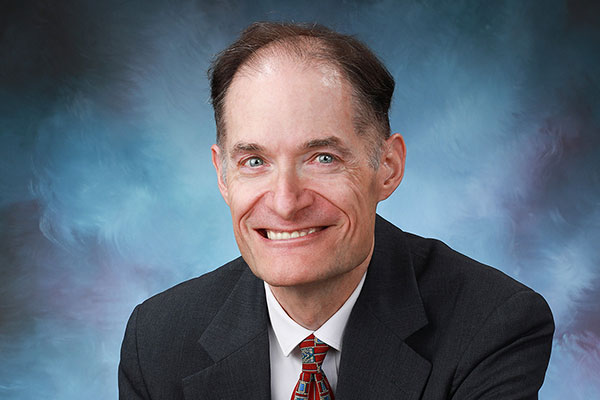
New book by Matthew Ehrlich explores the history of the phony cancer drug Krebiozen


In March 1951, Andrew Ivy—at the time, one of the most renowned scientists and medical ethicists in the U.S.—held a press conference in Chicago to announce Krebiozen, a recently discovered wonder drug that Ivy said could dramatically help cancer patients. The announcement created a frenzy among cancer patients, who deluged the University of Illinois’ Chicago campus, where Ivy was vice president in charge of the professional schools at the time, with telephone calls trying to obtain it.

Matthew Ehrlich

But within a few months, Krebiozen was denounced by the American Medical Association and, a few years later, Ivy, the drug’s creator Stevan Durovic and some of their supporters were prosecuted for fraud.

The dramatic Krebiozen saga culminated in Durovic fleeing the U.S., Ivy’s reputation in ruins and two of his U of I colleagues—President George Stoddard and Provost Coleman Griffith—ousted from their positions, in part because of their association with the scandal.

The Krebiozen Hoax: How a Mysterious Cancer Drug Shook Organized Medicine, a new book by Matthew C. Ehrlich, a professor emeritus of journalism at Illinois, examines the controversial drug’s dramatic rise and fall.

Although the sensational story of Krebiozen has since faded into obscurity, Ehrlich said that its lessons are relevant today, offering potent reminders about the dangers of medical misinformation, misplaced trust and the unquestioning adoption of unproven treatments. “The Krebiozen Hoax” is also a cautionary tale about the pitfalls of hubris and how the political climate can undermine public trust in established institutions and mainstream medicine.

According to the author, Krebiozen was “a quintessential example of medical quackery” that “foreshadowed today’s bitter debates over health misinformation, medical freedom and scientific and educational expertise.”

Krebiozen also marked a “key historical moment for the Food and Drug Administration,” which was then flexing new regulatory powers, and its stance on that drug triggered backlash from cancer patients and accusations of medical overreach when the agency reported the drug was worthless as a cancer treatment, refused to license it and blocked its interstate shipment. 

“It was a big episode, not just in the history of the U of I but also in the history of the whole state of Illinois, since the legislature and the governor got involved,” Ehrlich said. “And then, of course, it became a national deal with the involvement of the FDA and the National Cancer Institute. Illinois Senator Paul Douglas and even President Lyndon Johnson at one point got sucked into this whole thing.”

The story of Krebiozen is a poignant reminder that these travails are nothing new, but instead have ample historical precedent. It is also a reminder of the damage that can be inflicted when quackery and all the untruths that accompany it go unchecked for too long.

The book details how Durovic, an unknown doctor who had never published peer-reviewed research on the drug’s performance, duped a world-renowned clinician and scores of vulnerable patients who were desperate to find a cure for a frightening disease. 

Ever evasive about the medicine’s formula and origins, Durovic indicated that it was derived by stimulating horses’ immune systems and extracting their blood, a potential form of immunotherapy that piqued Ivy’s research interests in the body’s defenses against cancer and may have clouded his professional judgment.
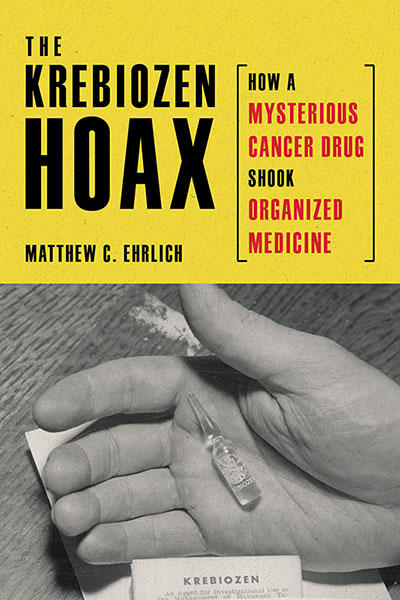
The Krebiozen Hoax book

“Where I think Ivy went wrong is when he dug in his heels and refused to listen when first his close friends, then his scientific associates and prominent groups and organizations told him Krebiozen was worthless,” Ehrlich said. “He really seemed to have a natural stubbornness and a strong ambition to make a lasting contribution to science that may have gotten the best of him. And he never renounced Krebiozen, despite all the personal and professional travails that befell him.”

Ehrlich’s book examines how public excitement over the drug elevated Ivy’s Sisyphean pursuit of clinical trials and federal approval for the drug to a nationwide cause, attracting A-list supporters such as movie star Gloria Swanson and environmentalist Rachel Carson, a cancer patient who briefly and unsuccessfully treated herself with it.

The battle to obtain “fair trials” of Krebiozen that advocates believed would demonstrate its efficacy once and for all pitted them against federal regulators, mainstream medicine and the AMA. Ivy and Durovic accused the AMA of conspiring with powerful corporate interests to keep Krebiozen off the market after failing to seize control of it. 

When the FDA refused to license the drug, angry demonstrators besieged the White House, with cancer patients waving picket signs declaring, “I need Krebiozen to live!”

“Krebiozen is one episode in a long, sorry series of such episodes, and that’s one of the reasons I wanted to write about it,” Ehrlich said. “It just had colorful characters involved, including Ivy, Stoddard, and Douglas.”

Ivy was a distinguished physiologist and medical ethicist who testified as a representative of the AMA at the Nuremberg trials and was once dubbed “the conscience of U.S. science” by Time magazine. His friend Douglas was a firebrand Democrat legislator and decorated war hero who became one of Krebiozen’s biggest supporters and foremost legislative sponsors. 

“And, like Ivy, once Douglas committed to it, he dug in and would not be dissuaded from it,” Ehrlich said.

Were it not for Ivy’s star power, political connections, rapport with the press and federal agencies’ confusion over which of them was responsible for regulating it, the Krebiozen controversy likely would have fizzled more quickly, according to the author.
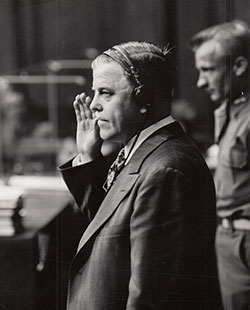
Dr. Andrew Ivy
Dr. Andrew Ivy

Ehrlich examines the historical conditions that existed when Krebiozen came to prominence and how they likely heightened the controversy surrounding the drug.

In Ehrlich’s exploration of Krebiozen’s tumultuous history, he notes that it was among nearly150 miracle cures for cancer that were touted at one time or another. The Krebiozen controversy copied the pattern of many such brouhahas that preceded it—and foreshadowed many of those that came after it, including controversial treatments for COVID-19 such as hydroxychloroquine, Ehrlich said. 

“People should be aware that these things happen from time to time,” Ehrlich said. “The story of Krebiozen is a poignant reminder that these travails are nothing new, but instead have ample historical precedent. It is also a reminder of the damage that can be inflicted when quackery and all the untruths that accompany it go unchecked for too long.”

The book was published by 3 Fields Books.


Editor’s note:    

To reach Matthew Ehrlich, call 217-333-1365 or email mehrlich@illinois.edu.

ISBN: 0252088115 

A press kit with photos of the author and the book’s cover is available from News Bureau.

View original press release.

Share on social

College of Media to hold three-part webinar series, ‘Bridging Divides: Conversations on Media and Disagreement’


How are we teaching students, and the broader community, to disagree? It’s a question the College of Media hopes to address in a new three-part series, “Bridging Divides: Conversations on Media and Disagreement.”

Update 11/13/24: Read excerpts from the Q&As:


Bridging Divides banner

Faculty from the Departments of Advertising, Journalism, and Media & Cinema Studies will host free webinars exploring how productive discussions occur across lines of disagreement and difference. All take place on Fridays at noon via Zoom, on October 18, October 25, and November 1.

“The College of Media’s ‘Bridging Divides’ series is an opportunity to foster civic preparedness through expert-led dialogues,” said Dean Tracy Sulkin. “We look forward to welcoming students, faculty, staff, alumni, and community members to these important conversations.” 

The talk topics and panelists include:

Reaching across the Aisle: Advertising and Messaging in an Age of Polarization

October 18, 12-12:45 p.m.
Register to join via Zoom.

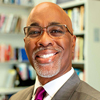
Jason P. Chambers

Jason P. Chambers, Associate Dean for Diversity, Equity, and Inclusion; Professor, Charles H. Sandage Department of Advertising; author of Advertising Revolutionary: The Life and Work of Tom Burrell

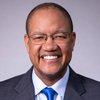
Michael Strautmanis (BS ’91, advertising; JD ’94, law), Executive Vice President for External Affairs, Obama Foundation 


What Does It Mean to Be an Informed Critic? 

October 25, 12-12:45 p.m.
Register to join via Zoom.
Learn how to give criticism a good name. During this session, the panelists will share a how-to for every kind of writer.

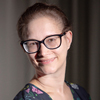
Jenny Oyallon-Koloski, Assistant Professor, Department of Media & Cinema Studies; author of Storytelling in Motion: Cinematic Choreography and the Film Musical

Michael Phillips, Chicago Tribune Film Critic; College of Media Ebert Fellows Mentor


Engaging with People, Perspectives, and Policies When You Don’t Agree: Lessons from Journalism

November 1, 12-12:45 p.m.
Register to join via Zoom.

Leon Dash, Professor and Swanlund Chair, Department of Journalism; 1995 Pulitzer Prize Winner for Explanatory Reporting

Colleen King, Clinical Assistant Professor, Department of Journalism; Director of the Richard and Leslie Frank Center for Leadership and Innovation in Media; former Executive Producer for MSNBC’s The 11th Hour with Brian Williams  

Share on social

Journalism alum Thomas Winski receives IJEA Lifetime Achievement Award

Winski

Thomas Winski (MS ’75, journalism) was selected to receive the 2024 Illinois Journalism Education Association Lifetime Achievement Award. Winski accepted the award on September 20 at the annual IJEA conference at Illinois State University.  

Each year, the IJEA seeks to honor retired individuals for a lifetime of dedication to scholastic journalism. 

Winski was an assistant professor of journalism at Lindsey Wilson College in Kentucky for four years before joining the faculty at Emporia State University in Kansas. There, he served as assistant professor of journalism for 16 years and co-director of the journalism program until his retirement.

Alumna Cheryl W. Thompson to receive Washington Association of Black Journalists Legacy Award

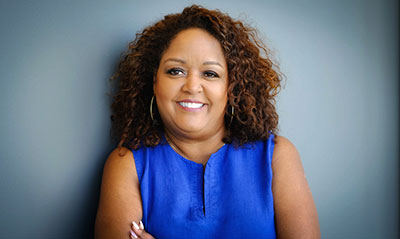
Cheryl W. Thompson

Cheryl W. Thompson (BS ’82, LAS; MS ’84, journalism), investigative correspondent and senior editor at NPR, and associate professor at George Washington University, will receive the 2024 Washington Association of Black Journalists Legacy Award.

This award recognizes a current or retired journalist or journalism educator in the Washington, D.C., area who has broken barriers and/or provided distinguished leadership in increasing access and opportunities to people of color in journalism. 

Thompson will be honored at the third annual WABJ Special Honors & Scholarship Gala on Saturday, Dec. 7, at the Blackburn University Center, Howard University. 

“As the first elected Black president of the Investigative Reporters and Editors organization, and as an associate professor of investigative reporting at George Washington University, where she founded and also advises an NABJ student chapter, Cheryl has forged an exemplary pathmaking career rooted in strengthening the next generation qualifying her as a worthy recipient of WABJ’s Legacy Award,” the WABJ Awards Review Committee said. The Investigative Reporters and Editors is a 6,000-member organization dedicated to enhancing the quality of investigative journalism. 

Thompson has worked at Champaign-Urbana’s News-Gazette, Chicago Tribune, The Kansas City Star, Los Angeles Daily News, The Gainesville Sun, and The Washington Post, where she wrote extensively about law enforcement, political corruption and guns, and was a White House correspondent during President Barack Obama’s first term.

She has received numerous awards for her investigative reporting, including an Emmy, three sharedPulitzer Prizes, and five awards from the National Association of Black Journalists, one awarded in 2019 for a Washington Post Sunday Magazine story on the nearly 50-year-old unsolved murders of six little black girls in D.C. 

Thompson is a member of the Alpha Kappa Alpha Sorority, Inc. and received the NABJ Educator of the Year Award in 2017. She’s also a founding and current board member of the Center for Collaborative Investigative Journalism, which focuses on cross-border investigations.

Historic gift from Richard and Leslie Frank totals $10.5M for College of Media


With their latest $2.5 million donation, Richard and Leslie Frank increased their historic gift to the College of Media to upgrade classrooms on the lower level of Gregory Hall.

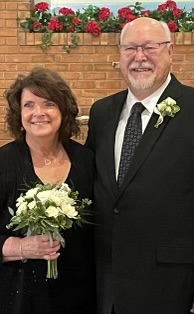
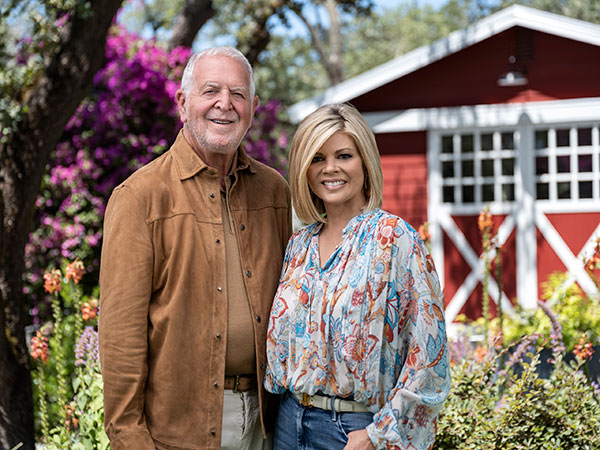
Richard and Leslie Frank
The couple’s latest $2.5 million donation will fund the renovation of classrooms on the lower level of Gregory Hall, located on the University of Illinois Quad, and will create a new hybrid, flexible classroom as the centerpiece.

The new funding will enable a substantial renovation of the lower level of Gregory Hall, with the creation of a new hybrid, flexible, or hyflex, classroom as the centerpiece.

The new multipurpose classroom, which will be constructed in the space that currently houses two smaller classrooms and an office, will boast features that all three departments in the College of Media will be able to take advantage of—such as advertising brand consultations, journalism press conferences, and media and cinema studies production—and enable hybrid teaching and conferencing. 

“Because we believe in the fundamental impact that media has on our society, we want to continue to invest in our future media leaders at the University of Illinois,” said Rich Frank. “We’re excited to establish a new state-of-the-art space that will support the excellence of the College of Media, and we hope to inspire other donors to make gifts that leave a lasting impact on the college.”

The gift will also renovate the lower level, featuring a more modern design such as new flooring, painted walls throughout the entire hallway, including the east and west wings, and digital signage. Substantial work in that part of Gregory Hall has not occurred since the 1990s. The project details are underway; work will begin in summer 2025.

The College of Media is deeply thankful to Richard and Leslie Frank for their generous investments that not only have expanded opportunities for our current students and faculty but will continue to facilitate an enriched experience for those to come.

“This new gift will create a showpiece in Gregory Hall,” said Dean Tracy Sulkin. “The College of Media is deeply thankful to Richard and Leslie Frank for their generous investments that not only have expanded opportunities for our current students and faculty but will continue to facilitate an enriched experience for those to come.”

The Franks’ original gift of $7.5 million in 2020 is the largest gift ever made to the College of Media. That gift enabled the creation of the Frank Newsroom at Richmond Studio, the college’s broadcast teaching facility, and endowed the Richard and Leslie Frank Center for Leadership and Innovation in Media.

Having each experienced professional success in media and entertainment, the Franks are committed to creating a positive impact in media for generations.

Rich Frank, who received his bachelor’s degree in marketing from the University of Illinois, began his career at the advertising agency BBDO in New York City before moving to Los Angeles to work as a Sales Manager at KTLA. He then served as President of Chris-Craft Broadcasting. In 1977 he became President of Paramount Television Group, overseeing the creation and production of such shows as Taxi, Family Ties, and Cheers as well as the creation of the groundbreaking entertainment news show, Entertainment Tonight. In 1985 he became President of Disney Studios. Under his leadership, the studio created iconic sitcoms such as The Golden Girls and Home Improvement, and films including Good Morning Vietnam, Dead Poets Society, and The Lion King. He also oversaw the launch of the Disney Channel. Rich served three terms as President of the Academy of Television Arts and Sciences. In 2007, the Academy of Television Arts and Sciences recognized him with the prestigious Syd Cassyd Founder’s Award. In 2011, Rich received an honorary doctorate from the American Film Institute where he is currently a Vice Chairman on the AFI’s Board of Directors. Rich previously served on the board of the Motion Picture Association of America. His archival interview with the Television Academy provides a fascinating historical perspective of the evolution of modern television: https://bit.ly/3iQvS7s. 

Born in Hamilton, Ontario, Leslie Frank began her career in Canada before crossing the border to work in some of the largest television markets in the United States. She spent more than 25 years covering many major stories including the 9/11 attacks, where she reported live from ground zero in New York City, as well as from the scene of the devastating aftermath of Hurricane Katrina, and inside the courtroom at the Michael Jackson trial. Leslie spent the last nine years of her TV news career reporting and anchoring at the number one rated station, KABC in Los Angeles, where she covered politics, crime, weather calamities, as well as interviewing some of the biggest stars in Hollywood on the red carpet. Prior to Los Angeles, Leslie was the main anchor at KCPQ in Seattle, where she took the 10 pm newscast to number one in its time slot and clinched an Emmy for outstanding news anchor. In 2024, she joined the board of directors of Treasury Wine Estates Ltd.

Leslie and Richard are former owners of Frank Family Vineyards, a highly acclaimed luxury wine business based in the Napa Valley, California, that was acquired by Treasury Wine Estates in 2021.

Under the leadership of its inaugural director, Colleen King, clinical assistant professor of journalism, the Frank Center has brought media industry leaders to campus for free and public events including Steve Kornacki, Brian Williams, and on December 3, NBC News chief political analyst Chuck Todd. The Frank Center has also held virtual Q&As with Kara Swisher, Michael Steele, and Dan Balz. See recordings of these conversations with the Frank Center.

Share on social

Journalism alum Mike Carpenter writes book about Illinois basketball 

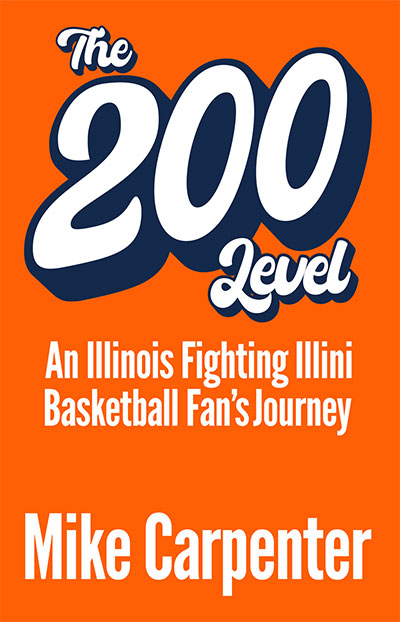
Carpenter book

Mike Carpenter (BS ’09, journalism) has written a book about the last 30+ years of Illinois basketball, The 200 Level: An Illinois Fighting Illini Basketball Fan’s Journey, which will be released on October 3.

The book is a mix of personal narrative and sports journalism, charting the ups and downs of the program while reflecting on Carpenter’s own personal experiences as a fan.

Carpenter was a sports talk broadcaster and podcaster for ESPN 93.5 from 2011 through 2019. He’s hosted his own podcast on Illini sports, The 200 Level, for the past five years. 

Learn more.

Media faculty and TAs make list of teachers ranked as excellent


Congratulations to all the College of Media faculty and teaching assistants who were ranked as excellent by their students!

Congrats image

This list is based on Instructor and Course Evaluation System questionnaire forms completed by students during the Spring 2024 semester. Only those instructors who distributed ICES forms at least once during this time period and who released their data for publication are included in the list. View the complete list.

Note: * denotes that the instructor ratings were outstanding.

ADVERTISING

ANDREW GLEASON – ADV 490

STEVE HALL – ADV 150

TERRY KASDAN – ADV 409

EWA MASLOWSKA – ADV 594

SHACHAR MERON – ADV 250

MICHELLE NELSON – ADV 582

*MARISA PEACOCK – ADV 290, ADV 498

*ALLISON VANCE – ADV 350

CARRIE WILSON-BROWN – ADV 393

KEVIN WISE – ADV 588

*MIKE YAO – ADV 461 


JOURNALISM

*CHRISTOPHER BALL – JOUR 430, JOUR 451

STEPHANIE CRAFT – JOUR 205

*ALISON DAVIS – JOUR 215, JOUR 340

COLLEEN KING – JOUR 313

VINCE LARA-CINISOMO – JOUR 220

CHARLES “STRETCH” LEDFORD – JOUR 335

*CAROL LOMBARDI – JOUR 220

MARGARET NG – JOUR 425


MEDIA & CINEMA STUDIES

ANGELA AGUAYO – MACS 391

VICTOR FONT – MACS 480

JONATHAN KNIPP – MACS 282

SUSAN MUIRHEAD – MACS 372

M. QUINONES-RIVERA – MACS 375


STRATEGIC BRAND COMMUNICATION

EWA MASLOWSKA – SBC 505

RICH PIECZYNSKI – SBC 504


TEACHING ASSISTANTS

K. COOK – ADV 284

X. DONG– ADV 250

W. DU – ADV 150

*N. FAISAL – ADV 250

M. FUKADA – ADV 284 

*Y. LEE – ADV 360

A. LIU – ADV 150

*M. LYERLA – ADV 150

*S. PARK – ADV 360

Z. RANDOLPH – ADV 284 

*J. CINTRON – MACS 100 

Y. GAO – MACS 101

*Y. KANG – MACS 101

J. OH – MACS 100

*J. ZHANG – MACS 260

Share on social

Institute of Communications Research welcomes 2024 cohort of doctoral students


The Institute of Communications Research is excited to announce our newest cohort! Please learn more about the students’ research interests below and join us in welcoming them to the University of Illinois College of Media community this fall. For more information, see full ICR student profiles.

Haochen Ji

Haochen Ji earned her master’s degree in communication from Northwestern University and her bachelor’s degree in public relations from Boston University. Her primary academic interests focus on the impact of emerging technologies on communication, aiming to promote human-centered technology designs and proactively shaping positive digital communication. She is passionate about exploring how technologies like AI, video games, and interactive media influence people’s online behaviors and psychological well-being. She is also highly interested in utilizing mixed methods, especially computational approaches, to investigate specific problems.

Yujin (Floria) Lee

Yujin (Floria) Lee earned her master’s and bachelor’s degrees in advertising from the University of Illinois Urbana-Champaign. Her interests include virtual reality, artificial intelligence, social media marketing, celebrity endorsement, media usage, and cultural analysis.

Gustavo Nery

Gustavo Nery earned a bachelor’s in journalism from the University of Fortaleza and a master’s in theatre studies from Illinois State University. Gustavo has professional experience as a film critic, reporter, and editor for books, magazines, and newspapers. His main area of research is television, film, theatre, and media studies. Interests include coming-of-age and teen cinema, queer cinema, Brazilian cinema, film theory and criticism, popular music, theater professional recordings, film biopics, and narrative theory.

Gillian Paxton

Gillian Paxton is a researcher with interests in media literacy, scholastic journalism, visual communication, and education. She has actively blogged about media, including reviews and analysis, since she was in high school.

Duo Wang

Duo Wang is a researcher and entrepreneur committed to exploring the convergence of mixed reality and generative AI for the next generation of immersive interaction and 3D storytelling. His research interests include virtual/augmented reality (VR/AR), human-AI communication in virtual environments, XR+AI simulation in healthcare, generative AI in immersive media, and human-computer interaction.

Kendra Williams

Kendra Williams is a researcher with interests in critical cultural studies, Black popular culture, television and film, and race and media representation.

Nansong Zhou

Nansong Zhou is interested in the dynamic interactions between games, technology, and society. His research encompasses the global media industry, China studies, and game studies, focusing on two primary research areas including the formation of the global video game industry and how video games integrate with AI and VR technologies, along with their impacts and potential.

Share on social

College of Media welcomes Fall 2024 with faculty promotions, new leadership roles, new faculty


This fall, seven faculty in the College of Media have been promoted, two faculty have taken on new leadership roles, and three new faculty have been hired.

Hallene Gateway

In the Charles H. Sandage Department of Advertising, promotions include Chang-Dae Ham to full professor, Leona Su to associate professor with indefinite tenure, and Dionne Clifton and Marisa Peacock to senior lecturers. Two new assistant professors of advertising, Louvins Pierre and Guolan Yang, joined this fall.

In the Department of Journalism, Margaret Ng has been promoted to associate professor with indefinite tenure. Melita Garza, associate professor and Tom and June Netzel Sleeman Scholar in Business Journalism, will serve as the director of graduate studies. Cassandra L.C. Troy joined as a new assistant professor of journalism.

In the Department of Media & Cinema Studies, promotions include Derek Long to associate professor with indefinite tenure and Victor Font to senior lecturer. Long will also serve as the director of graduate studies for the Institute of Communications Research. Professor Julie Turnock, the inaugural director of the Roger Ebert Center for Film Studies, has returned from sabbatical and will resume the Ebert Center director duties.

Share on social

New advertising professor Louvins Pierre centers research on social, psychological consumer factors


Louvins Pierre can trace his interest in advertising back to childhood. 

Louvins Pierre

“As a kid, I often watched advertisements because I found them funny. In hindsight, it may have been my underlying interest in the advertising and how [it was] effective that caused me not to change the channel,” Pierre said. “One ad that comes to mind is Apple’s original iPod commercial with music and dancing silhouettes, which directly influenced me to ask my parents to buy me one for either my birthday or Christmas. Another includes McDonald’s 2005 ad that used humor to communicate when you work hard for your money, you should spend it wisely on their value menu.”

Pierre will bring his long-time advertising interests and expertise to Illinois this fall as an assistant professor in the Charles H. Sandage Department of Advertising with an appointment in the Institute of Communications Research.

Pierre said the reputation of the Sandage Department of Advertising, and the many prominent scholars within, helped inform his research and drew him to pursue a position at Illinois.

“I am looking forward to working with and learning more about the work of others throughout the College of Media and the university,” he said. 

The advertising department is well known nationally and internationally as a major outlet for advertising research. Being in an environment filled with bright and motivated students and faculty will be a truly rewarding opportunity.

This fall, Pierre, who earned a BA in communication at Tuskegee University in Alabama, and an MA and PhD in communication at the University of Connecticut, will be teaching ADV 284: Consumer Insight, a class designed to teach students how to build a brand strategy that puts the desires and needs of the consumers first—a subject with which he’s very familiar. 

Pierre’s dissertation examined how consumer evaluations of advertising about two similar, yet different, social issues, “Black Lives Matter” and “Stop AAPI Hate” could vary. 

Using both an in-person laboratory experiment with Gen Z consumers—who are believed to highly value brand activism—and a follow-up online experiment with older consumers from the general population, Pierre explored whether consumers evaluate advertising about these social issues differently; what multimedia components of the advertisement affect consumer evaluations; and what internal factors influence consumer evaluations.

One of his key insights included “evidence that when you visually feature people who are adversely affected by the movement, it can improve consumer evaluations of the ad.” He also found that brand authenticity mattered, and ads that facilitated a sense of transportation or immersion were viewed more positively. Learn more about Pierre’s research.

Pierre is equally passionate about the research process and his teaching, and he considers the opportunity to make an impact on students amongst the most fulfilling aspects of a career in academia. 

“It is humbling and rewarding to know I helped [former students] gain either some practical experience as a research assistant or conceptual knowledge in the classroom. I look forward to being able to continue these efforts and more with the talented students at Illinois,” he said. 

Pierre says his teaching objectives are to guide students to understand the “why” behind advertising before showing them how they may apply concepts, and he aims to make the classroom experience interactive and relevant. 

He also encourages students to share their interests and career goals, which helps him to make adjustments to lectures and classroom activities to meet students’ needs. 

At Illinois, Pierre will continue his research on how brands influence consumer decision-making through advertising, with a focus on the social and psychological consumer factors.

Some of his potential projects include studying how consumer attitudes and knowledge about new technologies that more precisely target them (AI, algorithms, machine learning, etc.) relate to their consumption decision-making. 

For now, he’s most looking forward to working with fellow thought leaders in the Sandage Department of Advertising, as well as the students.

“The advertising department is well known nationally and internationally as a major outlet for advertising research,” Pierre said. “Being in an environment filled with bright and motivated students and faculty will be a truly rewarding opportunity.”

Share on social

DEV College of Media
119 Gregory Hall
810 S. Wright St.
Urbana, IL 61801
217-333-2350