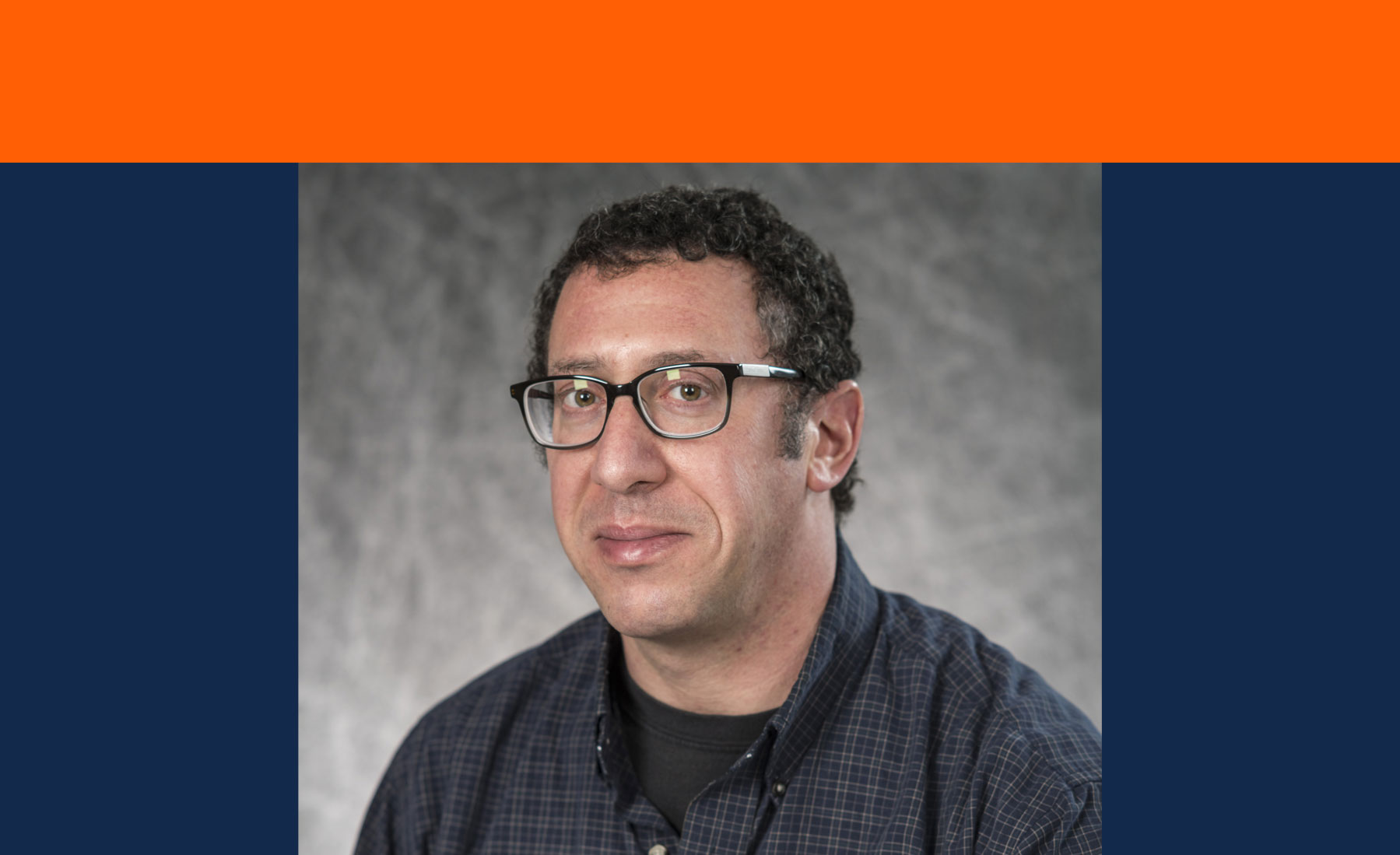
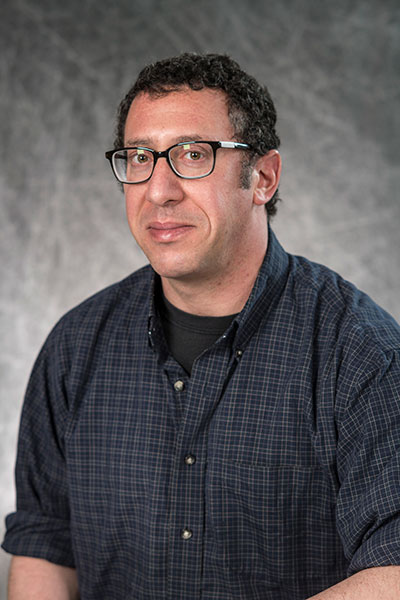
Josh Heuman, a teaching assistant professor in the Department of Media & Cinema Studies and the Department of Journalism, has been appointed by College of Media Dean Tracy Sulkin as a Dean’s Fellow for the coming academic year. Heuman will work with department and college leadership teams to facilitate activities around the college’s 2022-2023 annual theme of media literacy.
The idea for an annual theme emerged from the College of Media strategic planning process in 2020. Each year, college faculty and students brainstorm about possible themes and then vote to select among them. Last year, the inaugural theme focused on social justice.
“This is a critically important time to be examining media literacy,” said Dean Tracy Sulkin. “We’re excited to bring together perspectives from advertising, journalism, and media and cinema studies through class projects, college events, and public engagement. I’m very pleased to have Professor Heuman join our leadership team this year to support these initiatives.”
Heuman sees the theme as particularly timely. As the pandemic has increased our time spent online, there are concerns about how to be an informed citizen amidst the spread of misinformation.
“We are at a moment where the ways that we engage with media have qualitatively changed,” he said. “It’s hard not to peek out into the scary world outside and see lots of ways that [media literacy] is very relevant, whether we’re talking about the field of politics or social media, and [the effect it has on] young people.”
As part of his duties, Heuman will engage with IMEDIA, a joint collaboration between faculty in the College of Media and College of Education that is helping Illinois public school educators learn how to teach media literacy to students and hosted a media literacy workshop this summer.
“I think it’s a really exciting time to think about these questions, maybe at a more abstract level, but also to recognize and engage with the people who are putting these ideas on the ground, in schools across the state and other states, too,” he said.
Heuman’s own research explores media industries and regulation, especially in television, with an emphasis on the regulation of media work. He’s also interested in the evolution of the television writers’ room—the place where stories are first introduced.
“What kind of an environment is this, in which the stories that we see on the screen come to be formed and come to be shaped?” Heuman asked. “We have a sense of struggles and tensions and what’s at stake in the stories that we end up seeing on screen.”
As media literacy events are announced, Heuman invites faculty, students, and alumni, within the college and beyond, to engage in the conversations.
Associate Professor and Tom and June Netzel Sleeman Scholar in Business Journalism Director of Graduate Studies
Affiliations
Department of Journalism
Institute of Communications Research
Education
PhD in Journalism, University of North Carolina at Chapel Hill Hussman School of Journalism and Media
MBA, University of Chicago Booth School of Business
AB in Government, Harvard University
Course Specialties
Journalism History
Business Journalism
Diversity
Qualitative Research Methods
Oral History
Background
Melita M. Garza is an associate professor and the Tom and June Netzel Sleeman Scholar in Business Journalism in the Department of Journalism. She is the 2022-2023 Chair of the Standing Committee on Research for the Association for Education in Journalism and Mass Communication. She was a fellow at the Donald W. Reynolds National Center for Business Journalism. Prior to getting her PhD, Melita M. Garza was an award-winning journalist, working at the Chicago Tribune, Bloomberg news, and the Los Angeles Times during a two-decade-long career.
Melita Garza is an American journalism historian who studies news as an agent of democracy, specializing in English- and Spanish-language news, the immigrant press, and coverage of underrepresented groups. She is the lead editor of The Routledge Companion to American Journalism History (2024). She is the author of They Came to Toil: Newspaper Representations of Mexicans and Immigrants in the Great Depression (Austin: University of Texas Press, 2018), which was a finalist for the Tankard Book Award, the Frank Luther Mot/ Kappa Tau Alpha Award, and the National Association of Chicana and Chicano Studies (NACCS) Tejas Fojo Award. Her research has also won awards from the American Journalism Historians Association (AJHA), and the Association for Education in Journalism and Mass Communication (AEJMC) divisions of: History, Minorities and Communication, and International Communication.
Jennifer is currently a Ph.D. candidate at the Institute of Communications Research. Her research aims to equip communicators with theory-driven and evidence-based strategies to navigate the digital landscape more effectively. From a social scientific perspective, she examines how social media messaging strategies in Public Service Announcements (PSAs)—particularly humor and visuals—shape public opinion, cognitive processing, and behavioral intentions. She also investigates social media environments, particularly what branding content generates social buzz.
Her dissertation explores the persuasive impact of visual formats on shaping public understanding of health. Using a multi-method design combining experiments and eye-tracking, this dissertation examines the cognitive mechanisms underlying visual message processing in health misinformation contexts. This work advances theoretical understanding of how people process visual misinformation and corrections. It offers practical implications for designing effective health promotion campaigns.
Recent Publications/Presentations
McKasy, M., Yeo, S. K., Zhang, J. S.#, Cacciatore, M. A., Allen, H. W.#, & Su, L. Y.-F. (2025). Support for regulation of enhanced geothermal systems research: Examining the role of familiarity, credibility, and social endorsement. Geothermal Energy, 13(1), 19. https://doi.org/10.1186/s40517-025-00346-5
Yeo, S. K., Freiling, I., Yeon, J.#, Zhang, J. S.#,McKasy, M., Cacciatore, M. A., Su, L. Y.-F., & Siskind, S. R. (2025). Satire and perceptions of aggressiveness and trustworthiness in communication about renewable energy. Science Communication. https://doi.org/10.1177/10755470251345746
Zhang, J. S.#, & Su, L. Y.-F. (2025, November). More vivid, more deeply processed: Exploring the roles of message format in misinformation and correction of health misbeliefs. 111st National Communication Association (NCA) Annual Convention, Denver, CO.
McKasy, M., Cacciatore, M. A., Yeo, S. K., Zhang, J. S.#, Cook, J., Olaleye, R.#, & Su, L. Y.-F. (2024). Engaging the dismissive: An assessment of strategies to support global warming action. Public Understanding of Science, 33(2), 227-240. http://doi.org/10.1177/09636625231186785
Freiling, I., Cacciatore, M. A., Su, L. Y.-F., Yeon, J.#, Park, S.#, Du, W.#, Zhang, J. S.#, Yeo, S. K., & Siskind, S. (2024). Communicating about renewable energy with satire: The influence of gentle and harsh humor tones on perceived message credibility and information reliance. Science Communication.https://doi.org/10.1177/10755470241293361
Gupta, M.#, Kazybayeva, A.#, Paltaratskaya, V.#, Zhang, J. S.#, Wise, K., & Peterson, M. (2024, August). Visual attention, comprehension, and memory for visual metaphors in advertising. Presented at the 107th Annual conference of the Association for Education in Journalism and Mass Communication (AEJMC), Philadelphia, PA.
#Graduate student co-author
Courses Taught
Instructor of Record
ADV 483 – Audience Analysis, SP26, FA25, FA23
Teaching Assistant
ADV 283 – Advertising Research Methods, SP24
ADV 281 – Advertising and Brand Strategy, SP23, FA22
ADV 150 – Intro to Advertising, SP22
Awards and Honors
S. Watson and Elizabeth Dunn Fellowship
James Webb Young (JWY) Fund Graduate Student Research Award
James Webb Young (JWY) Fund for Summer Research in Advertising
AEJMC 2023 First Place MCS Faculty Paper Award
Lynne Blanton Student Travel Award
What Most People Don’t Know about Me
I’m an outdoor sports enthusiast. I enjoy various outdoor activities, including hiking, camping, mountaineering, cycling, climbing, skiing, kayaking, fishing, kite surfing, zip-lining, and more!
August 5, 2022 | Tom Hanlon (College of Education) with Holly Rushakoff (College of Media)
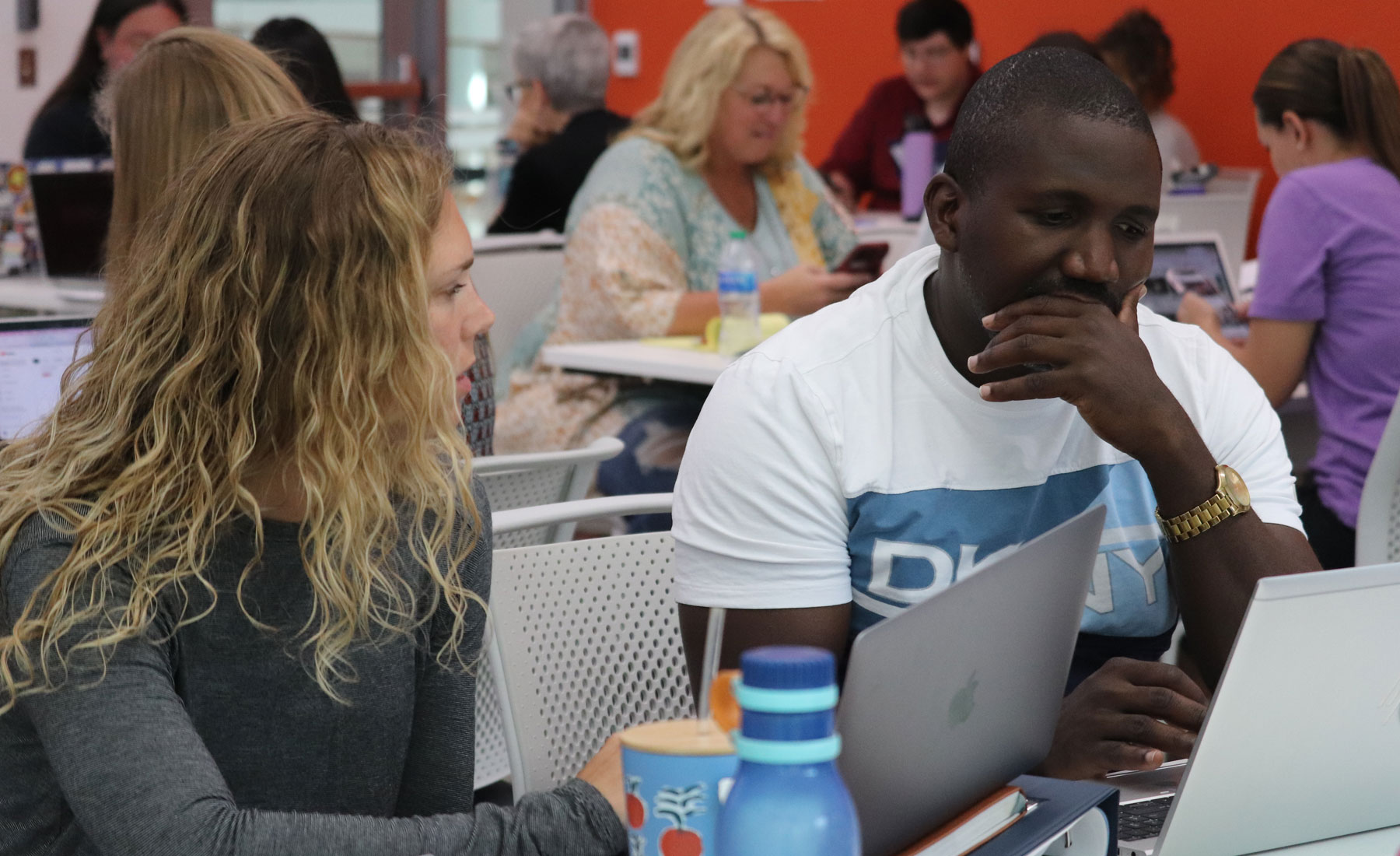
Twenty-one Illinois public school educators learned how to incorporate media literacy into their curricula this summer through an IMEDIA media literacy workshop on campus, hosted by faculty from the College of Media and College of Education.
“Media literacy is especially important in light of the last presidential election and the amount of disinformation and misinformation that is pervasive in the U.S.,” said Professor Sarah McCarthey, head of the Department of Curriculum & Instruction in the College of Education. “It’s more and more critical that we equip students with the ability to discern what’s factual from what’s not.”
The workshop, attended by librarians and teachers from language arts, social studies, special education, and art, was developed by the College of Media and the College of Education. The two colleges recently jointly launched a program entitled “Initiative for Media Education Inquiry and Action (IMEDIA),” along with the cofounder of the Illinois Media Literacy Coalition, Michael Spikes of Northwestern University.
The workshop was designed to better equip teachers and students with media literacy skills to encourage mindful media consumption and production and to help teachers meet the needs of a state mandate requiring public high schools to teach media literacy beginning with the 2022-2023 school year.
“Many of us in the College of Media have been working on media literacy-related research and teaching in the last several years,” said Professor Stephanie Craft, head of the Department of Journalism. “When we heard about the new law, we wanted to be able to turn that work into action. Teaming up with curriculum and instruction experts in the College of Education seemed an ideal way to do that.”
The IMEDIA team introduced participants to key concepts in the framework for media literacy, with a focus on news media literacy. Educators were:
shown how to help students identify propaganda and see how the media have been used for social and political change throughout history,
instructed in how to use documentaries to increase media literacy, and
taught by a local Urbana High School student and undergraduate students from the College of Media how students are both creators and consumers of social media content.
The IMEDIA collaboration is working to build a robust critical media literacy curriculum in Illinois schools. Interested teachers will continue working with IMEDIA for follow up on media literacy implementation throughout the 2022-2023 school year.
“Preparing Illinois students to successfully navigate an increasingly complex media environment is vital to their well-being and ability to participate in democratic life,” Craft said.
“The end goal is quite simple,” McCarthey added. “We want all of our students to be prepared to be critical media consumers.”
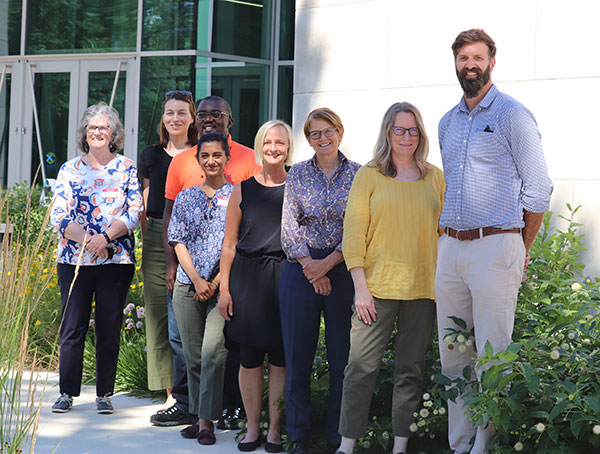
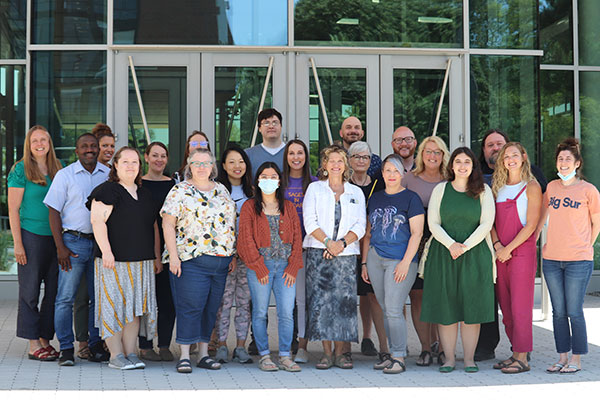
IMEDIA team members include Professor Sarah McCarthey from the College of Education; Professor Amanda Ciafone from the College of Media; Michael Spikes from Northwestern University; doctoral student Sakshi Bhalla from the College of Media; Professor Michelle Nelson from the College of Media; Professor CL Cole from the College of Media; Professor Stephanie Craft from the College of Media; and Professor Jon Hale from the College of Education.Twenty-one public school educators attended the IMEDIA media literacy workshop held this summer at the Siebel Center for Design on campus.
Anna’s research lies at the intersection of strategic communication, data and emerging data-driven technologies (algorithms and AI), consumer behaviors, and media sociology.
She takes a behavioral approach to study data and data-driven technologies (algorithms and AI) in message design and media exposure for consumer empowerment and societal good. Specifically, she studies people’s perceptions and behaviors surrounding data and data-driven technologies, focusing on three key questions: (1) how NGOs and brands ethically and effectively communicate data in message design to persuade consumer pro-social behaviors and promote consumer protection, (2) how people understand and strategically engage with algorithms to influence media exposure and public visibility on digital platforms, and (3) how AI biases, and people’s understanding of these biases, shape the influence of AI-generated content on people’s perceptions and behaviors.
Anna employs a mixed-method approach, using computational methods (e.g., engagement metrics, sentiment analysis, topic modeling, computational visual analysis), traditional quantitative (e.g., experiment, survey, content analysis), and qualitative methods (e.g., interview, netnography) in her research.
Anna’s research interest and teaching philosophy are informed by her 5 years of professional experience in Ipsos, a global marketing and consumer research company. Before joining ICR, Anna was a Senior Research Manager at Ipsos, where she conducted research on brands, advertising, media, products, and consumers using a various methods, including survey, experiment, content analysis, focus group, in-depth interview, observation, home visit, shop-along, consumer diary, eye-tracking, social media analytics, etc.
Anna earned a B.A. in journalism from Renmin University of China and an M.S.S.c. in advertising from Chinese University of Hong Kong.
Recent Publications/Presentations
Liu, A. Y. & Zhang, M. M. (Accepted). Positivity Bias in AI-Generated Summaries of User-Generated Content: Exploring Its Sources and Impact on Public Sentiment. Computational Communication Research.
Liu, A. Y. (2025). Ephemeral Visibility and Externally Visible Production: How Algorithmic Automation Accelerates Fans’ Data Work. New Media & Society. https://doi.org/10.1177/14614448251393480
Liu, A. Y., Ji, A. R., Taneja, H. & Nelson, M. R. (2025). Stakeholder-Desired Audiences: Fans’ Audience Data Imaginaries and How They Shape Industry Data Practices. Convergence: The International Journal of Research into New Media Technologies. https://doi.org/10.1177/13548565251366412
Liu, A. Y., & Taneja, H. (2025). Visibility of K-pop in the US: Global Rankings, ‘Audience Mis-aggregation’, and Mainstream Attention to Niche Genre. Convergence: The International Journal of Research into New Media Technologies. https://doi.org/10.1177/13548565251320755
Liu, A. Y. (2025, Jun 12-16). Context Matters: Exploring Consumers’ Sense-Making of Online Ratings in the Social Context. International Communication Association (ICA) Annual Conference, Denver, United States.
Gong, Z., Chen, T., Liu, A. Y., Xuan, J., & Su, L. Y. F. (2025, March 6-9). Navigating Consumer Acceptance of Cultured Meat: An Exploratory Narrative Review of Communication Strategies. American Academy of Advertising (AAA) Annual Conference, Pittsburgh, United States.
Courses Taught
ADV 284: Consumer Insight (Teaching Assistant)
ADV 281: Advertising Research Method (Instructor of Record)
ADV 250: Advertising and Brand Strategy (Teaching Assistant)
ADV 150: Introduction to Advertising (Teaching Assistant)
MACS 100: Introduction to Popular TV & Movies (Teaching Assistant)
Awards and Honors
James Webb Young Grad Research Award, Department of Advertising, University of Illinois Urbana-Champaign
Bart A. Cummings Advertising Gift Fund (Research fund for dissertation), Department of Advertising, University of Illinois Urbana-Champaign
Petullo Fellowship, Department of Advertising, University of Illinois Urbana-Champaign
James Webb Young Travel Fund, Department of Advertising, University of Illinois Urbana-Champaign
Jorge Rojas-Alvarez, a doctoral student at the Institute of Communications Research in the College of Media, was honored with the 2022 Campus Excellence in Public Engagement Award for Graduate/Professional Students. The Campus Awards for Excellence in Public Engagement are given to individuals at the University of Illinois who engage the public to address critical societal issues, and include a $2,000 stipend.
Rojas-Alvarez said this award motivates him “to continue working on these types of projects involving collaborations between universities and local communities” and the award underscores how “UIUC takes seriously the value of this kind of work.”
As part of the Community Data Clinic team, which is directed by Anita Say Chan, associate professor in the Department of Media & Cinema Studies and in the School of Information Sciences, Rojas-Alvarez focused on redesigning the Champaign County Resources (CCR) website with community partners. For more than two years, Rojas-Alvarez organized and implemented improvements to make the 211 service more accessible and navigable to users.
Rojas-Alvarez organized and led information sessions with nearly 50 CCR service providers, and coordinated their web updates. He engaged Latinx groups during the process. He also led the web design team and mentored Illinois engineering students who were involved.
The CCR website is now managed by a community-based board and features new resources and community directories that are more visible to potential clients, and has Spanish and French language options.
“The multi-language feature was based on the growing immigrant population in Champaign County,” Rojas-Alvarez said. “Additionally, I found that immigrants and refugees avoided using the 211 directory because they believed such contact would expose them to immigration authorities. Unfortunately, the old directory did not identify organizations that accept participants despite their immigration status. Under my suggestion and outreach, the new directory provides immigrant-friendly services.”
According to his nominators, Rojas-Alvarez demonstrated a forward-thinking mindset and leadership by organizing partnerships, group services, research, and funding to benefit the surrounding community.
Rojas-Alvarez draws inspiration from designing technologies for social change. His passion for community-building combined with his ability to identify growth opportunities has helped to serve Champaign County residents.
Rojas-Alvarez’s background is in computer science and history of technology. In Colombia, he helped design public history exercises in national libraries, which emerged as spaces of dialogue between historical documental archives and the memories of users.
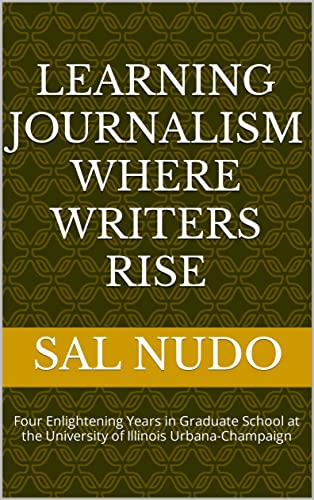
Nudo interviewed several past and current journalism faculty members at Illinois and added their thoughts in his book, including Swanlund Chair Professor of Journalism Leon Dash; Professor Emeritus Matt Ehrlich; Knight Chair Professor in Investigative and Enterprise Reporting Brant Houston; Associate Professor Emeritus Rich Martin, and Lecturer Jean McDonald.
He also interviewed and included three journalism classmates in his book: Jessica Elliott, Janelle O’Day, and Teryn Payne.
“I wrote this book to relate the values and practices of journalism for aspiring journalists, and for those who have an interest in the field,” Nudo said. “This is a book on how to do a wide range of journalism right, with thoughts from scholars, practitioners, and former students who care about the field.”
Nudo has published multiple books that are available on Amazon, including Far From Mars (2021), which contains nine creative nonfiction articles about individuals who live and work in Champaign-Urbana. Learn more.
The Institute of Communications Research is excited to announce our newest cohort! Please learn more about the students’ research interests in their profiles below and join us in welcoming them to the University of Illinois College of Media community this fall.
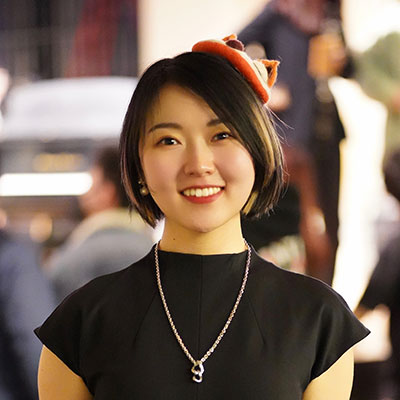
Jiyeon Chang received her master’s degree in communication and media and bachelor’s degrees in journalism and advertising & PR at Ewha Womans University, Seoul. Jiyeon studies the psychological and societal impacts of using new media. Her newest research focuses primarily on personal traits that determine psychological well-being and improvement in work skills in the virtual work environment. As a new student in ICR, she is interested in understanding collective actions and homophily in online and social media. She also wants to examine senior citizens’ new media usage to minimize information gaps and social disparities. Before joining ICR, Jiyeon worked in a government-funded research institute in South Korea. She has contributed to policy developments in the broadcasting and media fields in line with technological developments and changes in the media environment.
Jennifer Cintron received her bachelor’s degree in English literature with a minor in film studies from North Central College. She then completed a master’s degree at Northern Illinois University, in English with a concentration in film and literature. Her research across these degrees has focused on adaption from the written to visual, emphasizing youth culture and social media. At a past conference, she has spoken on the choice of adaptation literature in youth media, as it affects ongoing conversations of cultural and historical awareness. With her new work at the ICR, she hopes to continue this path and research these ongoing changes that can be seen in the film medium.
Namita Gupta graduated from Lady Shri Ram College for Women, University of Delhi, receiving her bachelor’s in English, and she attained her master’s degree in English from Shiv Nadar University (India). Her research lies at the intersection of print and digital public sphere, where she aims to study the impact of new technologies on social and political discourse in visual and popular culture. Particularly, she is interested in examining how contesting notions of nationalism, collective memory, and belonging are interpreted in mass media texts. Before joining ICR as a PhD student, she worked as a researcher with Indian Institute of Management-Ahmedabad, participating in various projects on gender, politics of space, and trolling. She has also held several teaching assistantships and editorial positions.
Ruochong (Alice) Ji received her bachelor’s degree in psychology and economics at the University of Chicago. Her bachelor’s thesis in psychology “Ramifications of social inclusion: Does social inclusion affect people’s adoption and internalization of harm-doing group normative behavior?” examined whether profile likes by group members on social media affected subsequent learning and internalization of aggressive behaviors displayed by other group members. Prior to joining ICR, she also worked as a research assistant at the University of Chicago Booth School of Business. Her primary research interest is in media psychology. Specifically, she is interested in the reception of health messages and scientific/political communication on social media, the effects of social media in promoting policy and social change, and influencer (real or virtual) marketing.
Jiwon Oh’s research interests intersect digital culture, technology, and identity. Drawing upon both qualitative and computational methods, she would like to study how gendered and racialized boundaries are created, enforced, and protected within digital spaces, particularly regarding how Asian-American communities navigate pandemic-era identity politics online. Jiwon holds an MA in communication from Seoul National University, where she studied cringe culture, fandoms, and Korean popular culture. She has also conducted research with industry giants like Netflix and HYBE. She graduated magna cum laude from New York University, receiving a BS with honors in media, culture, and communication.
“The College of Media is eager to celebrate Roger Ebert’s legacy through this new center that will engage scholars, students, and movie fans alike in robust conversations about film,” said Dean Tracy Sulkin. “I look forward to the energy and insight that Professor Turnock will bring to the director role.”
“I’m excited to help the center bring both more awareness of cinema and cinema studies to the campus, as well as the opportunity to bring more film-centered programming,” Turnock said.
As part of her appointment, Turnock will coordinate event programming, including the Ebert Symposium, Ebert Lecture, and a screening series; Ebert research grants and travel grants for film studies; and the Ebert Fellows Program for undergraduate students.
The first event Turnock is planning is the annual Ebert Lecture for mid-fall, which will feature a scholar of film studies.
“We will invite a prominent speaker and hopefully also have a screening, both of which will be open to the public,” she said.
Turnock’s research focuses on film, with an emphasis on special/visual effects, and she coordinates the film studies curriculum.
“I never met Roger Ebert, but like many people around my age, I watched the TV program Siskel and Ebert at the Movies religiously every week,” Turnock said. “Even though most of the films they reviewed weren’t playing in my northern Indiana town, it was an exposure to a wide variety of movies that I might eventually be able to rent at the video store.”
Turnock served as acting head of the Department of Media & Cinema Studies during academic year 2019-2020. At the 2019 Chaz & Roger Ebert Symposium, she moderated a panel discussion on diversity in film. She is the author of The Empire of Effects: Industrial Light and Magic and the Rendering of Realism (University of Texas Press, 2022) and Plastic Reality: Special Effects, Technology, and the Emergence of 1970s Blockbuster Aesthetics (Columbia University Press, 2015).
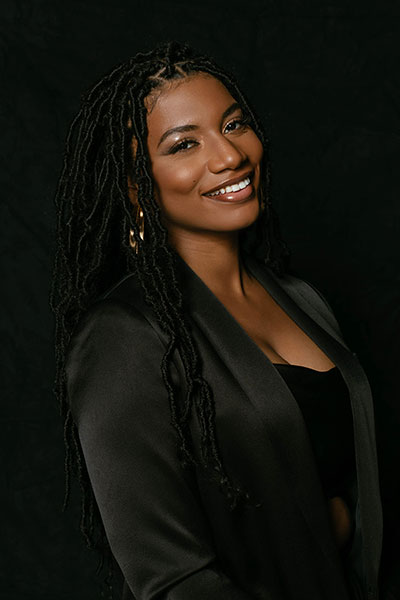
Taylor Rooks (BS ’14, journalism), sports journalist and broadcaster at Bleacher Report, is known in the field of sports journalism for her interviewing skills and for her ability to connect with athletes. She was recently nominated for a 2022 Sports Emmy Award for “Outstanding Personality/Emerging On-Air Talent.”
Rooks said her time at the University of Illinois provided the opportunity for her to ask questions and was an important foundation for her career today.
The College of Media has selected Rooks as the recipient of the 2022 Emerging Leader Award, which honors an alum for their exemplary early career achievements and engagement with the college.
“As sports media fans already know, Taylor Rooks is a talented and innovative journalist, and we are fortunate to have her share inspiring personal and career experiences with students in the College of Media,” said Dean Tracy Sulkin. “We are proud to recognize her with the Emerging Leader Award.”
Rooks has been a panelist at a 2021 Media Career Night focused on sports media; she is part of the college’s Alumni Speakers Bureau and has been a featured guest in journalism classes; and she is involved in a College of Media mentoring program that pairs alumni and students from underrepresented populations, where alumni share perspectives and advice.
“Things are so much more special when they come from places or people or institutions that you have a very deep emotional tie to, and the University of Illinois has been so important in my life and in my family’s life,” Rooks said.
Both of her parents attended Illinois, where her mother was a broadcast journalism major and her father was an Illini running back and studied political science.
From the start of Rooks’s time at Illinois, she was involved with the athletic department and applied her studies to her interests in sports media.
“Being around that environment really showed me that doing the media side of it was something that I could do, and could excel at,” she said. “And the College of Media gave me the tools.… That was the first time that I really saw how the team aspect of news is what really makes it work. And that’s something I have carried with me ever since.”
Rooks was involved with the Big Ten Network as a student, and worked for them full-time after graduating. From there, she spent two years at SportsNet New York before being hired at Bleacher Report.
At Bleacher Report, Rooks had her own web series,Take It There with Taylor Rooks, where she did longform interviews with athletes such as Jimmy Butler and DeMar DeRozan. Her episode “Inside the NBA Bubble with Taylor Rooks” was a 2021 honoree for a Webby Award in the Social, Sports (Series & Campaigns) category. Along the way, she has developed a large following on social media, with nearly 500,000 followers on Instagram and more than 240,000 followers on Twitter.
As an interviewer, she tries to engage in conversations that tell a story.
“When you have conversations with [people] on a human level and you allow them the space to tell you who they are, you have a better understanding of them completely,” Rooks said.
Rooks said she sees a lot of dehumanization of athletes in sports and it can be hard for fans to understand that these players are human beings with real emotions.
“We only see people for what they do,” Rooks said. “And it’s just really important to me to let them feel like their voice exists and that it’s important, and that when they sit in the chair, they can use their voice in whichever way they wish.”
And these emotions are often connected to identity, Rooks said. Most of the athletes she talks to want to discuss how they feel in relation to their Black identity or womanhood, for example.
“Those are all things that have to be in the conversation to get a full scope of someone’s life from a perspective, someone’s point of view,” Rooks said.
Rooks said it also helps when she shares her own experiences as a Black woman, something she did when she was inside the NBA Bubble, an isolation zone for basketball players during the final games of the 2019-2020 season and 2020 NBA playoffs, when the pandemic began.
It was the summer where protests following the murder of George Floyd were at their height, affecting many of the players inside the bubble but also Rooks herself, as a Black journalist.
Calling it the best thing she’s done in her career, Rooks said the experience taught her about her responsibilities as a journalist and how it’s necessary to tell multiple stories at once.
“Because with all these people in a place, the experiences aren’t monolithic,” she said.
There were players who wanted to leave the bubble to join the George Floyd protests, and players worried about their families getting COVID-19.
“You wanted to do right by them and tell the stories in the ways they intended for them to be told. And we all just wanted our work to reflect the duality that was happening in the bubble,” she said.
Her own identity and experiences has helped in the storytelling she does—something that Rooks encourages students to remember.
“It’s so much less about having to shy away from stories you have a personal connection to and more so about understanding how lending your voice to it actually pushes it forward,” she said.
Everyone’s lives are different, Rooks said. She advised focusing on things that can be controlled and that it’s okay to not have everything figured out as a college student.
“What you can control is working, waking up and trying to be better, looking inside to figure out the things that move you, that make you feel passionate, and you cultivate those,” she said.
 Josh Heuman, a teaching assistant professor in the Department of Media & Cinema Studies and the Department of Journalism, has been appointed by College of Media Dean Tracy Sulkin as a Dean’s Fellow for the coming academic year. Heuman will work with department and college leadership teams to facilitate activities around the college’s 2022-2023 annual theme of media literacy.
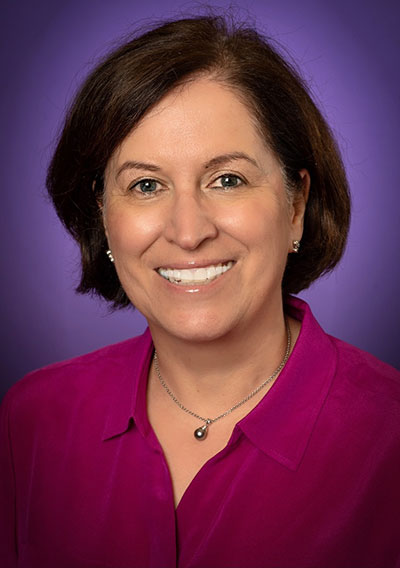

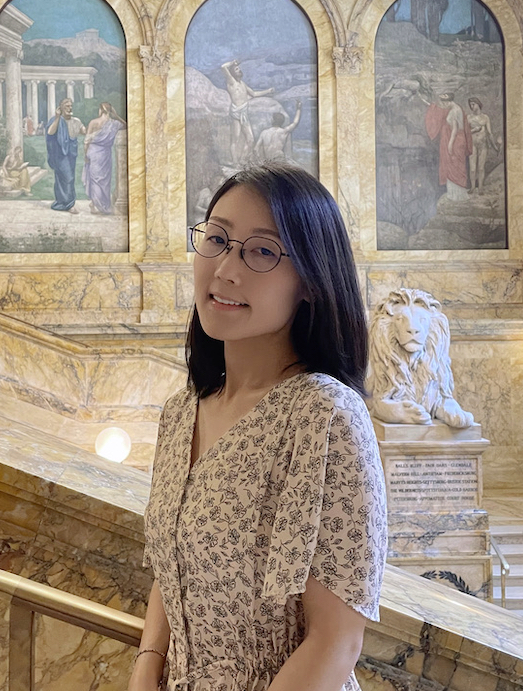
 Jiyeon Chang received her master’s degree in communication and media and bachelor’s degrees in journalism and advertising & PR at Ewha Womans University, Seoul. Jiyeon studies the psychological and societal impacts of using new media. Her newest research focuses primarily on personal traits that determine psychological well-being and improvement in work skills in the virtual work environment. As a new student in ICR, she is interested in understanding collective actions and homophily in online and social media. She also wants to examine senior citizens’ new media usage to minimize information gaps and social disparities. Before joining ICR, Jiyeon worked in a government-funded research institute in South Korea. She has contributed to policy developments in the broadcasting and media fields in line with technological developments and changes in the media environment.
 Jennifer Cintron received her bachelor’s degree in English literature with a minor in film studies from North Central College. She then completed a master’s degree at Northern Illinois University, in English with a concentration in film and literature. Her research across these degrees has focused on adaption from the written to visual, emphasizing youth culture and social media. At a past conference, she has spoken on the choice of adaptation literature in youth media, as it affects ongoing conversations of cultural and historical awareness. With her new work at the ICR, she hopes to continue this path and research these ongoing changes that can be seen in the film medium.
  Namita Gupta graduated from Lady Shri Ram College for Women, University of Delhi, receiving her bachelor’s in English, and she attained her master’s degree in English from Shiv Nadar University (India). Her research lies at the intersection of print and digital public sphere, where she aims to study the impact of new technologies on social and political discourse in visual and popular culture. Particularly, she is interested in examining how contesting notions of nationalism, collective memory, and belonging are interpreted in mass media texts. Before joining ICR as a PhD student, she worked as a researcher with Indian Institute of Management-Ahmedabad, participating in various projects on gender, politics of space, and trolling. She has also held several teaching assistantships and editorial positions.
 Ruochong (Alice) Ji received her bachelor’s degree in psychology and economics at the University of Chicago. Her bachelor’s thesis in psychology “Ramifications of social inclusion: Does social inclusion affect people’s adoption and internalization of harm-doing group normative behavior?” examined whether profile likes by group members on social media affected subsequent learning and internalization of aggressive behaviors displayed by other group members. Prior to joining ICR, she also worked as a research assistant at the University of Chicago Booth School of Business. Her primary research interest is in media psychology. Specifically, she is interested in the reception of health messages and scientific/political communication on social media, the effects of social media in promoting policy and social change, and influencer (real or virtual) marketing.
 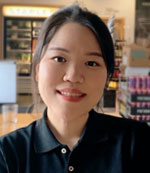 Jiwon Oh’s research interests intersect digital culture, technology, and identity. Drawing upon both qualitative and computational methods, she would like to study how gendered and racialized boundaries are created, enforced, and protected within digital spaces, particularly regarding how Asian-American communities navigate pandemic-era identity politics online. Jiwon holds an MA in communication from Seoul National University, where she studied cringe culture, fandoms, and Korean popular culture. She has also conducted research with industry giants like Netflix and HYBE. She graduated magna cum laude from New York University, receiving a BS with honors in media, culture, and communication.