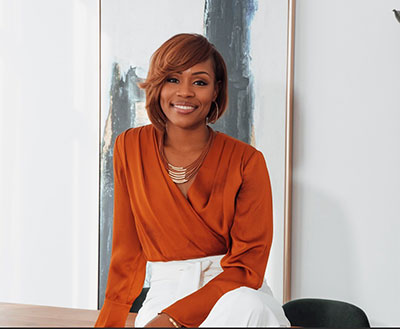
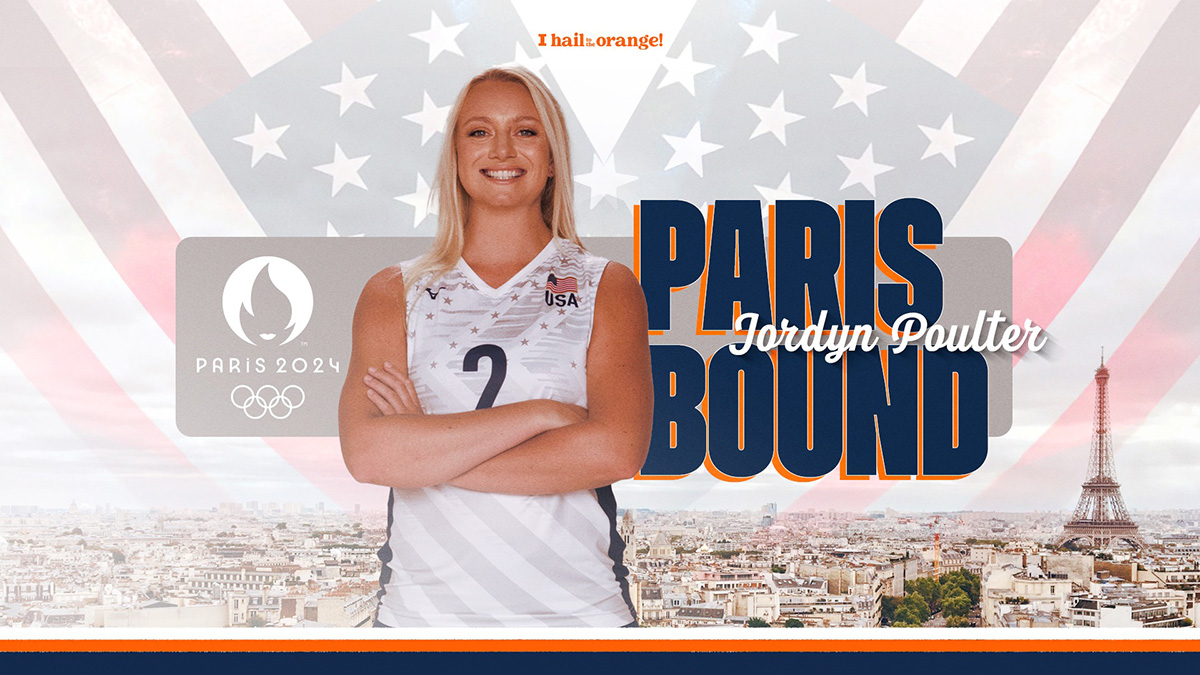
Former Illinois setter Jordyn Poulter (BS ’18, MACS) was named to the U.S. Women’s National Volleyball Team for the 2024 Olympic Games in Paris this summer. The All-American setter is one of 12 selected for the roster.
Poulter, who was chosen as Best Setter at the COVID-delayed 2021 Tokyo Olympics, helped the U.S. earn its first-ever gold medal three years ago.
During her time at Illinois, Poulter was a three-time All-American, earning first-team accolades as a senior in 2018. During her senior year, the Colorado native was named the Big Ten Co-Setter of the Year, AVCA Northeast Region Player of the Year, and a finalist for the Honda Award. Poulter also led the Illini to the program’s fourth-ever NCAA National Semifinal appearance.
The Women’s Olympic indoor volleyball competition runs July 27-August 11.
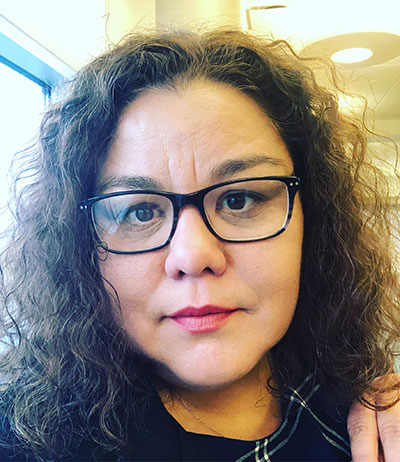
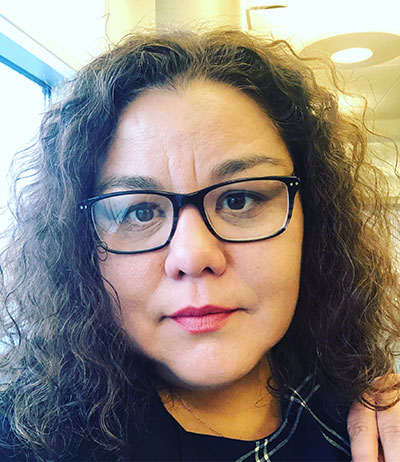
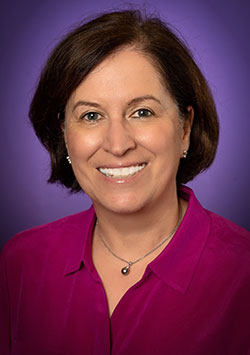
Melita Garza, associate professor and Tom and June Netzel Sleeman Scholar in Business Journalism, won the 2024 essay contest sponsored by AEJMC’s Journalism History.
The competition in Journalism History, the academic journal of the Association for Education in Journalism and Mass Communication’s history division, first began in 2018 and has featured essays around specific themes. This year’s theme focused on civil rights in light of the 60th anniversary of the Civil Rights Act of 1964.
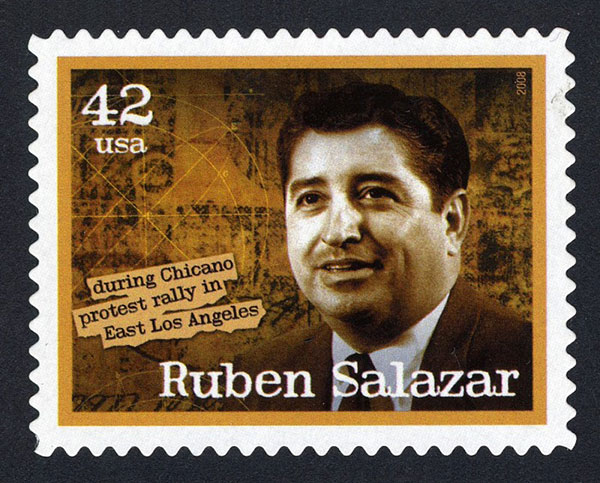
Garza’s essay, titled “Ruben Salazar: Beyond Postage Stamp Memory,” highlights the work of Salazar at the “Los Angeles Times” and at a Spanish-language station KMEX regarding the Mexican American freedom struggle.
“I am grateful that Journalism History chose to commemorate this milestone legislation, whose spirit, more than a half-century after its passage, is still hauntingly unfulfilled,” Garza said. “Moreover, I’m thrilled to bring greater recognition to pathbreaking journalist Ruben Salazar, who lost his life in 1970 while covering one of the nation’s largest Mexican American civil rights marches.”
(Postage stamp image is copyright United States Postal Service. All rights reserved.)
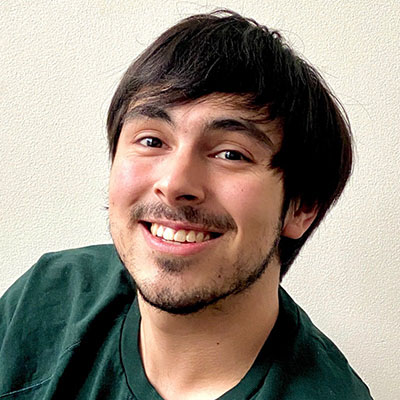
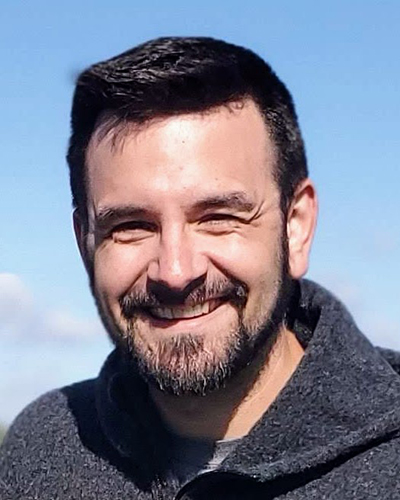
Armando Sanchez-Monsivais (BS ’19, advertising), ad product specialist at Twitch and a member of the James Webb Young Advisory Board in the Charles H. Sandage Department of Advertising, was named to the Creative Ladder 2024 Cannes Lion Cohort.
Sanchez-Monsivais is one of six creatives chosen to receive an all-expenses-paid trip to the prestigious Cannes Lions International Festival of Creativity, held June 17-24, to gain invaluable exposure, connect with industry leaders, and showcase their unique perspectives on a global stage.
Held annually in Cannes, France, the Cannes Lions International Festival of Creativity is home to the world’s most prestigious advertising awards. It’s also an opportunity to celebrate creativity, effectiveness, and innovation in the global advertising, marketing, and communication industries.
In addition to his role at Twitch, Sanchez-Monsivais serves as a committee member on the Mosaic Next Gen Leadership Council, an initiative by the American Advertising Federation; an advisory board member for ADCOLOR Conferences and Awards; and was selected for the Rising Leaders Academy at the Creative Ladder.
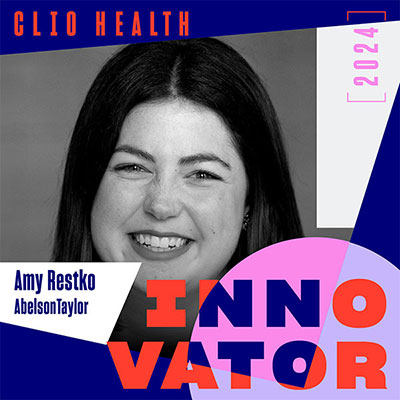
Amy Restko (BA ’13, LAS; MS ’14, advertising), planning director at Chicago advertising agency AbelsonTaylor Group, has been selected as one of 20 Clio Health Innovators.
The 2024 honorees, recognized as top talents from around the globe, will be celebrated at the Clio Health Awards on June 12. The Clios were founded in 1959 to celebrate creative excellence in advertising.
“Being selected as a Clio Health Innovator is an immense honor and validation of the work that I and my colleagues at AbelsonTaylor Group do every day. It shows that you can do amazing things when you make your work fun and feel supported and encouraged to explore new territory,” Restko said.
Restko joined AbelsonTaylor Group in 2016 and served as an account planner before her promotion as planning director in 2022.
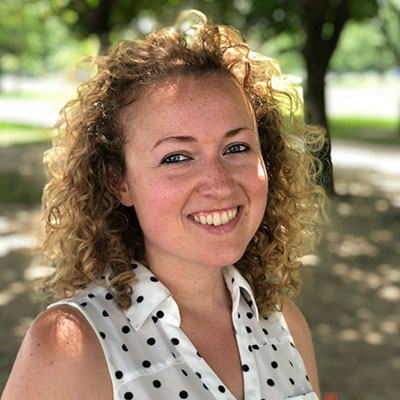
Get to know some of our College of Media alumni. Rosie Powers (BS ‘12, journalism) is a self-employed consultant. Powers also participated in a Media Career Night alumni panel on “Nonprofits” in Spring 2022. Watch a recording of the session here.
How did the College of Media prepare you for your future? The college had great courses that addressed the changing media landscape. Pairing that with traditional journalism skills of writing and copy editing felt like a good mix. I took a multimedia journalism course at the beginning of social media, and the idea of being a multimedia reporter was new and cutting-edge. You’d be someone reporting live on the field rather than solely writing in the newsroom, and it helped me think of myself as more than a writer. The College of Media also provided a well-connected alumni network, so it was easier for students like me to apply for internships and jobs after we were introduced to those who came before us.
During and right after college, how did you go about getting internships and jobs? I applied everywhere in Chicago because I was an overachiever, but between my freshman and sophomore years, I had an internship at Lake County Journal, where I wrote a couple of stories a week. The following summer, I interned as a digital producer at WGN, then I interned at NBC, and later The Washington Post. I knew I wanted to do digital production, and even though my background was in newspapers, I applied to television stations. I realized early on that I could re-envision my skill set, so my advice would be don’t be afraid to apply for everything, even if you fear not having the skill set or experience required. Just try it because I think places are eager to teach people, and I had great experiences with all my internships.
What has your career path looked like since graduation? I graduated from the College of Media in 2012 as a news-editorial journalism major with a minor in environmental science. After graduation I had an internship with The Washington Post; then I moved on to work for the Chicago Sun-Times, specifically for Oak Park and River Forest—those suburban publications—for a few years, and then I worked as a digital producer at ABC 7 Chicago. I liked my journalism career, and I’m proud of it, but in my mid-20s, I was ready for a change. I realized I could take my writing and storytelling skills from journalism and apply them to help nonprofits and further causes that are important to me, and it’s been about eight or nine years now down this new path. I totally pivoted my career.
What does your career look like now after this pivotal moment? I work for myself, so I’m like a self-employed contractor. I used to work full-time, but I discovered advertising and branding agencies specific to the nonprofit space. I thought that was cool and I could be a consultant; now, I work with three different consultancies, and Mission Minded, a branding agency, is one of them. I do brand and website strategy for them while working with Column & Row, a consultancy that does web strategy and SEO with nonprofits and foundations, and I’m a consultant with Tiny Windows Consulting in Chicago, doing digital communications work. I do different types of strategy depending on who I’m working with, whether it’s brand, web, or digital communications.
What are you most proud of? My career transition. I thought during high school that I would be in journalism forever and also because of my parents—my dad worked the same job for 30 years. When I was growing up, I thought, “I’m going to pick my job, and the path is always the same.” I was proud of my journalism career; it was rewarding, but I felt I achieved what I wanted there and wanted what was next. That pivot was freeing, exciting, and scary because I’d never thought about doing anything else professionally. But I knew I wanted something else and went for that, even though it was terrifying, having to relearn how to do other things. I think there’s a full circle—maybe this is what I wanted to do all the time but didn’t know it existed. I was able to do that, do journalism for a few years, and get a great experience.
What’s one piece of advice you would give students? College is four of the greatest years, and—this is stereotypical to say—it goes by fast, especially after freshman year. Remember to enjoy it, even with all the stress about internships and questioning what you’re doing over the summer. Remember to try new things to broaden your horizons and envision your skill set. Don’t put yourself in one box because you’re not going to know what you want to do in 10 years or 15; for me, it totally changed, and there’s no way you can know that when you’re a freshman.
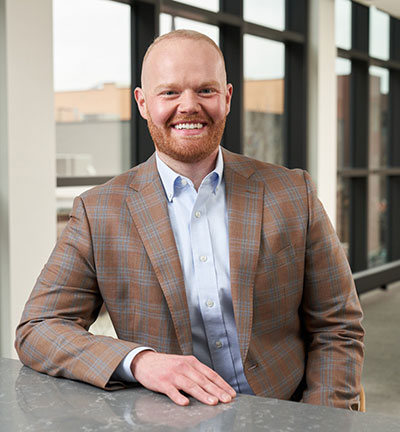
Get to know some of our College of Media alumni. Adam Hamilton (BS ’11, advertising; MBA ’19) is a global social and digital director at McDonald’s. Hamilton also participated in a Media Career Night alumni panel on “Digital Communication” in Spring 2023. Watch arecording of the session here.
Can you recall any College of Media classes or professors that impacted you? I remember Professor Jason Chambers teaching Advertising History, and it was fascinating to see the impact of advertising and culture—how it’s such a key tenant of pop culture, which I love. Subsequently, I minored in media and cinema studies. It was fun to learn about different media types from people whose primary passion was media. I absorbed and carried those elements into the advertising world.
Were you involved in any media-related RSOs? I was in the American Advertising Federation, and it was how I got my foot in the door to the industry. I went to a Leo Burnett information night during my sophomore year; they talked about internships, and while I wasn’t qualified, I stayed in touch. They gave me tips on being ready, and I applied and got accepted during my junior year. Doors opened up for me upon graduation, but there are also various professional opportunities on campus. I was a marketing intern for Assembly Hall [State Farm Center], where I got to do marketing for all the concerts and events. I also worked at the Career Center for resume critiques and marketing, but there were so many things at my disposal that I tried to take advantage of as much as possible.
How has advertising influenced your career path? When I graduated, I thought I’d work at an ad agency or something, and I started working at Caterpillar—the manufacturing company where you think of tractors, big mining trucks, and construction projects. I worked there for six years and then had the opportunity to work at McDonald’s. I started as a supervisor in executive communication, so speech writing for our CEO and their social handles, and it evolved to managing our broader content editorial globally. Now, I oversee our corporate social and digital channels and all the storytelling with those. However, I’d say that three-fourths of the roles I’ve had didn’t exist until I had them. The team I’m in now—I built the team from the ground up, which is a great opportunity, but you have to be able to pitch that vision and showcase what you can do.
You attended the McDonald’s Worldwide Convention in Barcelona in April 2024. What was that like for you? The McDonald’s Convention is interesting because it’s a huge milestone where nearly 20,000 franchises—restaurants, staff, companies, employees, and suppliers—come together on the vision of the business for the next two years. It’s always been held in the United States, even though it’s a worldwide convention, but this was the first one that took place outside of that in Barcelona. I had the opportunity to produce an event with Dua Lipa, which was fantabulous.
Besides that, what is your day-to-day work life? When it comes to my day-to-day, it’s telling the business and brand story of McDonald’s. The business story is how we inspire investors, stakeholders, and media that we’re a company to believe in. From a brand story, it’s how we inspire people to believe; also, we want to be at the intersection of culture. When we do different campaigns, like the Adult Happy Meal with Cactus Plant Flea Market or our Valentine’s meal with Cardi B and Offset, there are many opportunities to intersect culture with McDonald’s because people are passionate about it. The idea for the Adult Happy Meal came up because, one day, you had your last Happy Meal and never even knew it. It’s tapping into what we call “fan true”—things true to fans of the brand and establishing a connection point with them through content to meet them where they are.
What are you most proud of? I’ve been lucky that I’ve been able to hire and develop some of what I think are the best people in the industry. Even though I’m their manager, I learn from them every day, and I’m in awe of what they’ll do once they leave my team; I couldn’t be more proud of them. Another thing I’m proud of is my employees always say I bring a safe space to work, which means a lot to me. I’m a gay man, and I haven’t always been in an environment where there’s a safe space in a workplace. When people have that safe space, they do their best work and flourish there themselves. They’re connected to their peers, and the opportunities are endless.
What skills do you think students need to succeed in the media world? Students have such a leg up because the technology and media they’ve grown up in are key to the future. No matter how much people say they understand that stuff, the fact is that this generation grew up with it, so use that as an advantage. On a much broader note, bring your full self to your job. It’s so easy when you apply and interview for all these roles to want to fit what you think is the mold of what they want, but ultimately, you want to be yourself. You want to make sure you’re choosing an employer that clicks with who you are, and you’ll do your best work.
What experiences motivated you to choose Illinois? Growing up on the west side of Chicago, I took inspiration from my favorite news anchors and I had always had an affinity for storytelling. As I got older, my love for storytelling, creative writing, and hearing the stories of others continued. Additionally, I enjoyed sports, and I knew Illinois could help me expand on that area of focus in journalism. My sister always told great stories about the professors here, and I knew Illinois had such a great reputation, but what sold me was my campus visit in high school. Overall, it felt like home, and I knew I wanted to maintain my family’s bloodline connection to Illinois as the second person in my family to graduate from the institution.
What opportunities did you take advantage of to explore your passion for sports journalism? I worked for Fighting Illini Productions early in my college career, which refined my media editing skills. Not only did I receive a high-caliber experience by being able to tell the exclusive stories of athletes, but I also became a great producer, editor, and videographer through my work. Overall, Fighting Illini Productions gave me a taste of what the broadcast media industry is like, and many students don’t get these types of experiential learning opportunities, like partnering with the Big Ten Network, until their junior or senior year. Additionally, I created my own blog, which I maintained during my undergraduate years, which helped me build journalistic storytelling skills in a digital-based format. This experience allowed me to become more independent in my work and was instrumental in preparing me for a career in journalism.
Who guided you to excel in a professional media career at Illinois? I pursued business journalism because of Lynn Holley. She was a business journalist who lectured at Illinois, and I would pop into her office as she had an open-door policy. I remember she said that if you specialize in a particular media area, you make yourself much more marketable, and you can build your brand and identity. At the time, there weren’t any business journalism courses, but Holley’s advice encouraged me to pursue this style of journalism and take every opportunity I saw. In the media industry, I often didn’t see other people who looked like me doing business journalism, meaning Black students or reporters. However, Holley helped me create that opportunity for myself. Business journalism still plays a role in my current position at Reuters as a global race and justice correspondent, as money is often involved in every type of reporting. I include this connection in the tapestry that helped me progress more in my career.
In your current role as a global race and justice correspondent at Reuters, how do you use your platform to advocate for others? I use my platform to initiate conversations within my community and at groups within my organization about how we should consider covering race and justice. When I’m talking to emerging journalists or students, I think it’s essential for them to know that if you identify as a minority, there are opportunities for you to pursue areas of reporting that you are interested in while advocating for yourself and others. As you continue to grow in your career, lifting others as you climb up is essential. I want to be known as someone who is constantly advocating for young girls to open doors that they may be scared to open because they probably don’t see folks like myself at media organizations. At Reuters, we always have those conversations within our walls to keep in mind how we’re interviewing and hiring journalists of all backgrounds. We focus on where we need to improve our diversity and inclusion initiatives to lift those voices up. Advocacy work is extremely important to me, and it always will be.
Get to know some of our College of Media faculty. Angela Aguayo is an associate professor of media and cinema studies (MACS) and served as the acting director for the Roger Ebert Center for Film Studies in 2023-24. She is also the director of the Illinois Community Media Project, which uses the production process, the gathering and reporting of information, to address community problems. (Learn more about the Illinois Community Media Project in this “I on the Media” video with Aguayo.)
What are some of the classes you teach? I teach various classes that have to do with audio-visual culture. Much of my specialization is in documentary. In Gender and Pop Culture, we examine how gender is articulated in movies, TV, music, and more. The class is constantly changing with the currents of what’s happening in the world. In Intro to Documentary, I encourage students to take up skills in interviewing and documentation and look into its history. The class also asks what it means to pick up a camera and engage with the world. A teacher once told me, “When documentaries are done correctly, they change who you are.” I teach New Media and Society, which addresses how new technologies are integrated into our lives—and how those technologies are partial and biased but also have capacities to engage with the world and change things. I also teach a capstone senior portfolio class for media and cinema studies majors. In that class, students look and apply for jobs, think about internships, and develop themselves professionally like finding funding for their work or applying for grad school.
What are your research interests? I’m forever fascinated with how people use the camera to access the political process, engage with the world, and articulate themselves when they don’t see something articulated in their culture. All of my work and scholarship has been about that process. It’s deeply sociological, in that I’m not preoccupied with the theater screen or traditional understandings of film culture. Rather, I’m interested in everyday people interacting with the screen and the tools of production to create new worlds around them.
What do you enjoy about working with college students? It’s this beautiful time in human development when young people are becoming unrooted from the things that created them—their families, communities, and homes—and choosing what to bring along and what to add to their lives that will be different from their family legacy. That is an interesting open space for dialogues about the world. I find those discussions with students energizing and keep me thinking freshly. I’ve been teaching for about 25 years, and I see real differences in the generations of students, which is refreshing.
What are some projects you are involved with? I’m about to start writing a new book: “Collective Matters,” which circles how people pick up the camera and engage the world to address community problems. For example, what does that look like when the only sex education is through film, or schools if they’re lucky? This has resulted in people picking up the camera, recording their lives, and sharing them with others to address absences in resources and information. My book looks at sex education, and how youth media programs have given young people access to their voice, among other topics.
I’m also writing a few grants around AI and representations of mental health in mainstream media. And I’m working with community partners to think through how we can use documentary production to give community members access to technology and authorship, whether that’s veterans finding out how to use their cell phones and record, or houseless people who don’t get access to technology. How do we help them articulate their life on their terms?
What is your favorite part of what you do? I love that every single day is different. I wake up and think about developing projects with the smartest people I know, working with the brightest students, and thinking about how we can address some of our major problems. I talk about the things that are important to me. I don’t know that many people get to do that. I have a lot of control over what I teach, how I teach it, and what I spend my time with. In a geeky way, I love intellectual puzzles—how to get a grant, make a journal article and publish it, write books, and think about structure. Everything I do is a giant intellectual puzzle.
What are some of your hobbies and interests? I see an incredible amount of live music. I spent a lot of money on concert tickets last year. I did see Taylor Swift in Los Angeles when they recorded the Eras Tour. And then I paid $20 to see the same concert in the theater. It doesn’t make much sense. I like to see concerts on campus—we just had Ani DiFranco, Emmylou Harris, and Shawn Colvin. There’s something special about enjoying music with people in a room, whether slow, orchestral, or fast, and dancing. I appreciate that process.
I love to cook. I’ll brag about myself. I’m a great sourdough baker—country loaves, sandwich bread, pecan rolls, all kinds of things. Another MACS professor, Anita Chan, helped me learn how to make kombucha. I’m working my way through the different fermented foods. It’s good for your gut.
I love spending time with my family. I spend a lot of time on a sports field every year. My son who is 12 years old is an avid club soccer player, and now basketball. So I spend most of my weekends in small towns, big towns, all across Illinois.
What advice do you have for a student in the College of Media? University lifestyle is overwhelming. So there’s a lot to get caught up in and explore. Especially in your first couple of years, you must try as many things as possible. In that process, you’ll learn who your people are and what you’re interested in. When you have an idea, you should do what you love often and frequently, especially when it connects with your career choices.
For MACS majors, there’s so much you can do to help prepare for the moment from graduation to your career. Take every opportunity in your classroom to make something you think might showcase your skills. Take the opportunity to push yourself to learn things outside your classroom purview. So learn cameras, technical skills, etc., because you have no idea where you’ll find yourself and what skills will be useful. I did this as a young person and was surprised by what ended up being valuable to me, which were the things I didn’t give too much thought to.
If you orient your studies in an entrepreneurial way, you’ll find yourself at the end of your degree with opportunities, rather than scrambling to figure out what you need to be successful. The classroom stuff is essential and foundational, but not inclusive of everything you should know.
Get to know some of our College of Media alumni. Joe Hercik (BS ‘04, advertising) is a product owner for the Quantum Computing team at State Farm’s Innovation Group. Hercik also participated in a Media Career night alumni panel on “Corporate Communication” in Fall 2023. Watch a recording of the session here.
Why did you choose advertising as your major? When I came to the University of Illinois in 2000, I wanted to go into graphic design but didn’t get accepted into that program. I didn’t have much formal art training going into it, but I had an artistic side and was very interested. So, my first semester, I was in landscape architecture, and during that semester, I saw a journalism friend working on a project using Adobe Photoshop. I asked them what class that was for, and it was for ADV 150: Introduction to Advertising; I thought, “Here’s a way to do graphic design and get paid.” I looked into it and took classes to get experience with the College of Media. I applied to the advertising program during my junior year and began my studies there.
What was one of your most memorable experiences here at Illinois? By senior year in the advertising program, you tailored your classes a bit more based on your interests such as the business side or the creative track. I distinctly remember one presentation where we had someone from one of the major ad agencies, and I’ll never forget it. They held up a fashion magazine and said, “Any guess how many ads are in this?” They did the math; there were around 300, and they said, “You are one ad among 300, and you need to be able to catch their attention, keep it, and sell yourself—your product.” Nowadays, it’s more like 3,000 with online ads. This helps me understand the importance of standing out.
Looking back, would you have done anything differently with your time at the University of Illinois? Networking is a huge deal. You need skills, experience, and competency in what you do, but making connections and maintaining them over the years has held true throughout my career; it’s key to future success. That’s not just a life skill but also a business skill, so I probably would have been more intentional about that.
What has your career path looked like? I didn’t have a clear path laid out to follow. It’s good to have a plan; the worst plan is still better than no plan. I made sure to use my time in the summer wisely and worked at WPGU. I did missionary work after college and fundraised my salary at the time. Over the next 15 years, I like to describe what I went through as the sales or the customer journey, where you go for more face-to-face, customer-focused work. Eventually, I went into more communications and marketing work across different business areas and departments and then into technology. I applied to State Farm on a whim and resurrected my communication-focused work, and that’s been my journey.
What does your job entail at State Farm? I like to say that my day-to-day involves asking smart people dumb questions, and I say that because most of the people on my team are technically focused—there are three data analysts and one software engineer. Two of the analysts have PhDs, one in physics and the other in math, so there are some meetings where it’s only in math terms, and it may as well be a completely different language. My job is to say, “Okay, put this in layman’s terms as much as possible in a way I can explain it to other business areas so they can come to understand what it is we’re doing, why it’s important, and how we might be able to help them.” That’s the main focus of my work—trying to understand and align the team with leadership to show where things are and where it’s going to help manage and pace expectations to create the envisioned direction.
What advice would you give students in the College of Media? The College of Media focuses on communication—being able to understand what it is you want to communicate and then doing that successfully, regardless of whether it’s public speaking, writing, or any other medium. It’s a very important skill to have—being able to articulate your thoughts and being persuasive—and you can apply it to whatever you do. Communication is not just a soft skill; it’s nice to have in addition to your technical or business expertise, so I would encourage students to put in the time for public speaking—practicing and studying speeches. Same with writing—simplify your message. And I know data is seen as the currency nowadays, but attention is also the current currency. Capture attention and keep it through communication.
Get to know some of our College of Media alumni. Mike Dalton (BS’ 12, journalism) is currently a programmaticsales director with Raptive. Dalton also participated in a Media Career Night alumni panel on “Sales and Retail Communication” in Spring 2024. Watch a recording of the session here.
What brought you to the College of Media at the University of Illinois? I knew I wanted to do something within media, specifically journalism. My freshman year was the first year that the College of Media expanded the journalism program into a four-year program. During my visit to campus, I was told that the program was pretty selective, so when I got in, I think I was just filled with a lot of excitement about that, and I loved the campus.
What were some of your favorite classes that you took at Illinois? One of my all-time favorite classes, and one of the hardest classes I ever took, was JOUR 411: Law and Communications, with Professor Steve Helle. I found that to be one of the most interesting classes the University offered within the program. It was high stakes. Everyone was giving it 110% because the exams were tough, but it was so rewarding and I learned a lot from that class. The way that it was set: you did not have to take the first two midterms, but you had to take the final, that was weighted more if you chose not to take the midterms. It was a really cool way for the professor to put the trust into the students’ hands. I took the course in the second semester of my senior year, and it was literally like, “I need to pass this class and graduate.” It was just a tremendous course that I still think about to this day.
What RSOs were you involved in during your time at the University? I got started with Fighting Illini Productions, where I was filming sporting events and making edits and highlight videos for the teams. Eventually, I was filming with the big board cameras for the video boards at Memorial Stadium and State Farm Center. I did that, and then me and some other students co-founded JAMS, which was journalism, advertising, and media studies. We would put together a TV broadcast a few times a semester and give everyone a chance to get a head start on working in a studio and putting together a program. I started a part of it called Movie Corner where I would give movie reviews. It was just a really great experience to be able to feel that we were building something special in the college because, again, this was the first time that journalism was open to underclassmen.
What are some lessons that you learned through the College of Media and your RSOs? Fighting Illini Productions trained me on being accountable, and I think that that is huge. We had to go there ridiculously early on football gamedays to get everything ready; then after games we’d have to dump tape and upload our footage and then get ready and be editing and start helping piece together highlights. There were plenty of times when it was 9, 10, 11, midnight, and I was sitting in the editing bay working to get my tapes done, my highlights done, and my cuts done for review by the staff within the production department. It felt stressful at the time, but it was an accountability thing that they taught us because we had a job there, and a job as students, and we had to find a way to get both things done. That’s life now. I have a family, I have personal interests, I have a career, and I have to juggle all those different things and be accountable for the work that I say that I’ll get done. That’s an experience that stuck with me.
What skills did you learn through studying journalism that you’re able to use today in your advertising sales job? The way that you sell advertising solutions is by asking the right questions. That comes from my background in journalism. I have an interest in learning more, I want to recall things that clients tell me, and I think that that makes me more relatable and personable. All that comes from having it drilled into my brain from the College of Media—the journalism classes specifically. Dive deeper, find the story, get an answer. If you don’t like the answer you’re given the first time, find a different way to ask that question. That all came from the college.
What advice would you give to current College of Media students? I think everyone should utilize their time at the University to lean into what interests them. It doesn’t necessarily have to be something like Fighting Illini Productions or starting a broadcast channel of underclassmen but lean into what interests you. I leaned into cinema studies as a minor because that interested me, and I knew that that was something I cared about. I leaned into an extra focus on Recreation, Sport and Tourism, pairing my interests with sports and the business side of them. Find time to lean into the things that you think might interest you. I guarantee you that it’ll help you in the long run with time management, accountability, and checking boxes. The second piece I would say is to reach out to alumni; find them on LinkedIn. The people that attend Media Career Nights or speak on Zooms, don’t be afraid to reach out to them and ask questions or ask for help. That’s how we all get by; we utilize our connections and our network to find an avenue or opportunity for us both professionally and personally. I think that that’s something that everyone should consistently remember to do.
 The competition in Journalism History, the academic journal of the Association for Education in Journalism and Mass Communication’s history division, first began in 2018 and has featured essays around specific themes. This year’s theme focused on civil rights in light of the 60th anniversary of the Civil Rights Act of 1964.