How are we teaching students, and the broader community, to disagree? It’s a question the College of Media hopes to address in a new three-part series, “Bridging Divides: Conversations on Media and Disagreement.”
Faculty from the Departments of Advertising, Journalism, and Media & Cinema Studies will host free webinars exploring how productive discussions occur across lines of disagreement and difference. All take place on Fridays at noon via Zoom, on October 18, October 25, and November 1.
“The College of Media’s ‘Bridging Divides’ series is an opportunity to foster civic preparedness through expert-led dialogues,” said Dean Tracy Sulkin. “We look forward to welcoming students, faculty, staff, alumni, and community members to these important conversations.”
The talk topics and panelists include:
Reaching across the Aisle: Advertising and Messaging in an Age of Polarization
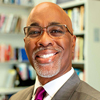
Jason P. Chambers,Associate Dean for Diversity, Equity, and Inclusion; Professor, Charles H. Sandage Department of Advertising; author of Advertising Revolutionary: The Life and Work of Tom Burrell
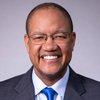
Michael Strautmanis (BS ’91, advertising; JD ’94, law), Executive Vice President for External Affairs, Obama Foundation
What Does It Mean to Be an Informed Critic?
October 25, 12-12:45 p.m. Register to join via Zoom. Learn how to give criticism a good name. During this session, the panelists will share a how-to for every kind of writer.
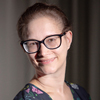
Jenny Oyallon-Koloski,Assistant Professor, Department of Media & Cinema Studies; author of Storytelling in Motion: Cinematic Choreography and the Film Musical
Michael Phillips,Chicago Tribune Film Critic; College of Media Ebert Fellows Mentor
Engaging with People, Perspectives, and Policies When You Don’t Agree: Lessons from Journalism
Leon Dash,Professor and Swanlund Chair, Department of Journalism; 1995 Pulitzer Prize Winner for Explanatory Reporting
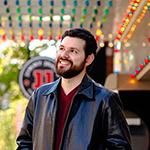
Colleen King, Clinical Assistant Professor, Department of Journalism; Director of the Richard and Leslie Frank Center for Leadership and Innovation in Media; former Executive Producer for MSNBC’s The 11th Hour with Brian Williams
Thomas Winski (MS ’75, journalism) was selected to receive the 2024 Illinois Journalism Education Association Lifetime Achievement Award. Winski accepted the award on September 20 at the annual IJEA conference at Illinois State University.
Each year, the IJEA seeks to honor retired individuals for a lifetime of dedication to scholastic journalism.
Winski was an assistant professor of journalism at Lindsey Wilson College in Kentucky for four years before joining the faculty at Emporia State University in Kansas. There, he served as assistant professor of journalism for 16 years and co-director of the journalism program until his retirement.
This award recognizes a current or retired journalist or journalism educator in the Washington, D.C., area who has broken barriers and/or provided distinguished leadership in increasing access and opportunities to people of color in journalism.
Thompson will be honored at the third annual WABJ Special Honors & Scholarship Gala on Saturday, Dec. 7, at the Blackburn University Center, Howard University.
“As the first elected Black president of the Investigative Reporters and Editors organization, and as an associate professor of investigative reporting at George Washington University, where she founded and also advises an NABJ student chapter, Cheryl has forged an exemplary pathmaking career rooted in strengthening the next generation qualifying her as a worthy recipient of WABJ’s Legacy Award,” the WABJ Awards Review Committee said. The Investigative Reporters and Editors is a 6,000-member organization dedicated to enhancing the quality of investigative journalism.
Thompson has worked at Champaign-Urbana’s News-Gazette, Chicago Tribune, The Kansas City Star, Los Angeles Daily News, The Gainesville Sun, and TheWashington Post, where she wrote extensively about law enforcement, political corruption and guns, and was a White House correspondent during President Barack Obama’s first term.
She has received numerous awards for her investigative reporting, including an Emmy, three sharedPulitzer Prizes, and five awards from the National Association of Black Journalists, one awarded in 2019 for a Washington Post Sunday Magazine story on the nearly 50-year-old unsolved murders of six little black girls in D.C.
Thompson is a member of the Alpha Kappa Alpha Sorority, Inc. and received the NABJ Educator of the Year Award in 2017. She’s also a founding and current board member of the Center for Collaborative Investigative Journalism, which focuses on cross-border investigations.
10/18/2024 2 p.m. Knight Auditorium, Spurlock Museum, 600 S. Gregory, Urbana Or join us via Zoom
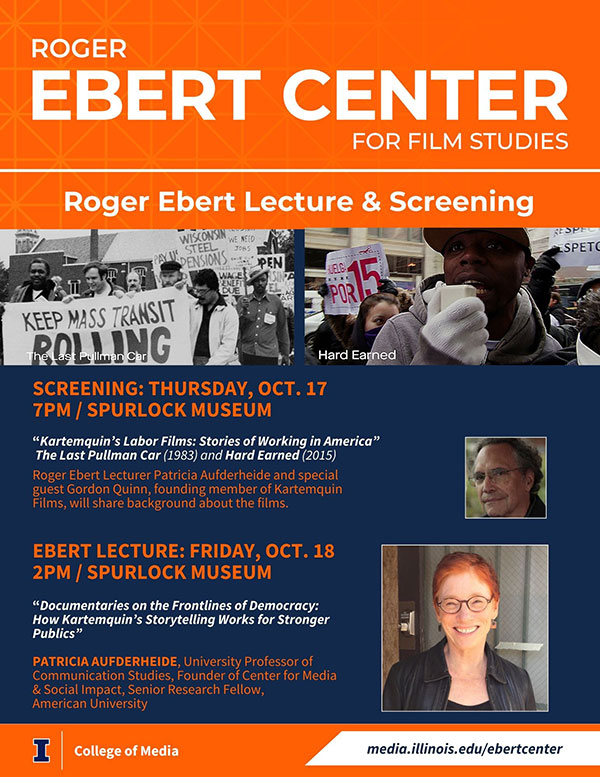
The 2024 Roger Ebert Lecture and Screening will be held October 17-18 in the Knight Auditorium of Spurlock Museum.
Join us in person or via Zoom for the Roger Ebert Lecture “Documentaries on the Frontlines of Democracy: How Kartemquin’s Storytelling Works for Stronger Publics,” presented by Patricia Aufderheide, University Professor of Communication Studies at American University in Washington, D.C.
Kartemquin Films, a Chicago media arts legend founded in 1966, has evolved through generations with a consistent claim for its documentary work: honest, experiential stories of real life in America can strengthen the democratic process, by empowering people to see themselves as active members of the public. It’s been a feminist-forward collective, a production center for labor activism, and a home for engaged humanist stories. At a time when democracy itself is at risk, this talk takes a close look at how filmmakers with a passion for their craft, an artistic vision, and a commitment to an open and just society told Midwest-centric stories that won Emmys, duPont-Columbias, Peabodys, Oscar noms, and changed how viewers understood themselves in the world.
Angela Aguayo, associate professor of media and cinema studies, will provide an introduction, and Raina Politva from the University of California Press will provide a brief statement before the Ebert Lecture by Patricia Aufderheide. Founding member of Kartemquin Films, Gordon Quinn, will also be in attendance. Quinn’s first film, Home for Life, was heralded as “an extraordinarily moving documentary” by Roger Ebert. A Q&A will follow.
About the Presenter
Patricia Aufderheide is University Professor of Communication Studies in the School of Communication at American University in Washington, D.C. She founded the School’s Center for Media & Social Impact, where she continues as Senior Research Fellow. Her books include Kartemquin Films: Documentaries on the Frontlines of Democracy (University of California Press), Documentary Film: A Very Short Introduction (Oxford), The Daily Planet (University of Minnesota Press), and Communications Policy in the Public Interest (Guilford Press), as well as co-authoring Reclaiming Fair Use: How to Put Balance Back in Copyright (University of Chicago), with Peter Jaszi.
She has been a Fulbright Research Fellow three times, in Brazil (1994-5), Australia (2017), and South Korea (2024). She is also a John Simon Guggenheim fellow (1994) and has served as a juror at the Sundance Film Festival among others. Aufderheide has received numerous journalism and scholarly awards, including the George Stoney award for service to documentary from the University Film and Video Association in 2015, the International Communication Association’s 2010 for Communication Research as an Agent of Change Award, Woman of Vision award from Women in Film and Video (DC) in 2010, a career achievement award in 2008 from the International Digital Media and Arts Association and the Scholarship and Preservation Award in 2006 from the International Documentary Association.
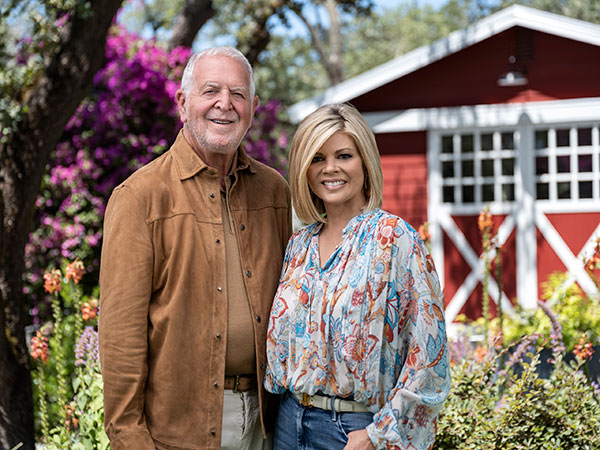
With their latest $2.5 million donation, Richard and Leslie Frank increased their historic gift to the College of Media to upgrade classrooms on the lower level of Gregory Hall.
The couple’s latest $2.5 million donation will fund the renovation of classrooms on the lower level of Gregory Hall, located on the University of Illinois Quad, and will create a new hybrid, flexible classroom as the centerpiece.
The new funding will enable a substantial renovation of the lower level of Gregory Hall, with the creation of a new hybrid, flexible, or hyflex, classroom as the centerpiece.
The new multipurpose classroom, which will be constructed in the space that currently houses two smaller classrooms and an office, will boast features that all three departments in the College of Media will be able to take advantage of—such as advertising brand consultations, journalism press conferences, and media and cinema studies production—and enable hybrid teaching and conferencing.
“Because we believe in the fundamental impact that media has on our society, we want to continue to invest in our future media leaders at the University of Illinois,” said Rich Frank. “We’re excited to establish a new state-of-the-art space that will support the excellence of the College of Media, and we hope to inspire other donors to make gifts that leave a lasting impact on the college.”
The gift will also renovate the lower level, featuring a more modern design such as new flooring, painted walls throughout the entire hallway, including the east and west wings, and digital signage. Substantial work in that part of Gregory Hall has not occurred since the 1990s. The project details are underway; work will begin in summer 2025.
The College of Media is deeply thankful to Richard and Leslie Frank for their generous investments that not only have expanded opportunities for our current students and faculty but will continue to facilitate an enriched experience for those to come.
Tracy Sulkin
Dean of the College of Media
“This new gift will create a showpiece in Gregory Hall,” said Dean Tracy Sulkin. “The College of Media is deeply thankful to Richard and Leslie Frank for their generous investments that not only have expanded opportunities for our current students and faculty but will continue to facilitate an enriched experience for those to come.”
Having each experienced professional success in media and entertainment, the Franks are committed to creating a positive impact in media for generations.
Rich Frank, who received his bachelor’s degree in marketing from the University of Illinois, began his career at the advertising agency BBDO in New York City before moving to Los Angeles to work as a Sales Manager at KTLA. He then served as President of Chris-Craft Broadcasting. In 1977 he became President of Paramount Television Group, overseeing the creation and production of such shows as Taxi, Family Ties, and Cheers as well as the creation of the groundbreaking entertainment news show, Entertainment Tonight. In 1985 he became President of Disney Studios. Under his leadership, the studio created iconic sitcoms such as The Golden Girls and Home Improvement, and films including Good Morning Vietnam, Dead Poets Society, andThe Lion King. He also oversaw the launch of the Disney Channel. Rich served three terms as President of the Academy of Television Arts and Sciences. In 2007, the Academy of Television Arts and Sciences recognized him with the prestigious Syd Cassyd Founder’s Award. In 2011, Rich received an honorary doctorate from the American Film Institute where he is currently a Vice Chairman on the AFI’s Board of Directors. Rich previously served on the board of the Motion Picture Association of America. His archival interview with the Television Academy provides a fascinating historical perspective of the evolution of modern television: https://bit.ly/3iQvS7s.
Born in Hamilton, Ontario, Leslie Frank began her career in Canada before crossing the border to work in some of the largest television markets in the United States. She spent more than 25 years covering many major stories including the 9/11 attacks, where she reported live from ground zero in New York City, as well as from the scene of the devastating aftermath of Hurricane Katrina, and inside the courtroom at the Michael Jackson trial. Leslie spent the last nine years of her TV news career reporting and anchoring at the number one rated station, KABC in Los Angeles, where she covered politics, crime, weather calamities, as well as interviewing some of the biggest stars in Hollywood on the red carpet. Prior to Los Angeles, Leslie was the main anchor at KCPQ in Seattle, where she took the 10 pm newscast to number one in its time slot and clinched an Emmy for outstanding news anchor. In 2024, she joined the board of directors of Treasury Wine Estates Ltd.
Leslie and Richard are former owners of Frank Family Vineyards, a highly acclaimed luxury wine business based in the Napa Valley, California, that was acquired by Treasury Wine Estates in 2021.
Under the leadership of its inaugural director, Colleen King, clinical assistant professor of journalism, the Frank Center has brought media industry leaders to campus for free and public events including Steve Kornacki, Brian Williams, and on December 3, NBC News chief political analyst Chuck Todd. The Frank Center has also held virtual Q&As with Kara Swisher, Michael Steele, and Dan Balz. See recordings of these conversations with the Frank Center.
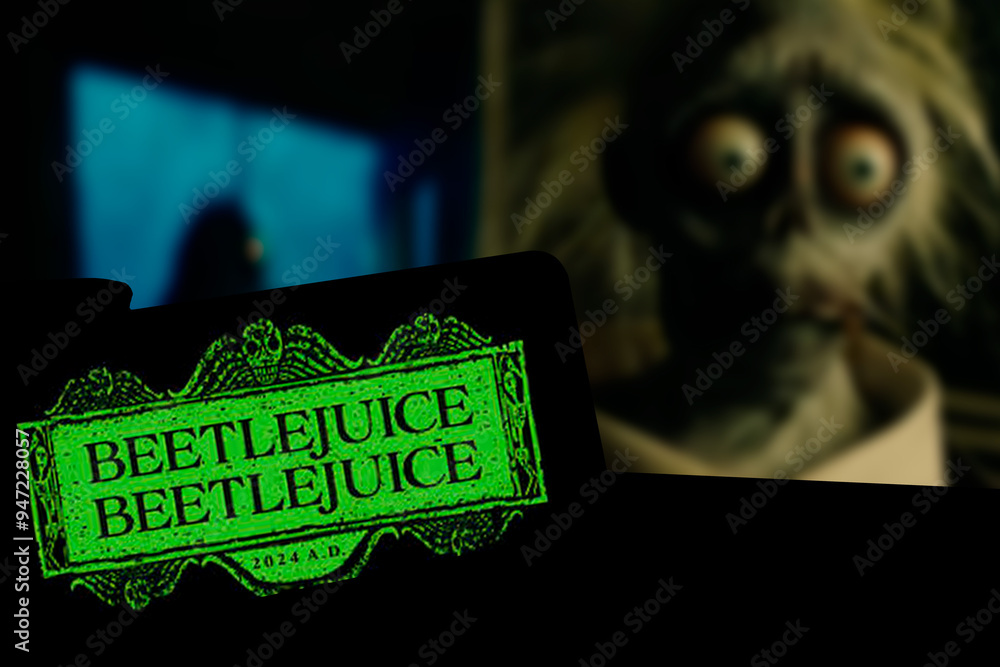
They were, to the industry, a kind of proof of concept that both aesthetically they can be successful, and also they could be marketed as an attraction, ‘Come see what the movies do now.’
Julie Turnock, Professor of Media and Cinema Studies
Digital effects in films have existed for decades. Their true watershed moments came in 1991 with James Cameron’s Terminator 2: Judgment Day and 1993’s Steven Spielberg blockbuster Jurassic Park. Though the films had a limited number of CGI shots, the effects—a liquid morphing into a robot and dinosaurs roaming the planet—showed the industry that such technology could appeal to audiences, even though the execution was still expensive and difficult to pull off, says Illinois professor of media and cinema studies Julie Turnock.
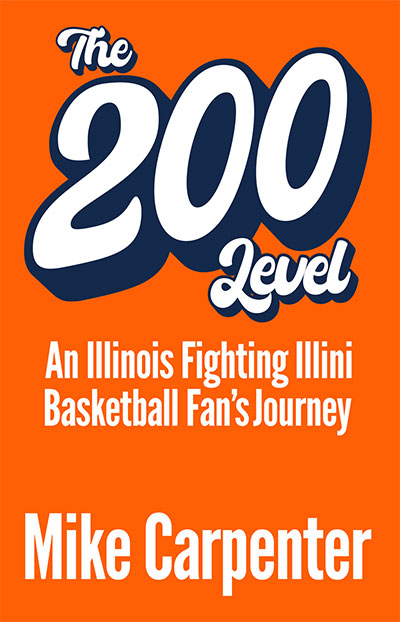
The book is a mix of personal narrative and sports journalism, charting the ups and downs of the program while reflecting on Carpenter’s own personal experiences as a fan.
Carpenter was a sports talk broadcaster and podcaster for ESPN 93.5 from 2011 through 2019. He’s hosted his own podcast on Illini sports, The 200 Level, for the past five years.
Congratulations to all the College of Media faculty and teaching assistants who were ranked as excellent by their students!
This list is based on Instructor and Course Evaluation System questionnaire forms completed by students during the Spring 2024 semester. Only those instructors who distributed ICES forms at least once during this time period and who released their data for publication are included in the list. View the complete list.
Note: * denotes that the instructor ratings were outstanding.
The Institute of Communications Research is excited to announce our newest cohort! Please learn more about the students’ research interests below and join us in welcoming them to the University of Illinois College of Media community this fall. For more information, see full ICR student profiles.
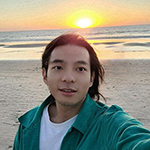
Haochen Ji earned her master’s degree in communication from Northwestern University and her bachelor’s degree in public relations from Boston University. Her primary academic interests focus on the impact of emerging technologies on communication, aiming to promote human-centered technology designs and proactively shaping positive digital communication. She is passionate about exploring how technologies like AI, video games, and interactive media influence people’s online behaviors and psychological well-being. She is also highly interested in utilizing mixed methods, especially computational approaches, to investigate specific problems.
Yujin (Floria) Lee earned her master’s and bachelor’s degrees in advertising from the University of Illinois Urbana-Champaign. Her interests include virtual reality, artificial intelligence, social media marketing, celebrity endorsement, media usage, and cultural analysis.
Gustavo Nery earned a bachelor’s in journalism from the University of Fortaleza and a master’s in theatre studies from Illinois State University. Gustavo has professional experience as a film critic, reporter, and editor for books, magazines, and newspapers. His main area of research is television, film, theatre, and media studies. Interests include coming-of-age and teen cinema, queer cinema, Brazilian cinema, film theory and criticism, popular music, theater professional recordings, film biopics, and narrative theory.
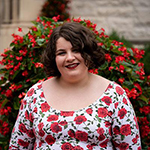
Gillian Paxton is a researcher with interests in media literacy, scholastic journalism, visual communication, and education. She has actively blogged about media, including reviews and analysis, since she was in high school.
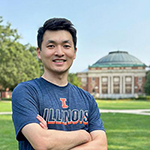
Duo Wang is a researcher and entrepreneur committed to exploring the convergence of mixed reality and generative AI for the next generation of immersive interaction and 3D storytelling. His research interests include virtual/augmented reality (VR/AR), human-AI communication in virtual environments, XR+AI simulation in healthcare, generative AI in immersive media, and human-computer interaction.
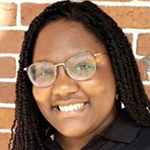
Kendra Williams is a researcher with interests in critical cultural studies, Black popular culture, television and film, and race and media representation.
Nansong Zhou is interested in the dynamic interactions between games, technology, and society. His research encompasses the global media industry, China studies, and game studies, focusing on two primary research areas including the formation of the global video game industry and how video games integrate with AI and VR technologies, along with their impacts and potential.
This fall, seven faculty in the College of Media have been promoted, two faculty have taken on new leadership roles, and three new faculty have been hired.
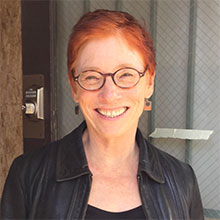
In the Department of Journalism,Margaret Ng has been promoted to associate professor with indefinite tenure. Melita Garza, associate professor and Tom and June Netzel Sleeman Scholar in Business Journalism, will serve as the director of graduate studies. Cassandra L.C. Troy joined as a new assistant professor of journalism.