Media faculty and TAs make list of teachers ranked as excellent


Congratulations to all the College of Media faculty and teaching assistants who were ranked as excellent by their students!

Congrats image

This list is based on Instructor and Course Evaluation System questionnaire forms completed by students during the Spring 2024 semester. Only those instructors who distributed ICES forms at least once during this time period and who released their data for publication are included in the list. View the complete list.

Note: * denotes that the instructor ratings were outstanding.

ADVERTISING

ANDREW GLEASON – ADV 490

STEVE HALL – ADV 150

TERRY KASDAN – ADV 409

EWA MASLOWSKA – ADV 594

SHACHAR MERON – ADV 250

MICHELLE NELSON – ADV 582

*MARISA PEACOCK – ADV 290, ADV 498

*ALLISON VANCE – ADV 350

CARRIE WILSON-BROWN – ADV 393

KEVIN WISE – ADV 588

*MIKE YAO – ADV 461 


JOURNALISM

*CHRISTOPHER BALL – JOUR 430, JOUR 451

STEPHANIE CRAFT – JOUR 205

*ALISON DAVIS – JOUR 215, JOUR 340

COLLEEN KING – JOUR 313

VINCE LARA-CINISOMO – JOUR 220

CHARLES “STRETCH” LEDFORD – JOUR 335

*CAROL LOMBARDI – JOUR 220

MARGARET NG – JOUR 425


MEDIA & CINEMA STUDIES

ANGELA AGUAYO – MACS 391

VICTOR FONT – MACS 480

JONATHAN KNIPP – MACS 282

SUSAN MUIRHEAD – MACS 372

M. QUINONES-RIVERA – MACS 375


STRATEGIC BRAND COMMUNICATION

EWA MASLOWSKA – SBC 505

RICH PIECZYNSKI – SBC 504


TEACHING ASSISTANTS

K. COOK – ADV 284

X. DONG– ADV 250

W. DU – ADV 150

*N. FAISAL – ADV 250

M. FUKADA – ADV 284 

*Y. LEE – ADV 360

A. LIU – ADV 150

*M. LYERLA – ADV 150

*S. PARK – ADV 360

Z. RANDOLPH – ADV 284 

*J. CINTRON – MACS 100 

Y. GAO – MACS 101

*Y. KANG – MACS 101

J. OH – MACS 100

*J. ZHANG – MACS 260

Share on social

New journalism professor Cassandra L.C. Troy examines role of solutions journalism to address environmental issues 


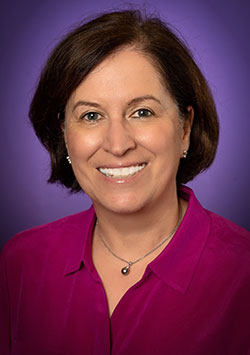
Growing up, Cassandra L.C. Troy was encouraged to be environmentally aware, especially by her grandmother and mother who taught her to care for the planet. But it wasn’t until she worked at a university sustainability office that she considered a career in environmental communications.

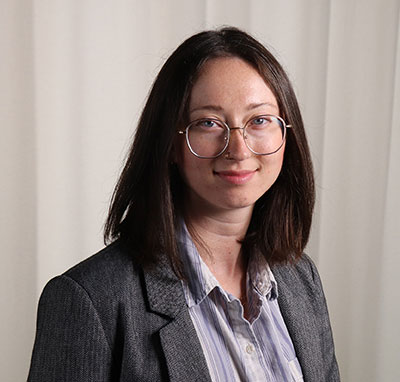
Cassandra L.C. Troy

“In that role, I got a taste of how varied environmental issues are, how complex it is to communicate about different environmental issues,” Troy said. “[What’s] really interesting to me is making that relevant to large portions of the public.”

Troy will be teaching environmental journalism at the College of Media this fall as an assistant professor of journalism with an appointment in the Institute of Communications Research.

She’s excited to connect with students interested in environmental topics and to continue her research on solutions journalism to raise public awareness and engagement on environmental issues.

Troy said solutions journalism takes the approach to reporting that solutions to problems are newsworthy, rather than just the problems themselves.

Illinois is a place that is committed to research, not just generally, but research related to environmental topics. The institutional commitment to examining climate change from an interdisciplinary perspective is really encouraging.

“In the minds of solutions journalists, in addition to giving the public information on serious complex issues, you also want to talk to them about solutions that are working, or maybe that could work, to address those problems,” she said. 

Troy, who is passionate about the impacts of climate change, added that “environmental challenges are so pressing, and they do impact everyone. You don’t have to just be altruistic and really into nature to care about the environment. We all should want to care about clear air or clean water, and what’s happening in the world around us.”

Troy’s position is part of an interdisciplinary faculty “cluster” on climate impacts, risks, and inequality that was approved as part of the Provost Office’s Strategic Hiring Initiative. The other participating units, in the College of Liberal Arts & Sciences, include the Department of Climate, Meteorology & Atmospheric Sciences; Department of Earth Science & Environmental Change; and the Department of Geography & Geographic Information Science.

“Illinois is a place that is committed to research, not just generally, but research related to environmental topics. The institutional commitment to examining climate change from an interdisciplinary perspective is really encouraging,” she said.

Troy earned undergraduate degrees in communication arts and foreign language from Virginia Commonwealth University and initially planned to pursue a career in visual communications and graphic design. 

But in her first job after graduation, she was introduced to a broad range of communication work including branding, social media, and content management, which inspired her to get a master’s degree in communication from Purdue University. 

During her time in graduate school, Troy loved the research process and realized much of her interest lies behind the why of messaging. 

“As I reflected on the direction that I wanted my career to take, I wanted to have the time and space to determine the questions that I wanted to ask, and the time and space to evaluate how different communication strategies were working, which is not always something you have the luxury of doing in a workplace,” Troy said. “You cannot stop and evaluate every single piece of messaging that you put out there and so that is what motivated me to apply to a PhD program versus just continuing in the industry.”

Troy went on to earn a PhD in mass communications from Pennsylvania State University. Her dissertation, “The potential of solutions journalism for climate risk mitigation: A mixed methods investigation,” examined the role of solutions journalism in climate risk mitigation from the perspective of journalists and the general public. 

Using both a quantitative and qualitative perspective, Troy studied how to design media messages that support positive results for people and the planet, especially when it comes to climate change. Learn more about Troy’s research.

Through writing about environmental topics in class, Troy’s students will gain an understanding of the unique challenges associated with environmental communication. 

“Similar to science journalism, you’ve got the scientifically complex topics and some of the topics are going to be politically polarized. Members of the public might be encountering disinformation or misinformation in relation to these topics and so you have to be really thoughtful in how you cover these issues,” she said.

Helping her students embrace challenges is just one of Troy’s teaching philosophies. She also aims to cultivate curiosity and prepare students for success beyond the classroom. 

“My ideal scenario is that everyone can take away at least one thing that’s going to be really valuable when you are given a task in a future professional environment,” she said.

Share on social

Legacy of late journalism alum James Urbanski recognized with honorary street name

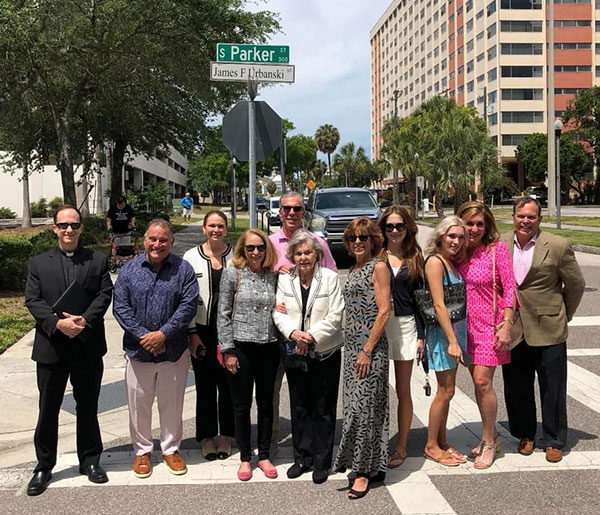
The City of Tampa recently recognized the legacy of the late James Urbanski (BS ’50, journalism), who worked with the Tampa Tribune for over three decades, with an honorary street in his namesake near the site of the former newspaper building.

Urbanski, who passed away on April 16, 2021, at the age of 93, served as president and general manager at the Tampa Tribune. 

A lifetime civic leader, Urbanski also served as CEO of the Greater Tampa Chamber of Commerce, director of the Straz Tampa Bay Performing Arts Center, director of the Museum of Science and Industry, president of the Florida State Fair Authority, president of the United Way of Greater Tampa Bay, and director of the Tampa Metropolitan Area YMCA.

Urbanski was also the recipient of the Boy Scouts of America Silver Beaver Award and 1989 Civitan Tampa’s Citizen of the Year Award. He was an avid booster of making Tampa “America’s Next Great City.”

Read more from Fox 13 News Tampa Bay and Tampa.gov.

Urbanski street sign
Urbanski

A One-Man Telemundo on TikTok


You’re seeing some of the same trends that we see in the English-speaking community, but they’re much more pronounced in the Latino community, especially the immigrant community.

Melita M. Garza

Melita Garza, associate professor and Tom and June Netzel Sleeman Scholar in Business Journalism, was quoted in a New York Times article about Carlos Espina’s social media influence in the Latino community regarding political and immigrant issues in the United States. 

Garza said Latinos are tuning in less to legacy Spanish-language television networks like Telemundo and Univision and turning more to social media for news.

“You’re seeing some of the same trends that we see in the English-speaking community, but they’re much more pronounced in the Latino community, especially the immigrant community,” she said.

CU-Citizen Access News Outlet Gets Students Their Clips, and the Community Their News


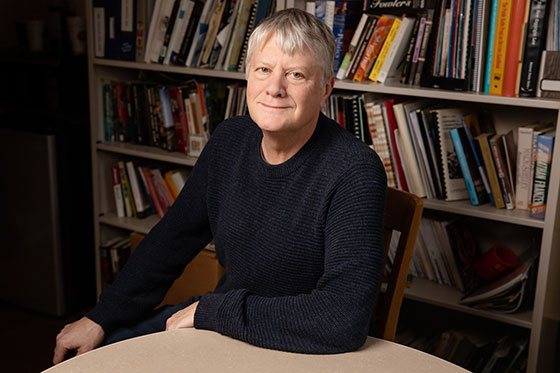
Brant Houston

If you pick up the 2023 book Changing Models for Journalism by Brant Houston, Knight Chair Professor in Investigative and Enterprise Reporting in the Department of Journalism, you would read about the collapse of traditional media and the changes in the news landscape over the past decade, written by an award-winning journalist who has spent years researching journalism models.

You would learn about the digital age, blogging, nonprofits, investigative centers and the rise in university-led student reporting programs—which is fitting because Houston founded his own such program in 2009 at the University of Illinois Urbana-Champaign. The watchdog community reporting outlet, CU-CitizenAccess, is run entirely by him and his managing editor, Dylan Tiger, as well as a cadre of student journalists.

Journalism alum, film projection pioneer Bob Endres passes away

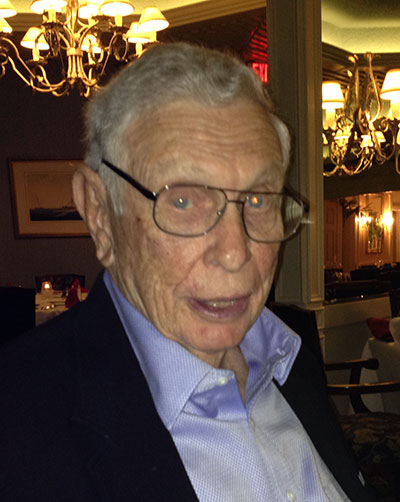
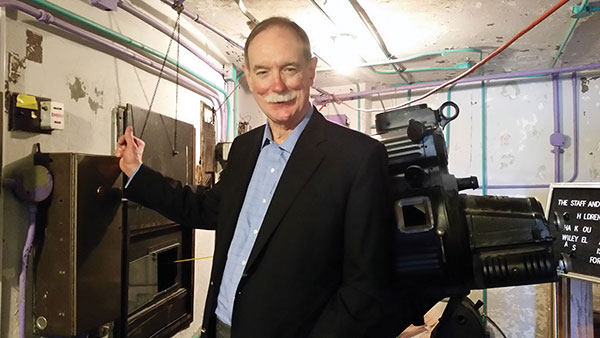
Endres

Robert “Bob” Endres (BS ’62, MS ’63, journalism), a pioneering figure in film projection and a generous University of Illinois donor, passed away on June 25, 2024. He was 85.

During college, Endres worked at WILL as an engineer and a film critic. Endres said the valuable experience he gained at WILL served him well in his first job after college as a radio talk show host and DJ in his hometown of Streator, Illinois.

Endres would go on to work as head projectionist at the Kankakee Theater until moving to New York City in 1974 to fulfill a lifelong dream as head projectionist at Radio City Music Hall. In 1999, he became a projection technician in Dolby’s New York City screening room where he worked for the remainder of his career. 

Endres was a member of the Society of Motion Picture and Television Engineers and worked as a projectionist for advertising agencies, film laboratories, and movie studios. He also acted as background projectionist for CBS on the television shows Search for Tomorrow, As the World Turns, and Captain Kangaroo. 

His career highlights include Abel Gance’s Napoleon, with its three-screen triptych at Radio City; the 25th anniversary celebration of the Metropolitan Opera; running “dailies” screenings for Sydney Lumet on seven of his pictures, including his last; and working for director Otto Preminger in his home screening room in Manhattan. 

In 2017, Endres created the Robert O. Endres Endowed Internship at Illinois Public Media to support student internships with WILL. Since it began, the fund has helped a total of seven Media students further their education and gain real-world experience through internships.

Endres was named a member of the President’s Council, the University of Illinois Foundation’s donor-recognition program for those who give at the highest levels (totaling $50,000 or more) and a member of College of Media’s Dean’s Society, for donors who give $10,000 and above.

Read his obituary.

Read his essay “25 Years at Radio City.”

Media faculty, students present research at 2024 International Communication Association conference


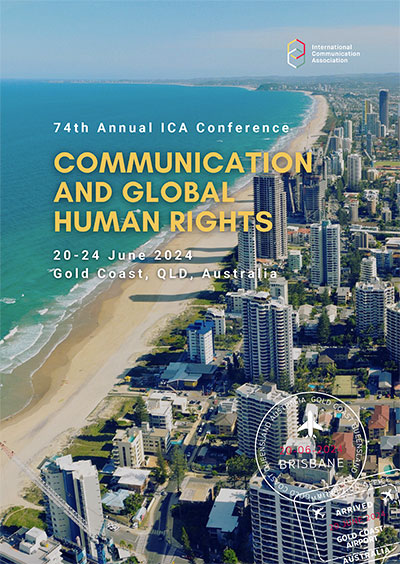
Faculty, graduate students, and recent alumni from the College of Media co-presented 16 topics of research at the 74th annual International Communication Association Conference—the largest academic conference for communication scholars—on June 20-24, 2024, in Gold Coast, Queensland, Australia. The ICA aims to advance the scholarly study of human communication by encouraging and facilitating excellence in academic research worldwide. 

ICA Conference Cover

This year’s conference theme addressed “Communication and Global Human Rights.” Media presenters included faculty in the Institute of Communications Research, the Charles H. Sandage Department of Advertising, and the Department of Journalism; graduate students in the MS Advertising program; and doctoral students in the Institute of Communications Research PhD program. 

Media research presenters and presentations are listed below. (Note: Presenters/authors from other units or institutions are not included. Please see the ICA conference program for full author listings.)

Theme: Environmental Risk and Science Communication
“Satire and Perceived Trustworthiness in Communicating About Renewable Energy”

  • Leona Yi-Fan Su, Assistant Professor, Advertising and ICR
  • Jennifer Shiyue Zhang, ICR student

Theme: Crisis Communication
“Public Engagement in an Era of Misinformation: Examining Corporate Responsible and Ethical Communication on Twitter”

Yanbo Li, ICR student

Theme: Continuing Effects and Practice of Stereotypes in Intercultural Communication
“Effects of Chinese Female Images in Controversial Advertisements on Audience Attitudes and Purchase Intention”

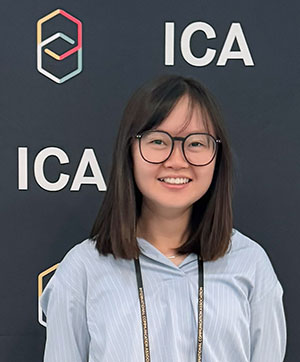
  • Ruiheng (Rachel) Sun, MS Advertising student (pictured below)
Rachel Sun
Rachel Sun

Theme: Hello Chatbot! Can We Talk?
“How Conversational-Agent Modality Affects Charitable Behavioral Intentions: The Roles of Communication Style and Anthropomorphism”

Theme: Stigma, Infodemic, and Social Media
“Unmasking the COVID-19 Infodemic: An In-Depth Examination of Information Dissemination and Misinformation Propagation on Twitter During the COVID-19 Pandemic”

Theme: Information Systems and Health Communication
“Combating Optimistic Bias: Evaluating the Role of Self-Focused Augmented Reality in Enhancing E-Cigarette Risk Perception Among Users”

  • Lizi Ma, MS Advertising alum (December ’23)

Theme: Information Systems and Health Communication
“Understanding (Counter-) Persuasive Effects of Personalized Health Messages Through Psychological Reactance Theory: Privacy Intrusion as a Freedom Threat”

Theme: Journalistic Acts on Social Media
“The Journalists’ Exodus: Navigating the Transition From Twitter to Other Alternative Platforms”

Theme: Navigating New Visibility That’s Feline Perplexing: Examining Emerging Dynamics around Data and Disclosure
“A Picture Is Worth a Thousand Doubts: The Counterintuitive Impact of Chat Log Screenshots”

Theme: Information Systems and Persuasive Effects
“Recall or Perception? Social Media Engagement Metrics, Perceived Social Endorsement, and Perceptions of Message Credibility”

Theme: Global Communication: Marco and Micro Perspectives
“Relational Surveillance Through Alipay Within the Localized Chinese Context”

  • Ran Ju, ICR alum (PhD ’23)

Theme: Information Systems and AI
“Playing Hide and Seek With Algorithms: Investigating Digital Media Users’ Algorithm Refinement Behavior”

  • Ewa Maslowska, Associate Professor, Advertising and ICR
  • Jiwon Oh, ICR student
  • Jiyeon Chang, ICR student

Theme: Algorithms, Social Media and Online Engagement
“Analyzing the Political Leanings of YouTube Recommendations in Brazil: A Network-Based Approach Using YouTube Audience on Twitter”

Theme: Information Systems and Methodological Considerations, Science, and Climate
“Extending Message Framing to Virtual Space: An Experimental Study on the Impact of Self-Focused vs. Non-Self-Focused AR Embodiments on Vaping Risk Perceptions”

  • Mike Yao, Professor and Director of ICR, Advertising and ICR

Theme: Information Systems at Work
“Targeting Against Disinformation: The Effect of Microtargeted Corrections on the Impact of Fake News”

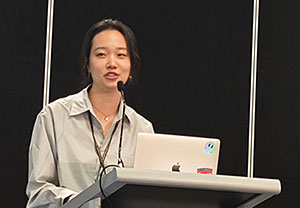
Melodie Zhao
Melodie Zhao

Theme: Information Systems in the Social Context
“Unraveling the Impact of User-Generated Content and Producer-Generated Content on K-Pop Fan Identity and Motivations”

  • Zixuan (Melodie) Zhao, ICR student (pictured at right)

Share on social

Melita Garza wins 2024 essay contest sponsored by ‘Journalism History’

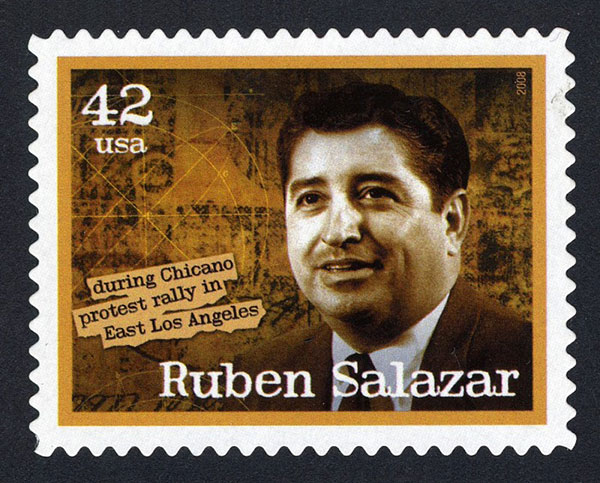
Salazar USPS stamp

Melita Garza, associate professor and Tom and June Netzel Sleeman Scholar in Business Journalism, won the 2024 essay contest sponsored by AEJMC’s Journalism History.

Melita M. GarzaThe competition in Journalism History, the academic journal of the Association for Education in Journalism and Mass Communication’s history division, first began in 2018 and has featured essays around specific themes. This year’s theme focused on civil rights in light of the 60th anniversary of the Civil Rights Act of 1964.

Garza’s essay, titled “Ruben Salazar: Beyond Postage Stamp Memory,” highlights the work of Salazar at the “Los Angeles Times” and at a Spanish-language station KMEX regarding the Mexican American freedom struggle.

“I am grateful that Journalism History chose to commemorate this milestone legislation, whose spirit, more than a half-century after its passage, is still hauntingly unfulfilled,” Garza said. “Moreover, I’m thrilled to bring greater recognition to pathbreaking journalist Ruben Salazar, who lost his life in 1970 while covering one of the nation’s largest Mexican American civil rights marches.”

(Postage stamp image is copyright United States Postal Service. All rights reserved.)

Q&A with Rosie Powers

Get to know some of our College of Media alumni. Rosie Powers (BS ‘12, journalism) is a self-employed consultant. Powers also participated in a Media Career Night alumni panel on “Nonprofits” in Spring 2022. Watch a recording of the session here.

Rosie Powers

How did the College of Media prepare you for your future?
The college had great courses that addressed the changing media landscape. Pairing that with traditional journalism skills of writing and copy editing felt like a good mix. I took a multimedia journalism course at the beginning of social media, and the idea of being a multimedia reporter was new and cutting-edge. You’d be someone reporting live on the field rather than solely writing in the newsroom, and it helped me think of myself as more than a writer. The College of Media also provided a well-connected alumni network, so it was easier for students like me to apply for internships and jobs after we were introduced to those who came before us.

During and right after college, how did you go about getting internships and jobs?
I applied everywhere in Chicago because I was an overachiever, but between my freshman and sophomore years, I had an internship at Lake County Journal, where I wrote a couple of stories a week. The following summer, I interned as a digital producer at WGN, then I interned at NBC, and later The Washington Post. I knew I wanted to do digital production, and even though my background was in newspapers, I applied to television stations. I realized early on that I could re-envision my skill set, so my advice would be don’t be afraid to apply for everything, even if you fear not having the skill set or experience required. Just try it because I think places are eager to teach people, and I had great experiences with all my internships.

What has your career path looked like since graduation?
I graduated from the College of Media in 2012 as a news-editorial journalism major with a minor in environmental science. After graduation I had an internship with The Washington Post; then I moved on to work for the Chicago Sun-Times, specifically for Oak Park and River Forest—those suburban publications—for a few years, and then I worked as a digital producer at ABC 7 Chicago. I liked my journalism career, and I’m proud of it, but in my mid-20s, I was ready for a change. I realized I could take my writing and storytelling skills from journalism and apply them to help nonprofits and further causes that are important to me, and it’s been about eight or nine years now down this new path. I totally pivoted my career.

What does your career look like now after this pivotal moment?
I work for myself, so I’m like a self-employed contractor. I used to work full-time, but I discovered advertising and branding agencies specific to the nonprofit space. I thought that was cool and I could be a consultant; now, I work with three different consultancies, and Mission Minded, a branding agency, is one of them. I do brand and website strategy for them while working with Column & Row, a consultancy that does web strategy and SEO with nonprofits and foundations, and I’m a consultant with Tiny Windows Consulting in Chicago, doing digital communications work. I do different types of strategy depending on who I’m working with, whether it’s brand, web, or digital communications.

What are you most proud of?
My career transition. I thought during high school that I would be in journalism forever and also because of my parents—my dad worked the same job for 30 years. When I was growing up, I thought, “I’m going to pick my job, and the path is always the same.” I was proud of my journalism career; it was rewarding, but I felt I achieved what I wanted there and wanted what was next. That pivot was freeing, exciting, and scary because I’d never thought about doing anything else professionally. But I knew I wanted something else and went for that, even though it was terrifying, having to relearn how to do other things. I think there’s a full circle—maybe this is what I wanted to do all the time but didn’t know it existed. I was able to do that, do journalism for a few years, and get a great experience.

What’s one piece of advice you would give students?
College is four of the greatest years, and—this is stereotypical to say—it goes by fast, especially after freshman year. Remember to enjoy it, even with all the stress about internships and questioning what you’re doing over the summer. Remember to try new things to broaden your horizons and envision your skill set. Don’t put yourself in one box because you’re not going to know what you want to do in 10 years or 15; for me, it totally changed, and there’s no way you can know that when you’re a freshman.

—Interview by Chloe Barbarise, New Voices Intern

Q&A with Bianca Flowers

Get to know some of our College of Media alumni. Bianca Flowers (BS ’13, journalism) is a global race and justice correspondent at Reuters.

Bianca Flowers

What experiences motivated you to choose Illinois?
Growing up on the west side of Chicago, I took inspiration from my favorite news anchors and I had always had an affinity for storytelling. As I got older, my love for storytelling, creative writing, and hearing the stories of others continued. Additionally, I enjoyed sports, and I knew Illinois could help me expand on that area of focus in journalism. My sister always told great stories about the professors here, and I knew Illinois had such a great reputation, but what sold me was my campus visit in high school. Overall, it felt like home, and I knew I wanted to maintain my family’s bloodline connection to Illinois as the second person in my family to graduate from the institution.

What opportunities did you take advantage of to explore your passion for sports journalism?
I worked for Fighting Illini Productions early in my college career, which refined my media editing skills. Not only did I receive a high-caliber experience by being able to tell the exclusive stories of athletes, but I also became a great producer, editor, and videographer through my work. Overall, Fighting Illini Productions gave me a taste of what the broadcast media industry is like, and many students don’t get these types of experiential learning opportunities, like partnering with the Big Ten Network, until their junior or senior year. Additionally, I created my own blog, which I maintained during my undergraduate years, which helped me build journalistic storytelling skills in a digital-based format. This experience allowed me to become more independent in my work and was instrumental in preparing me for a career in journalism.

Who guided you to excel in a professional media career at Illinois?
I pursued business journalism because of Lynn Holley. She was a business journalist who lectured at Illinois, and I would pop into her office as she had an open-door policy. I remember she said that if you specialize in a particular media area, you make yourself much more marketable, and you can build your brand and identity. At the time, there weren’t any business journalism courses, but Holley’s advice encouraged me to pursue this style of journalism and take every opportunity I saw. In the media industry, I often didn’t see other people who looked like me doing business journalism, meaning Black students or reporters. However, Holley helped me create that opportunity for myself. Business journalism still plays a role in my current position at Reuters as a global race and justice correspondent, as money is often involved in every type of reporting. I include this connection in the tapestry that helped me progress more in my career.

In your current role as a global race and justice correspondent at Reuters, how do you use your platform to advocate for others?
I use my platform to initiate conversations within my community and at groups within my organization about how we should consider covering race and justice. When I’m talking to emerging journalists or students, I think it’s essential for them to know that if you identify as a minority, there are opportunities for you to pursue areas of reporting that you are interested in while advocating for yourself and others. As you continue to grow in your career, lifting others as you climb up is essential. I want to be known as someone who is constantly advocating for young girls to open doors that they may be scared to open because they probably don’t see folks like myself at media organizations. At Reuters, we always have those conversations within our walls to keep in mind how we’re interviewing and hiring journalists of all backgrounds. We focus on where we need to improve our diversity and inclusion initiatives to lift those voices up. Advocacy work is extremely important to me, and it always will be.

—Interview by Mallory Miller, New Voices Intern

DEV College of Media
119 Gregory Hall
810 S. Wright St.
Urbana, IL 61801
217-333-2350