A Conversation with Brian Williams


Brian Williams

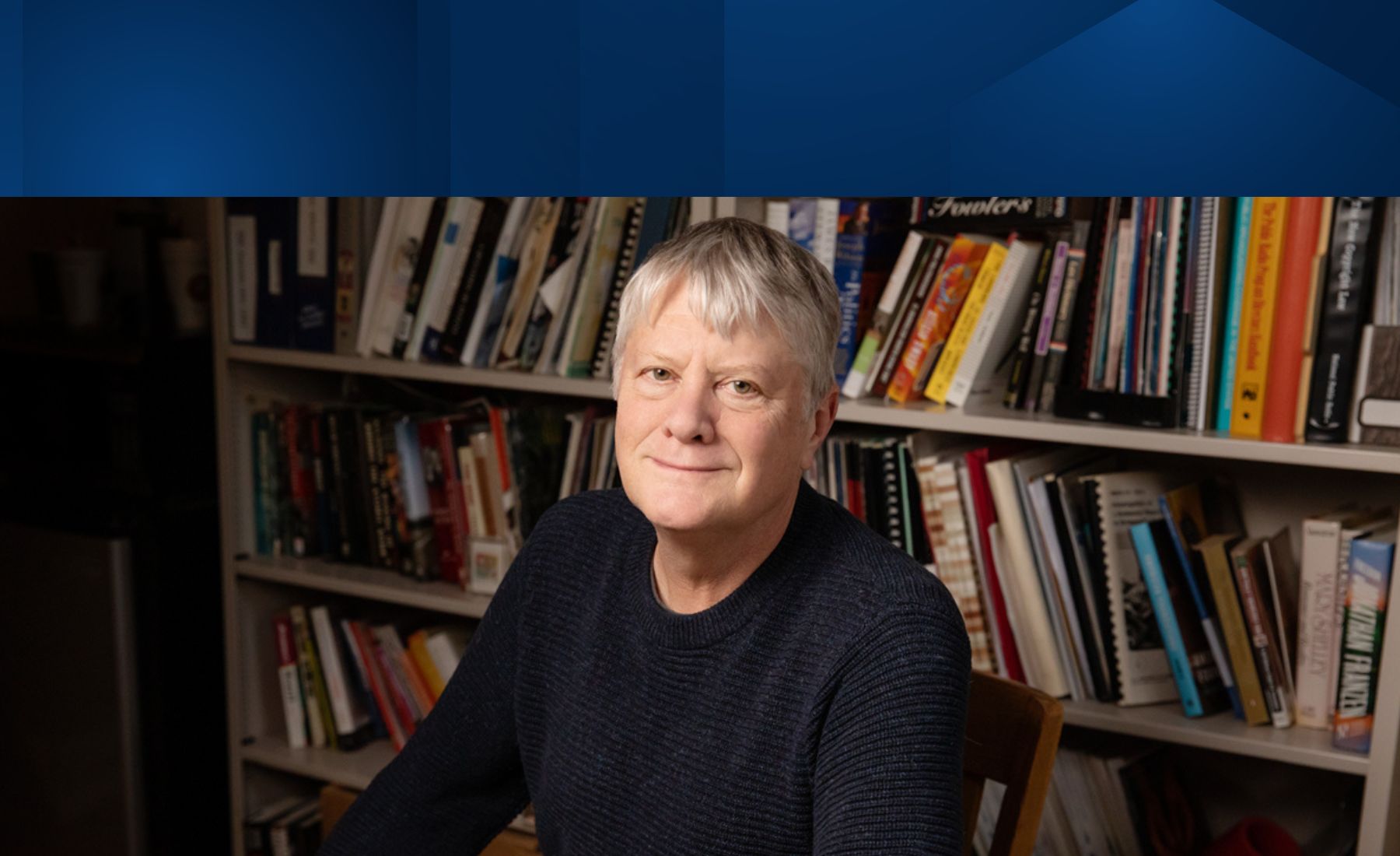
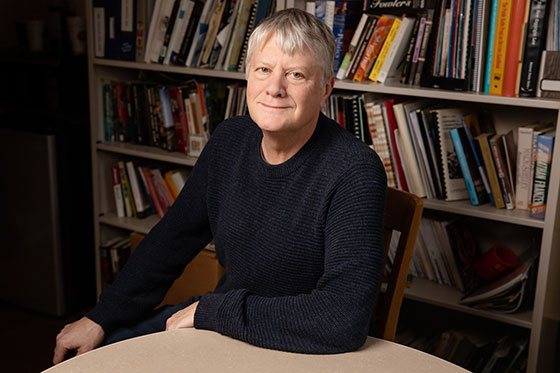
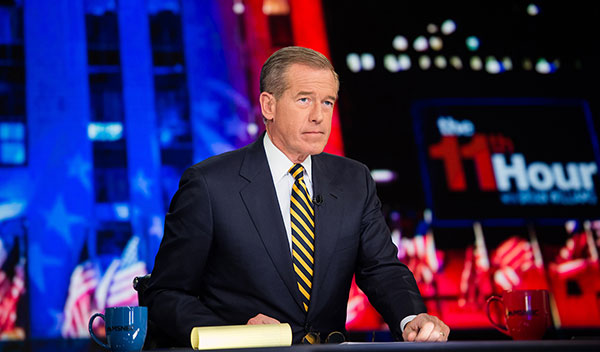
Brian Williams, former anchor of MSNBC’s The 11th Hour with Brian Williams and NBC Nightly News with Brian Williams, will be on campus for a conversation about the evolution of broadcast news in America.

A 40-year veteran of television news, Williams has received a dozen Emmy Awards, 11 Edward R. Murrow Awards, the duPont-Columbia Award, the Walter Cronkite Award for Excellence in Journalism, and the industry’s highest honor: the George Foster Peabody Award.

The conversation will be led by Colleen King, director of the Frank Center and clinical assistant professor of journalism. King worked closely with Williams as his executive producer of The 11th Hour. 

Questions may be submitted in advance through the Zoom registration form or through this online submission form.

This event is presented by the Richard and Leslie Frank Center for Leadership and Innovation in Media. 

About Brian Williams
Brian Williams

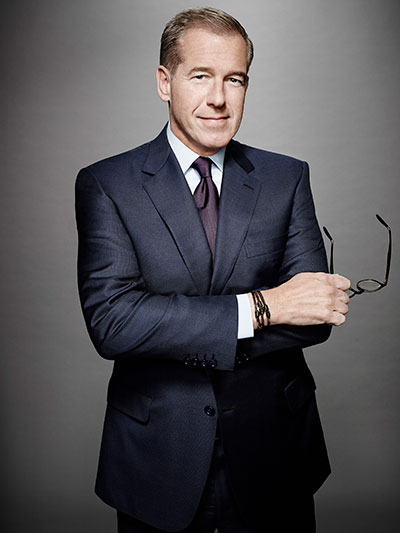
Brian Williams is a 40-year veteran of television news and is among the most highly decorated journalists of his generation. After 28 years at NBC News, he signed off the air for the last time on December 9, 2021. 

Over the course of his career, he covered every major story imaginable: political conventions and presidential elections, our nation’s wars in Iraq and Afghanistan, conflict in the Middle East, natural disasters, and countless mass-casualty tragedies in the United States and abroad. He traveled to more than two dozen countries, many of them aboard Air Force One. He has interviewed six American presidents. 

His work has been richly rewarded, with a dozen Emmy Awards, 11 Edward R. Murrow Awards, the duPont-Columbia Award, the Walter Cronkite Award for Excellence in Journalism, and the industry’s highest honor: the George Foster Peabody Award, which he received for his tireless coverage of Hurricane Katrina and its aftermath. His televised reports from New Orleans were praised by Vanity Fair as “Murrow-worthy.”

During the decade he spent as anchor and managing editor of NBC Nightly News, it was the most-watched news broadcast in the United States—and Williams was viewed by more people on a daily basis than any other broadcaster. At the time of his retirement from NBC, he was anchor of the critically-acclaimed 11th Hour with Brian Williams, which chronicled the 2016 election and its aftermath, including the January 6th insurrection and the failed attempt to overturn a presidential election. 

Williams joined NBC in 1993 after a dozen years in local news. Two years later, he was named Chief White House Correspondent. In 2007, Time magazine named him one of the 100 most influential people in the world. Along the way, he became a favorite of late-night talk show audiences, and in 2008 he became the first evening news anchor to host Saturday Night Live. In 2014, Williams was inducted into the New Jersey Hall of Fame by fellow member Bruce Springsteen. 

Beyond his family, his first love has always been firefighting—and that remains true today. He applied for enrollment in the fire academy at the age of 18, and has served as a volunteer firefighter for many years. He is currently an active and fully accredited member of the fire service in Ocean County, New Jersey. He has been a member of the Leary Firefighters Foundation Board of Directors for 10 years, where he is proud to advocate for the needs of the nation’s 130,000 volunteer firefighters.

Study: YouTube did not actively direct users toward anti-vaccine content during COVID-19


YouTube

New research led by data science experts at the University of Illinois Urbana-Champaign and United Nations Global Pulse found that there is no strong evidence that YouTube promoted anti-vaccine sentiment during the COVID-19 pandemic. 

The study, published in the Journal of Medical Internet Research, performed an algorithmic audit to examine if YouTube’s recommendation system acted as a “rabbit hole,” leading users searching for vaccine-related videos to anti-vaccine content. 

For the study, the researchers asked World Health Organization-trained participants and workers from Amazon Mechanical Turk to intentionally find an anti-vaccine video with as few clicks as possible, starting from an initial informational COVID-19 video posted by the WHO. They compared the recommendations seen by these users to related videos that are obtained from the YouTube application programming interface and to YouTube’s Up-Next recommended videos that were seen by clean browsers without any user-identifying cookies. 

The team then used machine learning methods to classify anti-vaccine content, analyzing more than 27,000 video recommendations made by YouTube.

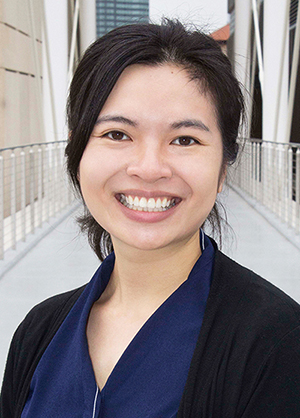
Margaret Ng
Margaret Ng.

“We found no evidence that YouTube promotes anti-vaccine content to its users,” said Margaret Yee Man Ng, an Illinois assistant professor of journalism with an appointment in the Institute of Communications Research and lead author of the study. “The average share of anti-vaccine or vaccine hesitancy videos remained below 6% at all steps in users’ recommendation trajectories.”

The initial goal of the research was to better understand YouTube’s famously opaque techniques for content recommendations—going beyond querying the platform’s application programming interfaces to collect real-world data—and whether these techniques funnel users toward anti-vaccine sentiment and vaccine hesitancy. 

“We wanted to learn about how different entities were using the platform to disseminate their content so that we could develop recommendations for how YouTube could do a better job of not pushing misinformation,” said UN Global Pulse researcher Katherine Hoffmann Pham, a co-author of the study. “Contrary to public belief, YouTube wasn’t promoting anti-vaccine content. The study reveals that YouTube’s algorithms instead recommended other health-related content that was not explicitly related to vaccination.”

“The videos that users were directed to were longer and contained more popular content, and attempted to push a blockbuster strategy to engage users by promoting other reliably successful content across the platform,” Ng said.  

 The study also allowed the researchers to examine how users’ real-world experiences differ from the personalized recommendations obtained by querying YouTube’s “RelatedToVideo” application programming interface. This API is designed to help programmers search for related content on the platform or using clean browsers, replicating the experience of a new user visiting YouTube with no search or view history, which is often used to study the platform’s recommendation system. 

The study reports that the watch histories of users significantly affect video recommendations, suggesting that data from the API or a clean browser does not offer an accurate picture of the suggestions that real users are seeing. Real users saw slightly more pro-vaccine content as they advanced through their recommendation trajectories. In contrast, searches performed by the API or clean browsers during the study were drawn toward irrelevant recommendations as they advanced.

“I think one benefit of this study relative to others is that it proposes a relatively lightweight methodology to gather real data on how people navigate through YouTube’s video recommendations,” Pham said. “So unlike the APIs, which will just sort of randomly suggest new links, the users can critically review the links and pick one, which sort of mimics the behavior that many people would use on YouTube in reality.” 

Understanding recommendation systems is important because it promotes transparency and holds them accountable,” added co-author Miguel Luengo-Oroz, a professor at the Telecommunications School of the Universidad Politecnica de Madrid. ”This helps people understand the choices being made for them by platform designers.”

Ng is also affiliated with the Department of computer science, the National Center for Supercomputing Applications, and the Center for Social and Behavioral Science at Illinois. 


Editor’s notes: 

To contact Margaret Yee Man Ng, call 217-300-8186; email ymn@illinois.edu.

The paper “Exploring YouTube’s recommendation system in the context of COVID-19 vaccines: Computational and comparative analysis of video trajectories” is available online. DOI: 10.2196/49061

View original press release.

Journalism alum Jill Wine-Banks receives 2023 Margaret Brent Women Lawyers of Achievement Award

Jill Wine-Banks (BS ’64, journalism), MSNBC legal analyst, author, podcast co-host, and former prosecutor at the U.S. Department of Justice, was one of five female lawyers to receive the 2023 Margaret Brent Women Lawyers of Achievement Award this summer.

The American Bar Association Commission on Women in the Profession established the award to recognize and celebrate the accomplishments of women lawyers who have excelled in their field and have paved the way to success for other women lawyers.

“These five distinguished lawyers are role models for all women in the legal profession,” said Commission member Victoria Alvarez, co-chair of the Margaret Brent Awards committee.

Wine-Banks, who earned a bachelor’s degree at the University of Illinois Urbana-Champaign and a law degree at Columbia Law School, was the first woman to serve as an organized crime prosecutor at the U.S. Department of Justice in Washington, D.C. Less than five years later, she was named one of the three Assistant Watergate Special Prosecutors—and the only woman—for the obstruction of justice trial against President Nixon’s top aides. She became a major player in the Watergate tapes hearing that preceded the trial, cross-examining Rose Mary Woods, President Nixon’s secretary, about the 18 ½-minute gap in a key White House recording. 

Her legal career also includes service as the first female General Counsel of the U.S. Army where she helped integrate women into the Regulate Army by eliminating the Women’s Army Corps, and into West Point; as the first Solicitor General of Illinois where she argued in the U.S. Supreme Court and first female Deputy Attorney General; and as the executive vice president and chief operating officer of the American Bar Association, the only woman to have held that position. 

See press release.

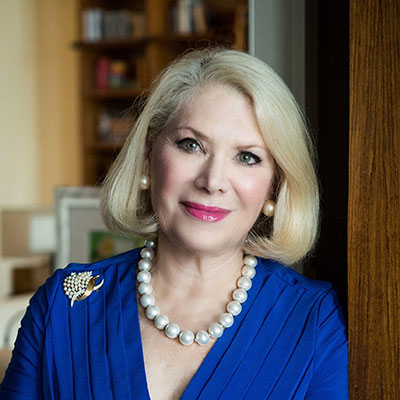
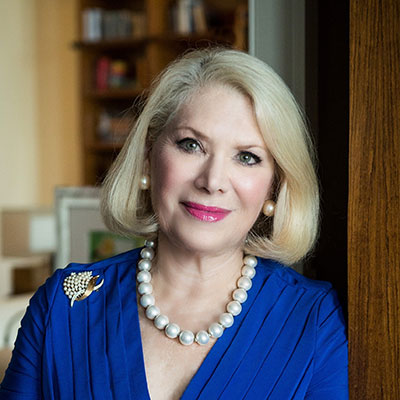
Jill Wine-Banks

I on the Media


“I on the Media” is a series from the University of Illinois College of Media in which faculty, staff, and students at the college address current issues and research. It began in 2020 to discuss the impact of COVID-19 on media-related issues. 

Hear from our experts

9/8/2023

In this Q&A, Professor Brant Houston, Knight Chair of Investigative and Enterprise Reporting in the Department of Journalism, discusses the implications of the August 11 police raid on the Marion County Record, run by retired associate professor of journalism Eric Meyer. 

9/7/2022

Angela Aguayo, associate professor of media and cinema studies, discusses the Illinois Community Media Project, funded by Chancellor Jones’s Call to Action to Address Racism & Social Injustice Research Program. The project supports people making and circulating media that is most aligned with the interests of that community. (Video produced by Andrew Hall.)

1/18/2022

Nikki Usher, associate professor of journalism, discusses their new book, News for the Rich, White, and Blue: How Place and Power Distort American Journalism. They argue that “the future of journalism conversation is actually a future of democracy conversation.” (Video produced by Andrew Hall.)

12/8/2021

Brian K. Johnson, professor of journalism, demonstrates how he applies a photojournalism methodology to his creative works and how to find the unseen in the seen.

11/5/2021

Kevin Wise, professor of advertising, discusses current studies at the MAD (Media and Advertising) Lab, where researchers have access to psychophysiology, eye-tracking, and virtual reality equipment. (Video produced by Andrew Hall.)

2/9/2021

Victor Font, lecturer in media and cinema studies, discusses how the pandemic affected film production in his class last spring, how he approached fall semester, and why he’s optimistic going forward. (Interview conducted by Connor Ciecko, Videography and Photography Intern.)

Watch the student film that was disrupted by the pandemic.
Watch the Normal Rockwell-inspired video made before the pandemic.

12/3/2020

Derek Long, assistant professor of media and cinema studies, discusses trends in movie exhibition since the pandemic, distribution and production studio strategies to mitigate losses, and the shift to streaming. (Interview conducted by Connor Ciecko, Videography and Photography Intern.)

11/5/2020

Brant Houston, Knight Chair Professor in Investigative and Enterprise Reporting in the Department of Journalism, discusses student-driven investigative reporting of COVID-19 on the website he oversees, CU-CitizenAccess.org, which serves as a lab for digital innovation and data journalism. (Interview conducted by Connor Ciecko, Videography and Photography Intern.)

10/5/2020

Ewa Maslowska, assistant professor of advertising in the Charles H. Sandage Department of Advertising, discusses the changes in consumer behavior and brand advertising strategies that researchers observed in the first few months of the pandemic.

5/11/2020

Mike Yao, professor of digital media and head of the Charles H. Sandage Department of Advertising, explains the mental and social impacts of using computers and digital devices while working and learning from home. 

4/22/2020

Alison Davis, a lecturer in journalism who teaches documentary production and has won seven regional Emmy Awards, recommends five documentaries to watch while we’re in quarantine and shares tips for documenting your own experience during this unprecedented time. 

4/15/2020

Eric Meyer, associate professor of journalism, discusses how his weekly paper in Kansas, the Marion County Record, has temporarily removed its paywall and has begun distributing the paper free for 13 weeks to county residents to keep people better informed.

I on the Media: Brant Houston discusses the police raid on ‘Marion County Record’


About the Media Expert

Brant Houston

Professor Brant Houston is Knight Chair of Investigative and Enterprise Reporting in the Department of Journalism. He is the author of Changing Models for Journalism: Reinventing the Newsroom, co-author of the Investigative Reporter’s Handbook, among other books. In addition to teaching, Brant Houston oversees the online newsroom CU-CitizenAccess.org, devoted to community and watchdog reporting and data-driven stories by journalism students.

Houston served for more than a decade as the executive director of Investigative Reporters and Editors and was an award-winning investigative reporter at daily newspapers for 17 years. He is co-founder of the Global Investigative Journalism Network and the Investigative News Network and advises nonprofits newsrooms in the U.S. and internationally. 


What were your first thoughts when you learned about the August 11 police raid on the Marion County Record, run by your former colleague, retired University of Illinois associate professor of journalism Eric Meyer, as well as his home? 

My first thoughts were that this was an out-of-control, small-town justice system whose actions resembled those of autocratic governments in developing countries. Although those governments go on to burn down news offices and imprison reporters.

Did you talk about the Marion County Record and Eric Meyer with your advanced reporting classes on the first day of class, only 10 days after the raid? 

I did talk about it. To be candid, most of the students had not heard about it. The one student who had been in one of Eric Meyer’s classes was aware of it. I explained what had happened, the dangers it represented to a free press if replicated, and talked about the broad national support Eric Meyer and his weekly were getting.

What does it mean for local journalism and First Amendment rights that the national response to this case has been one of overwhelming support for Meyer and his newspaper? 

We live in a time when the national press is under constant criticism and attack, while at the same time officials and the general public have realized the local newsrooms, which generally are regarded as more credible and accessible, have been deeply diminished by a changing business model that has led to budget and staff cuts. The national response shows there is still strong belief in the First Amendment and a free and independent press.

Marion County police were ordered to return the seized equipment and phones because of insufficient evidence to support a raid. How can newsrooms prevent overstepping of their First Amendment rights?  

The only way to prevent such invasions of newsrooms and other overstepping of First Amendment rights is through the assertion of the value of those rights and immediate and robust responses to those violations. It is a constant struggle to preserve those rights, but absolutely necessary.

Is there a misperception of investigative journalism and its value?  

I think the value of solid credible investigative journalism is widely recognized and appreciated. While those under scrutiny may not like it, the public still counts on investigative journalists to be watchdogs for the community, to prevent fraud, waste, and abuse in government and to hold the powerful accountable for taking advantage of the powerless. For a community, investigative reporting is often the court of last resort, when bureaucracies or businesses fail to correct bad practices or protect the public.

“I on the Media” is a series from the University of Illinois College of Media in which faculty, staff, and students at the college address current issues and research.

Media faculty and TAs make list of teachers ranked as excellent


Congrats

Congratulations to all of the College of Media faculty and teaching assistants who were ranked as excellent by their students!

This list is based on Instructor and Course Evaluation System (ICES) questionnaire forms completed by students during the Spring 2023 semester. Only those instructors who distributed ICES forms at least once during this time period and who released their data for publication are included in the list. View the complete list.

Note: * denotes that the instructor ratings were outstanding.
+ denotes Summer 2023 course.


ADVERTISING

* TERRY KASDAN – ADV 409

* SHACHAR MERON – ADV 283

SUSAN MUIRHEAD – ADV 490

* MICHELLE NELSON – ADV 582 

* MARISA PEACOCK – ADV 410, ADV 498 

SELA SAR – ADV 588

RASHMI TENNETI – ADV 490

CARRIE WILSON-BROWN – ADV 301, ADV 400


JOURNALISM

CHRISTOPHER BALL – JOUR 430, JOUR 451

* LEON DASH – JOUR 452

COLLEEN KING – JOUR 210

CAROL LOMBARDI – JOUR 220

MARGARET NG – JOUR 425

CARLA ERDEY – JOUR 453


MEDIA

*DEREK LONG – MACS 590


MEDIA & CINEMA STUDIES

CL COLE – MACS 356

VICTOR FONT – MACS 371+

JONATHAN KNIPP – MACS 282

E. KURT – MACS 372

DEREK LONG – MACS 361

CARRIE WILSON-BROWN – MACS 203


STRATEGIC BRAND COMMUNICATION

RICH PIECZYNSKI – SBC 504


TEACHING ASSISTANTS

* C. ARREAZOLA – ADV 150 

S. HEO – ADV 283 

* D. LEE – ADV 460 

* J. LIU – ADV 200 

* S. PARK – ADV 283

* D. CARRILLO FUCHS – MACS 101

* J. CINTRON – MACS 100

* Y. GAO – MACS 101

A. PENG – MACS 101

R. SIECZKOWSKI – MACS 260 

Media students apply classroom skills to internships across the country


Several Media students put the skills they learned in the classroom to good work this summer, applying their course knowledge to on-the-job training. At internships across the country, students gained valuable lessons that will help provide them with future academic and professional success. Here are just a few student experiences: 

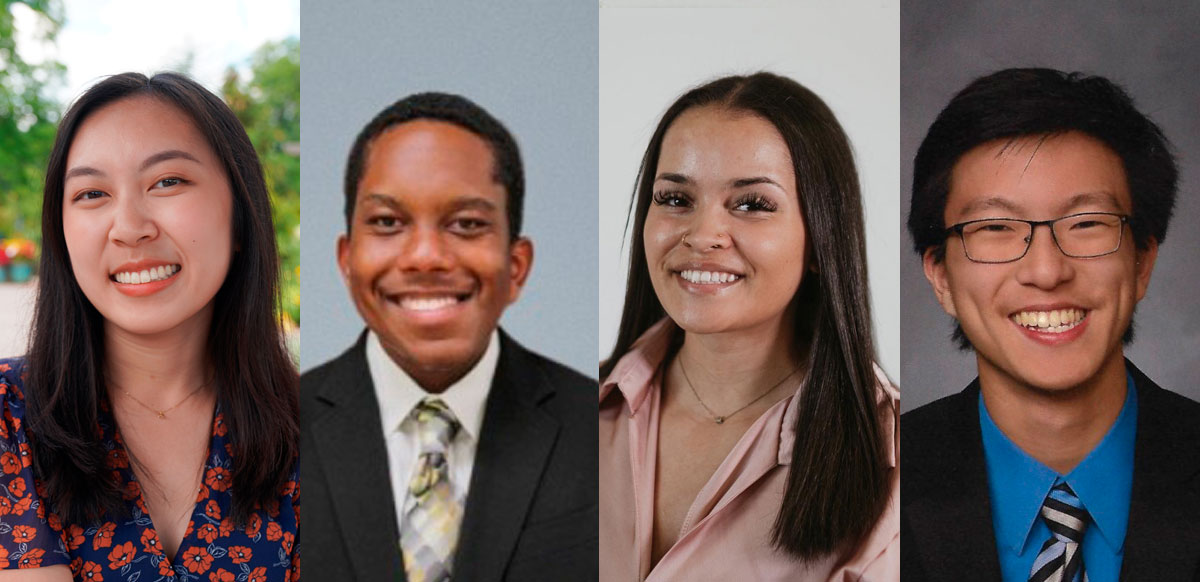
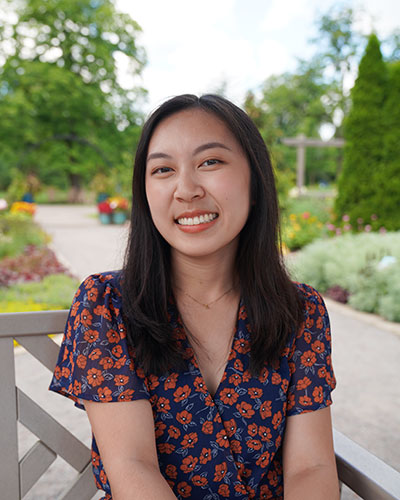
Vivian La

Vivian La 
Reporting Intern/Asian American Journalists Association Intern with Chicago Tribune 

Vivian La, a senior in journalism, worked as a reporting intern with the Chicago Tribune, covering environmental issues such as the city’s poor air quality due to Canadian wildfires. La’s work also focused on climate change and how it has affected Chicagoans—from tick season to home flooding.

La also covered breaking news twice a week, including crime, weather, and various events. She had the opportunity to write about the Chicago Pride Parade and the NASCAR Chicago Street Race. In addition, La was able to write one of her favorite pieces of the summer about the first LGBTQ+ pride parade held in Petersburg, Illinois. 

La said she absorbed a lot of useful information from experienced journalists in the newsroom.

“There are a couple people who are on the younger side, who are just graduating college, but there are people there who have been nominated for Pulitzers,” La said. “Even just being in the office and listening to them talk to each other, or talk to me, or overhearing their phone interviews with people, you learn a lot just by sitting there and soaking in what people are saying to each other.” 


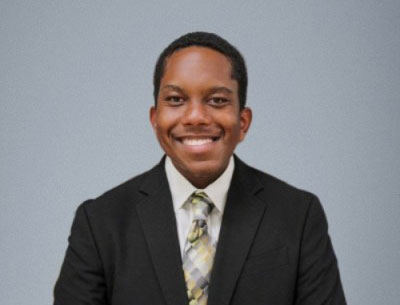
Trent Miles

Trent Miles 
Business Affairs Intern with AppleTV+ 

Trent Miles, a junior in media and cinema studies, worked as a contract administration intern with AppleTV+ in Los Angeles. In his position, Miles assisted in three departments supporting a senior executive in charge of securing feature film deals. 

Due to the ongoing strike by the Writers Guild of America and SAG-AFTRA, Miles had to work in the non-fiction programming department since production for scripted programming had stopped. Miles assisted sports executives in securing documentary deals by previewing submitted pitches and providing feedback on them.

A highlight of Miles’s time at AppleTV+ was being able to explore and find a passion for the non-fiction department. 

“I came in wanting to do something in scripted, and then when I found out that scripted is not doing anything because of the strike, I guess I just naturally fell in love with non-scripted,” Miles said.


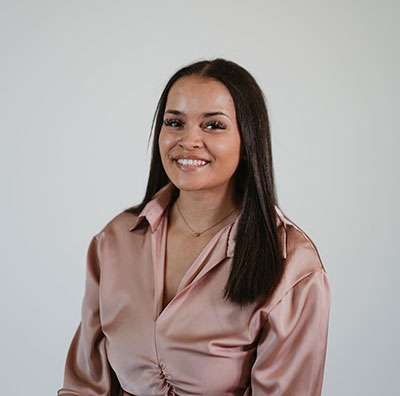
Paris Baptiste

Paris Baptiste 
Marketing Intern with Music for All 

Paris Baptiste, a second-year graduate student pursuing a master’s in advertising, spent her summer as an intern with Music for All, an event-based, nonprofit educational organization. She worked on several projects including research and creating social media posts. 

Baptiste enjoyed having the opportunity to attend a band camp for one week during the internship as well as the chance to work on a small team.

“Because it was a smaller nonprofit, it was a smaller team, and I felt very heard and listened to and like an actual part of the team, which was very valuable,” Baptiste said. 

As an undergraduate, Baptiste took ADV 290 (now ADV 201): Social Media and Personal Branding that was helpful during her time at Music for All. 

“That course presented ways to write content, how to find content, and that really helped when I was kind of stuck writing the same thing over and over again to post on Instagram,” Baptiste said. 


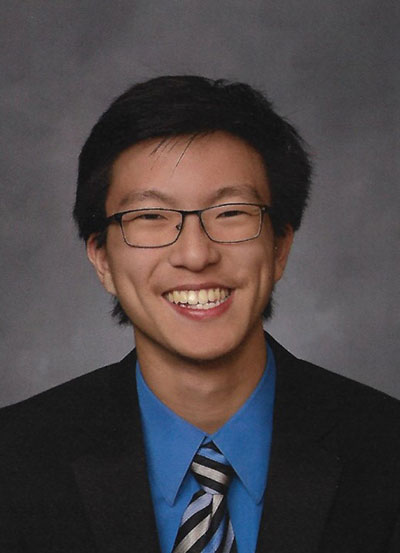
Nathan Lin

Nathan Lin
Sales Intern with Procter & Gamble

Nathan Lin, a senior in communication in the College of Liberal Arts & Sciences who is also pursuing a media sales certificate in advertising, relocated to Charlotte, North Carolina, this summer, where he joined Procter & Gamble as a sales intern. Lin assisted the fabric care division of the company to help increase profits and provided recommendations about product sales. 

Lin, who credits several advertising courses with giving him the skills he needed to be a successful sales intern, says the experience will help boost his growing professional career. 

“It was good work. I learned a lot,” Lin said. “I really learned how to sell and present. [I learned] it’s less about presenting and more about having a conversation with the buyer and being able to be persuasive and sell the products.” 


Editor’s note: If you had a summer internship, we’d love to hear about it! Media students are invited to share summer work experiences here. Media students are also invited to learn about career resources by making an appointment with Media Career Services. For more career advice, Media students can attend a Rapid Resume Review on September 11 and attend our virtual Media Career Nights held throughout the academic year.

College of Media welcomes new faculty leadership roles, newly promoted faculty, and new faculty members


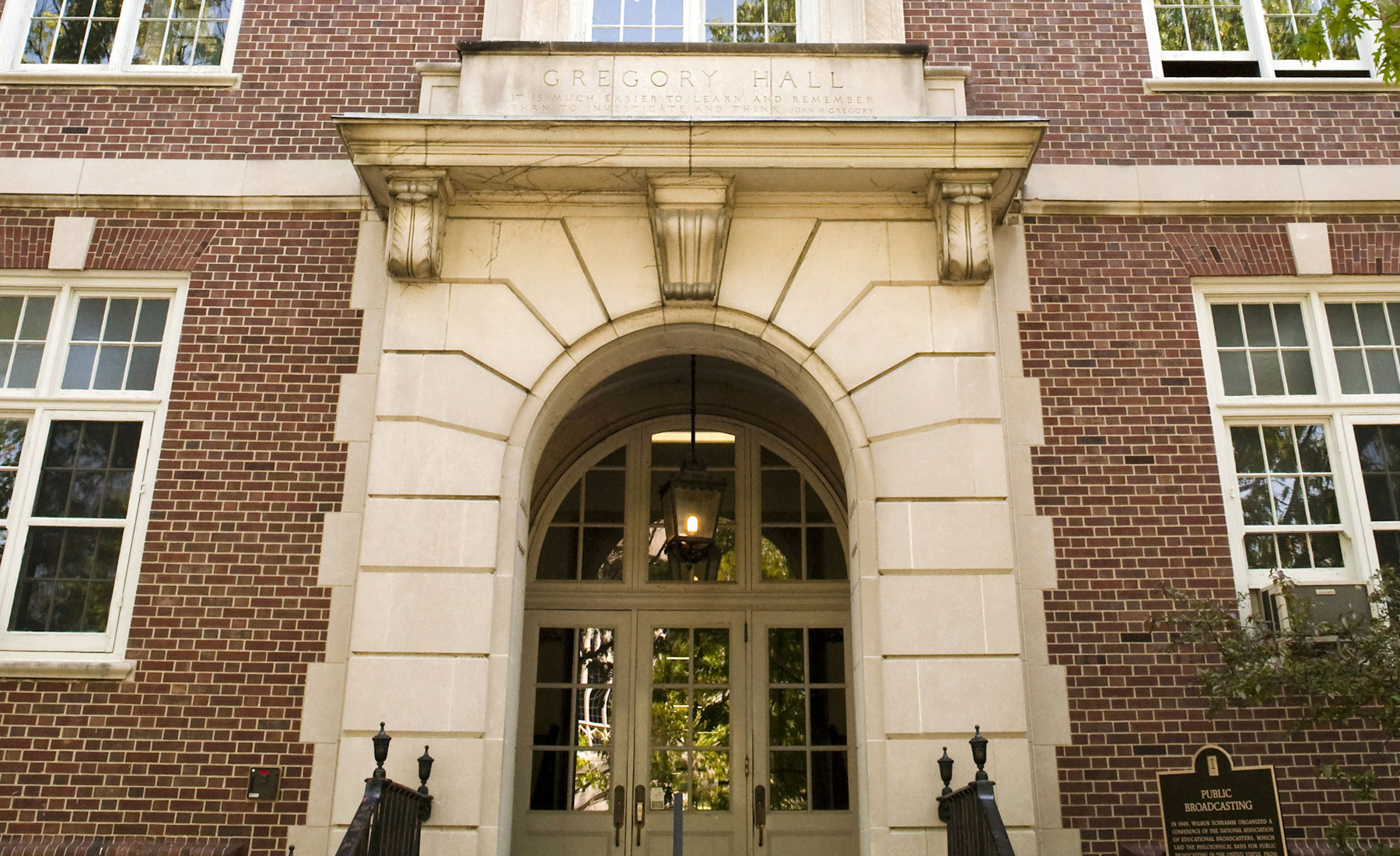
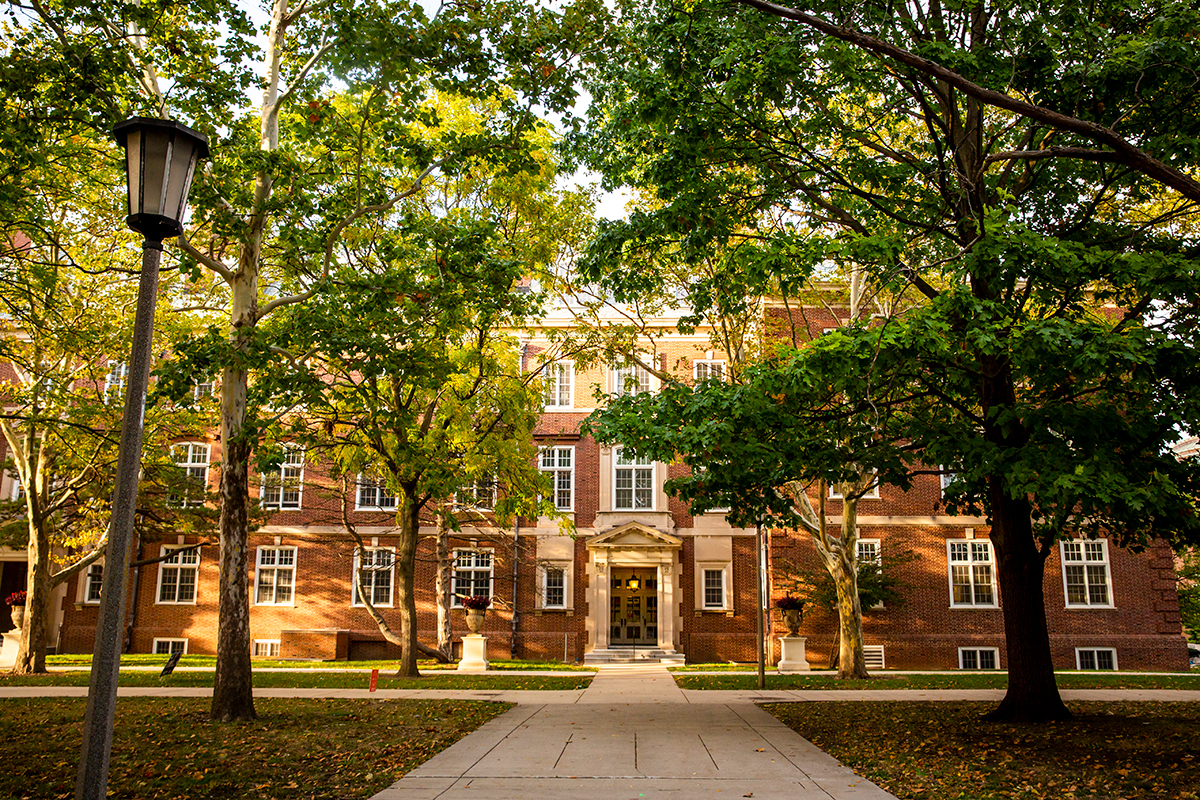
Gregory Hall

This fall welcomes two new heads of academic units, a new center director, a new associate head of advertising graduate studies, three faculty promotions, and two new faculty in the College of Media.

Professor Michelle Nelson will serve as the head of the Charles H. Sandage Department of Advertising for a three-year appointment. Nelson is a past president of the American Academy of Advertising. Her research interest focuses on advertising literacy and political advertising.

Professor Mike Yao has been appointed as the director of the Institute of Communications Research. He previously served as head of the Department of Advertising. Yao’s research delves into the interplay between media technology, society, and human communication. He studies how people engage with emerging technologies like AI, immersive multimedia, and extended reality across diverse social settings, and how these interactions influence our social behaviors and human communication within technology-mediated digital spaces.

Angela Aguayo, associate professor of media and cinema studies, will serve this year as acting director of the Roger Ebert Center for Film Studies. She has previously served as Dean’s Fellow for Strategic Initiatives. Her research is centered around documentary production and media studies, connecting production, theory, and history.

Chang-Dae Ham, associate professor of advertising, has been appointed as associate head of graduate studies for the Charles H. Sandage Department of Advertising for a three-year appointment. Ham studies persuasion knowledge and digital advertising. 

Three faculty in the College of Media have been promoted:

Jason P. Chambers has been promoted to professor of advertising. He also serves as Associate Dean for Diversity, Equity, and Inclusion. He is a scholar of advertising history, particularly the contributions of African Americans to the industry, and has a new book titled Advertising Revolutionary: The Life and Work of Tom Burrell that will be published in early 2024.

Ewa Maslowska has been promoted to associate professor of advertising with indefinite tenure. Her research centers around marketing communication and consumer behavior, specifically consumer-brand interactions in the context of new technologies. 

Julie Turnock has been promoted to professor of media and cinema studies. She served as the inaugural director of the Ebert Center and is on sabbatical this year. Turnock’s research focuses on film, with an emphasis on special/visual effects. She is working on her third book, a technical, industrial, and aesthetic history of the special effects industry in the Hollywood studio era, circa 1915-1960. Informed by extensive archival research, it centers around the labor and artistry performed by unsung “below-the-line” studio effects workers whose skills make much of “movie magic” possible.  
 

The Department of Journalism welcomes two new faculty members: Nancy Averett, lecturer, who specializes in science and environmental journalism, and Alex Gonçalves, assistant professor, who is a scholar of social media and data journalism.

New journalism professor Alex Gonçalves explores social dynamics through data-driven insights


Alex Goncalves

Alex Gonçalves believes a vibrant press is crucial to the future of democratic societies. He also knows the foundation of a dynamic media ecosystem is created in the classroom. 

For that reason, it’s been his goal to work in journalism education since Gonçalves left the newsroom as a science reporter and began his academic journey more than a decade ago.

“I am motivated by the thought of contributing to the education of the next generation of journalists and communicators,” Gonçalves said.

This fall, he joins the College of Media as a new assistant professor in the Department of Journalism. 

Gonçalves, who received a PhD in communication from Columbia University and a master’s degree in comparative media studies from MIT, will be teaching Journalism 102: Surviving Social Media. 

At both universities, Gonçalves studied the role of social media in the emergence of new cultural paradigms—a subject that continues to be a part of his research to help “inform the policies that shape the role of digital platforms.”

In addition to teaching, Gonçalves is also passionate about his research, which focuses on the intersection of computer science and social communication. 

When he realized the College of Media would offer him the opportunity to teach and to continue research, he knew it was the right place for him, where he “could teach future journalists and communicators while advancing my research agenda in a very stimulating intellectual environment,” he said.

Gonçalves also felt a personal connection to the College of Media as he’d always admired the late James W. Carey, a journalism professor, former director of the Institute of Communications Research, and former dean. Carey, a student of the media’s role in society, was an internationally recognized scholar in communications research. 

“I was exposed to [Carey’s] thought on journalism at MIT. His [book] Communication as Culture: Essays on Media and Society was part of the recommended reading list for the degree in comparative media studies,” he said. “Later, I joined the PhD program he founded and infused with his vision at Columbia Journalism School.”

After receiving a bachelor’s degree in computer science in 2002, Gonçalves worked as a software developer in Brazil for eight years. He got a second bachelor’s in social communication and worked at a Brazilian newspaper as a science journalist for four years.

In 2011, Gonçalves received the Visionary Journalist Fellowship, a $55,000 prize toward a master’s degree in communication abroad. The following year, he won a Person of the Year Fellowship, a $10,000 award given by the Brazilian-American Chamber of Commerce to young professionals pursuing graduate studies in the U.S. 

Eventually, Gonçalves began to focus on academia—teaching numerous courses in data science, public speaking, journalism ethics, and science reporting—and research, using computational methods to study digital communication. 

His focus on understanding social dynamics through data-driven insights helped him obtain an $82,500 Brown Institute Magic Grant for the development of a platform to make defense contracting data searchable by journalists and transparency activists. 

Currently, Gonçalves is working on turning his dissertation into a book, with plans to publish in the U.S. and Brazil, which examines the role of social media in the rise of the New Right in Brazil.

Though his roles have varied throughout his career—from software developer and reporter to scholar and educator—the interplay of communication and technology, and a desire to share knowledge with others, have been common threads. 

“I believe education is a privileged space for real communication. I love seeing my students making use, in practical settings, of the knowledge that I shared with them,” Gonçalves said. “Occasionally, I get emails from former students of mine telling me that something I shared with them has become very useful in their professional lives. That makes me very happy.”

New journalism lecturer and science writer Nancy Averett strives to highlight humanity behind research


Nancy Averett

As an independent science journalist for the last 17 years, Nancy Averett has dedicated her career to writing about the intersection where science and humanity connect. 

The award-winning reporter, who has a passion for the “sociological side of science and putting a human face on it,” says her secret weapon as a science writer is simple—she’s not a scientist. Instead, she views herself as a translator, reaching into the minds of scientists, engineers, and doctors to explain how their research will impact people. 

She’s looking forward to sharing that passion with students and fellow faculty this fall as a new lecturer in the Department of Journalism.

Averett, who has been published in Scientific American, Discover, The Nation, and other magazines, will teach three courses this fall: Science Journalism, Intro to Journalism, and Newsgathering across Platforms.

Averett will bring a breadth of experience to the classroom, having served as an adjunct instructor at Miami University of Ohio, where she designed and taught courses in news writing, editing, and feature writing.

In addition to teaching and mentoring young journalists, Averett was one of five journalists selected by a national nonprofit in 2019 to teach a workshop for scientists on how to communicate better with the press. She has always found teaching to be a worthwhile pursuit. 

“I just found all of those [teaching] experiences pretty rewarding,” said Averett, who is a member of the National Association of Science Writers and Society of Environmental Journalists.

After receiving a bachelor’s degree in international affairs at the University of Colorado, Averett went on to obtain a master’s degree in journalism from the University of Missouri. 

For the next 10 years, Averett worked as a reporter at three daily newspapers including the Columbia Daily Tribune in Missouri; the North Jersey Herald & News in New Jersey; and the Morning Call in Pennsylvania. She was recognized with awards for her writing at each post. 

With aspirations to write more long-form articles for magazines, Averett ventured into freelance writing, publishing her first articles in Runner’s World. Soon after, she attended an American Society of Journalists and Authors conference where she met other freelance writers and learned many of them were covering science news.

“After a while [I thought], I want to do what they’re doing. Their stories are really cool,” she said.

Averett started to pitch story ideas to Audubon magazine and “did a lot of writing about birds.” She also began to write for university publications.

From there, Averett focused on writing about wildlife, climate change, and environmental science, gaining recognition at top national publications including Sierra, Undark, and Mother Jones.

Her extensive journalism experience also includes working as the Midwest Climate Reporting Fellow for the Food & Environment Reporting Network, writing breaking news and long-form stories about climate change and agriculture, food production, and land rights issues. 

In 2020, she won first place for Outstanding Feature Story from the Society of Environmental Journalists for an article on air quality and industry titled “Undone Science: When Research Fails Polluted Communities.” That same year she also won the Robert G. Fenley Writing Award (silver) from the Association of American Medical Colleges. 

Averett says she will likely cut back on freelance work to focus on teaching, and perhaps, to pursue a long-held dream of writing a book. 

For now, she’s thinking about ways to help students realize the importance of effectively communicating science.

“We’ve got to find a way to excite people about science and understand really how science works,” Averett said. “I think being science literate would basically save lives.” 

DEV College of Media
119 Gregory Hall
810 S. Wright St.
Urbana, IL 61801
217-333-2350