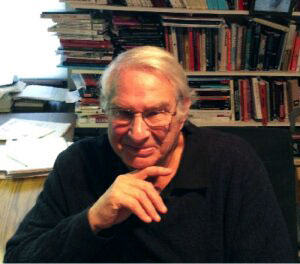
Veranika Paltaratskaya

Veranika Paltaratskaya

Email: vp21@illinois.edu

Research Interests

Veranika’s master’s thesis focused on the topic of time perception during media use. Her current research focuses on time perception, message fatigue, and computational approaches to communications research. 

Veranika completed her bachelor’s degree in neuroscience and art history at Emory University, and her master’s in advertising at UIUC.

Recent Publications/Presentations

Paltaratskaya, V., Wise, K. Time perception, cognitive load, and memory for short form video applications (SVAs). 73rd Annual Conference of the International Communication Association. Toronto, Canada, in review.

Courses Taught

  • ADV 284 Consumer Insights

Awards and Honors

Earl M. Cummings Advertising Education Research Award (Spring 2022)

Zixuan (Melodie) Zhao

Zixuan (Melodie) Zhao

Email: zixuan26@illinois.edu

Research Interests

Melodie is a doctoral student at the Institute of Communications Research, primarily researching the social and psychological effects of media messages and digital media use. Her specific interests revolve around the interactions between interactive media technologies and individuals’ identity, perceptions of “otherness,” and social relationships, as well as their role in driving social mobilization or polarization. 

Melodie earned her BA and MA degrees in journalism from the University of Missouri. She had industry experience as a journalist and producer, having worked with media organizations including Warner Bros. Discovery, CGTN America, and several others.

Courses Taught

  • ADV 284 Consumer Insight

Junwei Zhang

Junwei Zhang

Email: jz150@illinois.edu

Research Interests

Junwei’s research interests are centered around the relations between subjectivity, governmentality, global media network and the network’s interpretive power, which eradicate the boundary between public/private space, human/posthuman and self-governing/self-enslaving. Besides his academic research on communication and media, he is also a cross-disciplinary artist. Junwei received his master’s degree in fine arts from the University of Oregon. Before joining ICR, he explored gardens and vehicles in Japan as media to better understand the condition and method of language/culture.

Courses Taught

  • MACS 150: Intro to Digital Media Production 
  • ARTD 250: Print-based Media 
  • ARTD 251: Time-based Media 
  • ARTD 360: Digital Imaging

Related Links

https://junweizhang.com

Yewon Hong

Yewon Hong

Email: yewonh2@illinois.edu

Research Interests

Cuteness, aesthetics, affect, game, critical theory, cultural studies, cultural analysis

Recent Publications/Presentations

Puzar, Aljosa and Yewon Hong. “Korean Cuties: Understanding the Performed Winsomeness (Aegyo) of South Korean Women.” Asia Pacific Journal of Anthropology, vol.19, no. 4, 2018: pp. 333 – 349. 

Hong, Yewon and Dustin Hellberg. “Transient Labor: Past and Present of Young Female White-collar Work Force in South Korea.” The Journal of Human Studies, vol. 42, 2017, pp. 39 – 60. 

“Cultural Geography of Dating in South Korea’s Urban Landscape,” 9th East Asian Regional Conference in Alternative Geography, Daegu, South Korea. 

“The End of Boredom: Introducing Fun in Workspaces in South Korea,” Politics of Boredom, Amsterdam, the Netherlands.

Awards and Honors

Illinois Distinguished Fellowship, 2023 
Fulbright Graduate Student Program Award, 2023 
Horizon Fund, University of Amsterdam, 2018

What Most People Don’t Know about Me

I’m an early bird and I’m a night owl. So I’m wise and I have worms.

Related Links

https://illinois.academia.edu/YewonHong 
https://www.linkedin.com/in/hong-yewon-84a5081a6/

Wei Xiao

Wei Xiao

Email: weixiao8@Illinois.edu

Research Interests

Wei Xiao is a Ph.D student in ICR. She is broadly interested in exploring alternative approaches to the reasoning behind sharing dis/misinformation to debunk dis/misinformation or inoculate people against misinformation. Her research also involves technology policy topics, such as data privacy, free expression, and AI governance. While fighting traditional disinformation, Wei is equally dedicated to addressing the potential ramifications inherent in AI-amplified disinformation scenarios. 

Prior to coming to the ICR, Wei received her MA in communication, culture, and technology from Georgetown University and BA in communication and economics from University of Wisconsin-Madison.

Courses Taught

  • MACS 100

Nisa Rahman

Nisa Rahman

Email: nisapr2@illinois.edu

Research Interests

Nisa Rahman is a PhD candidate at the Institute of Communications Research. Nisa’s research interest lies in emerging technologies and their effect on social behavior in the context of health communication. This exploration takes shape through studies utilizing anthropomorphic conversational agents, i.e., “chatbots” to debunk health misinformation and persuade behavior change, as well as the effect of modality in cognitive processing. Nisa is also interested in the intersections between gender presentations and its influence in Human-AI Communication. 

Prior to joining the ICR, Nisa Rahman received her MS in advertising from the College of Media at the University of Illinois Urbana-Champaign and BA in communication from Purdue University – West Lafayette.

Recent Publications/Presentations

Conference Presentations 
Zhang, J. S., Rahman, N., Su, L. Y.-F., & Wang, Y-C. (2022, August). Examining Food Safety Knowledge: The Roles of Media Attention, Trust, Food Habits/Attitudes, and Demographics. The 72nd Conference of the Association for Education in Journalism and Mass Communication, Detroit, Michigan. 

Liu, W., Rahman, N., & Yao, M. Z. (2022, November). Gender Identity and Influence in Human-Machine Communication: A Mixed-Methods Exploration. Submitted at the 73rd annual conference of the International Communication Association.

Courses Taught

  • ADV 393: Advertising & Society (TA, Spring 2022) 
  • ADV 281: Advertising Research Methods (TA, Fall 2022 to present)

Awards and Honors

Earl M. Cummings Advertising Education Research Award (Spring 2022)

What Most People Don’t Know about Me

I enjoy watching media from different cultures and languages, thrifting and cooking in my free time.

Nini Zhou

Nini Zhou

Email: niniz2@illinois.edu

Research Interests

  • Critical studies of communication
  • Free labor of women online
  • Female digital communities

Courses Taught

MACS 100: Intro to Popular TV & Movies

Academic Roles

Teaching Assistant for MACS 100

College of Media welcomes new faculty leadership roles, newly promoted faculty, and new faculty members


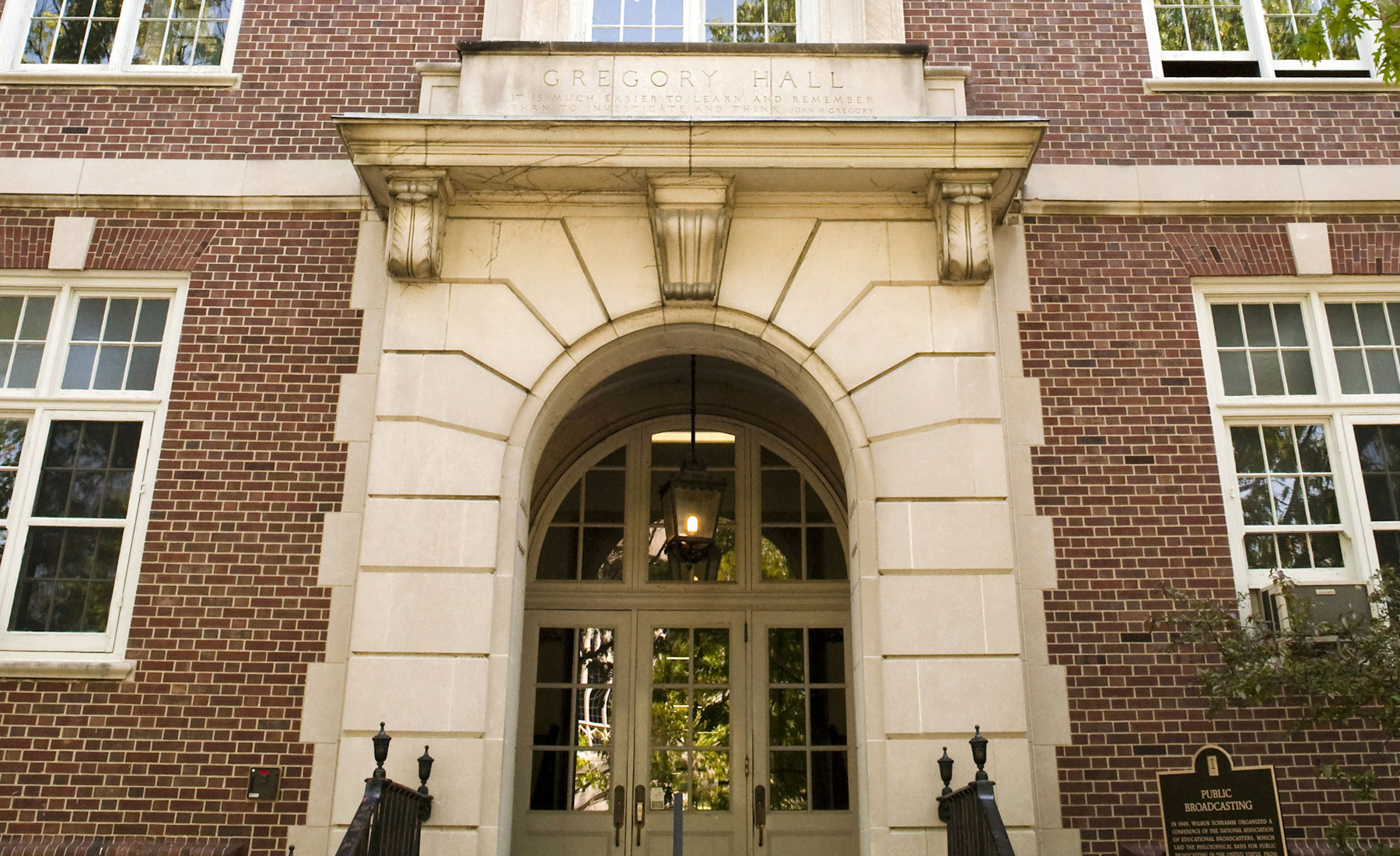
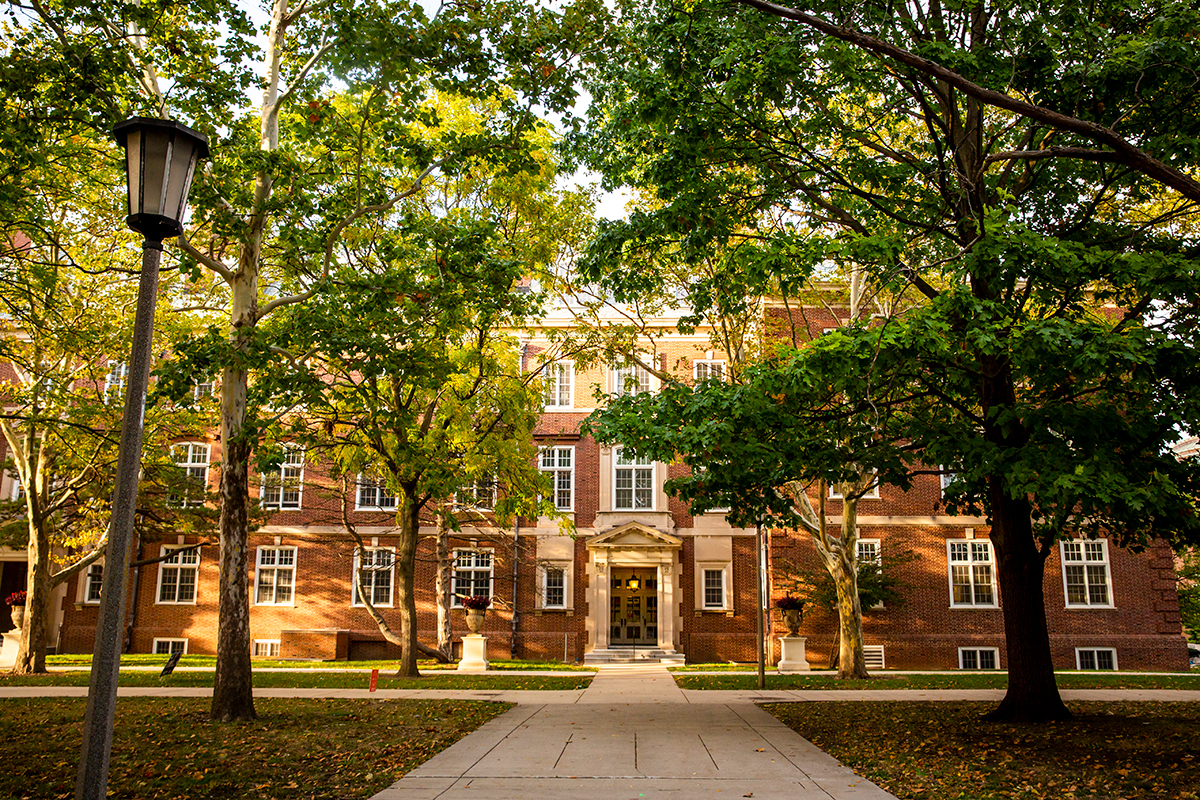
Gregory Hall

This fall welcomes two new heads of academic units, a new center director, a new associate head of advertising graduate studies, three faculty promotions, and two new faculty in the College of Media.

Professor Michelle Nelson will serve as the head of the Charles H. Sandage Department of Advertising for a three-year appointment. Nelson is a past president of the American Academy of Advertising. Her research interest focuses on advertising literacy and political advertising.

Professor Mike Yao has been appointed as the director of the Institute of Communications Research. He previously served as head of the Department of Advertising. Yao’s research delves into the interplay between media technology, society, and human communication. He studies how people engage with emerging technologies like AI, immersive multimedia, and extended reality across diverse social settings, and how these interactions influence our social behaviors and human communication within technology-mediated digital spaces.

Angela Aguayo, associate professor of media and cinema studies, will serve this year as acting director of the Roger Ebert Center for Film Studies. She has previously served as Dean’s Fellow for Strategic Initiatives. Her research is centered around documentary production and media studies, connecting production, theory, and history.

Chang-Dae Ham, associate professor of advertising, has been appointed as associate head of graduate studies for the Charles H. Sandage Department of Advertising for a three-year appointment. Ham studies persuasion knowledge and digital advertising. 

Three faculty in the College of Media have been promoted:

Jason P. Chambers has been promoted to professor of advertising. He also serves as Associate Dean for Diversity, Equity, and Inclusion. He is a scholar of advertising history, particularly the contributions of African Americans to the industry, and has a new book titled Advertising Revolutionary: The Life and Work of Tom Burrell that will be published in early 2024.

Ewa Maslowska has been promoted to associate professor of advertising with indefinite tenure. Her research centers around marketing communication and consumer behavior, specifically consumer-brand interactions in the context of new technologies. 

Julie Turnock has been promoted to professor of media and cinema studies. She served as the inaugural director of the Ebert Center and is on sabbatical this year. Turnock’s research focuses on film, with an emphasis on special/visual effects. She is working on her third book, a technical, industrial, and aesthetic history of the special effects industry in the Hollywood studio era, circa 1915-1960. Informed by extensive archival research, it centers around the labor and artistry performed by unsung “below-the-line” studio effects workers whose skills make much of “movie magic” possible.  
 

The Department of Journalism welcomes two new faculty members: Nancy Averett, lecturer, who specializes in science and environmental journalism, and Alex Gonçalves, assistant professor, who is a scholar of social media and data journalism.

New journalism professor Alex Gonçalves explores social dynamics through data-driven insights


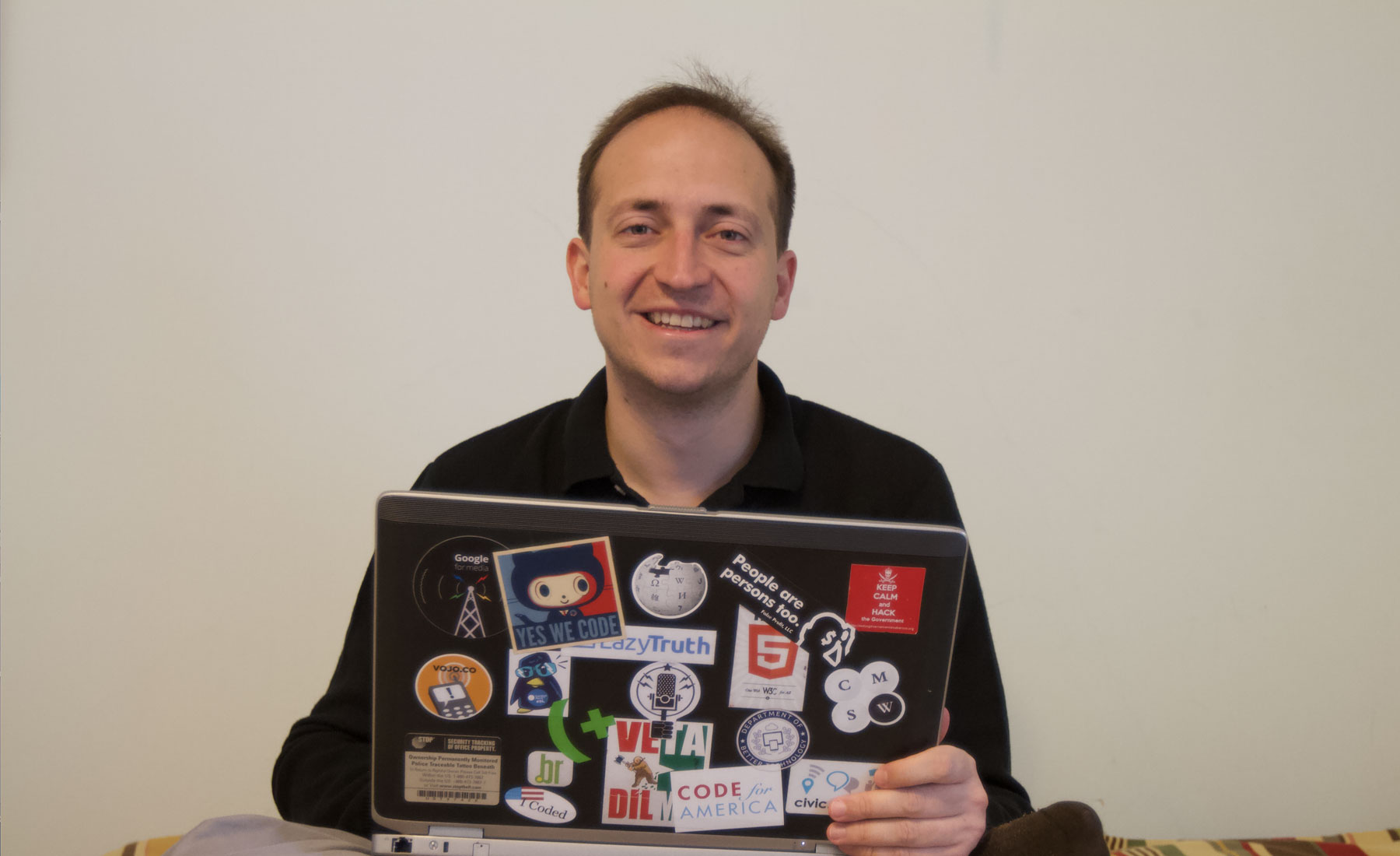
Alex Goncalves

Alex Gonçalves believes a vibrant press is crucial to the future of democratic societies. He also knows the foundation of a dynamic media ecosystem is created in the classroom. 

For that reason, it’s been his goal to work in journalism education since Gonçalves left the newsroom as a science reporter and began his academic journey more than a decade ago.

“I am motivated by the thought of contributing to the education of the next generation of journalists and communicators,” Gonçalves said.

This fall, he joins the College of Media as a new assistant professor in the Department of Journalism. 

Gonçalves, who received a PhD in communication from Columbia University and a master’s degree in comparative media studies from MIT, will be teaching Journalism 102: Surviving Social Media. 

At both universities, Gonçalves studied the role of social media in the emergence of new cultural paradigms—a subject that continues to be a part of his research to help “inform the policies that shape the role of digital platforms.”

In addition to teaching, Gonçalves is also passionate about his research, which focuses on the intersection of computer science and social communication. 

When he realized the College of Media would offer him the opportunity to teach and to continue research, he knew it was the right place for him, where he “could teach future journalists and communicators while advancing my research agenda in a very stimulating intellectual environment,” he said.

Gonçalves also felt a personal connection to the College of Media as he’d always admired the late James W. Carey, a journalism professor, former director of the Institute of Communications Research, and former dean. Carey, a student of the media’s role in society, was an internationally recognized scholar in communications research. 

“I was exposed to [Carey’s] thought on journalism at MIT. His [book] Communication as Culture: Essays on Media and Society was part of the recommended reading list for the degree in comparative media studies,” he said. “Later, I joined the PhD program he founded and infused with his vision at Columbia Journalism School.”

After receiving a bachelor’s degree in computer science in 2002, Gonçalves worked as a software developer in Brazil for eight years. He got a second bachelor’s in social communication and worked at a Brazilian newspaper as a science journalist for four years.

In 2011, Gonçalves received the Visionary Journalist Fellowship, a $55,000 prize toward a master’s degree in communication abroad. The following year, he won a Person of the Year Fellowship, a $10,000 award given by the Brazilian-American Chamber of Commerce to young professionals pursuing graduate studies in the U.S. 

Eventually, Gonçalves began to focus on academia—teaching numerous courses in data science, public speaking, journalism ethics, and science reporting—and research, using computational methods to study digital communication. 

His focus on understanding social dynamics through data-driven insights helped him obtain an $82,500 Brown Institute Magic Grant for the development of a platform to make defense contracting data searchable by journalists and transparency activists. 

Currently, Gonçalves is working on turning his dissertation into a book, with plans to publish in the U.S. and Brazil, which examines the role of social media in the rise of the New Right in Brazil.

Though his roles have varied throughout his career—from software developer and reporter to scholar and educator—the interplay of communication and technology, and a desire to share knowledge with others, have been common threads. 

“I believe education is a privileged space for real communication. I love seeing my students making use, in practical settings, of the knowledge that I shared with them,” Gonçalves said. “Occasionally, I get emails from former students of mine telling me that something I shared with them has become very useful in their professional lives. That makes me very happy.”

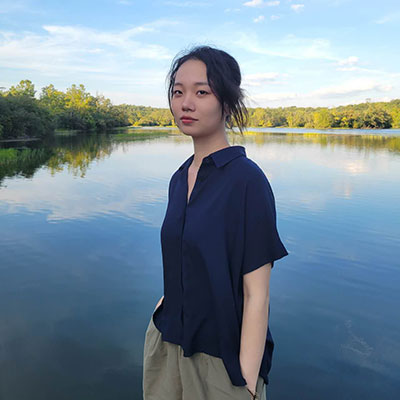
ICR emeritus professor and renowned scholar Norman Denzin passes away at 82


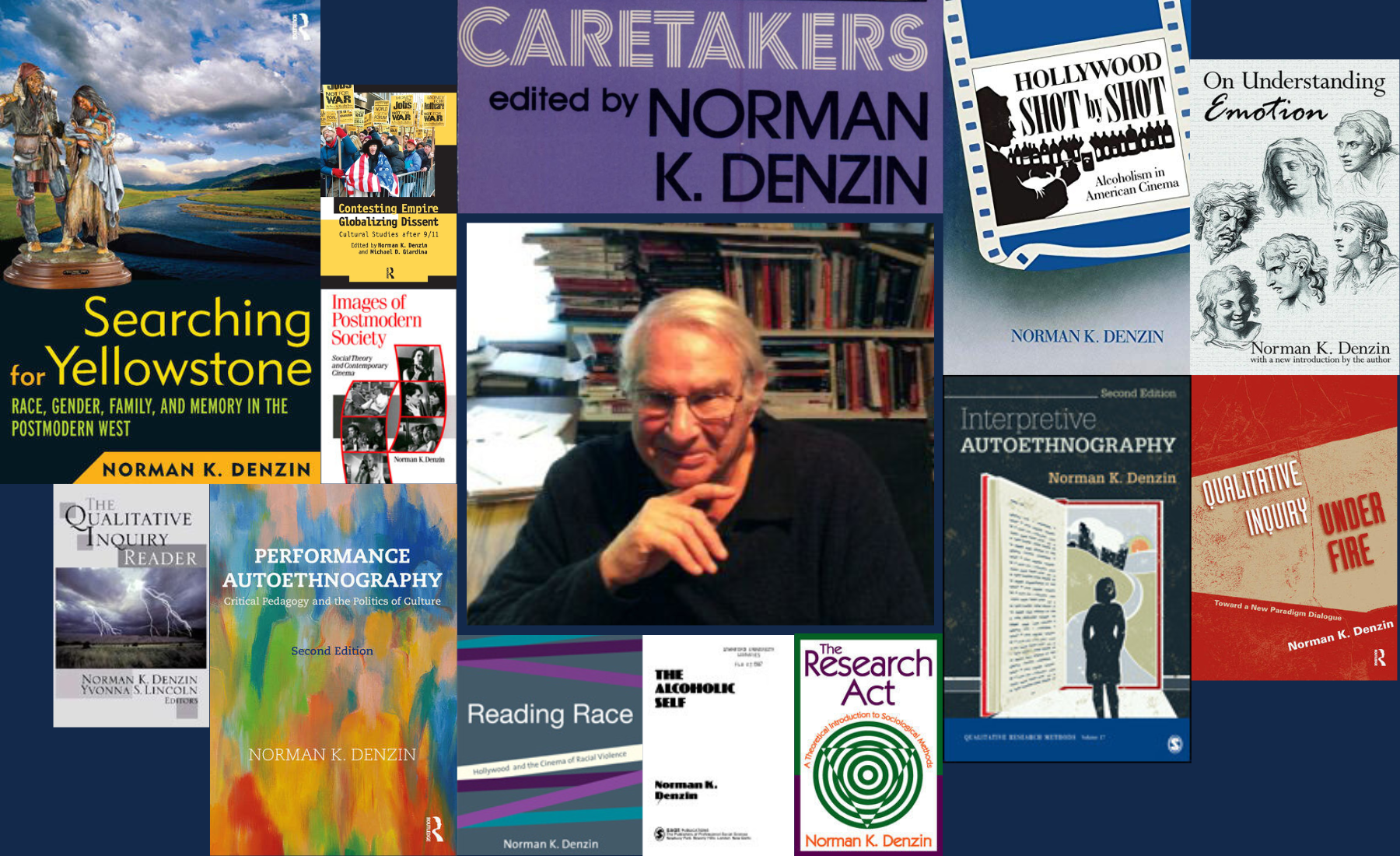
Norman Denzin

Norman Denzin, research professor emeritus of communications at the Institute of Communications Research, professor emeritus of media and cinema studies, and professor emeritus of sociology and humanities at the University of Illinois, passed away on August 6 at the age of 82.

Denzin was one of the world’s foremost authorities on qualitative research and cultural criticism, and a renowned figure in symbolic interactionist theory. 

A writer, scholar, teacher, and visionary, Denzin was also a mentor to many generations of students, faculty, and staff at the College of Media, especially within ICR. 

Professor CL Cole, the head of the Department of Media & Cinema Studies, co-authored a special issue on Denzin for the Journal of Sport and Social Issues in 2006 with Robert E. Rinehart, one of Denzin’s former students at UIUC. 

In it they wrote: “It is impossible to list all of his contributions or to fully express how his work has positively affected countless others. It is impossible to detail how his prolific writing, his creative vision and fresh ways of thinking have created a sea-change in those who have encountered them, struggled with them, incorporated them. It is also impossible to recount how his charming, easy-going affability, and generosity of spirit have lent themselves to mentees, friends, colleagues, students.”

Denzin was affiliated with several units on campus, including the Department of Sociology, Center for Global Studies, and Women and Gender in Global Perspectives.

He began in the sociology department in the early 1980s and joined ICR a decade later. He was also active in the Unit for Criticism and Interpretive Theory. In 2005, he founded the annual International Congress of Qualitative Inquiry conference, hosted by the International Center for Qualitative Inquiry, from which a series of journals were produced. 

Denzin was the author, co-author, or co-editor of more than 50 books and 200 professional articles and chapters and was still actively authoring and co-authoring papers as recently as last year.

He was awarded the prestigious Charles H. Cooley Award for his book, The Alcoholic Self, and the George Herbert Mead Award for lifetime contributions to the study of human interaction, both from the Society for the Study of Symbolic Interaction. 

Learn more about Denzin’s accomplishments.

A tribute wall for Denzin has been created by Renner-Wikoff Chapel & Crematory.

DEV College of Media
119 Gregory Hall
810 S. Wright St.
Urbana, IL 61801
217-333-2350