Media faculty and TAs make list of teachers ranked as excellent

CongratsCongratulations to all of the College of Media faculty and teaching assistants who were ranked as excellent by their students!

This list is based on Instructor and Course Evaluation System (ICES) questionnaire forms completed by students during the Fall 2022 semester. Only those instructors who distributed ICES forms at least once during this time period and who released their data for publication are included in the list. View the complete list.

Note: * denotes that the instructor ratings were outstanding.


ADVERTISING

JACOB FISHER – ADV 305 

STEVE HALL – ADV 150, ADV 392 

* CHANG-DAE HAM – ADV 587 

JACQUELINE HITCHON – ADV 310 

* TERRY KASDAN – ADV 409 

SHACHAR MERON – ADV 283, ADV 498 

SUSAN MUIRHEAD – ADV 290 

* MARISA PEACOCK – ADV 491, ADV 498 

* SELA SAR – ADV 550 

LEONA YI-FAN SU – ADV 480 

RASHMI TENNETI – ADV 490 

* KATIE WATSON – ADV 350 

KEVIN WISE – ADV 483


JOURNALISM

CHRISTOPHER BALL – JOUR 101

STEPHANIE CRAFT – JOUR 505

ALISON DAVIS – JOUR 240, JOUR 340

CHRIS EVANS – JOUR 200

COLLEEN KING – JOUR 210

CAROL LOMBARDI – JOUR 220


MEDIA & CINEMA STUDIES

* AMANDA CIAFONE – MACS 391 

COURTNEY M. COX – MACS 224 

VICTOR FONT – MACS 140 

RACHEL KUO – MACS 351 

DEREK LONG – MACS 284 

* JENNY OYALLON-KOLOSKI – MACS 485 


STRATEGIC BRAND COMMUNICATION

SHACHAR MERON – SBC 500


TEACHING ASSISTANTS

* C. ARREAZOLA – ADV 150 

U. CHUNG – ADV 284 

Y. LEE – ADV 150 

S. PARK – ADV 283 

M. WANG – ADV 150 

* J. CINTRON – MACS 100 

Y. GAO – MACS 101 

J. ROBINSON – MACS 100


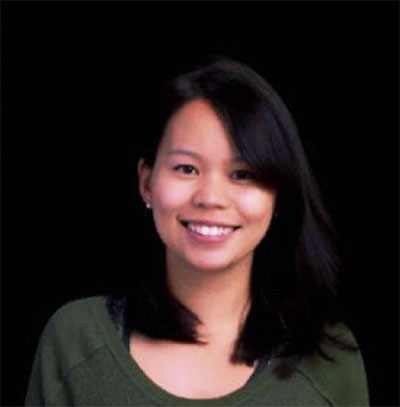
Q&A with Grace Chen

Get to know some of our College of Media alumni. Grace Chen (MS ’10 advertising) is a product manager at Meta. 

Grace Chen

When did you know that you wanted to study advertising?
As a child, I remember being very fascinated with old catalog ads. Throughout my childhood, a lot of advertising consisted of subscription-based magazines and order catalogs. I always thought about how much I loved seeing all these creative advertisements and innovative ideas. It even made me feel like I wanted to buy everything in the magazine. As I grew up, viewing TV commercials seemed like the coolest thing ever to me, for some reason. I’ve always been interested in studying advertising. 

What are your main responsibilities as a product manager at Meta?
As a product manager at Meta, I work with engineers to build new products for Meta. I primarily work on a private communication team. My team’s mission is to help people start and continue conversations on the Facebook app.

If you could describe the advertising industry in one word, what would it be?
Adaptive. A lot has changed since I started my first job in advertising, and change will continue to be constant in this industry. In the past, TV advertisements were a major shift in the industry. Now, advertising is completely digital. When I started my career, digital used to be about 5 to 10 percent of a client’s budget, and now it’s near 100 percent for some companies. People need to be adaptive to work in this industry and it will continue to evolve.

What are one or two skills you think one needs to be successful in the advertising industry?
It’s important to not limit your understanding of advertising in terms of studying this major or finding a job. Today, media and technology are treated very similarly in the industry. Advertising, while part of media, is also part of technology. As a student, I believed I needed to get into an agency role right away, or work in the client side at some point. I didn’t realize that the industry is much bigger. It’s a good reminder to students entering the industry to notice how it has evolved, and the various opportunities that have been created as a result of the industry evolving. Another skill is adapting an understanding of the food chain of advertising. For example, if you join an agency and are at the lower end of the food chain, meaning more entry-level positions, you naturally have less say in your role. You may also find yourself wanting to have different responsibilities. It’s important that you know who the designated decision maker is in order to be efficient in responding to the needs of your job.

What is the most meaningful part of your job?
Right now, the most meaningful part of my job is working alongside a team of people I enjoy working with and who inspire me to be better! In the past, what I enjoyed the most about my job was being introduced to different product types and industries. In general, my interest in advertising sparked my curiosity to discover how aspects of the industry work together. It also gave me a good glimpse into the categories of products I could work for, whether it was working for pet foods, coffee products, entertainment services, and many more.

What advice would you give to students soon to graduate from the College of Media?
This next chapter in your life is the start of everything, not the end of things. Certainly, the job market may be tough at times. It’s quite common and normal for people to feel a lot of uncertainty at times, especially considering that the economy is totally different now than in previous generations. Despite this, it’s important to remember that this is just the beginning, and you can continue to build your brand. This could be achieved by building up your portfolio from something you’ve never considered before. Always remember to stay hopeful and keep going!

Hear more from Grace Chen, who participated in a Media Career Night alumni panel on technology and media in Fall 2022. Watch a recording of the session here.

—Interview by Lauren Barjami, New Voices Intern

New Emerging Leaders Program connects advertising students with industry leaders in Chicago


Emerging Leaders

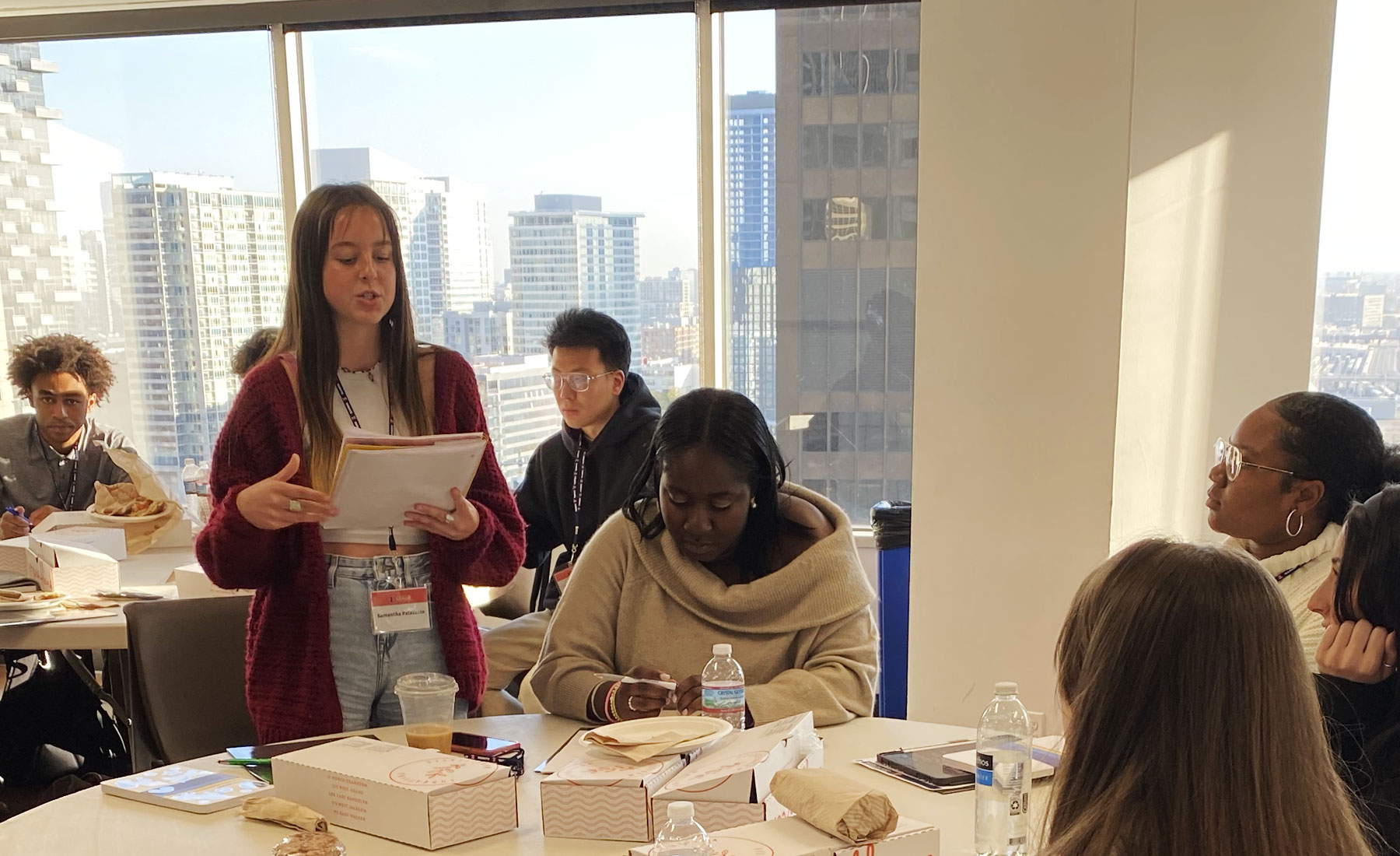
The Charles H. Sandage Department of Advertising and the Hub for Brand Innovation and Advertising Technology have created a new professional workshop series for students through the Emerging Leaders Program, which aims to immerse students in the advertising industry. 

Thirty advertising students were selected for the 2022-23 academic year to gain experience in innovative areas of advertising, and network with University of Illinois alumni and industry guests in three workshops at the Illini Center in downtown Chicago. 

“These immersive events allow students in the Emerging Leaders Program to interact with and learn from industry leaders in an experiential learning format,” said Michelle Nelson, professor of advertising and acting head of the department. “These experiences will also give students a unique advantage when they enter the job market.”

The program has focused on three themes in their workshops: programmatic advertising, brand strategy, and product marketing.

Susan Muirhead, associate director of the Brand Hub, was glad to develop an opportunity for students to apply their advertising skills outside of the classroom and gain a closer look at the advertising industry. 

“I hope [students] learn about what the industry is doing so they’ll get a pulse on what’s happening and what the emerging trends are,” Muirhead said.

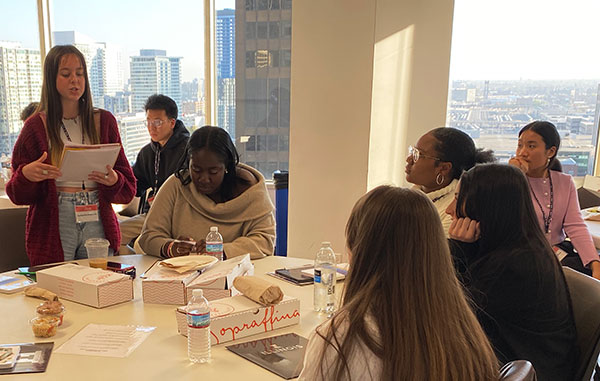
The sessions consist of a three-hour workshop where students work on a group project or exercise, followed by a two-hour networking event where students engage with peers and attending professionals and alumni.

Muirhead said the events have been a fun opportunity for both students and professionals to meet each other. 

“I think [the industry professionals] are really impressed with the energy, the passion, and the talent, and how bright our students are.”

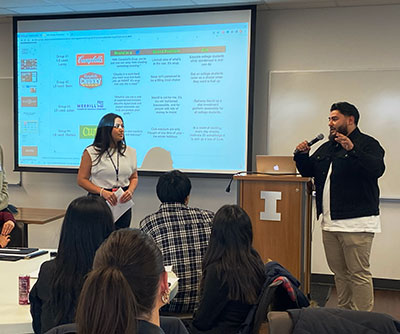
In October, the first workshop on the future of advertising technology was presented by The Trade Desk, which offers an independent media-buying platform.

“I learned about measuring audiences and media planning and the digital aspect of advertisements,” said Asia Griffin, a senior in advertising. “Just being able to network and talk to people at The Trade Desk was a great experience.”

Emerging Leaders

In February, global advertising agency Leo Burnett presented on brand strategy and the students completed a Cultural Insights exercise, a tool actively used by the brand strategy team at Leo Burnett.

“I want to be more involved with Chicago-based companies,” said Joshua Watson, junior in advertising. “It’s also a good opportunity to learn more about what Leo Burnett is, what a job looks like there, and even just seeing all the people [who work] there.”

TikTok will host the last workshop in April, focusing on TikTok search engine optimization and product marketing.

Danielle Rowaiye, a junior in advertising, has enjoyed the program so far.

“I’m just excited to get to meet up with the same people again and have that same opportunity to network and to learn,” Rowaiye said. 

Students and companies interested in participating in future Emerging Leaders Program events can contact Susan Muirhead at muirhea@illinois.edu. 

Geography, language dictate social media and popular website usage, study finds


Ng and Taneja

Since its inception, the Internet has been viewed by technology experts and scholars as a way to access information at a global scale without having to overcome hurdles posed by language and geography. However, researchers at the University of Illinois Urbana-Champaign found that how people around the world use the same popular social media platforms and websites remains vastly different based on their language and geography.

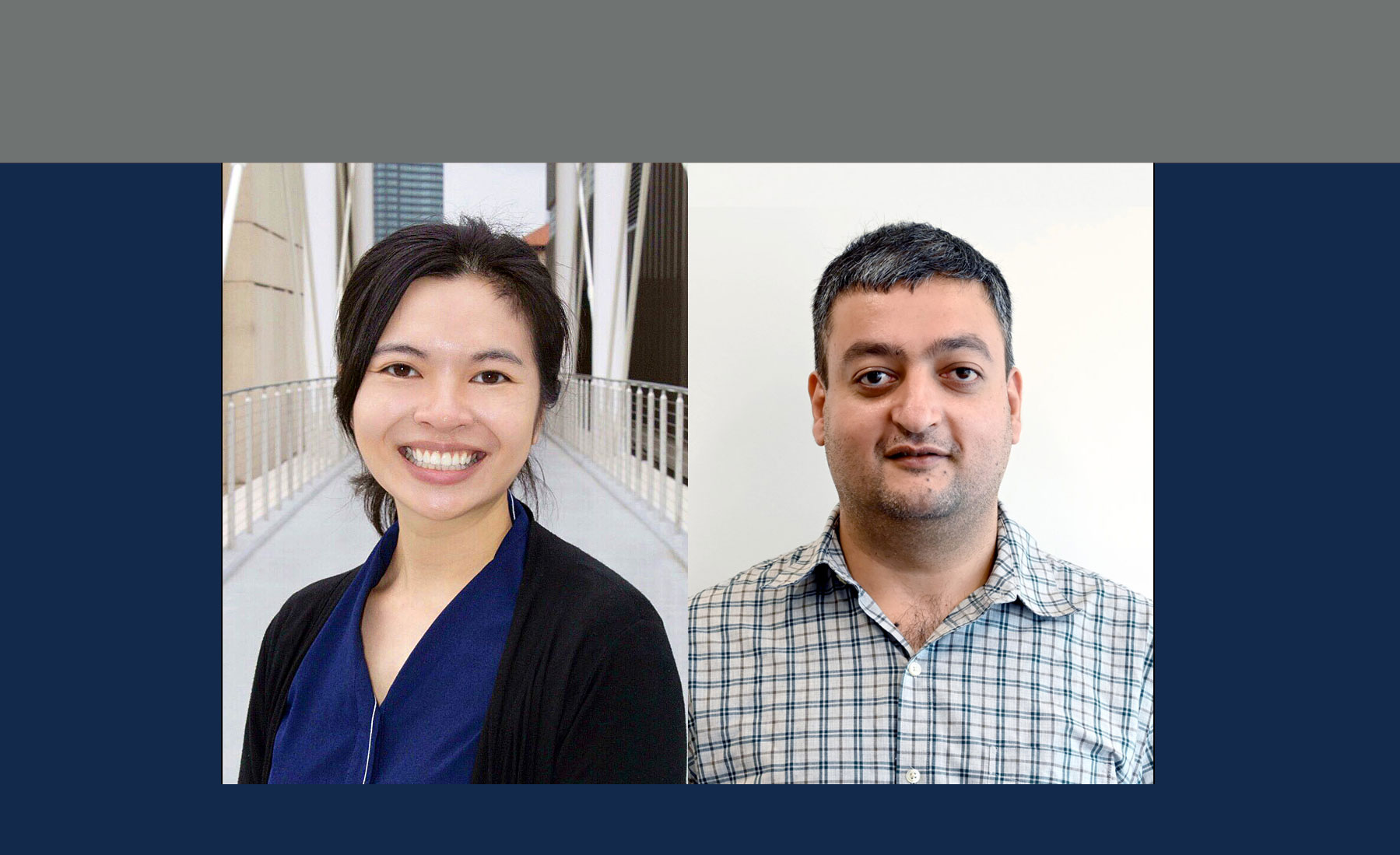
A new study by Harsh Taneja, associate professor of new and emerging media in the Charles H. Sandage Department of Advertising, and Margaret Yee Man Ng, assistant professor of journalism, builds upon previous research and examines Internet consumption across 124 countries through their usage of popular websites, as well as Twitter and YouTube—two globally dominant social media platforms.

The results of the new study are published in the journal PLOS ONE.

“The goal of this work was to develop ways to assess which countries are most like each other in the usage of these popular websites and social media platforms and to identify factors that explain the similarities,” the researchers said.

The team found that language and geography remain the most salient predictors of web usage, and their role on YouTube and Twitter is just as significant as on the wider web.

“This is true of the websites they visit and also how they use social media,” Taneja said. “Sure, YouTube is the most popular online outlet in most of the world, but people in Nepal on average do not watch the same videos as people in the United States.”

The team collected and compared trending Internet traffic data and the use of hashtags for the two most popular social media platforms—Twitter and YouTube—and the 500 most-visited sites using Alexa’s Global Rank in the 124 nations studied.

“We chose to work with Twitter and YouTube because although they are both very popular, they attract different audiences, so they capture a very wide slice of Internet use,” the researchers said.

“Our analysis suggests that global web use is quite heterogeneous, whether it is website traffic or in how people use Twitter or YouTube, with social media usage being even less similar overall than the usage of websites,” Ng said.

Previous studies have shown that the free exchange of information has been hampered by government regulations and protections in nations like Russia and China, for example.

“However, government regulation is not the only reason for the restrained flow of information,” Taneja said. “Our study offers empirical evidence that people generally prefer content that focuses on their region and in their language.”

While using data reflecting trending YouTube videos and Twitter topics via hashtags may not wholly capture Internet consumption numbers, it works well as a proxy to gauge consumption on these platforms, the researchers said.

“An important caveat of this work is that we must acknowledge that trending topics are not purely based on consumption,” Ng said. “There is some sort of a black box that determines the complete picture, but tracking hashtags is an effective proxy and less biased than methods involving geolocation, for example, because many users do not reveal their location while browsing.”

Taneja and Ng said the study is beneficial to researchers studying the global flow of information—and, importantly, misinformation—and for web content producers interested in gaining a larger or more targeted global audience.

Seed funding from the Center for Social and Behavioral Science at the University of Illinois Urbana-Champaign supported this study.

Editor’s notes:

To reach Harsh Taneja, email harsht@illinois.edu.

To reach Margaret Yee Man Ng, email ymn@illinois.edu.

The paper “Web use remains highly regional even in the age of global platform monopolies” is available online and from the U of I News Bureau. DOI: 10.1371/journal.pone.0278594

View original press release.

Q&A with Jason P. Chambers

Jason P. Chambers

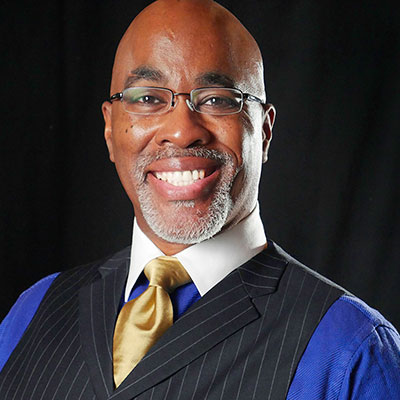
Get to know some of our College of Media faculty. Jason P. Chambers is the associate dean for access and engagement and professor of advertising. 

How long have you been a professor at the College of Media? What sparked your interest in teaching advertising?
I’ve been at the College of Media since August 2001. I started working here directly out of graduate school from The Ohio State University. I have always been interested in advertising, ever since I was a kid. I was one of those kids who didn’t change the channel when commercials came on—I always wanted to watch and pay attention to the content. In graduate school, I specifically examined the African American experience in advertising as professionals, entrepreneurs, agency owners, executives, and other similar roles. When I joined the College of Media, they were interested in someone who could combine history with advertising. I had this exact experience through my research, so it was the perfect opportunity.

What classes and topics do you currently teach?
Because of my administrative role as the associate dean for access and engagement, I focus my time in teaching ADV 175: Diversity in Advertising. It looks at race, ethnicity, sexual orientation, gender, age, and intersectionality. It also dives deeper into targeted advertising towards members of those communities or groups and the challenges, stereotypes, and opportunities as a result. 

What are your research interests?
Research-wise, my next book is on a gentleman named Tom Burrell. Tom Burrell was one of the first African Americans in the Advertising Hall of Fame. He’s from Chicago, and his agency, Burrell Advertising/Burrell Communications Group, was founded in Chicago in 1971. My interest remains, even after 20 years, in African American entrepreneurship and analyzing how it plays out in the advertising industry.

What do you enjoy the most about working with college students?
What I enjoy most is seeing the light come on when students can make connections between the topics I’m teaching and their interests. Much of my role is to facilitate how students grow in reaching their interests. It’s not just about dispensing information in one direction but finding ways to help students grow intellectually and professionally. After having been here for 20 years, I have seen students I taught 10, 12, and 20 years ago, nearly running Fortune 50 or Fortune 100 companies. You get to witness the minuscule role you played in that growth. It’s really gratifying to see.

What’s the biggest piece of advice you have for students graduating from the College of Media?
My biggest piece of advice is to keep learning and stay nimble. The world of advertising is in an ongoing state of flux. It’s rarely stable in terms of the way that things are done and the roles that exist within the industry. It’s also just as important to stay as flexible as you can, for as long as you can. Flexibility gives you the opportunity to take opportunities. Avoid making decisions that get you so far into your career that you get to a place where you can’t leave or feel the need to stay. Whatever the case may be, stay as nimble as possible for as long as possible.

What are some of your hobbies?
I watched far too much football. The Ohio State football, in particular, being from Ohio and graduating from The Ohio State University. I also dabble in woodworking, I’m quite the DIY’er. I’m currently building a book set of built-in shelves and cabinets in my basement. Those hobbies, in addition to hanging out with my family, my kids, and my wife, are how I like to spend my free time.

—Interview by Lauren Barjami, New Voices Intern

Q&A with Marisa Peacock

Get to know some of our College of Media faculty. Marisa Peacock has been an advertising lecturer since Fall 2019.

Peacock

What is the best part about advertising?
Two things. The first one is simple: Every industry needs advertising—it’s always going to exist. Secondly, advertising is constantly changing and creating. I specialize in social media, which didn’t exist at one point in my timeline, thus everyone is going to be doing something that doesn’t exist just yet within advertising! The limits are endless.

What is your best memory so far from your time spent at the College of Media?
Definitely working with all the students—their energy, openness, curiosity, and willingness to experiment recharges and fills me up every time. It’s a remarkable experience to work with students who put themselves into their work and achieve great things while having fun. 

What classes do you currently teach at the College of Media?
I teach ADV 498: The Sandage Project, which is an eight-week capstone class that is typically taken during the last year of coursework. A capstone class utilizes all your skills and talents over the past years to work on a real campaign with a real client! I taught it seven times, and in every instance the client wanted to pick more than one campaign. The class helps students to work in a team, execute a campaign, and use their creativity. 

What is the best way to network in advertising?
UIUC being a Top 10 school is an amazing start. You’re a part of a lot of moving parts and a huge entity. There is always something going on here and someone to talk to. Additionally, I’d say the best way to network is simply to just be yourself—don’t be afraid to promote yourself. People want to be around other people who like what they do, have great stories, and are interested in multiple things. Be that person in your own way. 

—Interview by Emily Campos, New Voices Intern

DEV College of Media
119 Gregory Hall
810 S. Wright St.
Urbana, IL 61801
217-333-2350