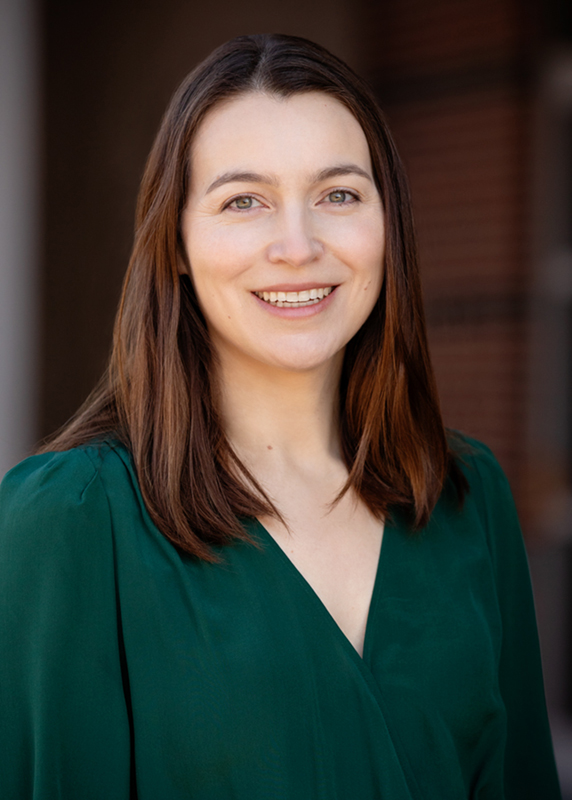
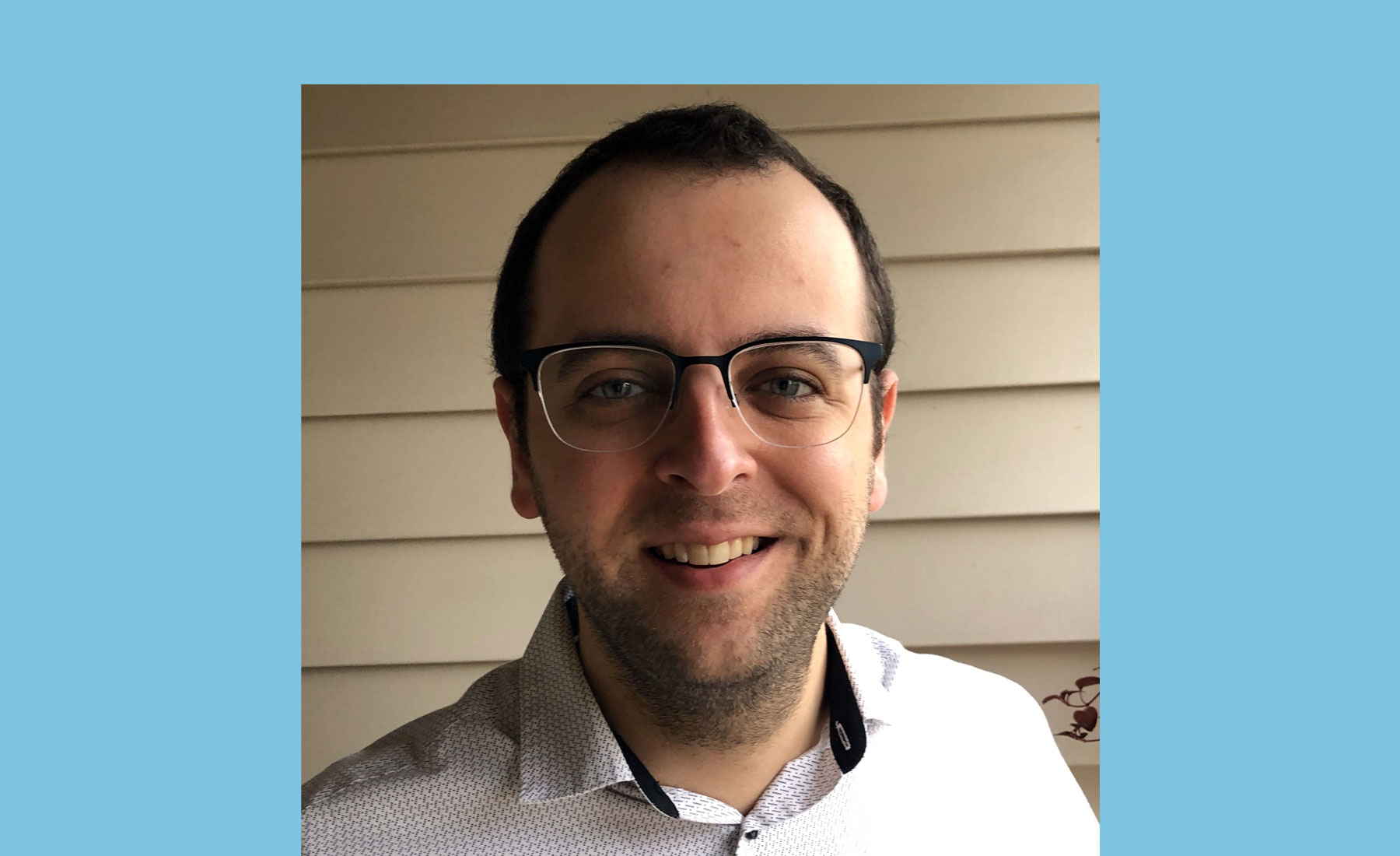
Carrie Wilson-Brown returned to campus this fall as a lecturer in the Department of Media & Cinema Studies and the Charles H. Sandage Department of Advertising. She previously attended the College of Media’s Institute of Communications Research as a graduate candidate in 1993 through 1999.
This semester, she is teaching new courses in Public Relations and Entertainment Industry, Becoming an Influencer, and Intro to Public Relations.
“I couldn’t be more honored to join the advertising and media and cinema studies faculties,” Wilson-Brown said. “This dual appointment gives me an opportunity to mentor students with varied media interests and a strong academic focus.”
Wilson-Brown said she is looking forward to connecting with digital-savvy students who are already comfortable creating social media content daily, which is an invaluable skill for those interested in influencer marketing and entertainment public relations.
She plans to develop and teach additional courses that fuse digital storytelling, video production, and public relations.
“I always strive to put classroom content into practice by creating course materials that aid academic discovery and community engagement,” Wilson-Brown said. “I want to expose students to the dynamism of public relations and content creation.”
Since 2001, she had been a faculty member at Eastern Illinois University where she received teaching honors including Outstanding Faculty Member.
Wilson-Brown received her bachelor’s and master’s from Eastern Illinois University, both with a focus on speech communication, and worked towards her doctorate at the University of Illinois concentrating on film and media studies, cultural studies, critical race studies, and Latina/o studies.
The Institute of Communications Research is excited to announce our newest cohort! Please learn more about their research interests in their profiles below and join us in welcoming them to the University of Illinois College of Media community this fall.
Tingyu Chen received her bachelor’s degree in journalism and her master’s degree in communication at Renmin University of China. With critical-cultural approaches to media study, she situates her research interests at the intersection of media industry practices, cultural studies, and media criticism. Her recent research focuses on realist media (mainly realist film and documentary) and the culture of production and consumption in contemporary China.
Kirby Cook received her master’s degree in advertising at the University of Illinois Urbana-Champaign, and her bachelor’s degree in classical languages and literature from the University of North Carolina – Greensboro. Kirby’s master’s thesis, “Evaluating Gender in Retail Servicescapes: Beyond the Heteronormative Binary Approach,” explored how retail companies communicate gender norms and how consumers of diverse backgrounds receive such messages and process shopping experiences. In her doctoral program, Kirby is interested in research pertaining to branding strategy, consumer behavior, and media effects as they relate to consumer identity. Prior to joining the ICR program, Kirby worked for UIUC as a career advisor and communications coordinator for Engineering Career Services at the Grainger College of Engineering, and as an international student advisor at the International Student and Scholar Services office. Before joining the University, Kirby worked abroad in Germany and South Korea as a consultant, adjunct lecturer, and high school English teacher.
Seo-Jeong (Rachel) Heo graduated from Yonsei University (South Korea), receiving her bachelor’s and master’s in communication. She also received a master’s degree in advertising at the University of Texas at Austin. She studies media psychology and marketing communications. Her research interest lies in understanding the social/moral implications of artificial intelligence (AI) and psychological processes in AI-powered technologies, Virtual Reality (VR), and social media. Her recent research focuses on exploring how people make moral judgments toward robots’ behaviors and how we can effectively implement AI in assisting people’s decision-making processes. She is also interested in online consumer privacy and gave a presentation about conversational agents and privacy at the 2021 International Communication Association conference.
Youngin Kang attained her master’s degree in gender, media and culture at Goldsmiths, University of London in 2018. As a new ICR student, she wants to examine the inextricable relations between individual subjectivities in producing, distributing, and appropriating “culture(s)” within various socio-political processes, which construct a discursive mega-text, with which we cognitively, materially, and affectively engage in our everyday lives. Her research interests focus primarily on the unique characteristics of contemporary South Korean popular culture, which are hybrid, albeit, distinctively Korean.
Ketan Krishna holds a master’s degree in media and cultural studies from TISS, Mumbai, and a bachelor’s degree in English literature from Hindu College, New Delhi. His research interests are centered around user-generated audio-visual content, art cultures on the internet, and technological change. His previous work includes writings on cinema and music. He has also worked as a documentary filmmaker and video editor on several projects.
Yan (Anna) Liu’s research interest lies in exploring consumer’s cognitive, attitudinal, and behavioral responses to brand messages on social media from the socio- psychological perspective. Specifically, she is interested in the influence of relational factors in the process, such as online network, consumer’s relationship with message source, etc. Before joining ICR, she has been working as a professional marketing researcher in Ipsos for about four years.
June 22, 2021 | Da Yeon Eom, Communications and Marketing Intern
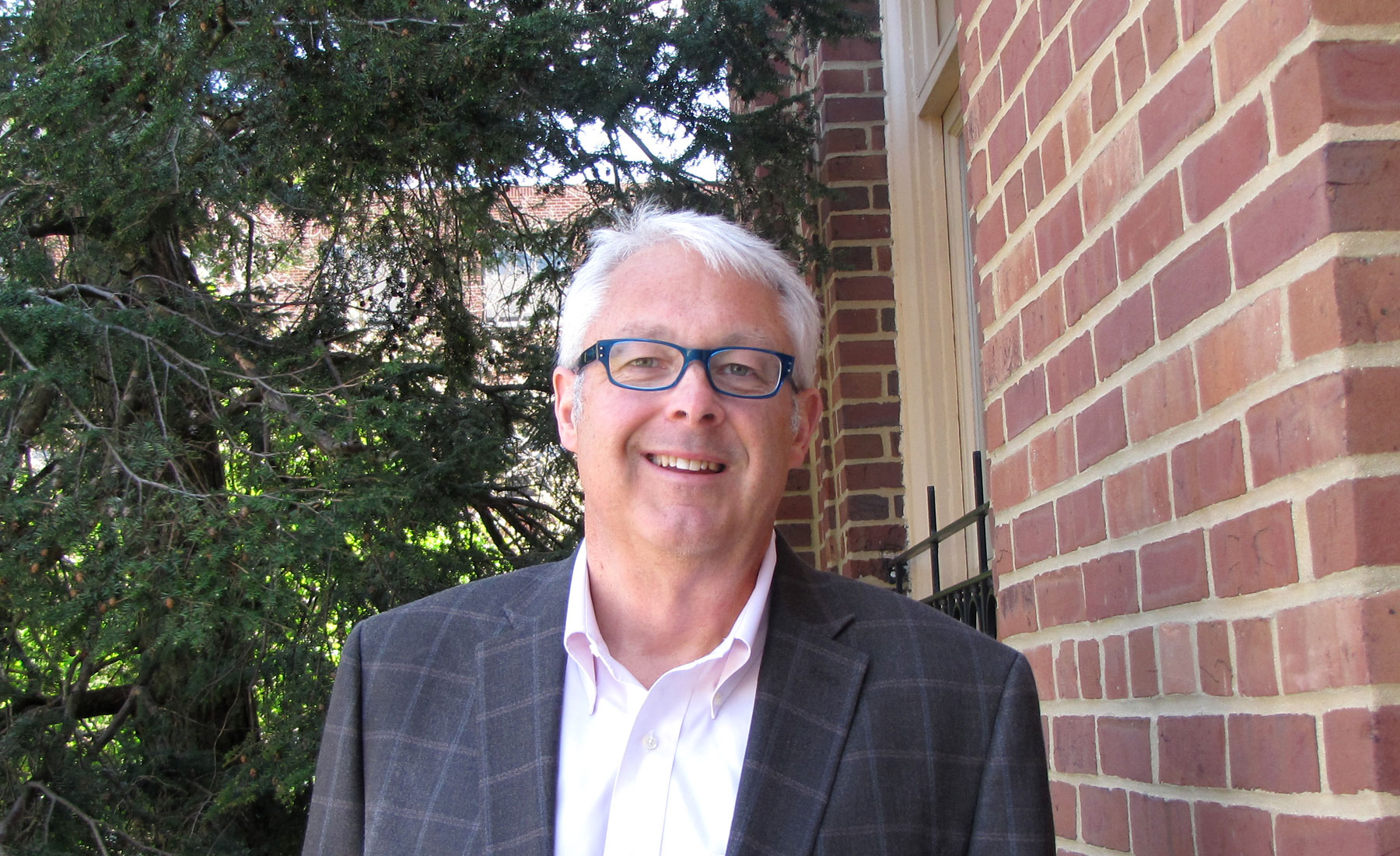
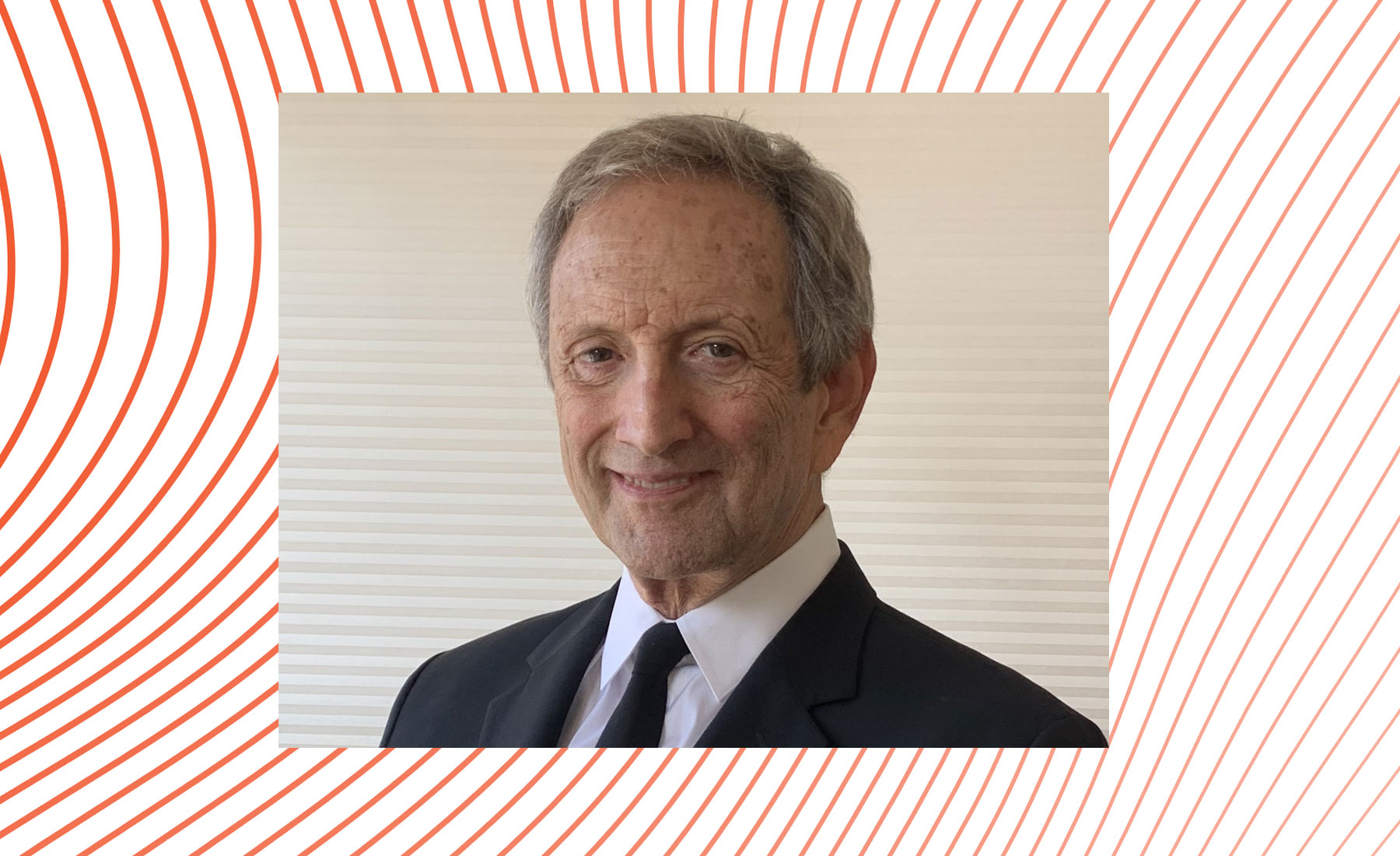
Steve Hall, a senior lecturer in the Charles H. Sandage Department of Advertising, received the 2021 Barton A. Cummings Gold Medal Award with a unanimous vote from the American Advertising Federation.
The award recognizes distinguished individuals for their service to advertising through volunteer work with the AAF, and this is the first time that it was given to an educator; previous winners have all been members of the industry.
“I’m extremely lucky to have so many incredible people in my life. Doing what I do wouldn’t be possible without amazing students, alumni, faculty, administrators, friends, family, industry professionals, and the American Advertising Federation,” said Hall, who has served as faculty advisor since 1997 for AAF Illinois, the largest student chapter in the nation.
“To be a part of Bart Cummings’ iconic legacy is special to me because of his connection to the University of Illinois as an alumnus, supporter of Charles. H. Sandage Department of Advertising, chair of the James Webb Young Board, and All-American athlete,” Hall added.
The award is named in honor of the late Bart Cummings (BS ’35, journalism), former Chief Executive Officer of Compton Advertising (now Saatchi & Saatchi Advertising), whose career was dedicated to industry service and to advancing the social and economic values of advertising. Cummings received honors such as induction to the Advertising Hall of Fame for his volunteer work serving as chair of the AAF, the 4As, the Ad Council, the Advertising Educational Foundation, and the AAF Foundation.
Echoing Cummings’ contribution to the advertising industry, Hall’s work in the Sandage Department of Advertising has helped shape the future of the field by teaching, mentoring, advising, and connecting students, alumni, and professionals in an array of industry immersion initiatives, activities, programs, and events.
“As educators, we should be teaching advertising students how to be students of life,” Hall said. “Teaching them to approach the world around them with curiosity, eagerness, and open-mindedness so they can achieve excellence in everything that comes their way—in whatever career path they decide to take—because the greatest reward an educator can receive is when their students do awesome work in careers they absolutely love.”
As AAF Illinois Faculty Advisor for more than 20 years, Hall has led National Student Advertising Competition teams to the finals, nominated more Most Promising Multicultural Student winners than any other university, and created countless industry immersion and engagement programs for AAF student members to Los Angeles, New York, Chicago, Portland, and San Francisco.
“For decades, Steve selflessly devoted himself to nurturing the future leaders of advertising, both in and outside of the classrooms,” said Professor Mike Yao, head of the Sandage Department of Advertising. “He was a champion for experiential learning before experiential learning became cool. Steve’s dedication to teaching excellence and student professional development are truly inspirational.”
Hall has previously been recognized nationally as one of the best professors in the industry having received AAF’s Distinguished Advertising Educator Award, along with the University of Illinois Excellence in Undergraduate Teaching Award, the Charles H. Sandage Faculty Excellence in Teaching Award, and the AAF James S. Fish Aid to Advertising Education Award.
When designing curricula, Hall advocates for finding new and creative ways for faculty and students to learn from each other.
“Pedagogically, faculty should be willing to immerse themselves in myriad roles as educators, because significant learning also occurs when teachers become mentors, advocates, advisors, coaches, catalysts, facilitators, coordinators, collaborators, listeners, and participants in the educational process.”
Hall believes advertising education should immerse, connect, and inspire students so they can achieve great successes in their careers and shape the future in the best way possible.
“Advertising education should instill the maverick spirit of an inventor, conviction of a marathon runner, analytical mind of a scientist, empathy of a philanthropist, and creativity of a jazz musician in every student,” he said.
“It should constantly strive to develop professionals who are thought-leading ‘architects’ who have the ability to balance the most intricate details with an extraordinary vision—and create blueprints that set the standard for best practices in the industry.”
The Campus Award for Excellence in Undergraduate Teaching recognizes sustained excellence and innovative approaches in undergraduate teaching and contributions beyond classroom instruction that have an overall positive impact on undergraduate student learning. Amanda Ciafone, associate professor of media and cinema studies, was one of this year’s recipients.
Ciafone honed her classroom skills teaching large 500-student classes as well as smaller seminars, requiring an impressive range of pedagogical approaches and methodologies. Her nominator described her as committed to regularly examining the broader curriculum to ensure students’ academic, professional, and personal goals are met and challenged. She brings her keen attention to emergent curricular needs and the needs of students from different backgrounds—including underrepresented and historically marginalized students—to innovate a critical, publicly engaged education at Illinois.
Peter Alexander (center), chief White House correspondent for NBC News, and Illinois journalism alum Judy Hsu (right), ABC 7 Chicago anchor, join a conversation with Leslie Frank (left), Emmy award-winning broadcast journalist.
The College of Media will celebrate the Richard and Leslie Frank Center for Leadership and Innovation in Media with a virtual kick-off event on Wednesday, March 31, at 7-8 p.m. (CT).
Leslie (Miller) Frank, an Emmy award-winning broadcast journalist, will host a conversation about media leadership and innovation with Peter Alexander, chief White House correspondent for NBC News, and Judy Hsu, ABC 7 Chicago anchor and Media alumna (BS ’93, journalism), with time at the end for an interactive Q/A. The event is free and open to the public; registration is required to receive the Zoom link.
“It’s a fascinating time to be a journalist, and it’s also challenging, but the important thing is to always go back to the fundamentals—what is the story you need to tell the public? Now more than ever there is a critical need for good, solid, objective journalism in this country,” said Rich and Leslie Frank.
Rich Frank, who received his bachelor’s degree in marketing from the University of Illinois, is former president of Disney Studios and former president of Paramount Television Group, and served three terms as president of the Academy of Television Arts and Sciences. Leslie Frank spent more than 25 years covering major stories including the 9/11 attacks from ground zero in New York City, as well as from the scene of the devastating aftermath of Hurricane Katrina, and inside the courtroom at the Michael Jackson trial. She spent the last nine years of her TV news career reporting and anchoring at the #1-rated station, KABC in Los Angeles.
The Franks, who are now vintners and hospitality leaders running Frank Family Vineyards in Napa Valley, established the Richard and Leslie Frank Center for Leadership and Innovation in Media in October 2020 by making a historic gift of $7.5M to the College of Media, the largest gift ever made to the college.
“The creation of the Frank Center is an infusion for the College of Media at a time where support for our students and programs is vital in preparing the next generation of media professionals,” said College of Media Dean Tracy Sulkin. “We’re excited to host important conversations about the evolution of media with accomplished and innovative leaders in the field.”
The kick-off conversation is the first of many engaging events to be offered by the Frank Center, which will host a diverse group of media experts and practitioners through a distinguished speaker series, residencies, symposia, professional development support for students, and more. The Franks’ gift will also provide facility upgrades in Gregory Hall classrooms and in Richmond Studio, where journalism students produce broadcasts for UI-7.
“The Department of Journalism is thrilled to work with the Franks to provide students experiential learning opportunities and access to media experts that they can’t get anywhere else,” said Professor Stephanie Craft, head of the Department of Journalism.
Rich and Leslie Frank have frequently shared their expertise with UIUC classes, speaking with students and faculty in both the College of Media and the Gies College of Business, and advising journalism students on their television news broadcasts and resume videos. Their next virtual visit will be in an advanced video storytelling and producing course to discuss a case study on how to be in control of an interview.
“The world is changing and being changed by journalists, and the definition is changing, too,” added Rich Frank. “It’s an exciting time to be launching this.”
For more information, contact Holly Rushakoff, (217) 333-3949, hrush@illinois.edu.
March 4, 2021 | Marissa Plescia, Communications and Marketing Intern
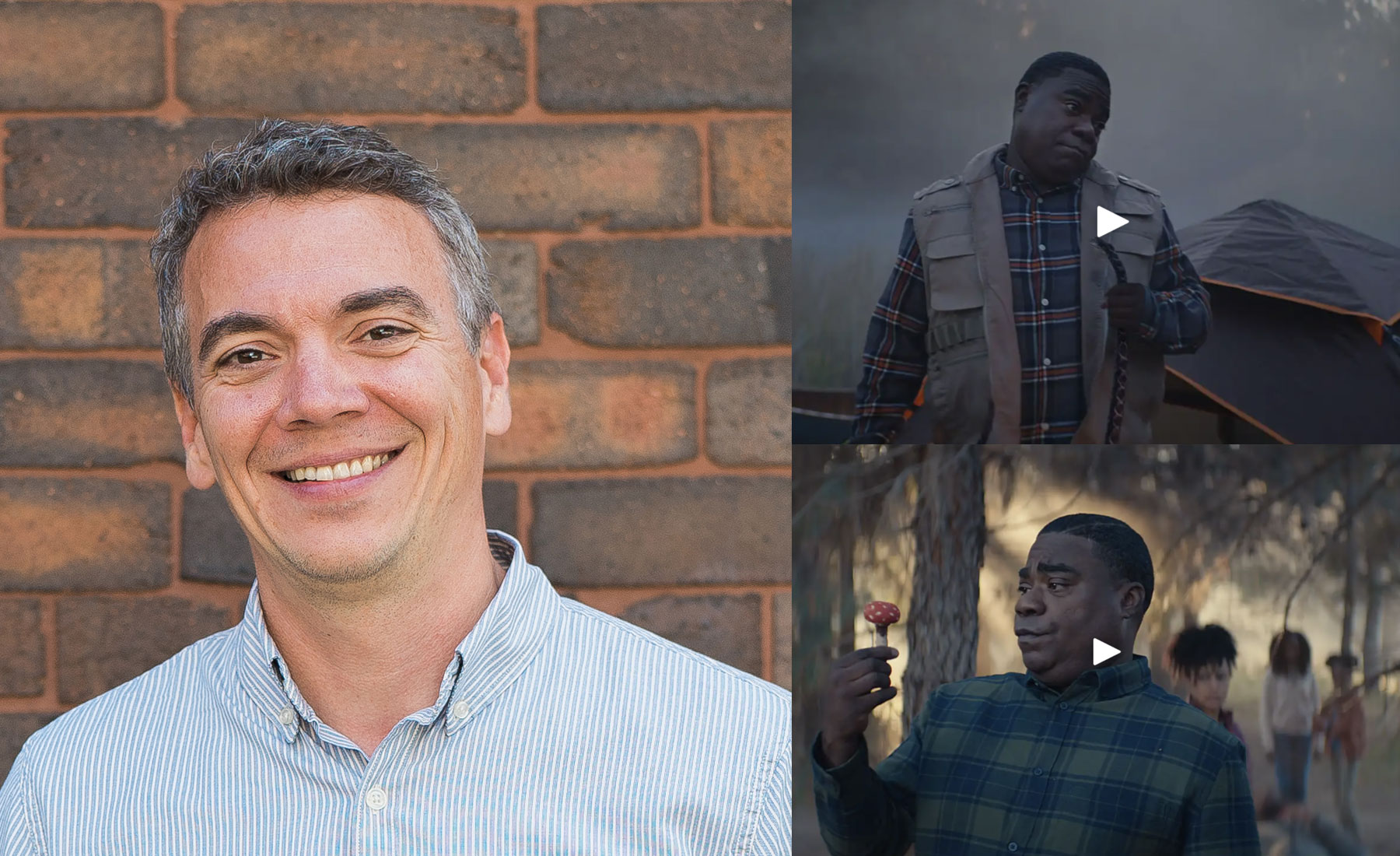
Patrick Burke doesn’t usually like waking up to a work text at 5 a.m. … unless it’s saying that his commercials got the #1 and #2 spots for the USA Today Super Bowl Ad Meter poll.
“If I’m gonna get woken up to a work text at 5 a.m., that was definitely a good one,” he said with a laugh.
Burke (BS ’95, advertising) is the group creative director for Highdive, an independently-owned agency based in Chicago. After working for larger Chicago agencies like BBDO, DDB, and Ogilvy, he decided to move to Highdive in 2019.
Highdive’s winning ads this year were two commercials for Rocket Mortgage starring Tracy Morgan, humorously demonstrating the difference between being “pretty sure” and “certain” about buying a home. Burke was the writer for both of these ads. (Watch the ads here.)
Because Rocket Mortgage isn’t a full-time client of Highdive, the agency had to pitch their idea against several other agencies. Their idea was ultimately chosen.
“What’s funny is, sort of immediately, we had Tracy Morgan’s voice in our heads when we were writing the script, and there were times in the process where we were asked to explore backups in case Tracy said no, and we could never find any,” Burke said.
This isn’t the first time Burke and Highdive were awarded top spots on the USA Today Ad Meter poll. Last year, they won the #1 spot for a Jeep commercial starring Bill Murray—which was a play on the classic film Groundhog Day—and the #5 spot for another Rocket Mortgage commercial featuring Jason Momoa.
Burke said it was very rewarding to get the #1 and #2 spots for Rocket Mortgage after getting #5 for them last year.
“I was really, really happy for our clients because it meant a lot to them and it’s a lot of PR,” he said. “It makes all their hard work and championing the idea worth it.”
He said he also enjoyed working with Tracy Morgan, although he wasn’t able to meet him in person this year due to the pandemic.
“Tracy Morgan is just super, super sweet,” Burke said. “We always dealt with him online or over Zoom or on the phone, but he is just the nicest, sweetest guy and just super funny.”
Working with Bill Murray last year, however, was an especially exciting experience for Burke because the actor is a major idol for him, he said. He shared one story about when he was finishing up work and showed up to a dinner with Murray 45 minutes late.
“It’s Bill Murray, you know, he’s famous for just giving people a hard time,” Burke said. “As soon as I walk in I know I’m getting roasted for being late to his dinner. It was just like the highlight of my life, getting made fun of by Bill Murray.”
Burke said going to UIUC and the College of Media gave him a well-rounded education that helped him in his career.
He added that the advertising faculty were very helpful, and he’s stayed in touch Steve Hall and Peter Sheldon, both senior lecturers.
“I wouldn’t trade my education for anything,” Burke said. “I think the faculty and staff have great real-world experience. They all have great connections within the industry and they stay connected to the industry.”
Sheldon said Burke was undeniably talented as a student and that he could tell he would be successful.
“He was one of those students that you know from the first month of having them, the best thing to do is to stay out of their way because they’re going to succeed.”
But despite his talent, Sheldon did fail him on his first assignment for turning it in late.
“He recovered nicely,” Sheldon said with a laugh.
He added that College of Media students can learn from Burke that it’s not enough to just be funny, but that it’s important to be smart too. Burke also proves that students don’t need to go to a portfolio school to be a successful creative in advertising.
Sheldon said he didn’t know when first watching that the two ads from last year were Burke’s. This year, he was looking for them.
“It gives me something to dangle in front of 130 students in a lecture,” Sheldon said. “I can tell the story of how Pat Burke used to sit in that chair there and this is what he’s doing now. I thought a year ago having the first and fifth highest rated ads was like the capstone to an incredible year … then this year he comes back with first- and second-highest rated ads of the Super Bowl. It makes me proud.”
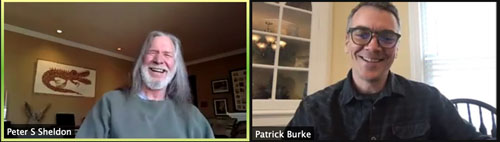
Pictured above: Patrick Burke recently joined one of Peter Sheldon’s advertising classes to give feedback to students during a portfolio critique.
James W. Carey Fund for Faculty Excellence will support outstanding faculty in the Institute of Communications Research
An internationally recognized scholar in communications research, James W. Carey (1934-2006) earned two advanced degrees at the University of Illinois and then dedicated nearly half of his life as an academic leader in the College of Media (then known as the College of Communications). Carey was a student of the media’s role in society, and his commentaries on American civil life are some of the most influential in the field of communication.
To honor their father’s legacy at Illinois and in the field of media, Carey’s four sons endowed the James W. Carey Fund for Faculty Excellence. The fund will benefit College of Media faculty affiliated with the Institute of Communications Research, where Carey earned his doctoral degree, was a research professor, and served as director (1969-1976). The ICR, housed within the College of Media, is the world’s oldest program for interdisciplinary research and doctoral education in communication and media studies. The first James W. Carey Faculty Fellow will be selected for the 2021-2022 academic year and will receive a stipend to support research activities.
“Our father’s education took off at the U of I and so much of his life as a teacher and scholar orbited around Gregory Hall,” said Dan, one of Carey’s sons. “He had remarkable ties to students and faculty in the University. We wanted to honor that depth of relationship and to make it a lasting one for the future.”
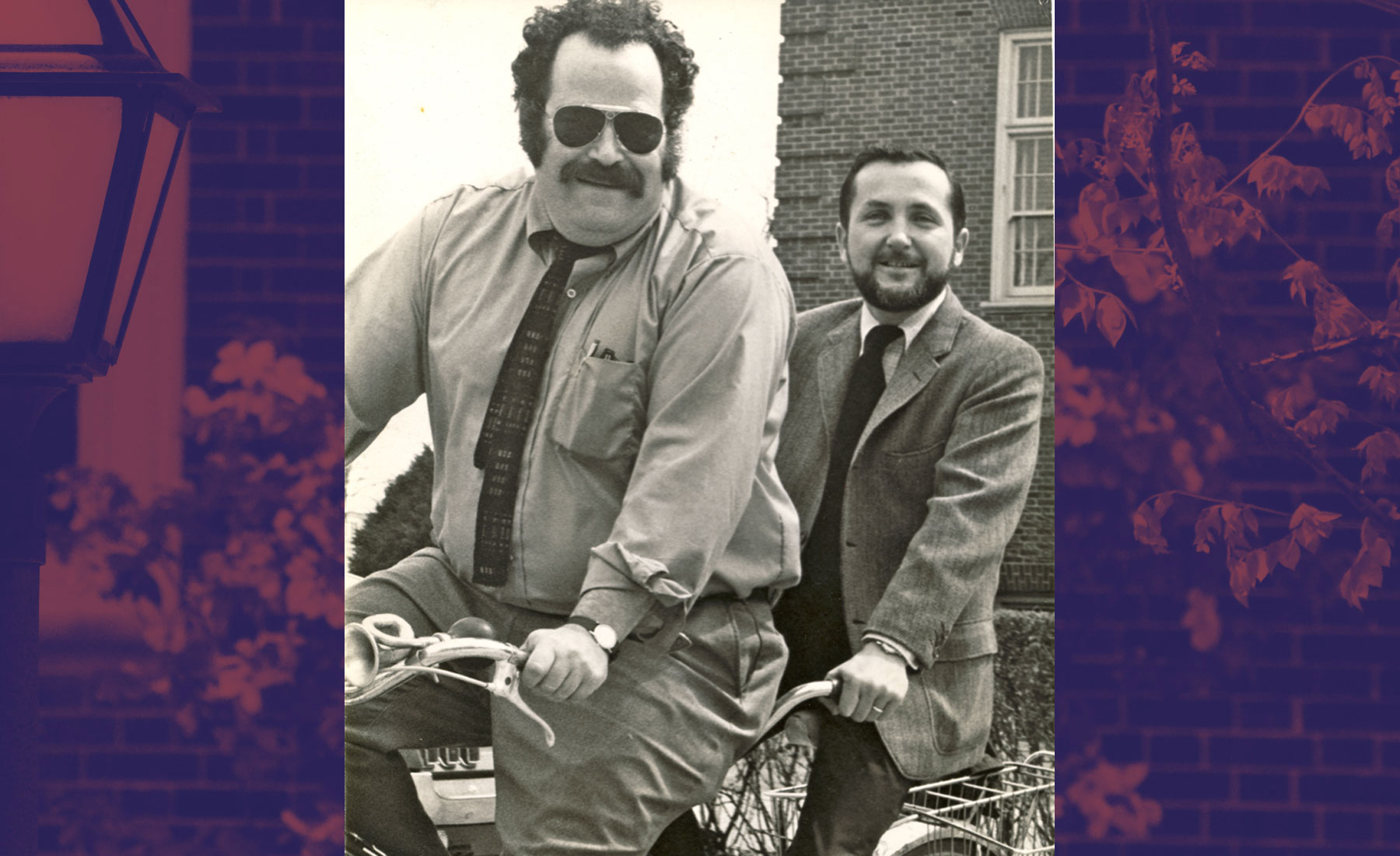
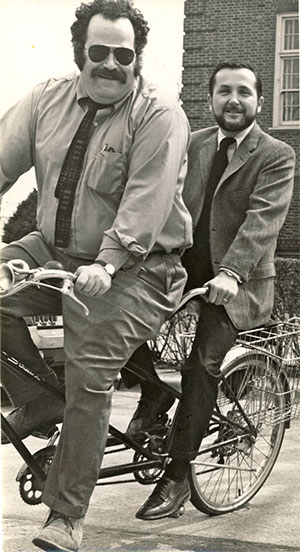
Professors Howard Ziff and Jim Carey ride a tandem bicycle outside Gregory Hall in the 1970s. (Photo by Dick Hildwein, a longtime faculty member who taught photojournalism.)
Carey (MS ’59, advertising; PhD ’63, ICR) began his career as a professor of journalism, working his way to dean of the College (1979-1992), during which the major in media studies (now media and cinema studies) was established. He received an Honorary Degree of Doctor of Letters from the University of Illinois in 2000 for his contributions as an author, educator, and administrator. After his time at Illinois, Carey spent the remainder of his career at Columbia University’s Graduate School of Journalism from 1992 to 2006, where he helped establish their doctoral program.
“For nearly 100 years, the College of Media has been guided by the principles of innovation, collaboration, and creativity, which Dr. Carey represented so well,” said Dean Tracy Sulkin. “To continue this tradition, it is crucial to attract, retain, and recognize our talented faculty who embrace these philosophies in their scholarship, teaching, and service.”
Carey is known for developing the “ritual view of communication,” a theory that links communication with participation, association, fellowship, and the possession of a common faith, as opposed to the common “transmission view,” in which communication is the dissemination of information. A ritual view of communication is “not the act of imparting information or influence but the creation, representation, and celebration of shared even if illusory beliefs,” Carey wrote in Communication as Culture: Essays on Media and Society.
“I think all education, all scholarship is ultimately an aspect of citizenship,” Carey said in an interview within his book James Carey: A Critical Reader. “We end up making a living with our education, but the end of education is to prepare one for life in society, for public life in the widest sense, for life among our fellow men and women.”
Carey was beloved by his students. In a 2003 issue of Mass Communication Education, the late John J. Pauly (BS ’72, MS ’74, journalism; PhD ’79, ICR) published “Remembering a Mentor: James Carey.”
“A Carey lecture resembles a grand magic show, bursting with fireworks, sleight of hand, dramatic flourishes, and the occasional personal aside. … His writing luxuriates in theoretical, historical, and literary allusion. … But the most important lessons Carey taught me were about being a professor,” wrote Pauly. The lessons were: Be serious about your work; honor the university tradition; look for the human; and leave the door open. “Carey’s students learn that there is always room for one more chair at the table, for one more spoon in the pot.”
In 2006, WILL interviewed his former doctoral students Clifford Christians (research professor emeritus of communications; professor emeritus of media studies and journalism; and former director of ICR) and Steve Jones (distinguished professor of communication at the University of Illinois at Chicago). They remembered Carey as an eloquent communicator who valued plain language, clarity, and honesty, who was an organic member of the community and loved the public university, and who was admired across campus for his wisdom.
Linda Steiner (PhD ’79, ICR), professor of journalism at the University of Maryland, remembered Carey for his important insights and storytelling.
“Carey’s teachings and writings had enormous impacts on me,” Steiner said. “So it’s really an honor for me to engage in this campaign to do something to celebrate his service to the field, to the University, to ICR, and the College of Media.”
To join Carey’s family, former students, colleagues, and friends in our fundraising campaign to grow the endowment, please visit the College of Media giving page, click on the orange “Give Online Now” button, and select the Carey Fund under “Nurture Excellence in Media Faculty.”
December 2, 2020 | Kimberly Belser, Communications and Marketing Intern
Talented advertising undergraduate students will be recognized for their creative work and provided with a monetary gift to support their creative career path, thanks to the Murray Kalis Award for Creativity in Advertising. The new award was established by College of Media alumnus Murray Kalis (BS ’61).
“Much of advertising education is quantitative based: media, research, tracking,” Kalis said. “Yet, what can truly differentiate ad agencies is qualitative. What I learned in the ad business was creative is the great equalizer in agency pitches. No matter how big our competitors were, if we had the big idea, we won the account.”
Kalis, who spent most of his career as a creative director, endowed this award to emphasize to students the importance of creativity in advertising.
“Overall, as a department head, I feel blessed and very happy that we have alumni who care deeply about our students, and who would really like to recognize the strength in our talent pool,” said Professor Mike Yao, head of the Charles H. Sandage Department of Advertising.
The award process, which begins this December in advertising senior lecturer Peter Sheldon’s ADV 452: Creative Concepts I course, will take place during a virtual portfolio review, where at least one “upper-level creative with an extensive track record” will critique the students’ work.
Three awards will be given: one for the best single ad, one for the best three-ad campaign, and one for the best 10-ad portfolio. Students have the ability to win in multiple categories.
The criteria for the Murray Kalis Award for Creativity in Advertising is smart positioning, outstanding creative concept, and strong execution, in addition to that “wow” factor, Sheldon explained. The winners will be given a gift award to support their efforts in pursuing a creative career path in the advertising industry.
“From the time I started at [the University of Illinois], I was always interested in majors that require creativity,” Kalis said. “In fact, I switched majors every semester, starting with architecture, to industrial design, to fine arts painting, and then to creative writing.”
Because of this, he had little to no concentration of prerequisites to start his junior year. Then, he learned that the School of Journalism only required 60 hours completed, and that the school offered a major in advertising.
“I loved advertising because it called upon everything I knew and had learned. After all, you never know what products you might need to work on,” Kalis said. Two years later he graduated from the journalism school having majored in advertising.
“Even though our curriculum does not have a dedicated track for creativity because its history has always focused on strategy, there are many creative talents in our major,” Yao said. “We will always be looking for a way to discover and support these students who are interested in pursuing a creative path in advertising, and so this timely gift and this award will allow us to discover and cultivate this type of talent.”
Yao said it is important for students to be given a broad view of the industry and to be able to pursue their interests through the advertising curriculum, while feeling supported and recognized.
“This award really reflects our dedication and our view of the importance of this particular dimension of advertising,” he said.
Kalis is creative director of Kalis, Inc.; a partner and creative director emeritus at Riester; a board member of the Los Angeles World Affairs Council; on the board of advisors for Dave’s Hot Chicken; and a member of the Tech Coast Angels, the largest angel investor group in the U.S. Most recently, he joined the Los Angeles-based B2B delivery startup, Ship District, as Chief Marketing Officer.
December 2, 2020 | Marissa Plescia, Communications and Marketing Intern
College of Media students and alumni may remember pre-pandemic late nights cramming on big projects in the dimly lit basement of Gregory Hall (not to mention the Doritos and Coca-Cola dinners from the vending machine). But thanks to college and campus funds, the basement will soon have a new makeover with long-awaited renovations to Rooms 13, 29, and 31 completed in time for spring semester.
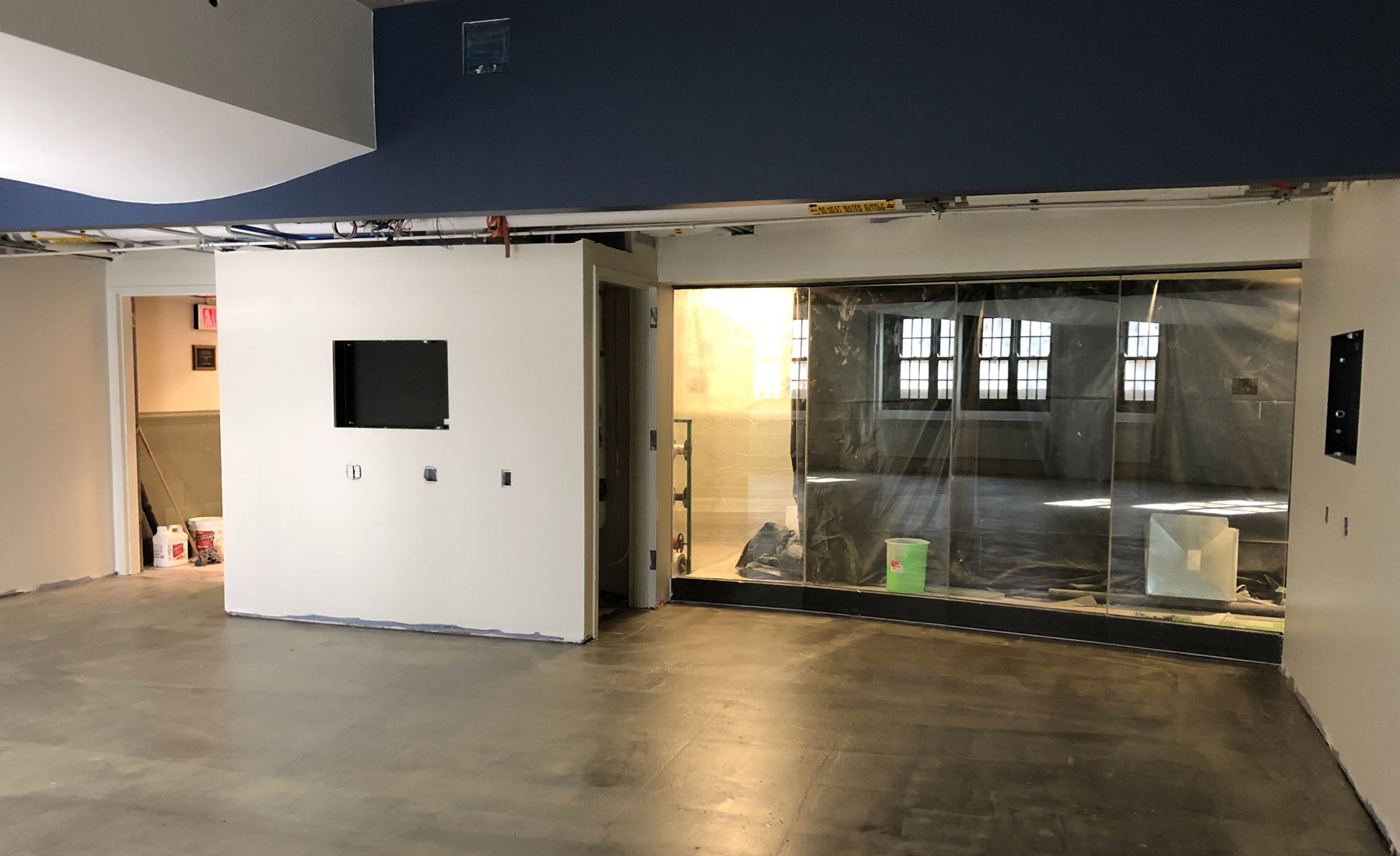
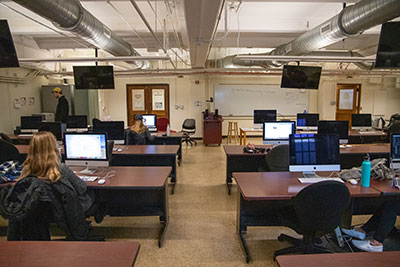
Gregory Hall Room 31, which is becoming an iFlex classroom, is being outfitted with screens along the interior walls and a glass wall along the hallway (pictured at top).
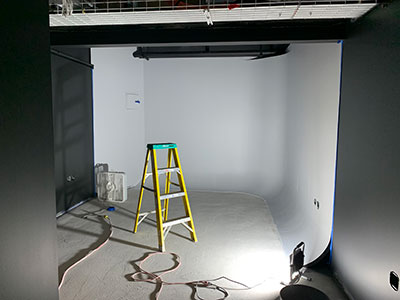
Rooms 29 and 31 used to be joined as one big classroom, with 31 as a computer lab and 29 as a little nook with tables and chairs. They will now be two separate rooms and 29 will act as a small media production space, said Meghan Burnett, director of information technology and operations. It will have a green screen and camera equipment for students to produce videos and do photo shoots. There will also be post-production equipment for students to edit material.
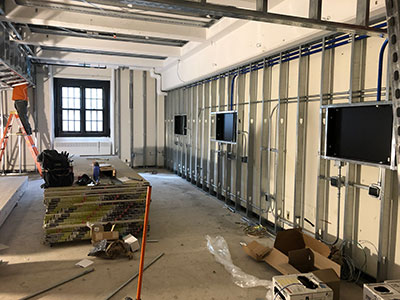
Room 31, meanwhile, will become an iFlex classroom, meaning it can be easily restructured to fit the needs of the class, Burnett said. The remodeled classroom will fit more than 40 students. Chairs and tables will all have wheels so they can be reconfigured, whether it’s in a lecture format sitting all in one direction or in a pod format for group work. Screens will fill the perimeter of the room and students and faculty can use their smartphones or laptops to share their work on the screens.
“It can accommodate a variety of different teaching styles,” Burnett said.
Room 13, a computer lab, will have new computers and a new large screen in the front of the classroom, Burnett said. It also received a new ceiling, new flooring, new paint, new AV equipment, and better lighting and ventilation. The class will now face to the west—rather than its old position facing the north—which allows for a better arrangement of the desks.
Gregory Hall Room 29 is being transformed into a small media production space.
The overall cost of the project is a little over $1 million, Burnett said, and was paid for with a combination of College of Media funds and campus capital project funds.
The renovation has been in the planning process since the 2018-2019 academic year. Construction began in January 2020 and paused in March due to COVID-related shutdowns, then resumed in June. The rooms will be utilized beginning in spring semester, but will not be used to their full capacity until the pandemic is over and social distancing requirements ease, Burnett said.
Faculty members in the College of Media advised on equipment, room layouts, and furniture. Victor Font, lecturer in media and cinema studies, provided recommendations for what should be included in the production room and will be using it frequently for his classes. He shared that, while he said the space will be too small for filming big action scenes, it will be helpful for still shots, close-ups, interviews, and casting auditions.
He said it will also be important for teaching students how to use green screens and camera equipment.
“The idea is for the students to use [the equipment] without being supervised by the TAs or professors so that they can go there and use the room [as needed],” Font said.
A view of Gregory Hall Room 31 in December 2019, before renovations began. (Photo by Madeline Wilson.)
One of the courses he plans on using the production room for is MACS 140: Smartphone Cinema, where he’ll have his students create a moving car scene using the green screen.
Font said these changes are something he thinks students will be excited to use and will provide great opportunities for experiential learning.
“It will make our 80-year-old building look a little more modern,” Font said.
However, while the renovations to the Gregory Hall basement are exciting to many, some student filmmakers may not be pleased, Font added.
“It was a perfect place to film a horror movie. Not anymore,” Font said, with a laugh. “So we’re going to need to find another basement for that.”
December 1, 2020 | Kimberly Belser, Communications and Marketing Intern
According to Alex Iniguez (BS ’11, journalism), assistant metro editor at TheSeattle Times, one thing that can’t really be taught in college is “the grind”—a daily devotion to work that helps manage tough days on the job. However,Iniguez said his time as a journalism student prepared him to work hard, regardless of his career path.
“My College of Media degree is worth a lot to me, first and foremost,” he said. “I felt like I thrived in a smaller environment in the College of Media compared to the large U of I umbrella, which was a good fit for me in other ways. And I’d be remiss to not mention [The Daily Illini]. The DI was a huge part of my development, and I still meet people who worked at the DI in the wild, which is always a pleasure.”
Iniguez was selected to be the alumni speaker at a virtual ceremony to honor College of Media December 2020 graduates.
“Alex has broad news coverage experience, having reported on both sports and recent events, including the protests, in Seattle. As a recent alum, and an emerging leader in the media industry, he will have helpful advice to share with our newest graduates,” said Dean Tracy Sulkin.
Previously an assistant sports editor at TheSeattle Times, Iniguez was promoted to assistant metro editor, effective November 30. His job shifted focus this summer when he spent four months assisting with coverage of the coronavirus pandemic and racial justice protests before returning to sports.
“My previous stint in metro earlier in the pandemic made me finally accept and truly know my skills are transferable,” he said. “I can work in metro for the same reasons I can work in sports. If you’re a well-rounded and prepared journalist, the possibilities are great.”
He took on the role as editor for TheSeattle Times’ news section over the summer at the height of the George Floyd protests, which he said was a fascinating experience. During a couple of shifts, he took feeds from reporters via email, Slack, and WordPress, and published them to the newspaper’s website in real time, “providing a valuable and up-close look at our community.”
“I enjoyed understanding the protests and protesters better, which I largely accomplished by watching hours of [Facebook, Periscope, and Twitch] livestreams from the streets. Seeing that kind of passion, relentlessness, and dedication, and understanding where and why those feelings exist was inspiring and made me understand our world more,” he said.
At TheSeattle Times, his coverage has included the Seattle Sounders’ 2019 Major League Soccer Cup title; the establishment of a National Hockey League team in Seattle and the announcement of its name; former Seattle Mariners Major League Baseball player Ichiro Suzuki’s retirement in Japan; Seattle Seahawks quarterback Russell Wilson’s midnight contract extension; and political donations made by the Seahawks.
Recognized for his talents, Iniguez was accepted into the Poynter Institute’s 2021 Leadership Academy for Diversity in Digital Media. The yearlong program trains journalists of color working in digital media to thrive, fosters honest discourse about the challenges for journalists of color in management roles, and provides the connections, confidence, and skills to confront them.
He said the most rewarding aspect of his career is his ability to work with journalists who have the same level of curiosity as his own.
“We get to take our curiosities, spend time researching them, and, ultimately, provide some information that might help people understand their surroundings more,” he said. “That’s a powerful feeling.”
For aspiring journalists, he has one message: Brace yourself.
“I don’t mean that as a warning,” he said. “But journalism is a wild ride. You never know what you’ll see or hear, and you never know where your work might take you. It’s a thrilling career, if you’re willing to go for a ride.”
Furthermore, he wishes December 2020 graduates well with their future.
“I know this is a really hard time to be coming out of school, but if you turn on your survival mode, you will figure it out,” he said. “You have time to find your place, personally and professionally. Take the time to think intently about where you want to be and what kind of person you want to be. That will guide you on your career path.”
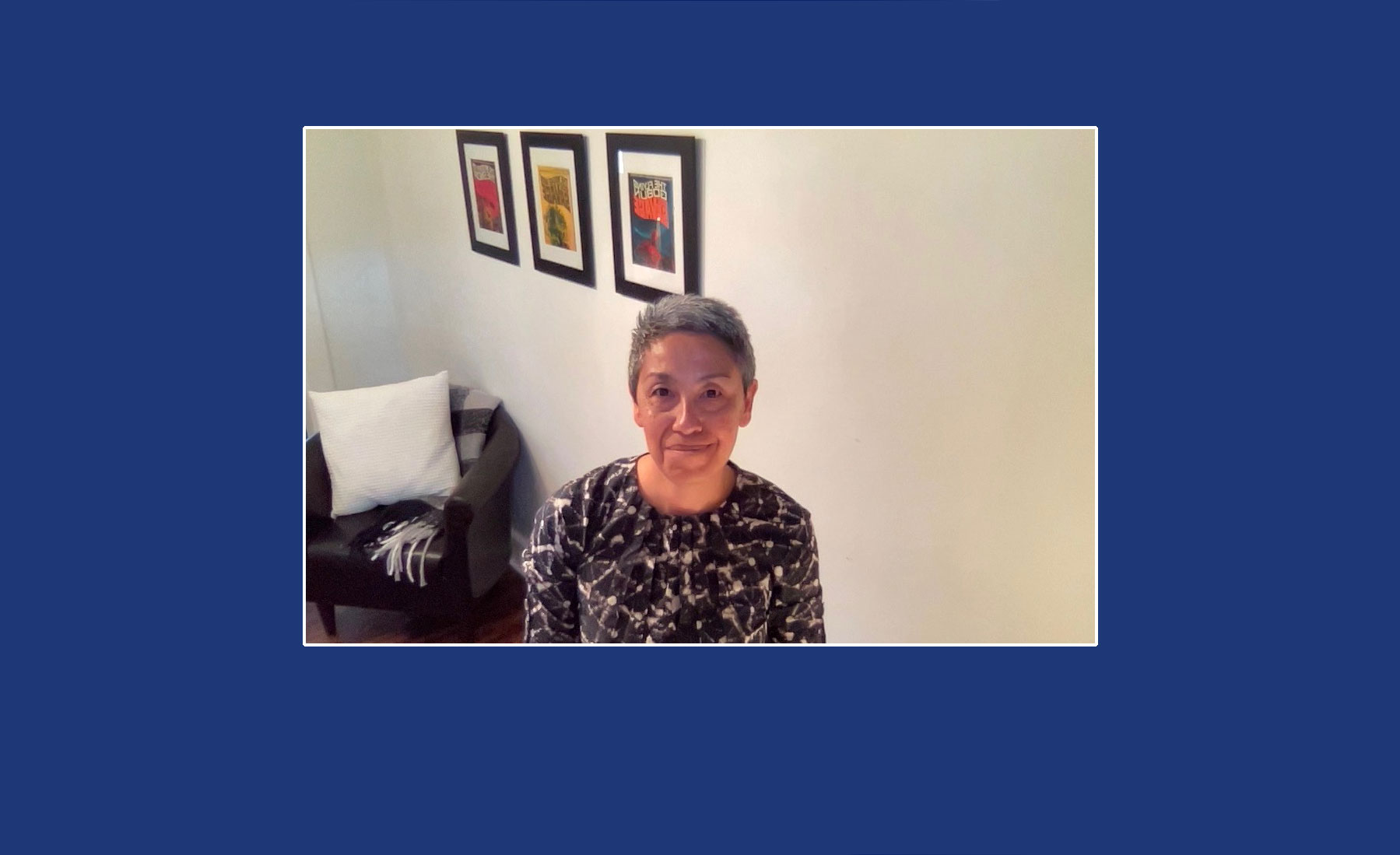
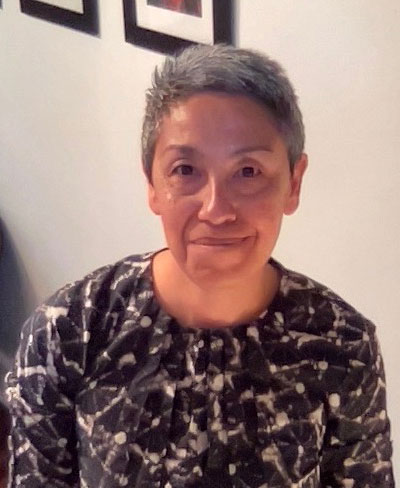
 Tingyu Chen received her bachelor’s degree in journalism and her master’s degree in communication at Renmin University of China. With critical-cultural approaches to media study, she situates her research interests at the intersection of media industry practices, cultural studies, and media criticism. Her recent research focuses on realist media (mainly realist film and documentary) and the culture of production and consumption in contemporary China.
 Kirby Cook received her master’s degree in advertising at the University of Illinois Urbana-Champaign, and her bachelor’s degree in classical languages and literature from the University of North Carolina – Greensboro. Kirby’s master’s thesis, “Evaluating Gender in Retail Servicescapes: Beyond the Heteronormative Binary Approach,” explored how retail companies communicate gender norms and how consumers of diverse backgrounds receive such messages and process shopping experiences. In her doctoral program, Kirby is interested in research pertaining to branding strategy, consumer behavior, and media effects as they relate to consumer identity. Prior to joining the ICR program, Kirby worked for UIUC as a career advisor and communications coordinator for Engineering Career Services at the Grainger College of Engineering, and as an international student advisor at the International Student and Scholar Services office. Before joining the University, Kirby worked abroad in Germany and South Korea as a consultant, adjunct lecturer, and high school English teacher.
  Seo-Jeong (Rachel) Heo graduated from Yonsei University (South Korea), receiving her bachelor’s and master’s in communication. She also received a master’s degree in advertising at the University of Texas at Austin. She studies media psychology and marketing communications. Her research interest lies in understanding the social/moral implications of artificial intelligence (AI) and psychological processes in AI-powered technologies, Virtual Reality (VR), and social media. Her recent research focuses on exploring how people make moral judgments toward robots’ behaviors and how we can effectively implement AI in assisting people’s decision-making processes. She is also interested in online consumer privacy and gave a presentation about conversational agents and privacy at the 2021 International Communication Association conference.
  Youngin Kang attained her master’s degree in gender, media and culture at Goldsmiths, University of London in 2018. As a new ICR student, she wants to examine the inextricable relations between individual subjectivities in producing, distributing, and appropriating “culture(s)” within various socio-political processes, which construct a discursive mega-text, with which we cognitively, materially, and affectively engage in our everyday lives. Her research interests focus primarily on the unique characteristics of contemporary South Korean popular culture, which are hybrid, albeit, distinctively Korean.
 Ketan Krishna holds a master’s degree in media and cultural studies from TISS, Mumbai, and a bachelor’s degree in English literature from Hindu College, New Delhi. His research interests are centered around user-generated audio-visual content, art cultures on the internet, and technological change. His previous work includes writings on cinema and music. He has also worked as a documentary filmmaker and video editor on several projects.
 Yan (Anna) Liu’s research interest lies in exploring consumer’s cognitive, attitudinal, and behavioral responses to brand messages on social media from the socio- psychological perspective. Specifically, she is interested in the influence of relational factors in the process, such as online network, consumer’s relationship with message source, etc. Before joining ICR, she has been working as a professional marketing researcher in Ipsos for about four years.