Alum Mike VanBlaricum combines passion for James Bond, University of Illinois to create media scholarship


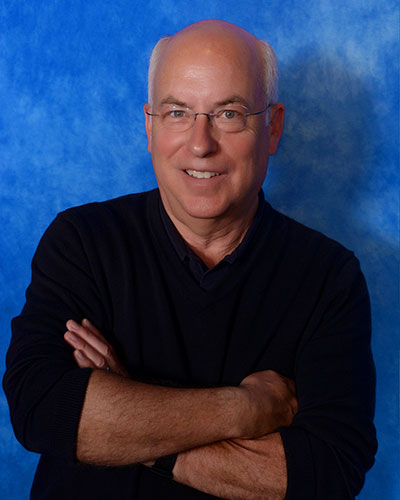
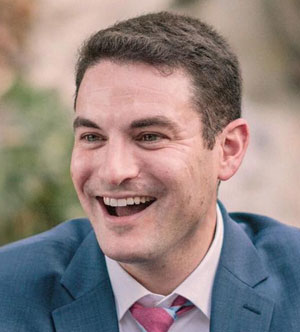
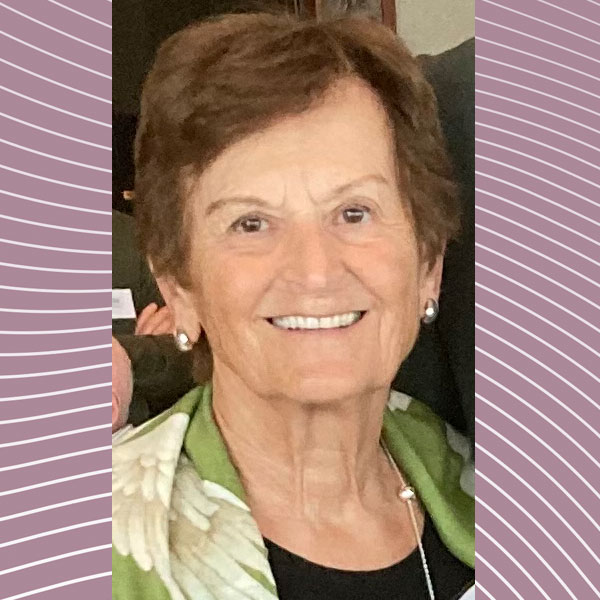
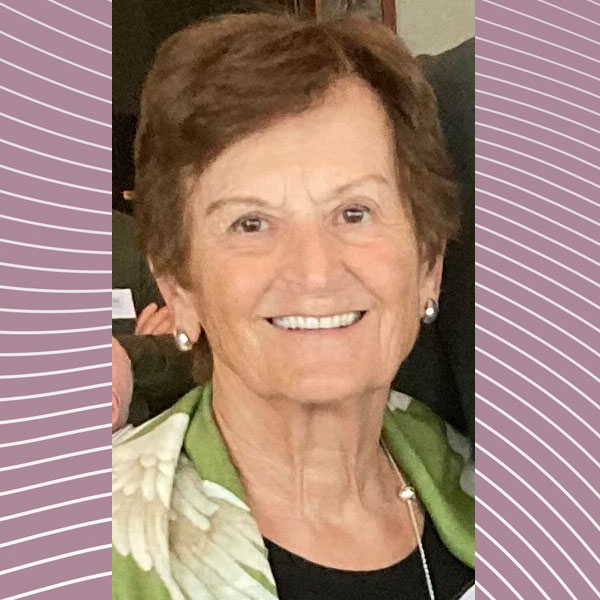
Mike VanBlaricum
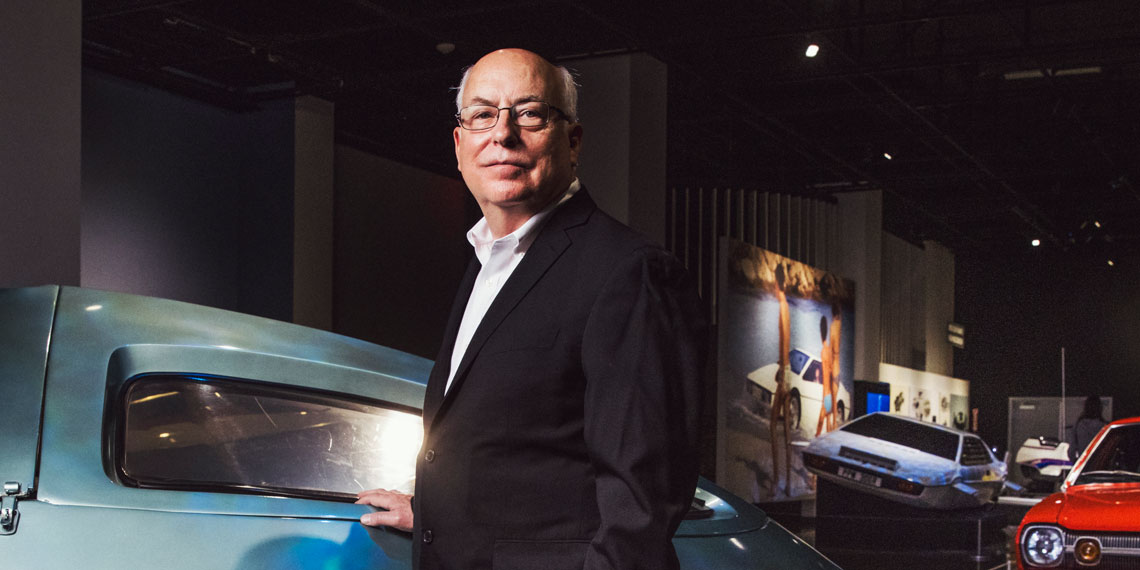
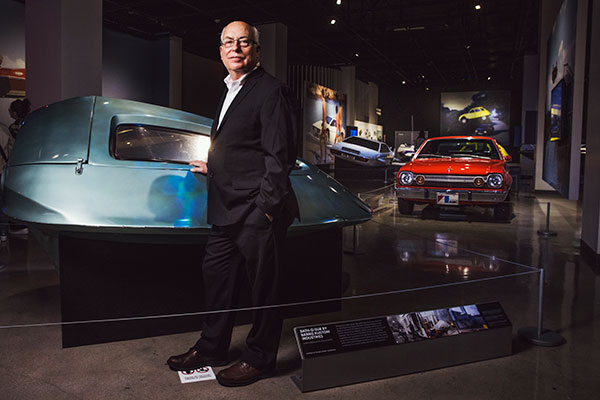
Mike VanBlaricum with some of the Ian Fleming Foundation’s vehicles on display at the Petersen Automotive Museum in LA. (Photo by Christina Gandolfo for the UI Alumni Association.)

It’s a toss-up for Mike VanBlaricum on which he loves more—anything related to James Bond and the fictional character’s creator, Ian Fleming, or his beloved Alma Mater, the University of Illinois. Luckily, he’s rarely had to choose.

In fact, VanBlaricum has found opportunities over the years to combine his passion for both, benefitting several different entities at the University, including the College of Media and its students. 

VanBlaricum, who graduated with three degrees in electrical engineering (BS ’72, MS ’74, and PhD ’76), is the president of the Ian Fleming Foundation. He was the driving force behind the creation of the Ian Fleming Foundation Undergraduate Research Scholarship for media students nearly a decade ago. He says there were several reasons for creating this scholarship.

It was a way for the Ian Fleming Foundation, formed in 1992 by VanBlaricum and two friends, to fulfill one of its main purposes—education. It also enabled them to honor the late Ian Fleming and highlight his journalistic endeavors.

“We wanted to make students aware that Ian Fleming was a journalist, a book reviewer, and a travel writer, as well as being a novelist and short story writer,” VanBlaricum said. “That’s why his books are so well written—he is trained as a journalist.”

The scholarship is also a nod to the late film critic and journalism alum Roger Ebert (BS ’64), since it was designed to provide incentive and support to outstanding undergraduate students participating in research around film. Plus, the fact that Ian Fleming and Roger Ebert started their careers as journalists seemed like a “wonderful match.” 

The origin of the scholarship may be multi-faceted, but the goal is more singular—to get undergraduate students involved with research at an early phase of their educational careers. 

Mike VanBlaricum

Undergraduate students in every College of Media major—advertising, computer science + advertising, journalism, or media and cinema studies—from freshmen to seniors, are eligible to apply if they are participating in research (either their own or with faculty) or an independent study project with a Media faculty member. The research can cover any area of film history or criticism, advertising in film, contemporary film production including the areas of film merchandising/memorabilia, travel writing, or history, and evolution of print journalism. 

“I think for undergraduates in the College of Media, who are going to be writing and producing as they get older, doing research as freshmen and sophomores is pretty cool. I wish I had done stuff like that when I was that age,” VanBlaricum said. 

VanBlaricum is somewhat of an expert when it comes to research. His career in research and program management spans more than 35 years, and much of that time was spent at Toyon Research Corporation based in California, which specializes in technology development and defense systems analysis. He retired from Toyon Research Corporation in 2010 but still serves as president emeritus of the company. 

His “Bondiana” collection, a term VanBlaricum coined himself, began in his 30s and required a talent and dedication only a true researcher could possess. Over the years, the self-professed “collector at heart” has amassed over 10,000 items, ranging from Fleming’s literary works and related books to merchandise such as toys, games, records, posters, and other ephemera. The Ian Fleming Foundation owns over 40 vehicles featured in James Bond movies, including a helicopter and submarine, which they loan to museums and charity events. 

Lately, he spends much of his time organizing and preserving his collection. He is currently in the process of donating a portion of his Ian Fleming/James Bond collection to the University of Illinois Rare Book and Manuscript Library. To date, he has already donated over 800 items.

VanBlaricum and his wife, Pam, who also earned three engineering degrees at Illinois, currently reside in California but come back to visit Illinois often. They own a home in Urbana that they purchased when their two daughters were attending the University of Illinois.

Mike VanBlaricum
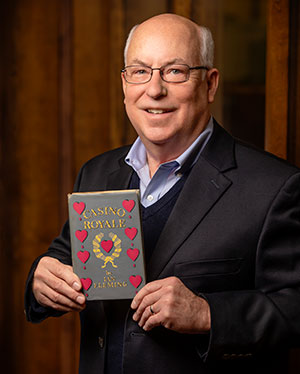
Mike VanBlaricum holds a British first edition of Ian Fleming’s first book, Casino Royale, published 70 years ago in April 1953, at the Rare Book & Manuscript Library. (Photo by L. Brian Stauffer.)

In the fall, they enjoy going to Illini football games as well as various Lyric Theatre and other School of Music presentations. In the spring, they look forward to coming back for Ebertfest. Along with the camaraderie and the possibility of running into old friends, VanBlaricum likes to “see movies on the big screen with an astute audience and to hear people explain and critique the films.”

VanBlaricum, a faithful volunteer at the University of Illinois since he was a student and co-chaired Engineering Open House in 1972 with his wife, continues to be an involved alum. 

He has served as president for the Electrical & Computer Engineering Alumni Board, for the Spurlock Museum Board of Advisors, and for the Illinois Music Advisory Council. In addition, he was the creator and a lead developer for the Illinois Distributed Museum, which highlights innovations at the University of Illinois. He’s also a generous donor, giving to many units, including his major home Grainger Engineering, the Spurlock Museum, the School of Music, and the University Library.

VanBlaricum’s enthusiasm for the University of Illinois and his Bond/Fleming collection doesn’t seem to be waning anytime soon; however, he unfortunately had to choose between Ebertfest and Bond this year. 

He and his wife will be in London during Ebertfest weekend, attending the 70th anniversary of the publication of Fleming’s first book, Casino Royale. The Fleming estate is having an event to commemorate the anniversary and is launching a new re-booted series of Bond novels.

“As my wife, Pam, says, nothing new can come out without me having to buy the whole set,” said VanBlaricum, who is excited to add another item to his collection.

Molly Cornyn joins College of Media as project coordinator for Ebertfest


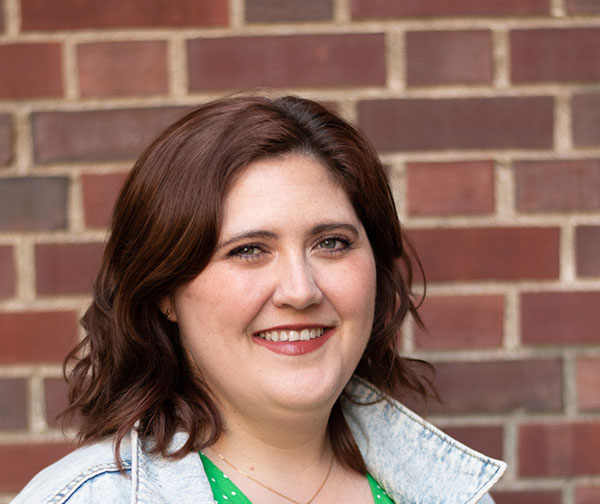
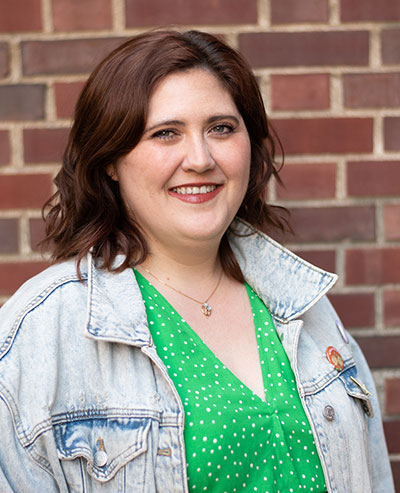
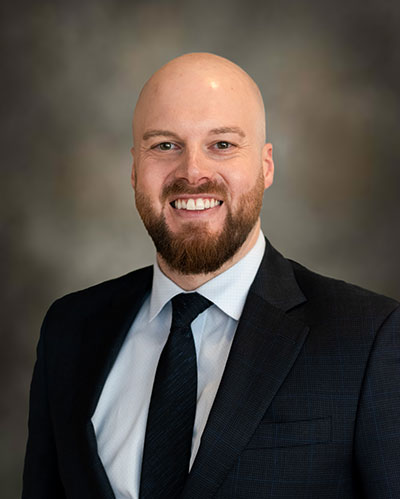
Molly Cornyn
(Photo by Isabella Pennebaker, photography intern.)

Molly Cornyn recalls the time she and the cast of her musical just happened to run into Roger Ebert one night at a local Steak ‘n Shake after one of their high school performances. Ebert, the late Pulitzer-Prize winning film critic and Media alum (BS ’64, journalism), was a huge fan of Steak ‘n Shake, so it’s not that implausible to have spotted him there one random evening enjoying a meal.

However, Cornyn and her fellow cast members didn’t waste the opportunity to strike up a conversation with Ebert and sing their best musical number for him. Cornyn is proud to say they received Ebert’s iconic two thumbs-up rating for their impromptu performance and she left the diner with a smile on her face and a story for the ages.

Years later, Cornyn is now helping to plan Roger Ebert’s Film Festival as the new project coordinator for the College of Media. While the Ebert encounter never came up during the application process, the Champaign native had numerous qualifications to make her a stand-out candidate for the position.

“Molly’s experience managing the logistics for multiple complex projects in the entertainment industry makes her a perfect fit, and she has jumped right in,” said Dean Tracy Sulkin. “Moreover, we’re happy to welcome home a Media alum who understands and is invested in the mission of Ebertfest.” 

Cornyn (BS ’06, media studies) will help plan, promote, and manage Ebertfest, which runs April 19-22 at the Virginia Theatre in downtown Champaign.

“I think [Ebertfest] is a shining gem of what we have in this community,” she said. “I know that people at both the University of Illinois and outside of it are excited about the festival and think it’s really something special. Being able to be involved in that and bring that to the community is rewarding.” 

After earning an MFA in producing for film and television from Chapman University in California, Cornyn spent five years at Caesars Entertainment in Las Vegas, which owns and operates nine resort properties in the area, starting out as an entertainment public relations coordinator and then a film and special events manager. 

Cornyn said she shot between 90 to 130 productions every year, which included “tons of cooking shows,” some with Gordon Ramsay whom she says is very nice to work with, despite his volatile persona on television. She also worked with producers of the Jason Bourne movie series for a scene that involved a car crashing into one of Caesars’ properties. 

“Every project was different, the people you worked with were different, and that just made it exciting, something different every day,” she said. 

When Cornyn decided to come back home to be closer to her family, she was hired at Krannert Center for the Performing Arts, coordinating all aspects of a visiting artist’s performance. She enjoyed her time at Krannert Center, but also still held onto the dream of making her own films one day.

After two years there, she decided to take the leap and delve into freelance filmmaking but ultimately discovered filmmaking “wasn’t for me.” However, she never lost her passion for film, and when she saw that the job description for Ebertfest project coordinator sought certain logistical and project management skills that she excelled at, and involved a familiarity with film, she knew the job would be a great fit. 

“The aspect of [the position] still being involved in film, which I love and didn’t necessarily want to get out of film entirely, [was appealing],” Cornyn said. “I was just trying to find my place, my niche [with film].”

Cornyn, who volunteered at Ebertfest as a student, believes her education and work experience in production will be a great asset in her new role. 

“Producing is project management. It’s certainly having an eye for the creative and making space for the creatives to do what they do, and it’s also managing budgets, timelines, paperwork, and all the various people,” she said. 

Her goal will be to balance the needs of all parties involved, from sponsors to vendors to attendees. Above all, she wants to maintain the integrity of the festival and the vision co-founder and host Chaz Ebert, wife of Roger Ebert, has for it. 

Cornyn said continuing Ebert’s legacy through Ebertfest is very important for the film industry and the community at large. 

“I think a big part of what Roger Ebert wanted from this festival was to educate people and give them the opportunity to see movies that are really phenomenal, that they might have never heard of, and having people who are involved or educated [about film] who can talk about them is so fantastic,” Cornyn said. “It’s important to remember people like him. He’s from this community, he cared about it, and gave a lot to it.”

First slate of Ebertfest films and guest Frank Oz announced around theme of ‘Empathy at the Movies’


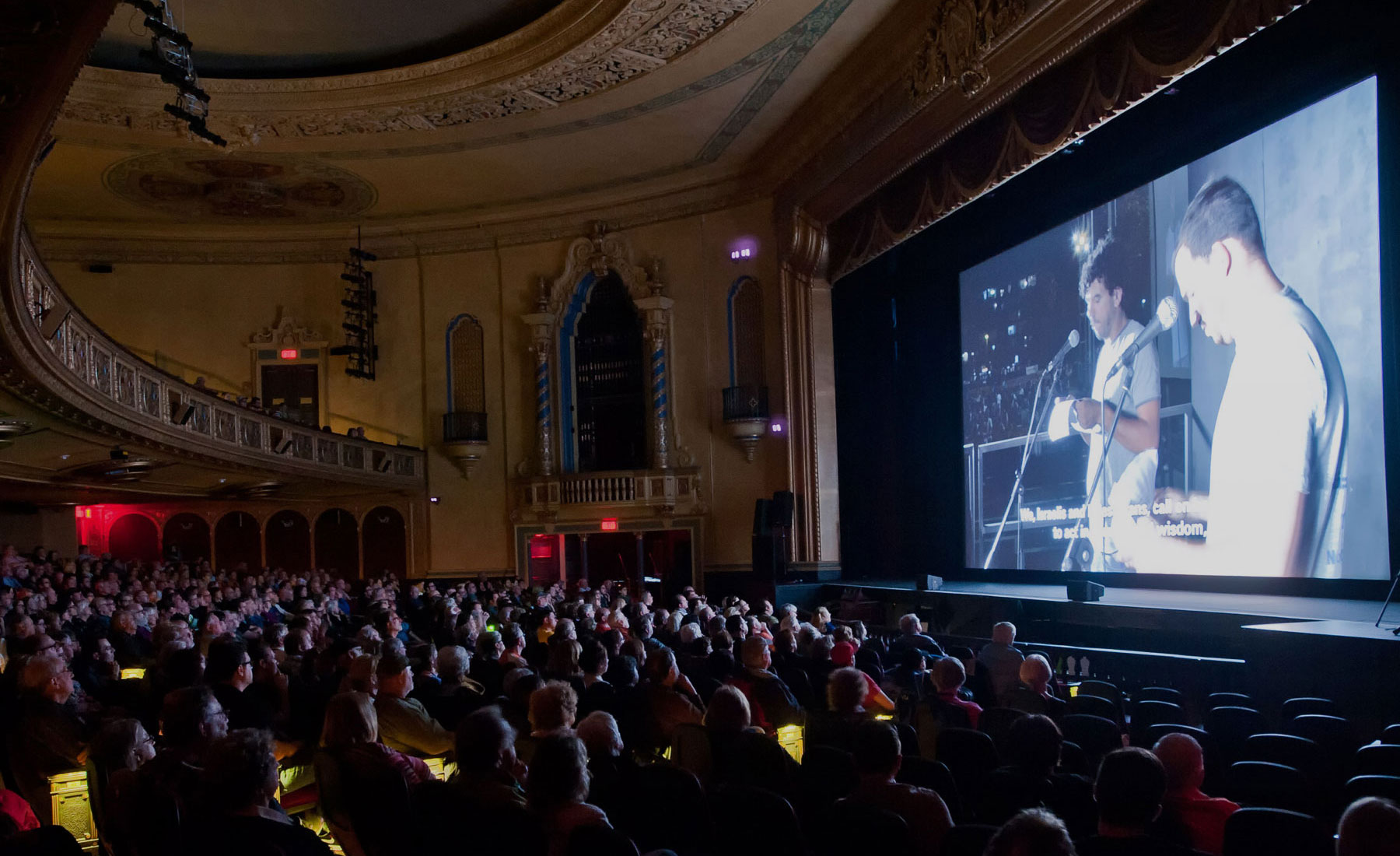
Ebertfest

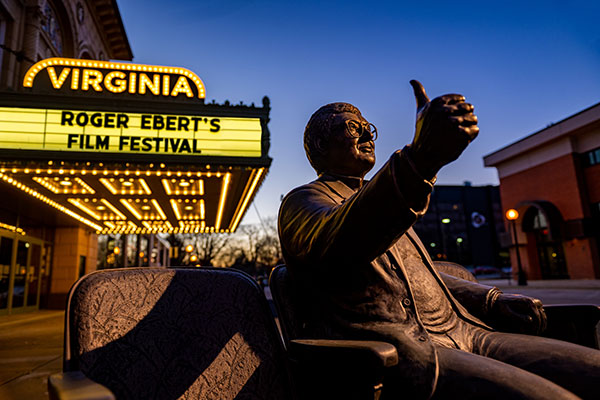
A diverse selection of films that generate empathy have been curated for the 23rd Annual Roger Ebert’s Film Festival, running April 19-22 at the Virginia Theatre in downtown Champaign. Ebertfest—co-founded and hosted by Chaz Ebert—will honor the 10th anniversary of her husband Roger Ebert’s death by screening films and bringing filmmaker guests who exemplify the theme of “Empathy at the Movies.”

Roger Ebert, a renowned film critic, University of Illinois journalism alumnus, and Urbana native, spoke often about the power of cinema and its ability to transform perspectives. Chaz said his guiding principle was empathy. 

“For me, the movies are like a machine that generates empathy,” said Roger Ebert. “If it’s a great movie, it lets you understand a little bit more about what it’s like to be a different gender, a different race, a different age, a different economic class, a different nationality, a different profession, different hopes, aspirations, dreams, and fears.” 

“Empathy can be generated through pathos and humor and by sharing communal experiences,” said Chaz. “This year in Roger’s memory we will gather together in what Roger has called the temple of cinema to reaffirm our connections to each other.”

Frank Oz
(Credit: Victoria Labalme)

Joining this year’s Ebertfest will be director Frank Oz, known for creating and performing many beloved characters on The Muppet Show and Sesame Street, bringing to life Yoda in the Star Wars series, and directing numerous films, from Little Shop of Horrors to What About Bob? to The Stepford Wives.

“We are eager to welcome this special guest whose work is the very embodiment of empathy,” said Chaz.  

In & Of Itself poster

Oz will accompany the screening of his film Derek DelGaudio’s In & Of Itself (2020), a biography that explores identity and illusion while the storyteller and magician attempts to answer, “Who am I?” The film originated as a play written and performed by DelGaudio and directed by Oz, which ran Off-Broadway for 72 weeks. Derek DelGaudio and Janet Pierson, director emeritus of SXSW Film Festival, will also be in attendance. 

THIS YEAR’S LINEUP ALSO INCLUDES THE FOLLOWING FILMS AND GUESTS:

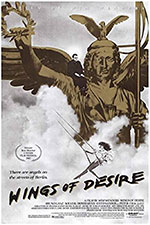
Wings of Desire

The German cinematic masterpiece Wings of Desire (1987) made director Wim Wenders’s name synonymous with film art. “You’re seduced into the spell of this movie,” wrote Roger Ebert in his original review. The film, which was shot in black and white and color, features Bruno Ganz as Damiel, an angel who is willing to give up his perch high over Berlin, his ability to hear thoughts, as well as his immortality to return to earth after falling in love with a trapeze artist. Created shortly before the fall of the Berlin Wall, Ebert wrote that “the film is like music or a landscape: It clears a space in my mind, and in that space I can consider questions. Some of them are asked in the film: ‘Why am I me and why not you? Why am I here and why not there? When did time begin and where does space end?’” Michael Barker, co-president of Sony Pictures Classics, will attend.

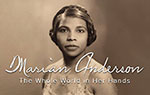
Marian Anderson

Directed by Emmy and Peabody Award-winner Rita Coburn, Marian Anderson: The Whole World in Her Hands (2022) explores the life of the African American singer and civil rights pioneer, who died in 1993 at the age of 96. The film highlights Anderson’s career, art, and legacy as a Black classical singer with a breathtaking and rare vocal range as well as her work to further civil rights. The film allows viewers to hear Anderson’s own voice and point of view through archival interview recordings, photographs, and personal correspondence with family and friends, including Martin Luther King Jr., Josephine Baker, and Langston Hughes. 

Director Rita Coburn and producer Brenda Robinson will attend. Following the screening will be a live performance by Viveca Richards, an opera soprano from the University of Illinois Lyric Theatre. 

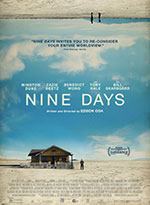
Nine Days poster

After a series of award-winning short films and music videos, Japanese Brazilian writer and director Edson Oda delivers a heartfelt vision on the meaning of life in his film directorial debut, Nine Days (2020). The ultra-original American fantasy drama that invites viewers to reconsider their worldview was a winner of the Waldo Salt Screenwriting Award in the U.S. Dramatic Competition. In the RogerEbert.com review, Oda was praised for centering the film around “the eternal issues of the human condition: What does it mean to be alive? How do we appreciate life while we are here? Is it even possible?” 

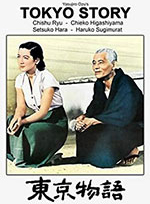
Tokyo Story

This year’s selection from the Ebertfest audience choice movie poll is Yasujiro Ozu’s Tokyo Story (1953). In Roger’s review of the film—which he called “one of the greatest films of all time”—he wrote, “Ozu is not only a great director but a great teacher, and after you know his films, a friend. With no other director do I feel affection for every single shot. …  It ennobles the cinema. It says, yes, a movie can help us make small steps against our imperfections.”

An expert on Yasujiro Ozu’s work (to be announced) will be in attendance.

Cabinet of Dr. Caligari

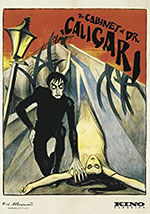
Continuing Ebertfest’s tradition of hosting a live music performance with a silent film, the Anvil Orchestra, based in Vermont, will accompany the German Expressionist silent horror film The Cabinet of Dr. Caligari (1920), directed by Robert Wiene. It depicts the story of an insane hypnotist who uses a somnambulist (a sleepwalker) to commit crimes. The Anvil Orchestra—fondly named after a misspoken introduction by Roger Ebert at the Alloy Orchestra’s first Ebertfest appearance—is comprised of two-thirds of the Alloy Orchestra, which has since disbanded. 

Additional films and guests will be announced in the coming weeks.

Passes to see all films with reserved seating are available to purchase online or at the Virginia Theatre box office, 203 W. Park Ave., Champaign, 217-356-9063. Individual movie tickets will go on sale on April 3. 

Ebertfest is sponsored by the University of Illinois College of Media and Chaz Ebert.

Note: Anyone interested in supporting the event as a festival sponsor may contact Molly Cornyn, the festival’s project coordinator, at mcornyn2@illinois.edu.

Richmond Studio to undergo $2M renovation to create state-of-the-art broadcast facility


Richmond Studio

Students in the College of Media will have access to a state-of-the-art broadcast studio and newsroom this fall after nearly $2 million in renovations are completed at the Richmond Studio.

Since 1999, the studio—connected to Campbell Hall, the home of Illinois Public Media—has served as the site for the college’s broadcast journalism courses. Three student broadcasts are currently produced at the studio for the University of Illinois public access TV channel UI7, including UI7 Live, Illini Sports Night, and Good Morning Illini.

The renovation project, which will begin in mid-March and is expected to reach substantial completion before the Fall 2023 semester begins, is made possible thanks to a gift from Richard and Leslie Frank. In 2020, the Franks gave the College of Media $7.5 million—the largest gift in college history—to establish the Richard and Leslie Frank Center for Leadership and Innovation in Media and to renovate Richmond Studio. This project is the first major overhaul of the building since it was erected in 1996, funded by a $2 million gift from Jack C. and Marjorie Laird Richmond.

“Through their enthusiastic support and generosity, Richard and Leslie Frank are ensuring our next generation of broadcast journalists will enter the profession ready to make an impact,” said Mira Sotirovic, associate professor, Karin and Folke Dovring Scholar in Propaganda, and head of the Department of Journalism. 

The renovation project includes a fully remodeled studio with a new control room. A new equipment storage and check-out room will be built, as well as a video and audio production room where students will be able to record podcasts. 

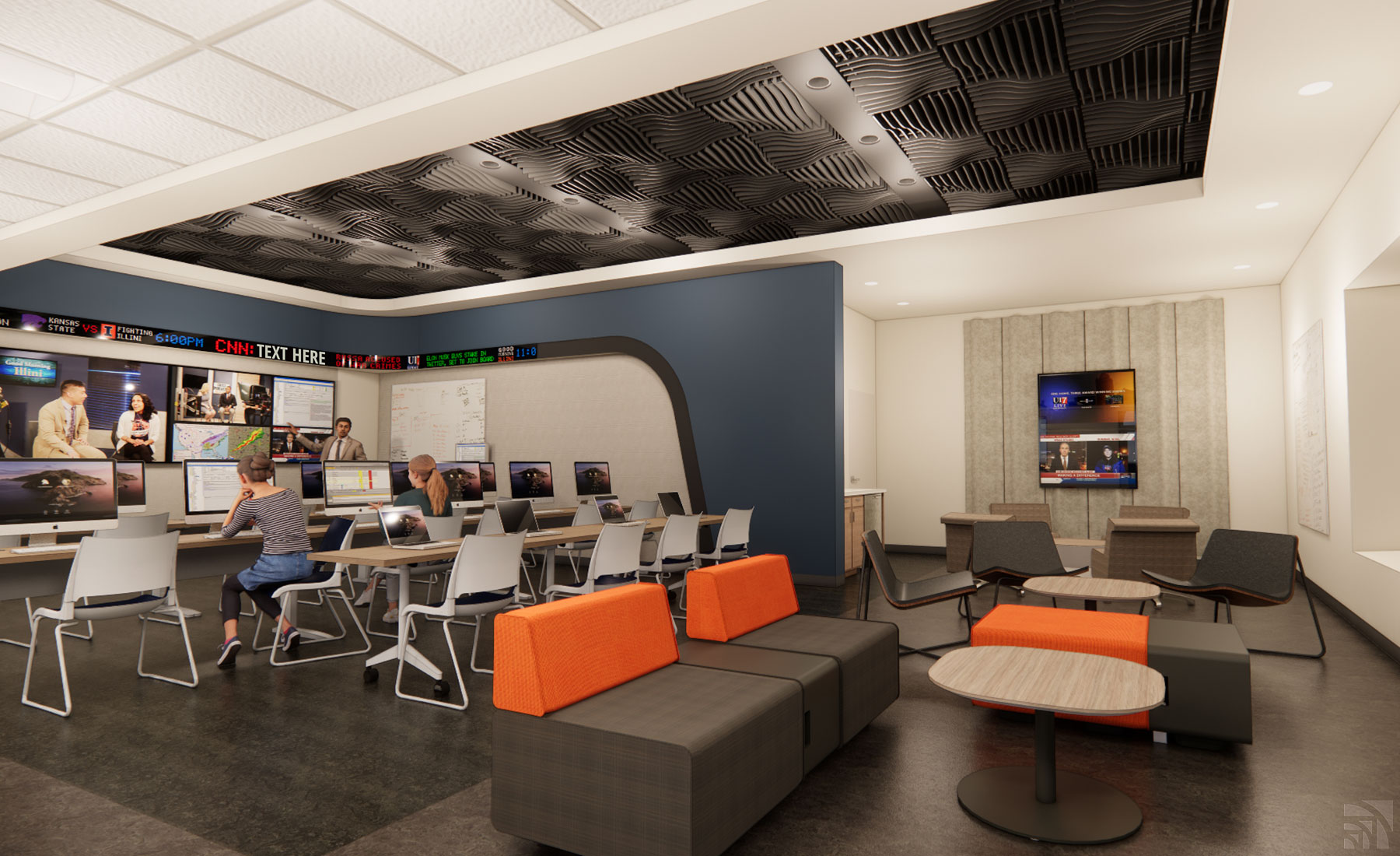
The existing classroom and computer lab located adjacent to the studio will become a collaborative room that serves not only as a class meeting space with a lab but also a newsroom and green room. A scrolling, LED news ticker will be installed around the perimeter of the newsroom and computer lab area. (Pictured above is a rendering of the newsroom and green room.)

Most of the current equipment—including studio cameras, lights, and the control systems—will be upgraded to more modern versions that newsrooms around the country are currently using, allowing students to learn best practices. 

“My commitment to the University of Illinois, and Leslie’s career and passion for journalism, inspired us to want to give back to the journalism program by creating a new, state-of-the art broadcast facility,” Rich Frank said. “We are really impressed with the program here and the people who are dedicated to making it one of the top in the country.”

“Shaping journalists starts at the university level,” said Leslie Frank. “We feel that the University of Illinois has a fantastic journalism program and think our contribution will only enhance it, giving students more advantages and opportunities to become successful in their future journalism careers.”  

Richmond Studio broadcast
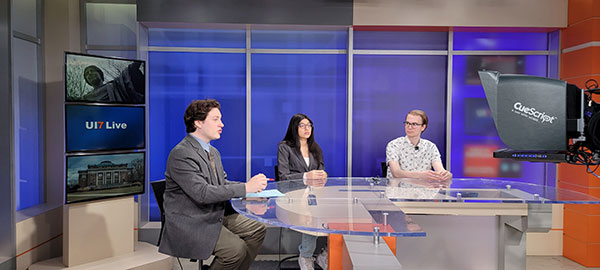
Students on the set of Richmond Studio broadcast an episode of UI7 Live. (Photo by Kenneth Erdey.)

Kenneth Erdey, instructor of journalism and technical coordinator for the Richmond Studio, says he’s excited to see the new opportunities the renovations will bring to students. 

He expects to see expanded televised programming, live reporting from various locations outside of the studio, and more breaking news coverage, which will be beneficial to students. 

“On-camera talent is going to get better because there’s going to be more opportunity for them to [be on-air],” Erdey said. “Newscasts will improve because there will be more opportunities to cover breaking news.”

Alison Davis, lecturer of journalism and Emmy-award winning documentarian, is thrilled about the revamped studio and increased access to experiential learning. 

“The renovated space will not only give students access to the latest technology but it will be a space for collaboration,” Davis said. “We hope students in all classes will use Richmond to further their creativity and journalism skills whether it is joining the UI7 Newsroom RSO, creating a podcast, anchoring a newscast, or producing their own TV show.”

Erdey, who has taught at the studio for 12 years, says his goal has always been to give students a sense of a real, working newsroom. 

“I want this building to be a working experience, but also allow students to make the mistakes they need to make before they get their job,” Erdey said. “The work students are doing here is not just college work, it’s [broadcast] television.” 

March 10 is the last day classes will be held at the studio before it’s closed for construction. However, students will continue reporting for the duration of the semester, making video stories to be uploaded to ui7newsroom.com. Live studio shows will be limited to one special per show. 

“The Department of Journalism is dedicated to preparing students for an industry that will continue to evolve with changes in technology,” Sotirovic added. “When Richmond Studio reopens, the new experiences it will offer will give students a distinct career advantage in today’s dynamic media environment.”

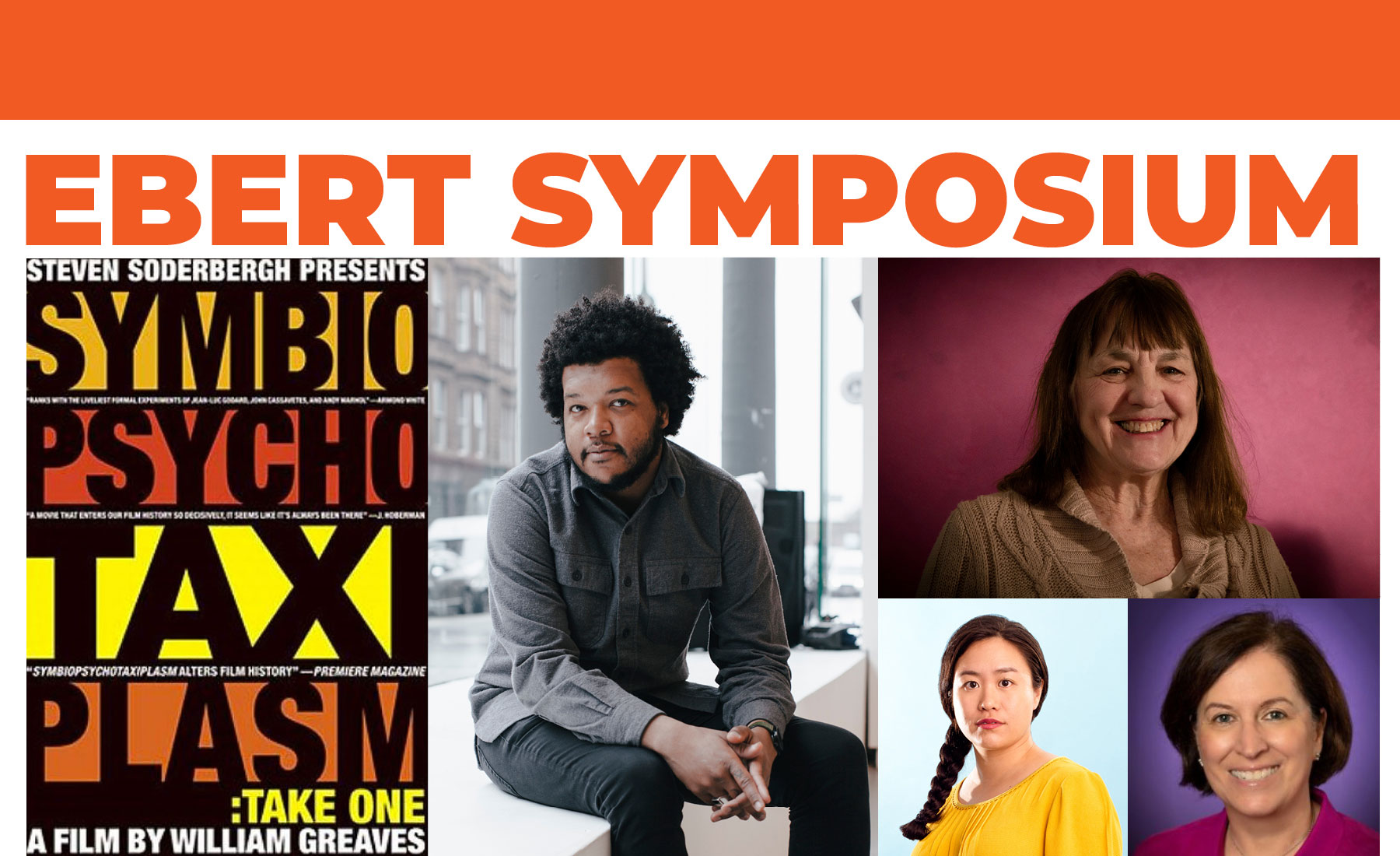
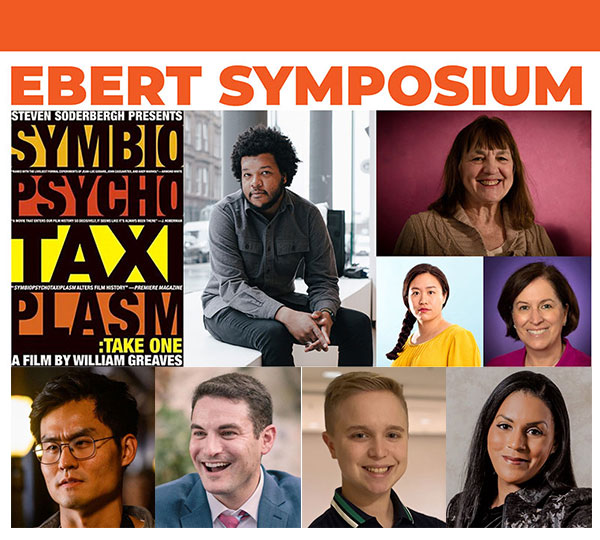
Ebert Symposium 2023 to address documentary, violence, and the media


Ebert Symposium 2023

This year’s Chaz and Roger Ebert Symposium will feature a film screening, keynote speaker, and two roundtable discussions that address the theme of “Documentary, Violence, and the Media.” The events, which are free and open to the public, are presented by the Roger Ebert Center for Film Studies.

Chaz Ebert’s beloved grandson, Joseph London Smith, was tragically and unintendedly the victim of gun violence in Atlanta, Georgia, in September 2022. In dedication to his memory, the Ebert Symposium will explore the power of cinema to mediate violence and ask: How does cinema intervene in this conversation? 

PROGRAM

TUESDAY, APRIL 18

7:30-9 p.m.
Knight Auditorium, Spurlock Museum, 600 S. Gregory, Urbana

Screening of Symbiopsychotaxiplasm: Take One
Symbiopsychotaxiplasm: Take One (1968) is an experimental documentary by Black Emmy award-winning filmmaker William Greaves that was selected by the Library of Congress for preservation in the National Film Registry in 2015. Ebert Symposium keynote speaker Amir George, artistic director of Kartemquin Films, selected the film and will share introductory remarks. Learn more.

WEDNESDAY, APRIL 19

9:30 a.m.-2:30 p.m.
Illini Room C, Illini Union, 1401 W. Green, Urbana

Keynote Speaker
9:30–10:45 a.m.
“To Be Radical”
Amir George, Artistic Director, Kartemquin Films, Chicago
Join us in person or register to join via Zoom.

Roundtable Discussion #1
11:30 a.m.–12:30 p.m.
“Cinema and Media Interventions into Violence”

Panelists: 

  • Rachel Kuo, Assistant Professor of Media & Cinema Studies, UIUC
  • Denise Zaccardi, Executive Director and Founder of CTVN, Community TV Network, Chicago 
  • Melita Garza, Associate Professor and Tom and June Netzel Sleeman Scholar in Business Journalism, UIUC
  • Moderated by Angela Aguayo, Associate Professor of Media & Cinema Studies, UIUC

Roundtable Discussion #2
1-2:30 p.m.
“Cinema and Violence in Challenging Times”

Panelists include the following Ebertfest 2023 filmmaker guests:

  • Edson Oda, director of Nine Days (2020)
  • Jason Michael Berman, producer of Nine Days and president of Mandalay Pictures
  • Max Libman, teenage founder and director of CU International Film Festival, Champaign-Urbana
  • Brenda Robinson, producer of Marian Anderson: The Whole World in Her Hands (2022)
  • Moderated by Jenny Oyallon-Koloski, Assistant Professor of Media & Cinema Studies, UIUC

KEYNOTE SPEAKER

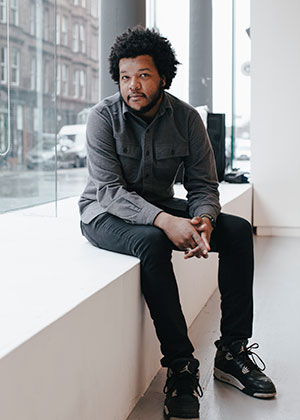
Amir George

Amir George, Artistic Director of Kartemquin Films

Amir George is an award-winning filmmaker and has served as a programmer at True/False Film Fest and Chicago International Film Festival. As an artist, George creates spiritual stories, juxtaposing sound and image into an experience of non-linear perception. George’s films have screened at institutions and film festivals including Schomburg Center for Research in Black Culture, Institute of Contemporary Arts, London, Anthology Film Archives, Glasgow School of Art, Museum of Contemporary Art Chicago, Ann Arbor Film Festival, Trinidad and Tobago International Film Festival, BlackStar Film Festival, and Camden International Film Festival, among others.

The Ebert Symposium began in 2018 and is named in part for the late film critic Roger Ebert. Ebert, who died in 2013, was an Urbana native, journalism alumnus, Pulitzer Prize-winning film critic for the Chicago Sun-Times, and founder of RogerEbert.com. His namesake film festival, known as Ebertfest, runs April 19-22 at the Virginia Theatre in downtown Champaign. 

PANELISTS

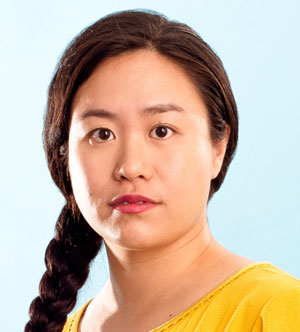
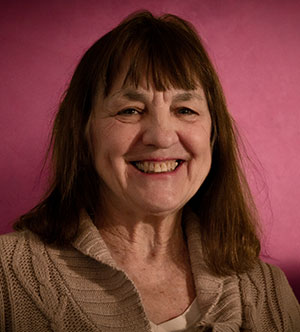
Rachel Kuo

Rachel Kuo, Assistant Professor of Media & Cinema Studies in the College of Media, University of Illinois Urbana-Champaign

Dr. Rachel Kuo writes, teaches, and researches race, social movements, and technology. Her current book manuscript, Movement Media: Racial Solidarities Across Platforms, brings together archival research and ethnographic fieldwork to examine historical and contemporary grassroots organizing and social movement media forms addressing state violence and U.S. democracy. Her new work examines transnational and intergenerational information systems in Asian diasporas and histories of mis- and disinformation. Her writing has been published in New Media & Society, Social Media and Society, Journal of Communication, Teen Vogue, Truth Out, and ACM Interactions. 

She is a founding member and current affiliate of the Center for Critical Race and Digital Studies and also a co-founder of the Asian American Feminist Collective. She is a co-editor of the anthology Black and Asian Feminist Solidarities with Haymarket Books and co-editor of the the book series Critical Race + Digital Studies at New York University Press. She is also a guest editor at the Asian American Writers’ Workshop, including the World Without Cages project. 

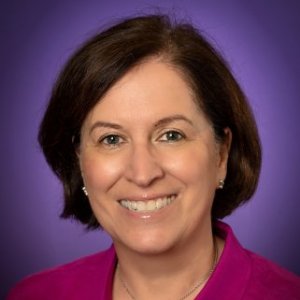
Denise Zaccardi

Denise Zaccardi, Executive director and founder of CTVN, Community TV Network, Chicago 

Denise Zaccardi, executive director and CTVN founder, holds a PhD in Communications from The Union Institute and wrote the nation’s first dissertation on media arts curriculum for low-income, minority youth. She earned an M.S. in Early Childhood Education from State College in Buffalo, and a B.A. in Psychology from the University of Dayton. She has participated as a media and education activist with a variety of local and national organizations. Dr. Zaccardi has received numerous awards for her contributions to the field, including the Christian Service Award from the University of Dayton, and the Service Recognition Award for Arts Educator from the Illinois Arts Alliance. Dr. Zaccardi has put together a team of seasoned artist/teachers carefully selected not only for their exceptional ability to engage and teach arts underserved youth; but to represent a broad range of vital skills and knowledge including psychology, marketing, organizational dynamics, writing, audio, editing, producing, directing, graphics, and animation.

Community TV Network (CTVN) is a non-profit company devoted to empowering youth with the resources and education they need to make digital media! Our network of artists, teachers, and alumni has been promoting the visions and voices of Chicago’s students for 49 years. CTVN promotes positive youth and community development with the overall goal of raising the educational success and economic viability of the neighborhoods in which young participants live and work. CTVN programs instill in our students the awareness, motivation, and tools they need to create positive futures for themselves and the people around them.

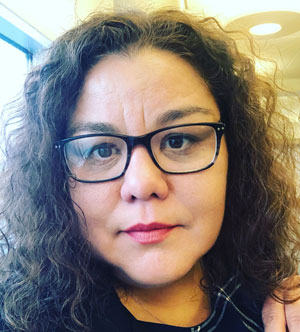
Melita Garza

Melita Garza, Associate Professor and Tom and June Netzel Sleeman Scholar in Business Journalism in the College of Media, University of Illinois Urbana-Champaign

Melita M. Garza is an associate professor and the Tom and June Netzel Sleeman Scholar in Business Journalism in the Department of Journalism. She is the 2022-2023 Chair of the Standing Committee on Research for the Association for Education in Journalism and Mass Communication. She was a fellow at the Donald W. Reynolds National Center for Business Journalism. Prior to getting her PhD, Melita M. Garza was an award-winning journalist, working at the Chicago Tribune, Bloomberg news, and the Los Angeles Times during a two-decade-long career.

She is an American journalism historian who studies news as an agent of democracy, specializing in English- and Spanish-language news, the immigrant press, and coverage of underrepresented groups. She is the lead editor of a forthcoming book that aims to re-envision the history of journalism. She is the author of They Came to Toil: Newspaper Representations of Mexicans and Immigrants in the Great Depression (Austin: University of Texas Press, 2018), which was a finalist for the Tankard Book Award, the Frank Luther Mot/ Kappa Tau Alpha Award, and the National Association of Chicana and Chicano Studies (NACCS) Tejas Fojo Award. Her research has also won awards from the American Journalism Historians Association (AJHA), and the Association for Education in Journalism and Mass Communication (AEJMC) divisions of: History, Minorities and Communication, and International Communication.

Angela Aguayo

MODERATOR: Angela Aguayo, Associate Professor of Media & Cinema Studies, UIUC

Angela Aguayo’s research is centered around documentary production and media studies, and her work creates connections between production, theory, and history. She was selected as a James W. Carey Faculty Fellow, for which she will work on a book project called Collective Matters, which examines how traditions in the humanities, health care, law, and education manifest through documentary in non-theatrical spaces, addressing the rituals of media producing, screening, and circulating that bind communities across time. Her project called the Illinois Community Media Project—which focuses on people making and circulating media that is most aligned with the interests of that community—received funding from campus’s inaugural Call to Action to Address Racism & Social Injustice Research Program. She has previously published Documentary Resistance: Social Change and Participatory Media (Oxford University Press), which explores a documentary’s capacity for social change.

Edson Oda

Edson Oda, Director

After a series of award-winning short films and music videos, Japanese Brazilian writer and director Edson Oda made his film directorial debut with Nine Days (2020). Based in Los Angeles, Oda is a BAFTA Breakthrough alum, a Sundance Screenwriters Lab alum, and a Latin Grammy-nominated director for best music video.


Jason Michael Berman

Jason Michael Berman, Producer, President of Mandalay Pictures

Jason Michael Berman, president of Mandalay Pictures, was named in the 2016 Variety Dealmakers Impact Report, and in Variety in 2011 as one of the Top Ten Producers to Watch.

Berman currently has AIR in release for Amazon and Skydance, directed by Ben Affleck, written by Alex Convery, and starring Matt Damon, Ben Affleck, Viola Davis, and Jason Bateman.

He recently produced Surrounded, directed by Anthony Mandler and starring Letitia Wright, Jamie Bell, and Michael K. William, awaiting release from MGM/Amazon. His other recent producing credits include Edson Oda’s Sundance award-winning film Nine Days; Olivier Megaton’s The Last Days of American Crime; Prentice Penny’s Uncorked; Cindy Chupack’s Otherhood; Clark Johnson’s Juanita; Jonathan Helpert’s IO; Gerard McMurray’s Burning Sands; Ryan Koo’s Amateur; Eli Craig’s Little Evil; and Nate Parker’s 2016 Sundance Film Festival Grand Jury and Audience Award-winning film The Birth of a Nation.

Berman is in development on new projects for Skydance, Netflix, Sony, Apple, and A24.

Prior to producing, Berman worked at the William Morris Agency, MGM Studios, and for writer/director Gary Ross. Berman is a member of the Academy of Motion Pictures Arts and Sciences, and the Producers Guild of America. He is a 2006 graduate of the University of Southern California, School of Cinematic Arts, where he has been an adjunct professor since 2013. Berman helped to develop and start the Catalyst program at the Sundance Institute which has now raised over $50M for the financing of award-winning independent narrative film and documentary projects. He is originally from Baltimore, Maryland.

Max Libman

Max Libman, CU International Film Festival Founder

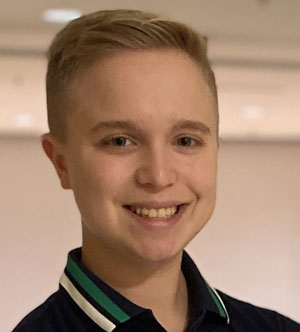
Max Libman is the teenage founder and director of the CU International Film Festival that debuted in October in Urbana and featured eight short films, one of which was produced by the Turner brothers. In his young career, Libman has also been honored for his screenwriting. 


Brenda Robinson

Brenda Robinson, Producer 

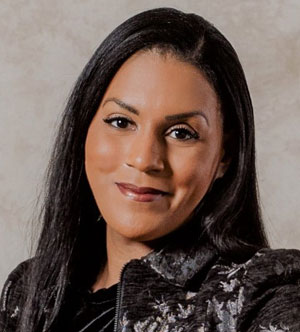
Brenda Robinson, producer and entertainment attorney, is involved with numerous film, television, and music projects. She is a producer of Marian Anderson: The Whole World in Her Hands (2022), and was a financier on the Academy Award-winning documentary Icarus as well as Won’t You Be My Neighbor and Step. Robinson is currently head of film finance and inclusion strategies for HiddenLight Productions, a global studio founded by Hillary Clinton, Sam Branson, and Chelsea Clinton. She is also a member of Impact Partners, which is dedicated to funding independent documentaries that focus on social issues.


Jenny Oyallon-Koloski

MODERATOR: Jenny Oyallon-Koloski, Assistant Professor of Media & Cinema Studies

Jenny Oyallon-Koloski is an assistant professor of Media & Cinema Studies at the University of Illinois Urbana–Champaign and a Certified Movement Analyst in Laban/Bartenieff Movement Studies. She serves as the movement analysis specialist for the Media Ecology Project (Mark Williams and John P. Bell, PIs, Dartmouth College) and is a faculty affiliate of the Eye Tracking / Physiology Lab in the College of Media at the University of Illinois. Her current book project argues for the storytelling power of figure movement and dance in musical cinema. She is also the director of the movement visualization (mv) lab and co-creator, in collaboration with Michael Junokas, of the mv tool, an embodied motion-capture research environment to study the manifestations of human movement in cinematic space.
 

Alumna Karen Petitte’s distinguished career advances gender equality in journalism


Karen Petitte

University of Illinois alumna Karen Lucas Petitte pursued a career in journalism at a time when barriers were common for women, and opportunities were few. But that didn’t stop the visionary trailblazer from building an illustrious career as an award-winning journalist—and helping to advance gender equality in journalism along the way. 

Petitte’s inspiration to become a journalist came from an unlikely source—the newspaper comic strip, Brenda Starr, Reporter. Petitte loved following the adventures of chic, newspaper reporter Brenda Starr, who traveled around the globe breaking stories (and, probably, just as many hearts).  

“She was quite glamorous, and I think at some point she met some dashing guy with a patch over his eye, and I thought, ‘Oh, I want to do that. That sounds great,’” Petitte said.  

Petitte, who earned two journalism degrees at Illinois (BS ’63, MS ’67), would eventually become a newspaper reporter like the comic book heroine. But it’s the comic’s creator, Dale Messick, whom she would truly come to emulate.

Dalia Messick, who used the pseudonym Dale Messick to avoid gender bias, was a rarity in those days as a female cartoonist. Like Messick, Petitte would forge her own path through a male-dominant field, opening doors for more women. 

After graduation, Petitte worked briefly at the Chicago Tribune and then joined the Chicago Daily News in 1968, assigned to an education beat. Originally, she had applied for an overnight reporter shift at the Chicago Daily News but was told it was “too dangerous” for women.

Although education was traditionally considered a “woman’s beat,” she was happy for the opportunity to break into the newsroom. In 1973, Petitte and a colleague won first prize from the National Council for the Advancement of Education Writing for an investigative piece on financial misconduct at Malcolm X College in Chicago. 

“It was kind of inspiring to be able to report on some of those activities, trying to bring to light things that many people would just as soon have kept in the dark,” Petitte said. 

After an initial focus on education, and later, consumer affairs, Petitte would go on to cover a variety of news stories including disasters, fires, and gender equality issues. She covered a protest at a local Chicago restaurant that had a men’s-only bar area and wrote about the discrepancies in men’s and women’s salaries. 

Eventually, Petitte was offered a position as assistant city editor at the Chicago Daily News—the first woman to ever be considered—and although she preferred reporting, she knew she couldn’t refuse.

“I didn’t really want to be an assistant city editor at the time; I like to report. But I figured, maybe I better do this, because if we [as women] keep asking for these jobs, and then we don’t take them, they’re not going to take us seriously,” Petitte said.

In 1979, Petitte took a brief detour from journalism and tried government. She spent over three years working as Chicago’s consumer affairs commissioner under Mayor Jane Byrne—the first woman to be elected mayor of a major city in the United States. That appointment enabled Petitte to help enforce consumer regulations as opposed to writing about them. 

When Byrne’s term ended, Petitte considered going into public relations but ultimately decided to return to journalism, this time entering the magazine field. Petitte worked as editor of Consumers Digest and then Modern Healthcare and Modern Physician, published by Chicago-based media company, Crain Communications. Petitte stayed with Crain Communications for 16 years before retiring in 2001. 

Petitte’s 40-plus-year journalism career is comprised of prestigious honors, including the first female president of the Chicago Newspaper Guild, an inductee into the Chicago Journalism Hall of Fame, and among the first women to serve as editor-in-chief of The Daily Illini from 1962 to 1963. 

Petitte, who was inducted into the Illini Media Hall of Fame in 2007, has fond memories of her time at the student newspaper, including working alongside the late film critic Roger Ebert (BS ’64, journalism), whom she recalls as “quite a character” and a “very smart, capable, witty guy.” And because she worked evenings at The Daily Illini, she was provided a key to get into her dorm room after the University’s curfew for women—a perk Petitte valued, knowing she had the freedom to choose her own schedule. 

In the latter part of her career, Petitte was able to mentor younger writers, sharing the skills she’d learned over her many years of reporting. She said that helping young people move along in their career was something she enjoyed more than she expected. 

Ten years ago, Petitte found another way to bring along the next generation of journalists by creating the Karen Lucas Petitte Endowed Scholarship in Journalism.

“It just seemed to me a good way to pay back the college for the education that I received, and the knowledge that allowed me to go on and build a career that was very satisfying and rewarding and fun,” Petitte said.

The endowed scholarship, created in 2003, is based on academic merit and financial need, and has created an impact and connection with students that Petitte finds extremely rewarding.

Petitte has met a few of the scholarship winners and has received many thank-you letters—reminders that she’s still helping to pave the way for future journalists, even in her retirement. 

Petitte said she has seen a gradual shift over the years, with more opportunities available for women in journalism. While she’s hesitant to take too much credit for that progress, she is grateful to have had any impact at all.

“It’s a good feeling to know that you helped change some of the patterns, and that there’s some women who came behind you who have some more opportunity,” Petitte said. “I think that’s what it’s all about.”  

JR Reed joins College of Media Office of Advancement


JR Reed
(Photo by Isabella Pennebaker, photography intern.)

JR Reed considers himself a lifelong learner who enjoys meeting new people and exploring new places—just a few of the many qualities that will serve him well in his new role as assistant director of advancement at the College of Media.

Reed, who officially began in January, is bringing a wealth of experience and a variety of interests, as well as a lot of drive and ambition, to the fundraising position.

For Deanne Johnson, assistant dean for advancement at the College of Media, those were some of the key reasons she felt Reed would be a great addition to the team. 

“His compassion for others and positive outlook on life were obvious from our first meeting,” Johnson said. “He brings a diverse set of skills to the position, and we are fortunate to have him on our Advancement team and in the College of Media.”

Reed said the major gift officer role initially appealed to him because he felt it offered the ability to connect with alumni and donors, hear their stories, and help them find ways to support the college. He knew the job would be a perfect match after meeting with members of the College of Media.  

“Not only did the job description match [my skills and interests] but I really connected with the team here. Everyone I’ve met has been friendly and welcoming, so it just felt right.” he said.  

He recognizes the importance of media and the role it plays in various aspects of today’s world—media is “very cutting-edge, always adapting, and impactful to people’s lives.”

A native of Tolono, Illinois, Reed grew up an Illini fan, frequently attending Illinois football and basketball games. 

“The University was always a big part of my life growing up. I was born and bred orange and blue,” he said. “It makes sense my professional trajectory would bring me back to the area, working for the University.” 

The career path leading Reed to Illinois has been a winding one which includes culinary school, a bachelor’s in business administration from Robert Morris University in Chicago, an infantry squad leader in the U.S. Army, a barber’s license, and an MBA from California Coast University. Most recently, he worked as a membership and marketing supervisor at Costco Wholesale in Champaign. Reed believes his vast experiences have prepared him for the role he’s in today.

Reed says the most valuable lesson he’s learned working at Costco and serving in the U.S. Army was the importance of taking care of people and finding solutions—whether it was soldiers, customers, or the 50-plus employees he managed. He feels it will transfer well to his advancement position.

Reed has also worked at two famous downtown Chicago attractions including the Skydeck at Willis Tower and the Chicago River Boat Architecture Tours. These experiences, coupled with organizing off-site networking events for Costco, has helped to foster his event-planning skills, which he will use in his new position as he supports Chicago-based, alumni-coordinated events. 

He anticipates his first year to be full of learning experiences, and he’s looking forward to integrating into the advancement team and engaging with alumni and donors. 

“Maybe it’s a scholarship or a deferred gift—everybody is going to have a different story and something different they want to support. That’s where I come in, as a liaison, to assure their needs are met to support the University of Illinois and the College of Media,” Reed said. 

“Perhaps the most fulfilling part of the job, and a component I will enjoy the most, is the positive impact on the lives and futures of students, faculty, and staff,” he added. “Each generous gift to the College of Media has the potential to positively transform the academic career of our students. Only rarely do we have the ability and opportunity to make such impacts, and I’m privileged to say I now have the potential to do so.”

Advertising alum Mike Wychocki credits college leadership and faculty for career inspirations


Mike Wychocki with advertising students
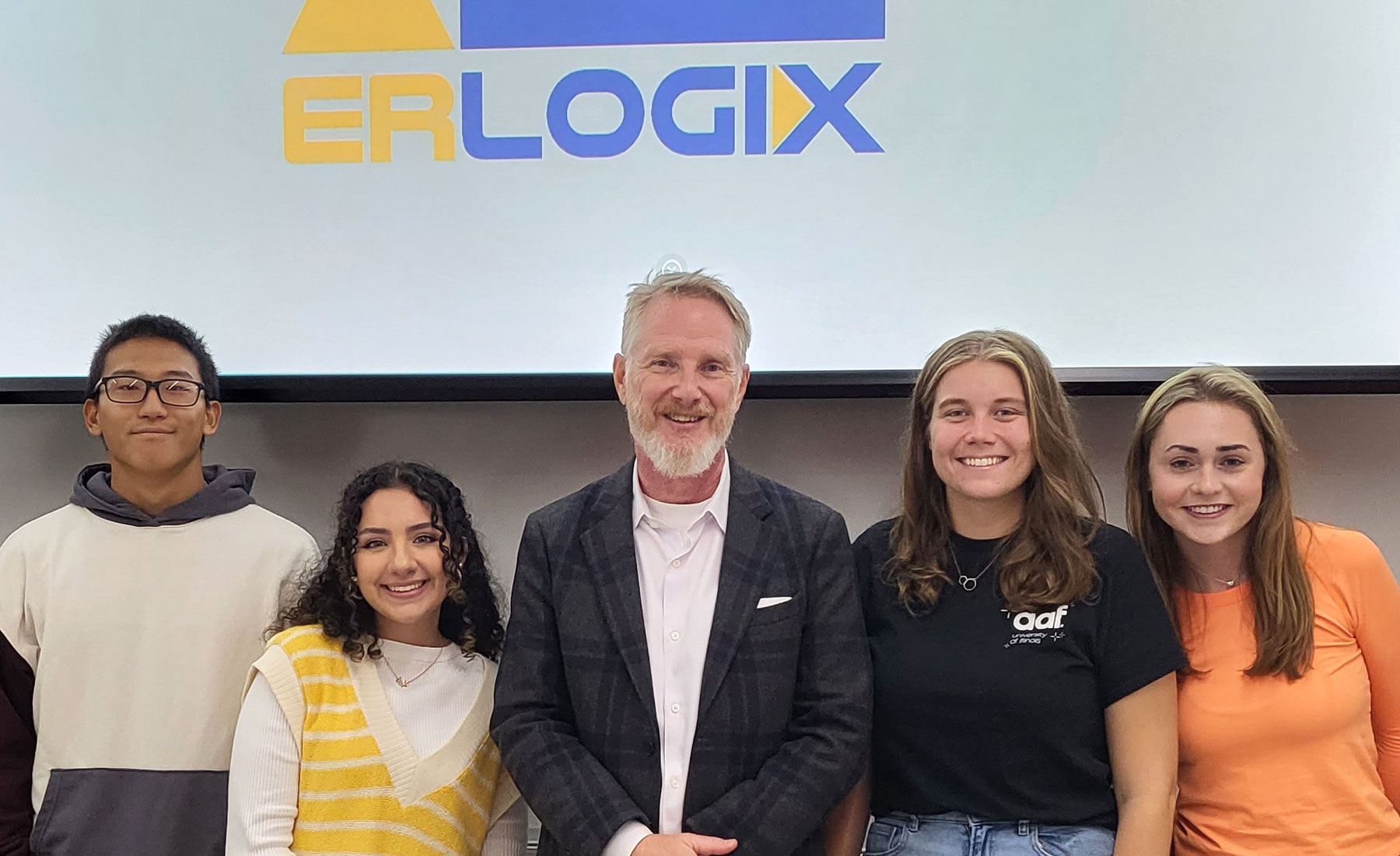
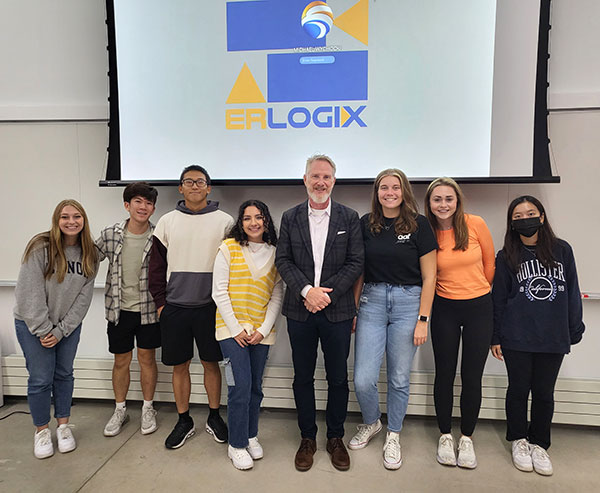
In Fall 2022, Mike Wychocki (center) was invited back to campus by the College of Media to explain to students in the American Advertising Federation RSO how he developed the new branding and marketing campaigns for EagleRail.

Since Mike Wychocki (BS ’83, advertising) graduated from the University of Illinois College of Media nearly 40 years ago, he has helped build and sell two advertising/marketing agencies, traveled around the world, and become Chief Marketing Officer of a global container-shipping transportation company. 

In all that time, Wychocki has never forgotten a certain College of Media associate dean and a professor, both of whom played a vital role in his education and professional success.  

“One of the things that keeps me connected to the University of Illinois and the College of Media is, at the time, we had a Dean of Students named William Alfeld. He helped me get across the finish line,” Wychocki said. “I think if it weren’t for Dean Alfeld, I probably wouldn’t have graduated.

“Dean Alfeld was one of those kind gentlemen who had a big heart. He would always help me figure something out,” Wychocki said of the late Alfeld, who served as associate dean at the college from 1962 to 1992.

Wychocki, a first-generation college student from the south side of Chicago, was unfamiliar with the collegiate lifestyle and overwhelmed upon his arrival. 

He initially struggled with academics and didn’t care for the large lecture-type classes held in huge auditoriums. Thankfully, Alfeld helped him navigate the challenge of introductory courses, and helped identify the strengths and talents that enabled him to thrive in the major.

Mike Wychocki

Wychocki also recalls an advertising professor who had a profound impact on his career—the late Gordon White, who Wychocki describes as “the second most influential person” he encountered as a student on campus. White, who taught classes in advertising creative strategy, also earned his MS and PhD degrees in the college. 

“[Professor White] taught me a lot and was very supportive of me. He gave me the confidence to know that I was a good storyteller. And I believe that all advertising starts with a good story,” he said. 

“Taking several journalism classes also helped and Professor White explaining how to craft and express a strong message definitely kept me inspired in my career over the years,” Wychocki added. “Plus, Professor White was an actual Mad Men Creative Director at BBDO on Madison Avenue in NYC in the 1960s and he taught us how the U.S. ad market transited from long-format ads in the 1950s to short, clever, and pithy ads just like Don Draper reminded us 30 years later.”

Wychocki also has fond memories of his time working at WILL-TV as a production assistant, production manager, and assistant producer. He said engaging in hands-on learning at WILL was a pivotal decision that helped guide him to choose a path in marketing and advertising.

The advertising education he received at Illinois has enabled him to create numerous career opportunities, including his current role as CMO of EagleRail. About seven years ago, Wychocki started out as a freelance marketing consultant for EagleRail, a global transportation solution that automates short-haul container shuttling between ports and intermodal facilities. 

Wychocki describes the company concept as “doing with a 60,000-pound box what Amazon warehouses do with a 60-pound box. Robotically lift it, shuttle it, and set it back down in the right spot.” He developed that elevator pitch seven years ago, and still uses it today.

After just a few months of joining the company, Wychocki purchased majority interest of EagleRail from the company’s inventor and took the lead as Chairman and Chief Executive Officer. More recently, he decided to focus on the marketing and sales side of the business and hired his own replacement.

“I always knew my job here was to sell this concept—create this story from the whole cloth. I recently hired my own replacement with international operational and global finance experience and gave myself the title of Chief Marketing Officer,” he said. 

No matter how far his career has taken him away from the University of Illinois campus, he will always recall the unique places and traditions that students still enjoy today, such has hanging out on the Quad and “geeking out” to the Marching Illini band perform at sporting events.

If he had any career advice to give current advertising students, Wychocki says it would be to work hard to create, cultivate, and value professional relationships. While a good strategy and creative execution are important, nothing helps you succeed long-term like creating a personal connection with the people you’re working with, whether it’s a client or a colleague. 

“I’m a huge believer in positive relationships as currency. I think it is one of the keys to success,” he said. “You have three elements in life that will determine the level you achieve professionally: how smart you are, how hard you work, and how well you work with other people. If you’ve got two out of three, you’ll be a success…and working well with others is the lowest investment and highest return of the three.”

Wychocki also recommends being yourself and understanding your own strengths first. 

“If you know what your brand is and know what your strengths are, then you’ll know how to position yourself either for jobs or accounts or freelance opportunities that are right for you,” he said. “Be yourself and find out what your internal brand is. If you want to figure out how to create someone else’s brand, first you’ve got to figure out your brand, and then you’ll be in the best position to succeed.”

New journalism master’s degree track focusing on science and technology receives campus funding

MS Journalism in science and technology

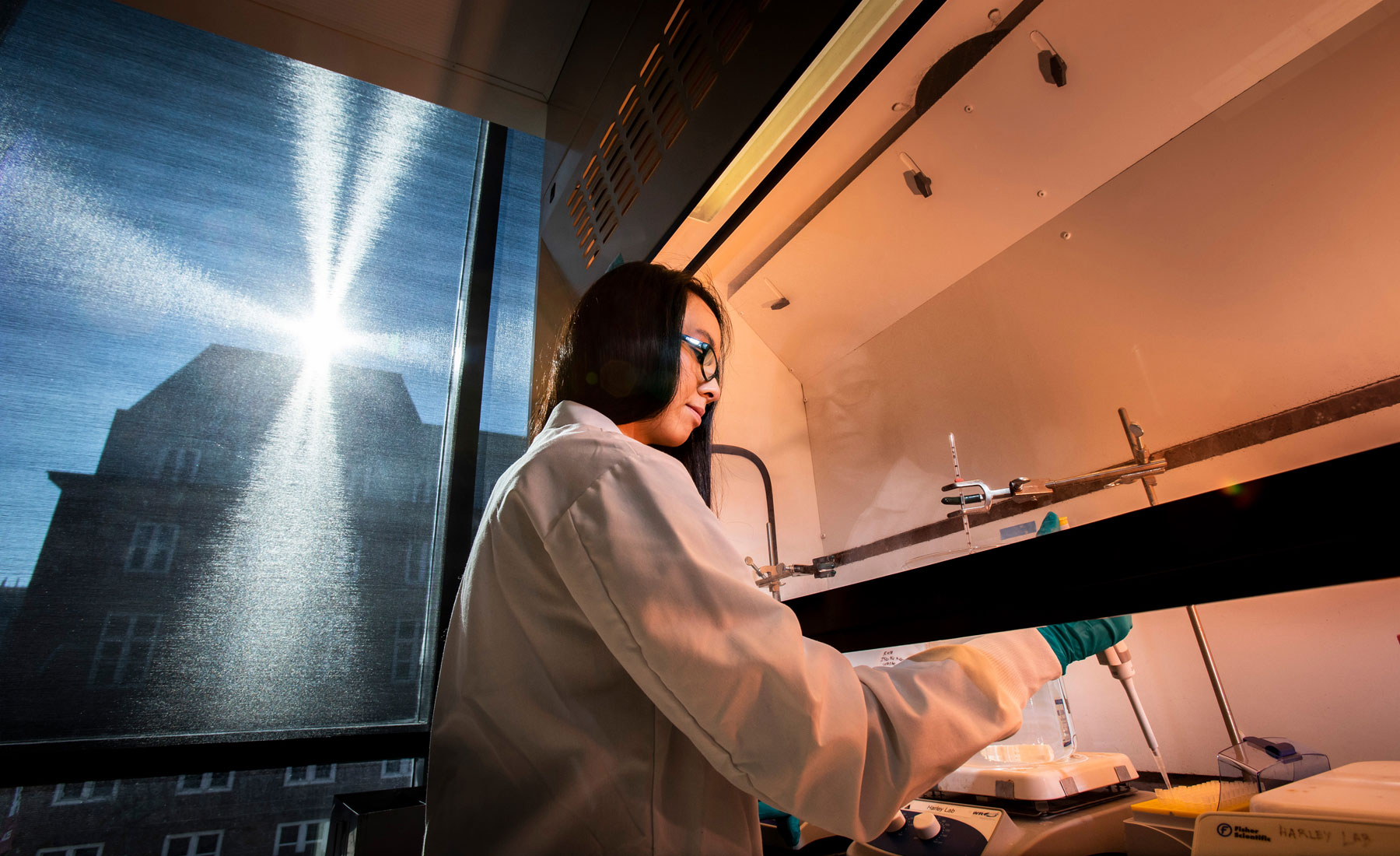
With a significant need for professionals to communicate science, discoveries, and innovations to the general public, a flexible hybrid/online program—with a focus on science and technology—will be offered through the journalism master’s degree beginning Fall 2023.

Students can earn the Master of Science in Journalism degree with a focus on science and technology journalism entirely online in as few as two semesters full-time or can tailor a part-time schedule over additional semesters. Students also may opt to take courses that “stack” to a professional credential, and those courses can later be applied to a degree. 

The new program is a collaboration between the College of Media and the Carl R. Woese Institute for Genomic Biology and was one of 10 projects selected this year to be funded by campus’s Investment for Growth program, to enhance the visibility and impact of the University of Illinois. 

“The Department of Journalism is proud to expand our curricula to train current and future journalists how to communicate important scientific and technical information to the general public,” said Mira Sotirovic, head of the Department of Journalism and associate professor and Karin and Folke Dovring Scholar in Propaganda. “We have seen a growing interest in, and a growing need for, science communication and are thrilled to receive Investment for Growth funding to begin meeting the demand.”

The new curricula will also offer a science and technology communication certificate for undergraduates, and the online 400-level courses in this track will expand paths to degree completion for undergraduates.

“Scientific research and innovation are present in our daily lives, in seen and unseen ways,” said Claudia Lutz, outreach manager at the Institute for Genomic Biology. “As the last few years have reminded us, this is particularly true of the field of genomics, which intersects with almost every aspect of both life sciences and society. We are excited to help give future science journalists an inside look at how science is done and a broader awareness of its impact.”

The timing of this program coincides with needs voiced by the science communication industry for such training, especially since the COVID-19 pandemic, but also to report on critical stories of our time including climate change, nuclear and chemical warfare, and health and wellness. For example, Scientific American published “How the Pandemic Remade Science Journalism,” (2022), NiemanLab reported on “Reporting That Hits Home: Covering Science for Local Audiences” (2022), and the Proceedings of the National Academy of Sciences covered “Science Audiences, Misinformation, and Fake News” (2019). 

The online master’s program and individual course modules are ideal for journalists and prospective journalists who want to improve and specialize in science writing or to gain a competitive advantage in the field; scientists and their academic colleagues who wish to be more effective in communicating to lay audiences; and communications professionals who work for nonprofits, government agencies, or science- or technology-focused corporations who are interested in boosting their skills and understanding.

Courses will cover writing science stories in plain English; the basics of data journalism, including building databases and analyzing data; visualization in newsrooms; humanizing data through video storytelling and humanizing science communication by harnessing virtual reality; and more. Students will also examine the science of genomics and its applications to environment, health, and technology through course modules. See a sample course sequence for the master’s degree and sample course modules.

As part of the preparation for enrolling students next fall, the Department of Journalism is hiring a new professor in science, technology, data, or digital journalism to supplement the course offerings. 

“They will have an important role in the new concentration,” Sotirovic said. “The new faculty member will teach courses in science journalism, as well as some combination of courses in data journalism, social media analytics, and other courses based on their own expertise and interests.” 

Additionally, the Institute for Genomic Biology is hiring a postdoctoral fellow in science communications curriculum coordination. This position will help develop course materials and oversee experiential learning for students in the program.

Learn more about the program and the application details. The deadline to apply is March 3, 2023. 

For more information about this program, please email Mira Sotirovic.

—Holly Rushakoff

Media Literacy Theme 2022-23

reading news on laptop

During the 2022-23 academic year, the College of Media will explore a theme of media literacy to build community and connections for students, faculty, and staff. The idea for an annual, opt-in theme emerged during the College of Media strategic planning process in 2020, and selection of a theme is voted on by faculty and staff each spring.

Josh Heuman, a teaching assistant professor in the Department of Media & Cinema Studies and the Department of Journalism, was appointed by College of Media Dean Tracy Sulkin as a Dean’s Fellow. He will work with department and college leadership teams to facilitate activities around media literacy this academic year. Learn more.

Media Literacy Initiatives in the College of Media

Initiative for Media Education Inquiry and Action (IMEDIA)
The Initiative for Media Education Inquiry and Action was formed by the College of Media and the College of Education, along with the cofounder of the Illinois Media Literacy Coalition, to help fill educators’ needs for media literacy training and curriculum development. In Summer 2022, IMEDIA held a media literacy workshop for public school educators. Learn more. 

Political Advertising Literacy Research Group
The Political Advertising Literacy Research Group includes researchers in the University of Illinois College of Media and at the University of Tennessee. The researchers are investigating how much U.S. voters know about political advertising, called political advertising literacy, and improve their knowledge to effectively cope with misleading political advertising. Their research was featured in Forbes in September 2022. 

Media Matters eText
This eText aims to empower readers with increased media literacy, or the ability to access, analyze, evaluate, create, and communicate using a variety of media. Anyone with a University of Illinois netID can view this multimedia-rich, online textbook. The book is authored by College of Media faculty Amanda Ciafone, associate professor of media and cinema studies; Stephanie Craft, professor of journalism and associate dean for academic affairs; and Michelle Nelson, professor of advertising. 

Upcoming Events

More details to come.

Past Events

National Media Literacy Week
October 24-28, 2022
Learn more. | View resources.

Defining and Measuring News Literacy
September 21, 2022
As part of the Center for Advanced Study’s Initiative on Conspiracy, Misinformation, and the Infodemic, Stephanie Craft, professor of journalism and associate dean for academic affairs, presented a talk on “Defining and Measuring News Literacy.” 

About the presentation: 
The rapid spread of misinformation during the COVID-19 pandemic has increased calls for news literacy to help reduce endorsement of misinformation, conspiracy theories, and other falsehoods. Recent research showing that individuals with higher levels of news literacy are more likely to reject COVID-19 misinformation and conspiratorial thinking suggests that improving news literacy could be part of a strategy to equip individuals to reject health misinformation. However, varied approaches will be necessary to engage with groups that differ in political orientation, race, age and news consumption habits.

DEV College of Media
119 Gregory Hall
810 S. Wright St.
Urbana, IL 61801
217-333-2350