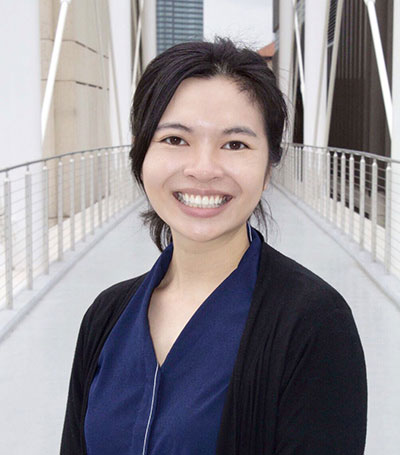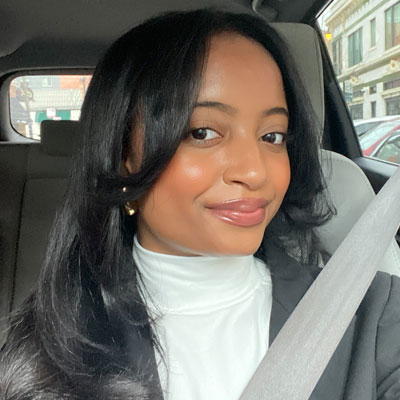
Rheanna Lewis

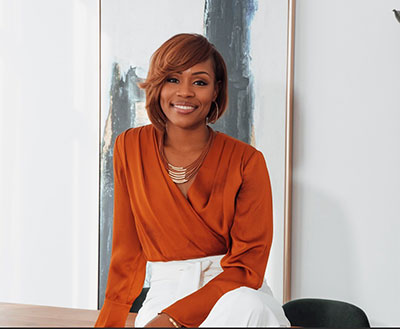
Get to know some of our College of Media students! Rheanna Lewis is a Class of 2026 journalism major. 

Rheanna Lewis

Why did you choose journalism as a major?
As a kid I always loved storytelling. Although I wasn’t thinking about journalism back then, I enjoyed telling stories and being on camera. My mom bought me a camera when I was younger to make video diaries, so I found myself talking to the camera, kind of acting like a vlogger. It wasn’t until high school that I realized that journalism might be the career for me after taking a newspaper class. My teacher for the class inspired me to tell and write stories; it was almost like an art. By senior year it was time to apply to colleges and journalism felt like the right choice. Although I wasn’t sure what kind of journalism I wanted to focus on, I knew the field was right for me.

Have you discovered what kind of journalism you want to focus on?
One of the things I like about journalism is how broad the field is. However, I come from a sports-loving family, and as a result, I am interested in sports journalism. While I don’t know specifically what I would like to do in sports journalism, I do see myself writing game recaps, broadcasting it on television, or taking pictures on the field.

Are you currently involved in any journalism programs or internships?
I am currently taking JOUR 400 for Illini Sports Night. I’m a reporter for the show and I take videos of games, interview players, and get to be a part of production. I think the class will help me narrow down what it is I want to do in sports reporting exactly. I’m also a part of an internship called “The Girls Club,” which is a media company that uplifts women who like to watch, play, and report on sports. From what I’ve seen in the field, it’s very male heavy. I don’t see many women involved in reporting games, especially women of color. So the company helps women break into the industry. Currently, I’m a reporter for their social media so I create content for their platform. It’s great getting to meet women who have the same interests as me, and being able to help other people break into the industry.

As a sophomore transfer student, how has your transition been?
Before coming to Illinois, I attended a university on the west coast for my freshman year. I was intrigued and invested in the west coast, and loved how diverse the community was. But because of a lack of journalism activities outside of school, I decided to transfer to the College of Media at the University of Illinois because of the number of opportunities it has for students. If you like television and broadcast journalism, you have classes at Richmond Studio; if print is more your style you have The Daily Illini (the student-run newspaper); and if you enjoy sports media there’s Fighting Illini Productions! I’ve been here almost a whole school year and I’m truly happy with my choice. I feel like I belong here. The school has a better environment and also more people with so many different backgrounds. You’d think that a school in the middle of a cornfield wouldn’t have as many opportunities for journalism, and such a diverse population, but you’d be wrong.

What are your career goals post-graduation?
I’ve had this goal on my vision board since I was 11, but my dream is to host my own talk show. I don’t know if I want the show to be more sports-focused or something like the late-night TV show. In my mind I picture my own show with me hosting and talking with all these famous guests. I just love conversing and getting to know people, so getting to just talk with these interesting people, it’s just a dream of mine. 

I would also love to work in more digital media spaces focused on sports after graduation! I love sports and I feel comfortable in this field and hope to mix my skills with digital media and sports. I’m not sure what exact job or position I’d want to do, but I’d love for it to have both sports and digital content.

How does your cultural background play into your role as a journalist?
Like I said earlier, you don’t see a lot of people like me in this field. This is why I enjoy getting to talk to people with the same or similar backgrounds. It makes me feel like I can be myself and implement that in the stories I tell and the questions I ask. A big reason why I came here was following [Illinois journalism alumna] Taylor Rooks, who does Thursday Night Football for Prime and she is also a host for Bleacher Report. She’s an alumna from the College of Media and she inspired me to do what it is I want to do. It makes me think that I can rise to a position like hers and be the Taylor Rooks for someone who will be in my position one day.

—Interview by Nathan Gonzalez, New Voices Intern
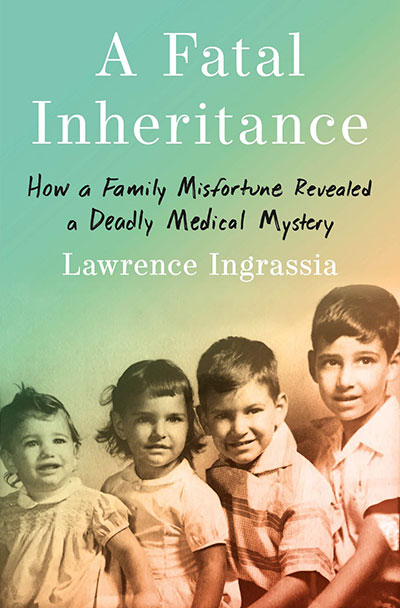
Journalism alum Lawrence Ingrassia weaves personal loss with scientific discoveries in second book

Lawrence Ingrassia (BS ’74, journalism) has written a new book, A Fatal Inheritance: How a Family Misfortune Revealed a Deadly Medical Mystery.

A Fatal Inheritance, which will be available on May 14, 2024, narrates the tale of a team of dedicated researchers who solved the medical mystery behind seemingly unrelated cancers devastating his and other families. 

The book has been described as “a compelling personal chronicle of tragedy and triumph.”

Ingrassia is a former business and economics editor and deputy managing editor at the New York Times, having previously spent 25 years at the Wall Street Journal, as Boston bureau chief, London bureau chief, money and investing editor, and assistant managing editor. 

He also served as managing editor of the Los Angeles Times. The coverage he directed won five Pulitzer Prizes as well as Gerald Loeb Awards and George Polk Awards. 

His first book, Billion Dollar Brand Club, chronicles the rise of popular direct-to-consumer e-commerce brands and was shortlisted for several best business book awards for 2020. 

Ingrassia book

College of Media collaborates with University, community partners to offer local children access to new opportunities in education, technology


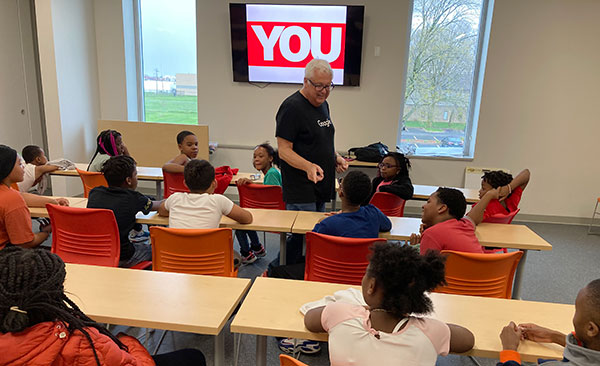
Steve Hall with Boys & Girls Club
Steve Hall, senior lecturer in advertising, leads Boys & Girls Club students through a workshop on “Advertising for Good.” (Photos by Paige Duncan.)

The College of Media is collaborating with University of Illinois and community partners to present educational workshops to local children this spring as part of a new public engagement effort.

The collaboration between the College of Media and the Center for Social and Behavioral Science focuses on creating hands-on educational content appropriate for 3rd– and 4th-grade students in the Don Moyer Boys & Girls Club of Champaign, which is housed at the Martens Center in Champaign. 

“One of the College of Media’s priorities is to enhance our activities in public engagement and access,” said Jason P. Chambers, associate dean for diversity, equity, and inclusion, and professor of advertising. “Faculty and staff were eager to sign up to share their expertise in fun, engaging ways with schoolchildren.” 

College of Media faculty are leading four programs in April, offering new opportunities in education and technology and helping students understand different media topics.

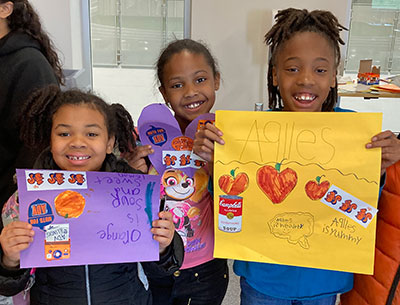
Boys & Girls Club students

“This first-time collaboration between the University and the Martens Center is not just exciting but a big game changer for community outreach and education, providing a unique opportunity for the University of Illinois to deliver transformative experiences to our community,” said Paige Duncan, community engagement specialist at the Center for Social and Behavioral Science.

Duncan said the College of Media was selected as the pilot module for the CSBS area of programming because their goal is to give elementary school students an introduction to a breadth of science learning opportunities, including different concepts from the social and behavioral sciences.

“We are excited about the College of Media’s programming because it gives children a window into the making of different types of media, which is likely to increase their media literacy. We hope they will become better consumers of media—for example, in terms of judging the veracity of advertisements and movies,” Duncan said.

Steve Hall, senior lecturer in advertising, held the first workshop, about “Advertising for Good.”

“It was a remarkable opportunity to help [the children] learn how they have the ability to positively impact the world with their ideas, creativity, and advertising,” Hall said. “The kids were super energetic, enthusiastic, always asking questions, and full of insights.”

The joint effort between the University units, the Champaign Park District, and the Boys & Girls Club is part of the Chancellor’s Call-To-Action Campus-Community Compact to Accelerate Social Justice. 

The College of Media workshops include:

Advertising for Good
Steve Hall, senior lecturer in advertising
Students will learn how advertising and creativity can be used for public and social good through the power of storytelling. Plus, a fun, hands-on creative challenge will allow students to generate their own ideas to create a positive impact in their own schools and communities. 

Fly Like Harry Potter: How Green Screens Work
Victor Font, lecturer in media and cinema studies and Susan Muirhead, advertising staff and adjunct faculty
This hands-on workshop teaches students about the green screen process and how this technique is used in films. Students will be able to dress up in costume, pretend to fly on a broomstick, and then watch the editing process to remove the green background creating the final effect. 

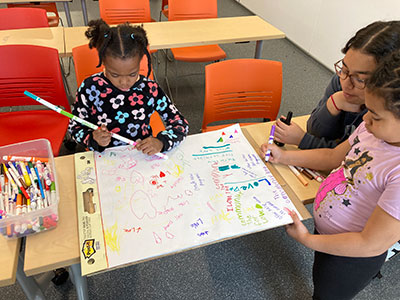
Fruit campaigns

Advertising Literacy
Michelle Nelson, professor and head of the Charles H. Sandage Department of Advertising, and Marisa Peacock, lecturer in advertising
This session will provide students with an understanding of the purpose and fun one can have with advertising. Through discussion, brainstorming, and hands-on activities, students will create an ad promoting healthy food products. 

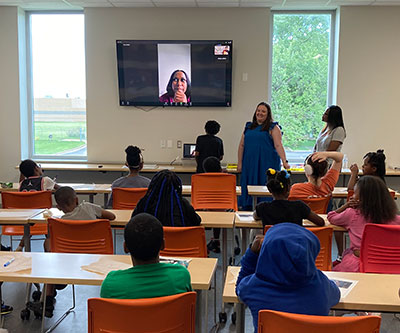
Interviewing Genesis Bryant

Introduction to Journalism and the Role of Reporters
Colleen King, director of the Richard and Leslie Frank Center for Leadership and Innovation in Media and clinical assistant professor in journalism, and Faith Lee, Mark L. Brandt Public Engagement Fellow and a junior in journalism
Following a presentation about what a journalist does, Genesis Bryant, a guard on the Illinois women’s basketball team will join the student group via Zoom for a Q&A. Using a guided worksheet, students will then write a story about the student athlete.

(Photos by Paige Duncan.)

Journalism students travel to Sierra Leone to film documentary about period poverty


Students in Sierra Leone

(Photos by Charles “Stretch” Ledford.)

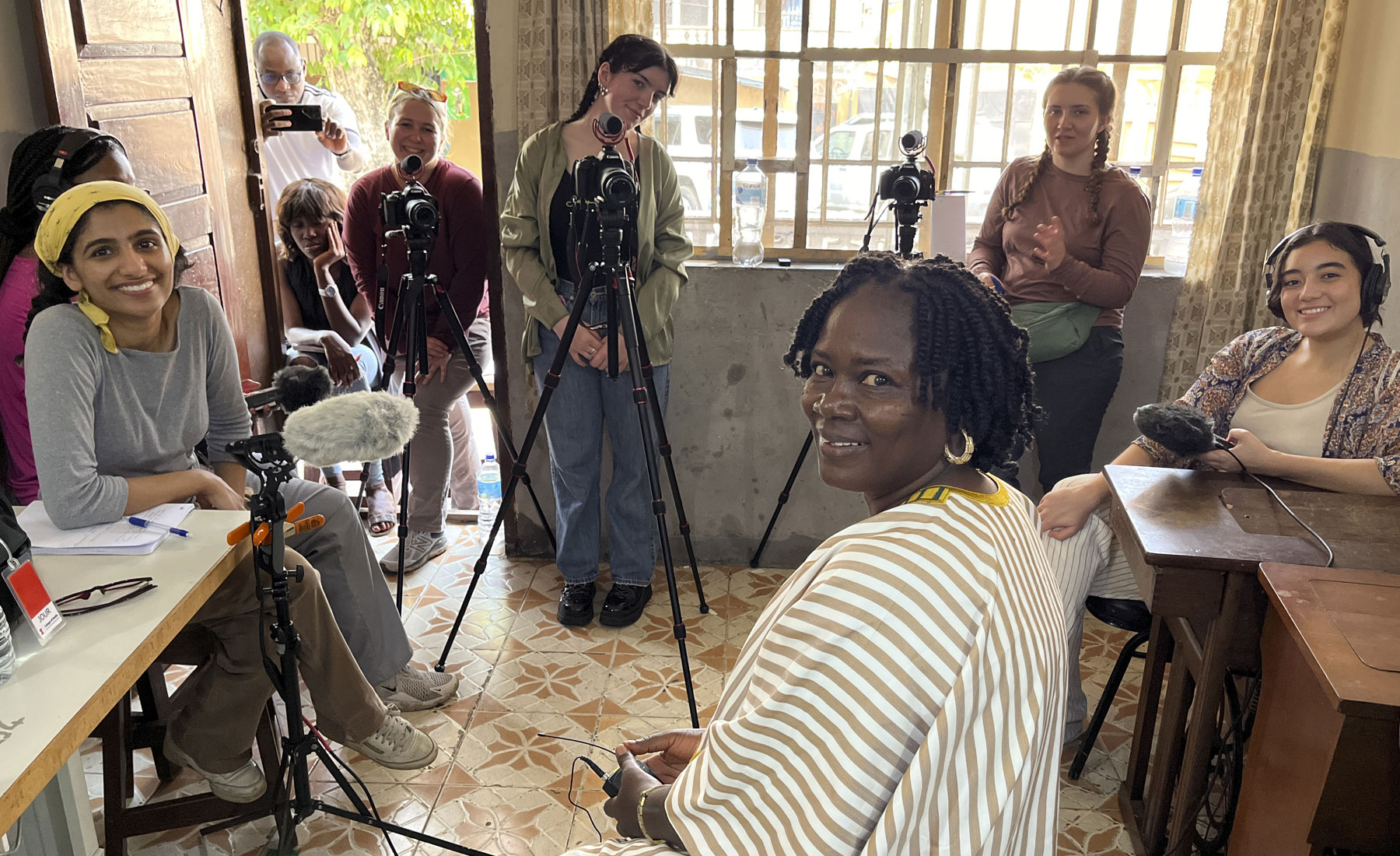
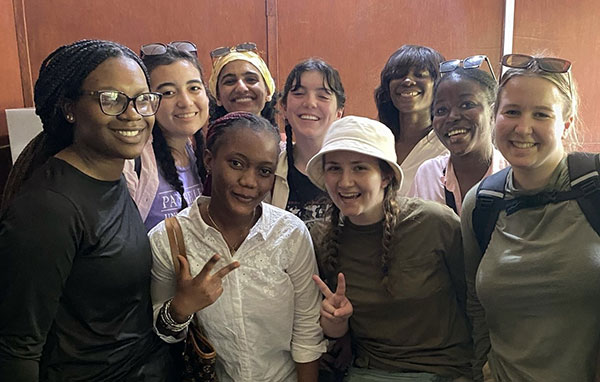
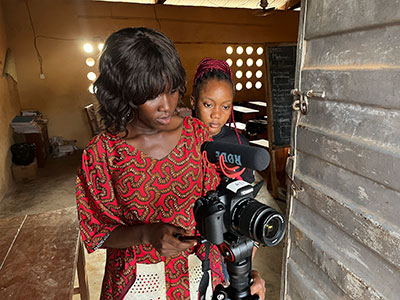
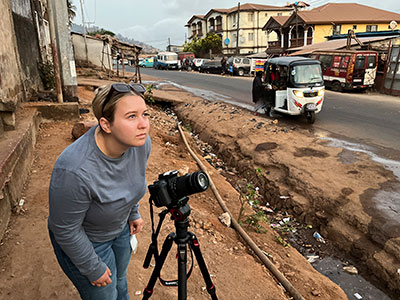
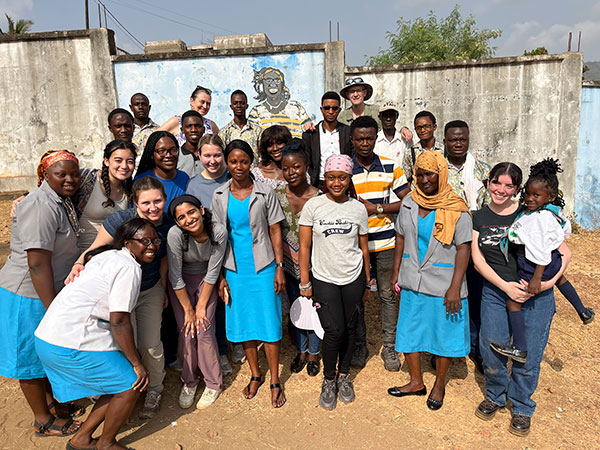
A group of journalism students heard harrowing stories from the local women they interviewed while filming a documentary about period poverty in Sierra Leone, West Africa, over spring break.

“Girls talked of being bullied at school when they got their period. Mothers talked about the struggle to have enough money to feed their children,” said Alison Davis, a lecturer in journalism who co-led the trip with Charles “Stretch” Ledford, associate professor of journalism.

Students interviewing in Sierra Leone

While difficult to hear, students hope sharing these stories will shed light on a widespread global issue known as period poverty, which refers to a substantial negative impact on one’s quality of life due to shame, economic destitution, and/or religious and cultural taboos associated with menstruation.

“All women have periods, but not all women have access to period products,” said Elena Cleary, a junior in agricultural communications. “It is my privilege to be able to share the stories of the most amazing, resilient, and kind-hearted women I have ever met.”

The forthcoming documentary, From Shame to Celebration: Sierra Leonean Women Reframe the Culture of Menstruation, focuses on a local woman-led grassroots organization called Uman Tok, which employs 18 women at a living wage to provide sustainable feminine health kits to women and girls around the country. In addition to making tangible progress to alleviate period poverty and menstrual exclusion, Uman Tok is educating a generation of girls and boys on sexual and reproductive health awareness. 

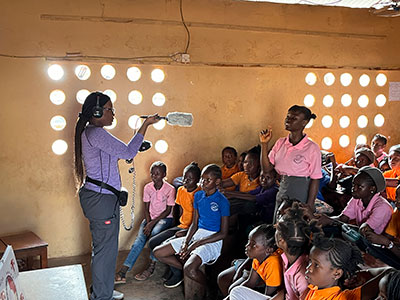
The film will feature interviews with a nurse midwife, the headmistress of a small semi-private school just outside of Freetown, and girls at the school who speak about the challenges they face as young women. 

Journalism student Faith Lee in Sierra Leone

The reporting trip is part of a new pilot class in the Department of Journalism, led by Davis and Ledford. They hope the class, “Globally Focused Advanced Documentary Filmmaking,” will be offered by the journalism department each spring semester.

The spring 2024 pilot class was executed in collaboration with Dr. Sophie King-Hill of the University of Birmingham (UK) and Dr. Francis Sowa of Fourah Bay College in Freetown, Sierra Leone. 

Ledford originally conceptualized the class as a research and learning lab where advanced journalism students would develop and apply their skills as documentary filmmakers and multimedia backpack journalists to report on issues of pressing international concern, especially in the Global South. Davis, who has over 25 years of experience producing nationally distributed documentaries, is mentoring the students in the process of creating their first long-form video story.

Illinois students partnered with four honors broadcast journalism students from Fourah Bay College to shoot primary footage for the film.

Ledford said he hoped the experience would be as beneficial for the Sierra Leonean students as it was for those from Illinois. 

Fourah Bay student Hannah Yankson described her experience as amazing as well as enlightening.

“As a media practitioner, I have been reporting on issues in the country, but this experience is one I will never forget,” Yankson said. “We got the chance to know about their classes at [the University of Illinois] and how journalism is practiced on their side, and they also learned from our side as to how our university operates.” 

Sierra Leone filming

Stella Bangura, also a Fourah Bay student, said learning how to use the equipment was somewhat difficult, but the Illinois team was helpful. 

“This was really an important exposure and experience for us,” she said. “It was highly meaningful as we enriched ourselves with [new] ideas and different knowledge.” 

Illinois students left for Sierra Leone on March 6 and returned March 16. For five days they worked on production of the film, conducting interviews, and shooting B-roll in Freetown and nearby Allen Town. They also took a day to tour Bunce Island, a major transit point for West Africans who had been imprisoned and were destined for slavery in the Americas.

Ledford, who has worked in nearly 60 countries in the last 40 years, said traveling to a developing country can present numerous issues and this experience was no different. 

“The challenges were myriad and nearly unceasing. Everything from powering our equipment to finding quiet places to interview our subjects in a crowded, cacophonous city; from dealing with lack of Internet connectivity to keeping our team fed and hydrated over many hours in the field; not to mention the abundance of various fauna unfamiliar to our students,” he said.

While the work was stressful and exhausting, with students and instructors working up to 20 hours a day, Ledford said it was also rewarding and infused with laughter and tears of both joy and utter sadness.

“Time will tell the true impact the assignment had on them,” Ledford said. 

Stephanie Wayda in Sierra Leone

Maggie Knutte, a junior in journalism, said the experience left a lasting impression on her.

“The subjects we were interviewing and working with were some of the most amazing women I have ever had the privilege of meeting,” Knutte said. “Now after coming home, I feel so honored that I am able to help tell their stories to the world. They are some of the kindest people I have ever met, despite living with hardships I could not imagine.”

For Faith Lee, a junior in journalism, the trip was the most fulfilling week of her life.

“Being a part of this project has not only made me a better storyteller and journalist, but a better human being,” Lee said. “I hope our work will show that period poverty is not just a Sierra Leonean issue, but a global issue.”

Davis said the week abroad was one of the most rewarding weeks of her teaching career and praised the work ethic and talent of the Illinois and Fourah Bay students who had to put their classroom knowledge to the test, making quick decisions under pressure, working in an uncontrolled environment, and dealing with the physical challenges of 90+ degree heat with no air conditioning. 

She said the students also had to get comfortable asking extremely hard questions and then processing the sometimes-difficult information they gathered. 

“These women shared their stories because of the foundation of trust our students built with them. This is probably what I am most proud of—that our students, including those from Fourah Bay College, conducted these hard interviews with grace,” Davis said. 

Davis and Ledford intend to build on their relationship with Fourah Bay College faculty and students and continue to tell the story of Sierra Leonians working locally to mitigate the impact of the global problem of period poverty, and of other woman-led solutions to issues as framed by the United Nations Sustainable Development Goals.

A chapter of the documentary, From Shame to Celebration: Sierra Leonian Women Reframe the Culture of Menstruation, will premiere on the web on May 28, 2024, which is recognized worldwide as Menstrual Hygiene Day. Their goal is for the full feature to be seen locally and nationally on PBS member stations, the BBC, and broadcast in Sierra Leone.

The project is funded by:

See more photos from the class’s visit to Sierra Leone.
 

Group in Sierra Leone


Students explore media industry in Chicago during inaugural spring break media tour


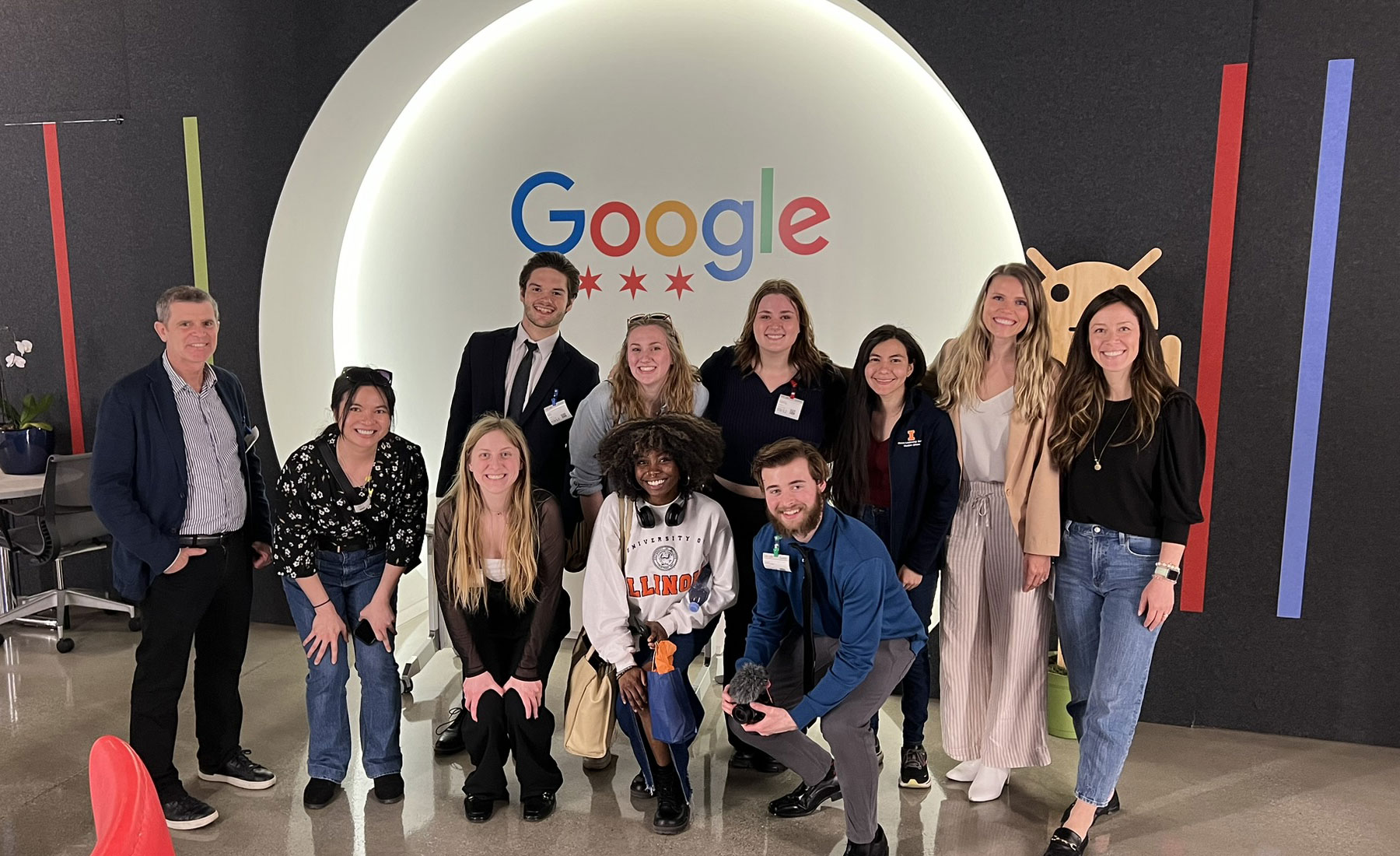
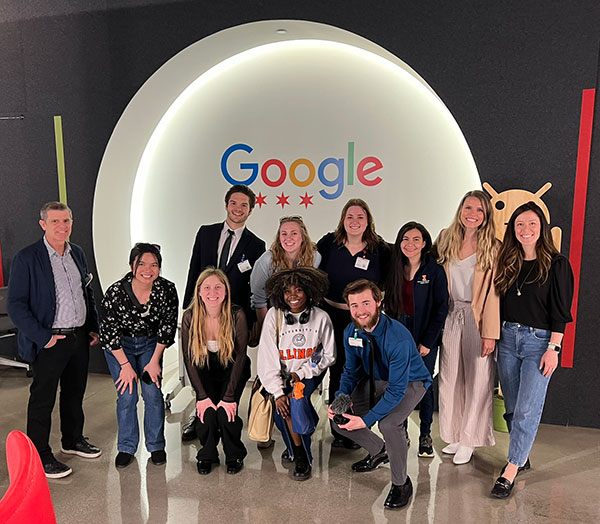
A group of College of Media students participated in a spring break media tour in Chicago, meeting Illinois alumni and visiting various industry sites including advertising agencies, news organizations, and a film studio.

Google

Led by faculty members Victor Font, lecturer in media and cinema studies, and Margaret Ng, assistant professor in journalism, seven students attended the three-day trip, held March 10-12.  

The inaugural trip was an experiential learning opportunity for students to discover more about media-related careers firsthand.  

Bekah Douglas, a junior in media and cinema studies, described the trip as a “once-in-a-lifetime journey” and credits her family and College of Media donors for making the trip possible. 

“I was so lucky to attend the College of Media’s spring break trip and have the chance to meet with the artists that make Chicago (and the world) a better place. The opportunity to travel outside of the classroom, to network, to explore the possibilities of media is priceless,” Douglas said. 

For Douglas, visiting the Lyric Opera of Chicago to participate in a press announcement for the 2024 season with Holly Gilson and her PR staff and touring the opera house, was her favorite memory.

“I have been a devoted opera fan for many years, so getting to learn the history behind the building and hearing from the artists who make the shows possible was very emotional for me,” Douglas said.

Ng also enjoyed the opera house, where students had the chance to sit on stage alongside professional journalists and watch brief vocal performances that previewed the upcoming season. 

“Witnessing the opera house’s level of preparation was a captivating experience. Additionally, observing reporters at work during a press conference taught us a great deal about media coverage of the arts,” Ng said.

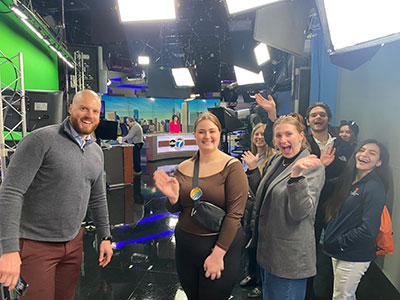
Group at ABC7 Chicago

Students also met alumna Judy Hsu (BS ’93, journalism), ABC7 evening news anchor, along with other anchors and hosts, and watched a live news broadcast (pictured at right). 

“We were right behind the camera, watching the entire hour-long program unfold,” said Ng. “[The anchors] interacted with the students during the short off-camera intervals. They were so friendly and easygoing, yet they could swiftly transition back to delivering news concisely and professionally within a few seconds. I was deeply impressed by their focus and professionalism.”

Gavin Schroeder, a senior in media and cinema studies, said the trip was not only fun but informative. He enjoyed meeting other Media students and talking with professionals in their respective fields.

“[The trip] opened my mind to the similarities that people in the workforce experience. What I took away most was the advice on how to assert yourself and stand out, along with knowing how to work in a team environment,” he said.

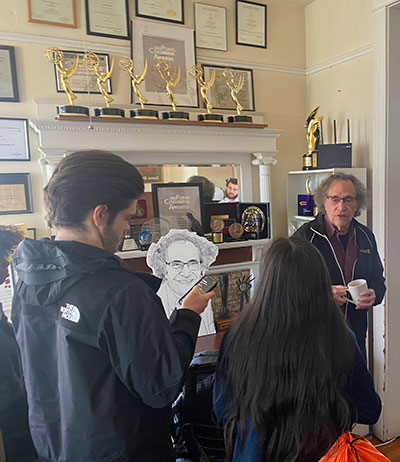
Kartemquin visit

Schroeder said meeting with communications staff and touring McDonald’s International Headquarters was impressive. As an aspiring filmmaker, the highlight of the trip for him was a meet and greet with Gordon Quinn, founder of Kartemquin Films (pictured at right). 

Penny Bradford, a junior in journalism, was also inspired by a visit to the production studio. She said Quinn’s dedication to public media and storytelling allowed her to see a career she had not yet considered. 

“Overall, the trip brought unique experiences and allowed us to connect with [alumni] of the University, along with others that are currently in positions we may want to see ourselves [in],” Bradford said.

Payton Jarzyna, a senior in advertising, said the trip sparked excitement as she will soon enter the workforce.

“I learned about a lot of fields I didn’t even realize I could go into. I also learned more about the job application process, and how to stand out as a candidate,” Jarzyna said. “The businesses we visited and the people we talked to were super knowledgeable and helpful.”

The itinerary also included conversations with:

  • Michael Phillips, Chicago Tribune film critic and mentor to the College of Media Roger Ebert Fellows 
  • Geno Schellenberger (BS ’20, advertising), communications director at Havas Chicago 
  • Suheily Davis (BS ’04, journalism), vice president, global chief diversity officer, McDonald’s International Headquarters
  • Journalism alumni who work in nonprofit communications and fundraising, including Samantha Kiesel (BS ’13), marketing content manager at Boys and Girls Club of Chicago; Isabel Morales (BS ’13), media relations manager at the Nature Conservancy; and Rosie Powers (BS ’12), strategist for Mission Minded; along with Sarah Morris, Associate Vice Chancellor for Regional and International Advancement at the University of Illinois
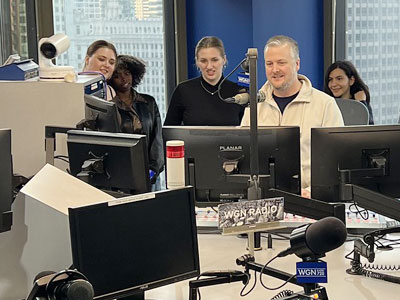
WGN radio tour

In addition, students were invited behind the scenes to see:

  • A model and perimeter tour of the Barack Obama Presidential Library with UIC alumna Rebecca Silverman and the communications and content staff at the Obama Foundation
  • Blackhawks Live coaches show with Jon Hansen (BS ‘06, journalism) and Joe Brand at WGN Radio (pictured at right)
  • Google with advertising alumni Katelyn Pringle (BS ’09) and Stephanie Stewart (BS ’08, advertising), both senior account executives

See more photos from their trip.

Journalism alumna appointed to Reuters Global Race and Justice team as U.S. Correspondent 

Bianca Flowers (BS ’13, journalism) was recently appointed to Reuters Global Race and Justice team as its first U.S. correspondent.

In her new role, she will pursue new and ambitious projects with a focus on producing agenda-setting coverage in the areas of race, identity, and social justice.

Flowers, who is based in Chicago, has spent the last two years at Reuters covering global steelmakers, agriculture, and construction manufacturing, centered on the integration of automation in manufacturing and the advancement of smart farm technology. 

Her expertise also encompasses coverage of labor unions, including her contributions to reporting on the historic United Autoworkers strike in 2023, the collapse of Silicon Valley Bank’s impact on commercial real estate, and the acquisition of U.S. Steel. 

Prior to joining Reuters, Flowers worked as a senior video journalist for Dow Jones where she covered short and long-form feature stories on personal finance, income equality, and diversity in the tech industry. She was one of the lead writers for MarketWatch’s “The Value Gap,” which  launched in 2020. She conducted in-depth interviews with business leaders and policymakers on reducing racial and social inequalities in various sectors. Flowers began her career at Fortune magazine and has held editorial roles at Learnvest, Investopedia, and ABC News. 

Read the full announcement.

Bianca Flowers

Journalism alum Doug Isbell combines passion for science, writing as NASA JPL risk communication coordinator


Doug Isbell
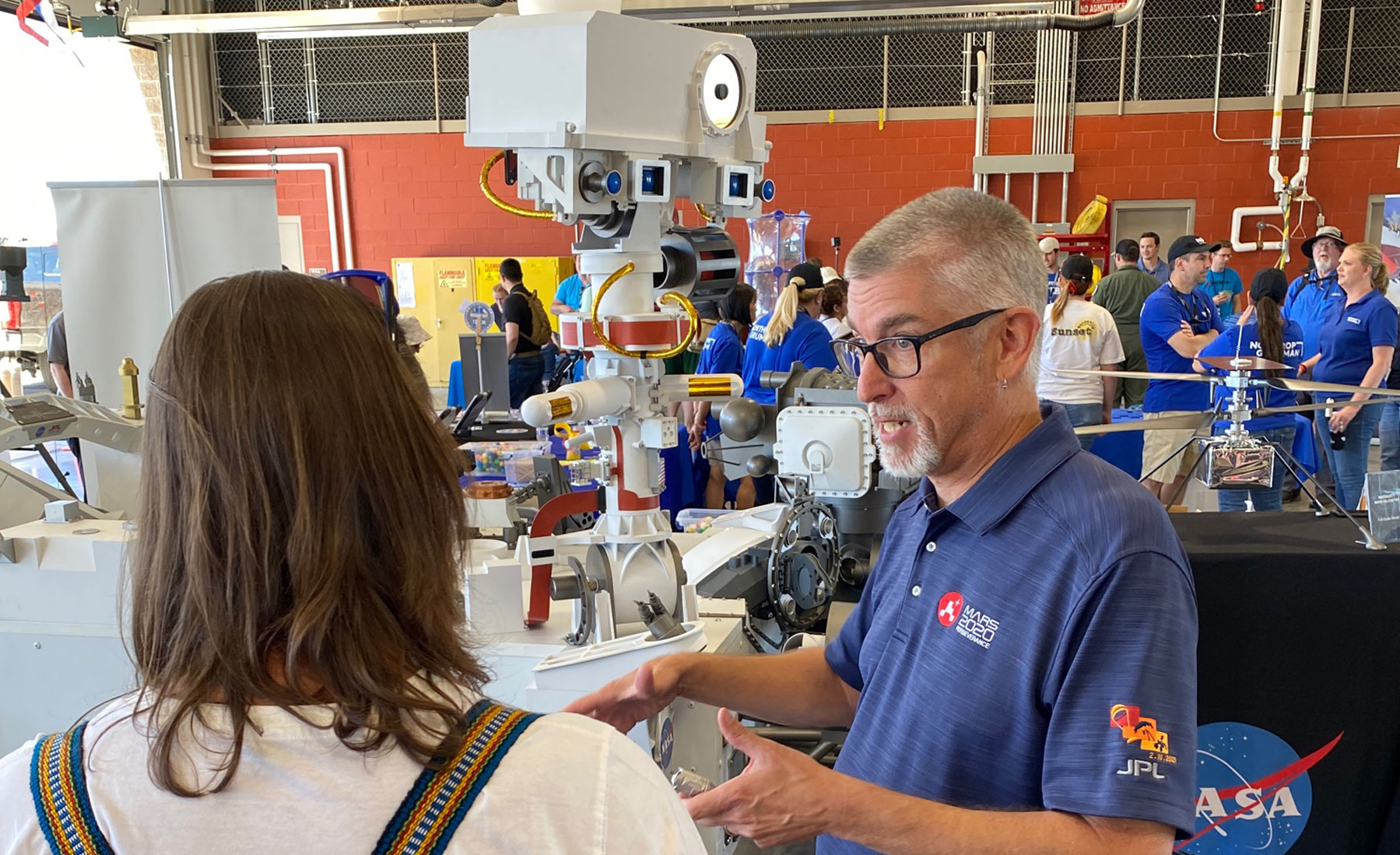
Doug Isbell (BS ’87, Grainger engineering; MS ’88, journalism) looks for opportunities to talk directly with the public whenever possible, such as at this NASA JPL exhibit booth at a popular summer air show at Hill Air Force Base in Utah, near where samples from Mars may one day land on Earth.

After 36 years in aerospace communications, Doug Isbell still thanks those lucky stars he’s always admired for the opportunity to create a successful career that combines his passion for science and his love of writing. 

Isbell’s fascination with space began when he was eight years old, around the time the last few Apollo missions landed on the moon. From then on, Isbell knew he wanted to be involved in space one day.

“Those [missions] made a big impression on me,” said Isbell, who grew up in the suburbs of Chicago.

Isbell (BS ’87, Grainger engineering; MS ’88, journalism) set his sights on becoming an astronautical engineer, but as he worked his way through the program and the upper-level courses, he started to have some doubts.

“I felt a little like I was not going to be an outstanding engineer and I wondered, how can I still be involved in aerospace? And I thought about writing,” he said.

Isbell did finish his bachelor’s degree in aerospace engineering but went on to get a master’s degree in journalism. Moving to Washington, D.C., to seek a start to his career, his first job was working as a writer for a business technology newspaper, Washington Technology, and then a reporter covering NASA for a weekly newspaper, Space News. 

Four years later, he decided to shift from journalism to the communications side and landed a job at NASA headquarters, eventually becoming a public affairs officer for planetary science. 

During that time, he helped with communications surrounding the Mars Pathfinder mission and the launch of the legendary mission of the Cassini spacecraft to Saturn.

“That was in the middle of a sort of renaissance of planetary science,” Isbell said. “[The Mars Pathfinder mission] was a huge global hit and kind of the first mission of the Internet age.” 

Isbell then spent nearly 10 years as a public affairs officer and director of educational outreach for the National Optical Astronomy Observatory in Tucson, Arizona, and the National Solar Observatory when it was in Tucson (now in Boulder, Colorado). 

He also served as the United States single-point-of-contact for the International Year of Astronomy 2009—a global celebration recognizing the first astronomical observation with a telescope by Galileo Galilei more than 400 years ago. 

Since 2010, Isbell has served as the cross-program risk communication coordinator at NASA’s Jet Propulsion Laboratory in Pasadena, California, working on issues related to space nuclear power and sample return, including the most recent two ongoing Mars rover missions, Curiosity and Perseverance. 

Isbell develops communications materials related to “spacecraft that would carry nuclear materials and nuclear power, and then kind of a growing area of interest is something called planetary protection,” he said. 

Planetary protection is the idea of protecting planets from potential biological contamination during a mission so they can be studied in their original state. It also involves protecting Earth’s biosphere when samples are brought back from other planetary bodies. 

“A lot of what we’re working on now is planning for Mars sample return,” he said. “Looking at my career overall, I’ll probably spend almost half of it on Mars missions and leading up to this idea of returning samples, and the value that can be provided by bringing them into Earth-based laboratories.” 

At the Jet Propulsion Laboratory (which is operated for NASA by Caltech), his group focuses on launch approval engineering, which means helping on the front end with aspects of the environmental reviews needed before a project can proceed and, on the back end, sharing public safety information around the launches and landings of missions. 

Whether it’s writing fact sheets about a mission or training spokespeople on how to share information with the public in engaging ways, Isbell said most of his job is behind-the-scenes, preparing for the tough questions and explaining the “why” behind each project.

“A lot of what I do is to try to explain potential hazards and how we’re handling them,” he said. “My job is to frame these things correctly and train people to talk about them effectively, and anticipate what people’s questions might be. It’s a lot of strategy—what might people be concerned about with this mission or this activity, and how can we address those concerns with as much detail as people can absorb.”

It’s been many years since Isbell was a journalism student at Illinois, learning from professors like Bob Reid and Tom Littlewood, but their teachings about investigative reporting and journalism ethics remain useful in his career today. Isbell also credits Michael Lembeck, an associate professor in the University’s Department of Aerospace Engineering, and a graduate student in the department at the time, for helping kickstart his writing career by encouraging a story on a student design project that led to Isbell’s first published story.

Isbell enjoys staying involved with the University, sharing his knowledge with students as a guest panelist for one of the first virtual Media Career Nights in 2020 and consulting with faculty about the structure of the new master’s in journalism track with a focus on science and technology. 

His passion for science doesn’t disappear at the end of a workday. Every couple of months, he hosts a family-friendly “space night” at a nearby brewery, where he brings out a telescope to view the moon and planets with the community. 

Isbell or a colleague talk about recent scientific accomplishments and exciting developments in space. About 30 to 40 people usually show up, filled with excitement and interest about the various topics.  

“I think [space exploration] is inspirational to people. It’s why I have the career that I have, and do what I do,” he said. 

Isbell is still captivated by space and feels grateful his job as a science writer allows him to be immersed in that world every day. 

“It is amazing to be involved in this stuff,” he said. “The science questions are the biggest ones that we can ask. ‘Are we alone in the universe, or least in the solar system?’ It’s kind of an interesting answer either way.”

Q&A with Alison Davis

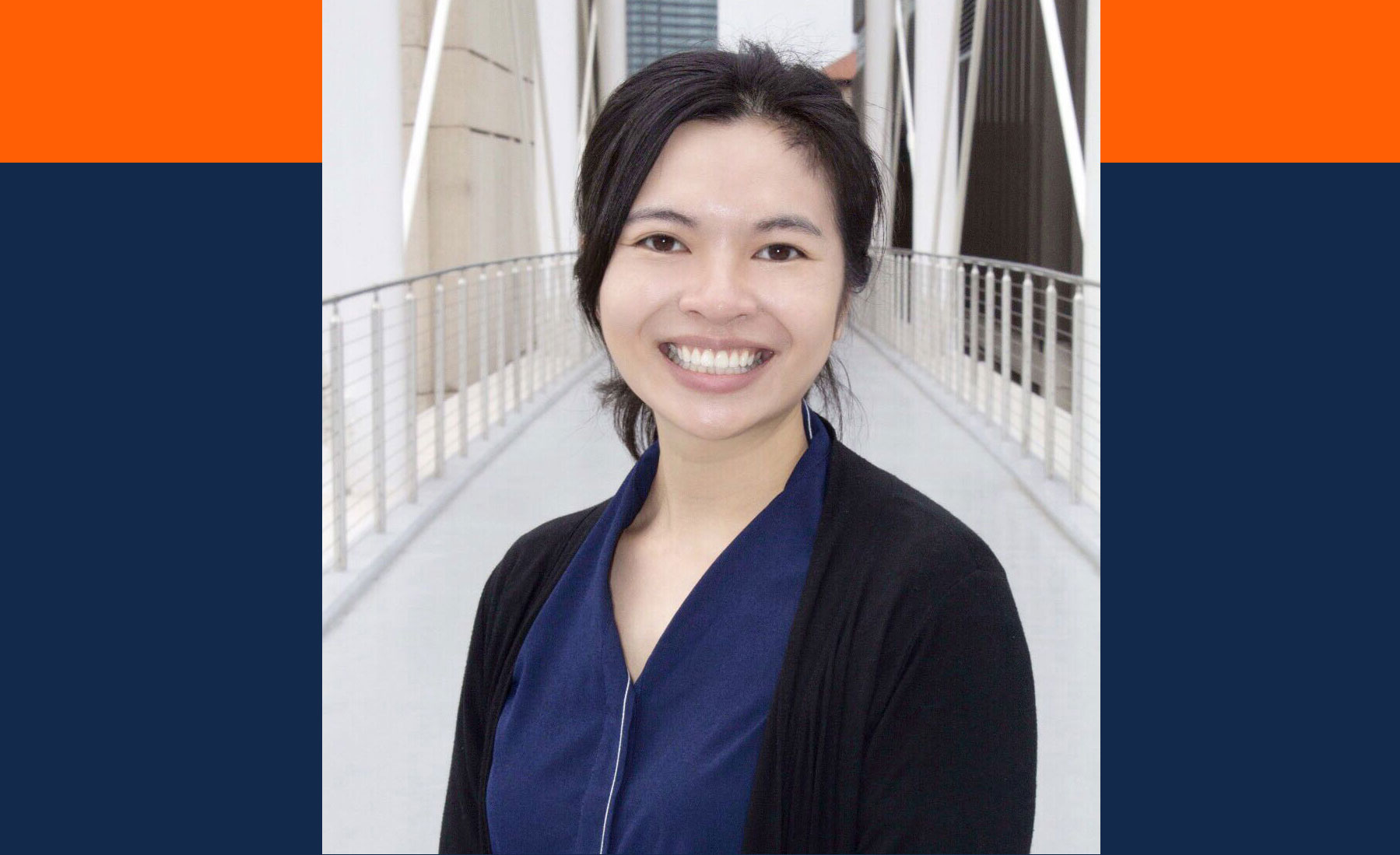
Get to know some of our College of Media faculty. Alison Davis is a lecturer in journalism and a seven-time regional Emmy Award winner.

Alison Davis

Why did you become a lecturer in the College of Media?
When I was working for the Big Ten Network, there were times that different professors would go on sabbatical, and I would fill in, teaching their classes, particularly the television production class. I loved it! I realized how fun it was teaching and working with students, seeing them learn new things, and watching their eyes light up when they understood something. Then, I saw a position opening and thought, “Well, maybe I would like to do this full-time; maybe I should consider teaching.” I ended up applying, and this is my fourth year of teaching in the Department of Journalism.

What courses do you currently teach?
I teach JOUR 215: Multimedia Reporting; JOUR 240: Introduction to Documentary Storytelling & Production; JOUR 340: Video Reporting & Storytelling; and JOUR 440: Advanced Documentary Storytelling & Production. For the first time this semester, Professor Stretch Ledford and I are teaching a globally focused documentary class, where we’re taking six students to Sierra Leone over spring break 2024 to produce documentaries about the issue of period poverty in Western Africa.

What did your career look like before returning to the University of Illinois Urbana-Champaign?
After I received my undergraduate and master’s degrees here, I worked for many years at the local PBS station, making shows and national documentaries. I worked for the Big 10 Network, creating documentaries about the University of Illinois—some sports stories and also stories that told the richness of the University, ranging from a biography on the man who invented the LED to our first African American captain of the basketball team; kind of the full gamut. My background is in filmmaking, and it’s great to teach that to students here.

For the past two decades, you’ve been producing national documentaries, receiving numerous regional Emmy Awards and over 20 Emmy nominations. What sparked your interest in doing such a thing?
I remember when I was an undergraduate, we were divided into tracks, and at that point, I was a broadcast journalism major. I loved doing videos and being able to tell stories—being a storyteller is something I have always loved doing since I was little. When I was in the news, I always felt there was more of a story, and I felt limited by doing a 30-second/minute-and-a-half package. I studied abroad in London, where I worked at a film company, and it was a blast, so when I came back, I did more work in video. After I was a freshly graduated person in my 20s, I had a chance to have my own television show and work in all of these different roles, learning what to do within those roles. It was an experience.

How did it feel to know your work was being noticed in a significant way that was shaping people’s opinions?
That was an incredible thing. We would enter the regional Emmys and feel like we didn’t have a shot at winning, but whenever I would, I just felt this unbelievable moment of shock and gratefulness. I remember the first time I won in Chicago. It was for a documentary I did about an architect who graduated from the University of Illinois and had built the capital of Australia, Canberra, but had died in obscurity. I recall sitting at this table—and they put you at a table with nominees in your category—and I was young, in my 30s, against older men. I talked to them about what projects they did, and they all sounded incredible compared to mine; then it was announced that I won. I took my mom and sister to that, and they couldn’t believe it; we were ecstatic.

What’s the biggest piece of advice you have for your students and others?
Don’t give up. If you’re making a video or any media project, you’re going to get frustrated. It could be technical problems when you’re trying to film. It could be your editing, and you’re sick of looking at this stuff that you don’t think you want to look at again. But don’t give up. Think about the goal of what you’re trying to create and keep working hard. Students, in general, should attend the whole University. Make use of the resources and all the great things here.

—Interview by Chloe Barbarise, New Voices Intern
Margaret Ng selected for 2023-24 James W. Carey Faculty Fellowship and AEJMC Emerging Scholar Award


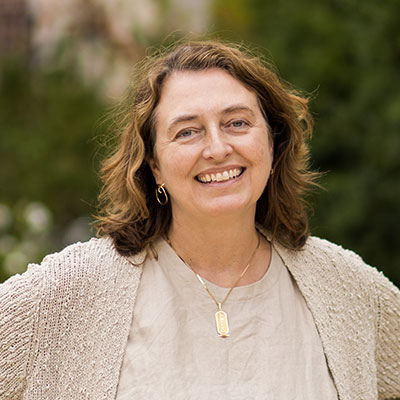
Margaret Ng

Margaret Ng, assistant professor of journalism with an appointment in the Institute of Communications Research, has been selected for 2023-24 James W. Carey Faculty Fellowship. She was also recognized with the Association for Education in Journalism and Mass Communication Emerging Scholar Grant.

Ng will receive stipends to support her research on social media platform migration, within broader shifts in digital communication culture. The recognitions support her pioneering inquiry into this contemporary phenomenon in journalism.

The James W. Carey Fund for Faculty Excellence, established in 2021 through the generosity of the Carey family, is a prestigious recognition designed to bolster the research activities of faculty in ICR, the world’s oldest program for interdisciplinary research and doctoral education in communication and media studies. At ICR, Carey earned his doctoral degree, was a research professor, and served as director (1969-76); he also served as dean of the College of Media.

Ng said the Carey Faculty Fellowship’s research support will assist her to explore the social and cultural implications of the platform migration phenomenon. 

“It would detail, for instance, how circumstances like voluntary and forced platform discontinuance (a platform closing due to financial reasons or the de-platforming of notable figures) are influenced by a complex interplay of factors like culture, economics, and social identity,” she said. 

Ng was also recently awarded a $3,500 grant from the Association for Education in Journalism and Mass Communication. The AEJMC Emerging Scholar Award will enable Ng to study how journalists are grappling with platform migration in the wake of Elon Musk’s Twitter takeover in October 2022. 

She will hire a research assistant and administer a mixed-method approach that encompasses computational analysis of activities by 900 journalists on Twitter (now X) and Mastodon and qualitative interviews of 10 to 15 active journalists. The new knowledge helps journalists assess the risks and benefits of platform changes, facilitating smoother transitions and audience maintenance in the future.The results will appear in a journal publication and a chapter in her book, setting the scholarly discourse around the topic.  

“Both the James W. Carey Faculty Fellowship and AEJMC Emerging Scholar Award, along with the opportunity to bring on board the Mark L. Brandt Public Engagement Fellows, focus largely on the topic of my scholarly book project—platform migration,” Ng said. 

Ng will also team up with a student Brandt Fellow to engage with journalists and the public, potentially through a webinar, to provide a better understanding of the experiences, challenges, and strategies journalists employed following Musk’s Twitter takeover. The Mark L. Brandt Public Engagement Fellows program was established to support Media students assisting faculty and staff with public engagement projects.  

Journalism students published in ‘The News-Gazette’


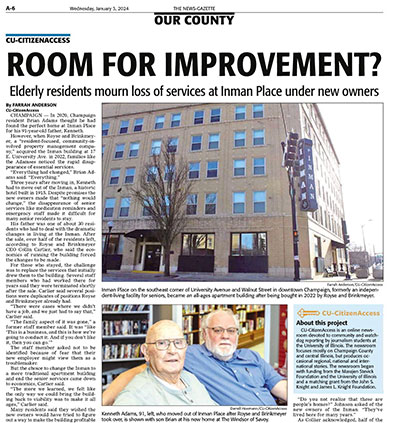
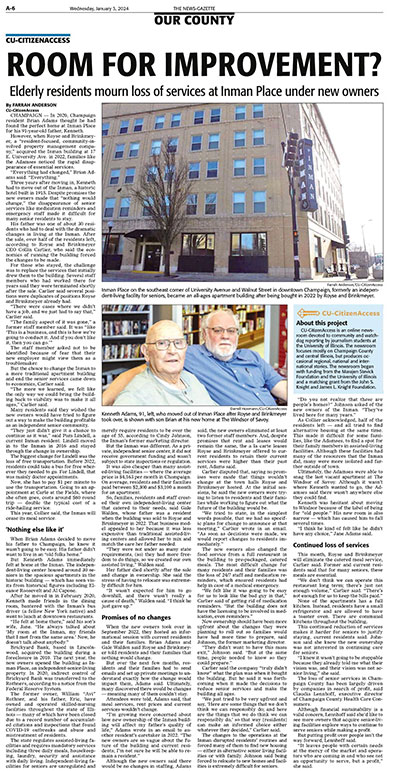
Several journalism students wrote investigative pieces that were recently featured in The News-Gazette.

Students in JOUR 315: Advanced Public Affairs Reporting and JOUR 483: Investigative Reporting classes, taught in Fall 2023 by Professor Brant Houston, Knight Chair Professor in Investigative and Enterprise Reporting, had work originally published in CU-CitizenAccess, an online newsroom devoted to community and watchdog reporting. Houston also teaches a Spring 2024 section of JOUR 400: Newsroom Experience that focuses on CU-CitizenAccess.

Articles by Farrah Anderson, Grace Brinkman, Ben Crane, Ethan Holesha, and Stephanie Wayda, all seniors in journalism, had stories picked up and re-published by The News-Gazette.

Read the students’ original articles here:


Anderson in paper

DEV College of Media
119 Gregory Hall
810 S. Wright St.
Urbana, IL 61801
217-333-2350