2025 Roger Ebert’s Film Festival to kick off with ‘The Searchers,’ first-ever Western screened at Ebertfest; passes go on sale November 18


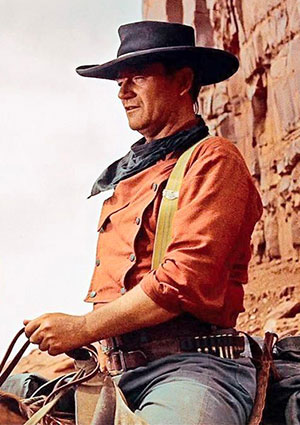
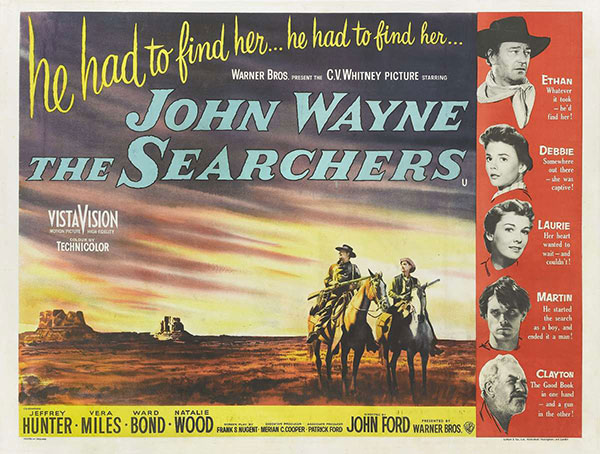
Chaz Ebert and the University of Illinois College of Media announce that the opening night film of the 2025 Roger Ebert’s Film Festival will be a new 70mm print of the Western classic The Searchers (1956), starring John Wayne and Natalie Wood. The four-day festival, named for famed film critic Roger Ebert, will be held Wednesday, April 23, through Saturday, April 26, 2025. Festival passes will go on sale on Monday, Nov. 18.

The Searchers poster

“We are pleased to bring the first Western to our Ebertfest audience, and it just so happens that a film from the Golden Age of Hollywood directed by John Ford was recently restored by Warner Bros. in collaboration with the Film Foundation,” said Chaz Ebert, CEO of the preeminent movie review site Rogerebert.com and cofounder of Ebertfest. “Roger gave the film four stars, but also acknowledged the racial attitudes of the time, asking whether the film sought to endorse them, or dramatize and regret them. We look forward to a vigorous post-screening discussion with film scholars and audiences about representation in film.” 

Passes to see all the films screened at Ebertfest can be purchased through the Virginia Theatre website, or at their box office by calling 217-356-9063 or visiting 203 W. Park Ave. in downtown Champaign. All films will be shown at the historic Virginia Theatre.

Individual festival passes cost $200. VIP Sponsorship packages start at $1,800 and include VIP seating for two, lunch and dinner with the filmmakers, invitations to all festival special parties and events, and much more. 

Roger Ebert was a Pulitzer Prize-winning film critic for the Chicago Sun-Times, University of Illinois journalism alumnus, and Urbana native.

Chaz Ebert is also the author of the indie best seller It’s Time to Give A FECK: Elevating Humanity through Forgiveness, Empathy, Compassion, and Kindness.

Ebertfest is hosted by Chaz Ebert and Nate Kohn, the festival director since the very beginning, in collaboration with the College of Media at the University of Illinois Urbana-Champaign.

Watch for announcements of films and filmmaker guests over the next few months. The full festival program will be announced in March. 

For the latest updates, please visit ebertfest.com and follow Ebertfest on social media:

Roger Ebert’s Film Festival relies on generous gifts from donors and sponsors. Gifts of all sizes are vital to the festival and can be made online through the College of Media by selecting “Roger Ebert’s Film Festival Fund – 11331422.” For additional sponsorship options, visit the Ebertfest website: ebertfest.com/become-sponsor. 


PRESS CONTACT: 

Molly Cornyn, Festival Coordinator, mcornyn2@illinois.edu, 217-333-1590 

Share on social

Excerpts from ‘Bridging Divides’ series: What Does it Mean to Be an Informed Critic?


As part of the College of Media’s three-part webinar series this fall, “Bridging Divides: Conversations on Media and Disagreement,” faculty from the Departments of Advertising, Journalism, and Media & Cinema Studies led Q&As to explore how productive discussions occur across lines of disagreement and difference. 

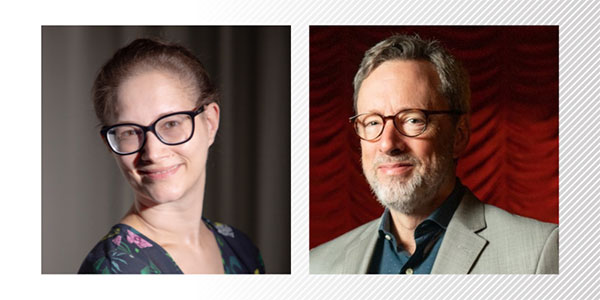
Jenny Oyallon-Koloski and Michael Phillips

Below, read excerpts from “What Does it Mean to Be an Informed Critic?” Note: Answers have been condensed for length and clarity.

Panelists: 

  • Jenny Oyallon-Koloski, Assistant Professor, Department of Media & Cinema Studies; author of Storytelling in Motion: Cinematic Choreography and the Film Musical
  • Michael Phillips, Chicago Tribune Film Critic; College of Media Ebert Fellows Mentor

 
Oyallon-Koloski: What’s the value of criticism, especially in these polarized times? Why do we need voices of critics, people like yourself, especially ones who are informed about those kind of artistic and cultural works that they write or communicate about?

Phillips: I’ve never stuck to one firm belief or answer on that because it really responds to the times you’re in. I think it’s important to have to acknowledge that every single human being has their own tastes and opinions and prejudices and responses to everything. And I just like to try to write so that your preconceptions and maybe expectations are not set in concrete. They can actually bend and they’re more porous. You can have your mind changed by a film that you didn’t think would be for you, but there are elements of it that are really working. Really in the end I think criticism works best and is most alive when it is acknowledging that you have more than two feelings about something, and they might go in opposite directions. That’s why I look to critics that I respect who try to sort out all the wildly conflicting elements that make anything worth talking about.

Oyallon-Koloski: Do you consider global perspectives, even if you’re targeting local audiences of your media outlet? How does the global perspective or the global audience play into criticism?

Phillips: This is something we all need. We just need to see, we need to hear from more than a certain kind of American filmmaker in our lives. Because then otherwise, we’re just risking a kind of cultural nationalism that does not help us at all.

Oyallon-Koloski: It often feels like what literacy there is today tends to come filtered through a decontextualized bite-sized meme culture. How much does criticism thrive on a culture where media is curated for you in intentional ways? How much does that historical knowledge play into all of this?

Phillips: It’s important. It’s also important to acknowledge that, broadly, everybody worth reading is going to have 10 very different reference shelves in their psyche. I think it’s always worth championing and reintroducing certain classics to people. But the reasons change through the decades. 

I think the critic or the academic or the media studies professor should always be reconsidering what needs to be shown to these people this semester because it will spark the kind of split or debate. Maybe it’s a film that is just begging for a cultural divide to happen literally in the classroom. And then I think it’s the critic or the professor’s role to just simply kind of referee it. And it’s wonderful to experience. It gets more dicey when you’re talking about films that have tremendously controversial content. I also don’t believe in shelving those works because they’re too hot to handle. But boy, oh boy, you really have to figure out how and when and if this is the right context. We forget or whitewash the past at our own peril in every aspect of American life.

As for the memes and the satire, I’d hate to just settle for that because that’s kind of a faint echo of the original.


Read excerpts from the other “Bridging Divides” Q&As:

Engaging with People, Perspectives, and Policies When You Don’t Agree: Lessons from Journalism

Reaching Across the Aisle: Advertising and Messaging in an Age of Polarization

Share on social

Excerpts from ‘Bridging Divides’ series: Reaching Across the Aisle: Advertising and Messaging in an Age of Polarization


As part of the College of Media’s three-part webinar series this fall, “Bridging Divides: Conversations on Media and Disagreement,” faculty from the Departments of Advertising, Journalism, and Media & Cinema Studies led Q&As to explore how productive discussions occur across lines of disagreement and difference.

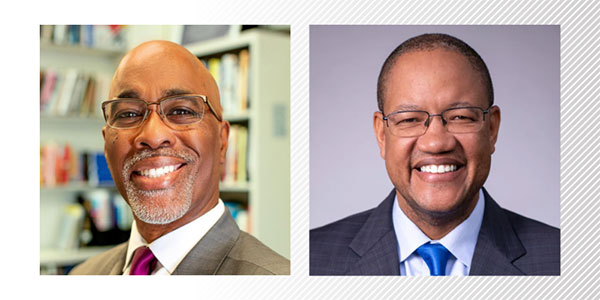
Jason Chambers and Michael Strautmanis

Below, read excerpts from “Reaching Across the Aisle: Advertising and Messaging in an Age of Polarization.” Note: Answers have been condensed for length and clarity.

Panelists: 

  • Jason P. Chambers, Associate Dean for Diversity, Equity, and Inclusion; Professor, Charles H. Sandage Department of Advertising; author of Advertising Revolutionary: The Life and Work of Tom Burrell
  • Michael Strautmanis (BS ’91, advertising; JD ’94, law), Executive Vice President for External Affairs, Obama Foundation 

 
Chambers: We live in a world in which people either love the AFC or the NFC, you either like Coke or Pepsi, Apple or Samsung, Democrat or Republican. We live in a world of these bifurcations and find your tribe and all of that. So how do you deal with those differing belief systems when you’re trying to establish a message? How do you present a core value or what might be some of those core values that you try to illustrate for people?

Strautmanis: If there is something that is a part of your identity, that is core to who you are, from which your values stem because of your experiences or because of the people that have taught you things, then I think in some ways it’s not [just] okay, it’s necessary to articulate them, to make them known, to make them seen.

But I guess the question is, what’s your goal? These things that divide us—and it could be our political parties, it could be our race, it could be our beliefs—could be used to build a connection, even if the connection comes from a different and opposing place. 

Our identities don’t have to be fixed and that can be an interesting story to tell that can often create common ground as well.

Chambers: I like the way that you put that, that our identities don’t necessarily have to be fixed. Does it sometimes feel as though we hold to things as though they must be a moment of learning for me? But if I accept that then I’m somehow being inauthentic to my tribe or I’m somehow being a traitor to the things that I’ve, at least up until this educational moment, thought that I believed in. So how do you approach those environments where you may be entering a space where you’re thinking [you’re] really going to have to work hard to find the points of common ground for folks, because at least in terms of belief system we may be on such wildly different planes?

Strautmanis: I think for me, when I’ve struggled with that, it’s because I’m afraid. And I might be afraid for good reason. I might be afraid because I’m in an environment where I feel like people are making assumptions about me based upon my identity that will hurt my ability to be successful.

I’d say one of my most basic values is learning and education. A fixed mindset that leaves you having a base—if you can think about it visually like a permeable fence that you can stand in—where you’ve got your people who love you, the people who know you, the people who you can be yourself completely with. The core of who you are. You’ve got that. And I think that really helps you then let things in and out of that fence and be able to shift and change along the way, based upon the different experiences that you’ve had. 

Literally, I can’t imagine this, but if you are mentally in your mind the same person at 50 that you are at 20, I just can’t think of anything more sad than that. That you have not been able to live a life [where you] grow and change and evolve. There is no better place to do that than in college. That’s what college is for—to come to an environment with a bunch of other people who don’t come from where you come from, who don’t look like you, who have different experiences than you have, and be in an environment that the whole point of it is to learn.

Chambers: As one who deals with audiences and creating messaging and dealing with folks of different perspectives, belief systems, politics, and other ways of thinking about messaging, do you have guidance or insight for thinking about some of these social media tools and this awesome power that we now have as individuals, as well as organizations, in a broader society? 

Strautmanis: We had this experience often, particularly in 2008, where part of the strategy to defeat [Barack Obama] politically, was to make people afraid of him, to connect him to things that were scary, and to play on a lot of very old tropes around Black men, very old tropes around Chicago, and try to find ways to have people leap over the intellectual part and go to something very core, like, ‘I need to be afraid.’

So, what we had to do is try to find a way to stimulate the ‘Is that true?’ instinct in people. If you ask yourself, when you see something, you read something, [and wonder] ‘Is that true?’ it kind of gives you the opportunity to do some of your own research.

I think that kind of messaging and strategy that has people connect to their best selves can really work across lines of difference. Our belief and our experience has been that people don’t really like hating everybody and being mad at everyone.

So, we do like to give people an opportunity to say: ‘You are a hopeful, optimistic, capable person who sees the best in others.’ And what we found is most people are like, ‘Yeah, that is me.’


Read excerpts from the other “Bridging Divides” Q&As:

Engaging with People, Perspectives, and Policies When You Don’t Agree: Lessons from Journalism

What Does it Mean to Be an Informed Critic?

Share on social

Excerpts from ‘Bridging Divides’ series: Engaging with People, Perspectives, and Policies When You Don’t Agree: Lessons from Journalism


As part of the College of Media’s three-part webinar series this fall, “Bridging Divides: Conversations on Media and Disagreement,” faculty from the Departments of Advertising, Journalism, and Media & Cinema Studies led Q&As to explore how productive discussions occur across lines of disagreement and difference. 

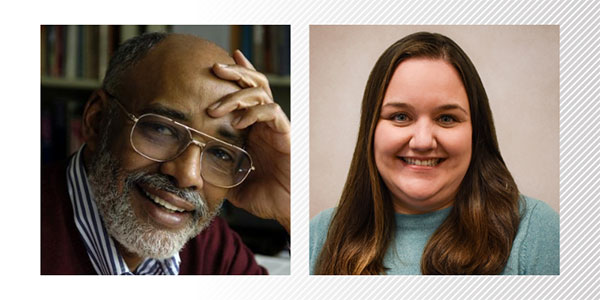
Leon Dash and Colleen King

Below, read excerpts from “Engaging with People, Perspectives, and Policies When You Don’t Agree: Lessons from Journalism.” Note: Answers have been condensed for length and clarity.

Panelists: 

  • Leon Dash, Professor and Swanlund Chair, Department of Journalism; 1995 Pulitzer Prize Winner for Explanatory Reporting
  • Colleen King, Clinical Assistant Professor, Department of Journalism; Director of the Richard and Leslie Frank Center for Leadership and Innovation in Media; former Executive Producer for MSNBC’s The 11th Hour with Brian Williams  


King: How do you have all your life experiences and not put them in a story?

Dash: You get used to keeping your personal opinion, your personal reactions out of stories. It’s discipline that becomes a part of you and working as a reporter. And, you know, an editor is not going to let your opinion go past him or her. They’re going to stop you and say, ‘Oh, no, no, you’re giving me your opinion here.’

King: News judgment really cannot be totally objective. So how do journalists approach the selection of stories at times of great polarization?

Dash: Probably from their personal interests. News objectivity is a goal, but as I said, it is very difficult to achieve pure objectivity. But you know when you’re being unfair. And so that was, for me, my measure. Fairness or unfairness. [As for] what stories to select to cover, they almost present themselves.

King: How can the press go about rebuilding trust with audience members, especially younger audiences who maybe aren’t as familiar with traditional news media?

Dash: That’s a good question because [I’m] dealing with a freshman class this semester and I’ve been surprised when they tell me they get most of the information from TikTok.

And I really don’t have an answer to that question. I talk to them and I give them a current events quiz. Some of them do quite well on it. The ones that do well on the current events are reading traditional news outlets. Here the students have access as part of their student fees to The New York Times, USA Today, and Wall Street Journal. And some of them do take advantage of that and read those papers regularly, not daily, and so they’re well up to the mark on current events.

Others follow traditional social media that they have always followed and they’re not really up on current events. So, I really don’t have an answer for that. I would like to see an answer for that. Maybe this is a part of an evolution that we have to go through as a society.

King: What are some of your big takeaways or advice for students in public affairs reporting?

Dash: It’s important to remain calm and not be defensive or offensive. I’m always telling them you have to have a bit of aggression in terms of advocating for the public, the politicians, and with the people who are elected officials. You must always be polite, and professional, but ask the question that needs to be asked.

If it’s a matter of embezzling money, you ask about it. If you know the amount of money that was embezzled, you cite that in your question and it’s public. So always be prepared to do that, no matter what the reaction of the official or the politician is to your question.


Read excerpts from the other “Bridging Divides” Q&As:

What Does it Mean to Be an Informed Critic?

Reaching Across the Aisle: Advertising and Messaging in an Age of Polarization

Share on social

2024-25 Ebert Fellows announced


Each fall, the Roger Ebert Fellows program selects three College of Media undergraduate students to complete a yearlong fellowship that immerses students into the film industry and provides them with opportunities to sharpen their critical writing skills and engage with the film community.

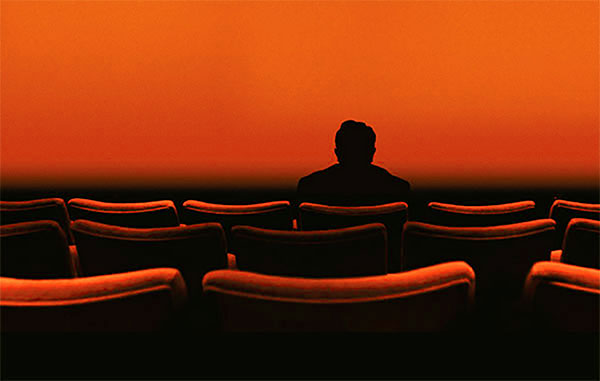
Ebert in theatre- orange

The Roger Ebert Fellows for the 2024-25 academic year are Aaron Anastos, Kennedy Caldwell, and Diamond Steward-Hutton. 

The program, named after the late Pulitzer Prize-winning film critic and University of Illinois journalism alumnus Roger Ebert, allows fellows to work with Chicago Tribune film critic Michael Phillips to hone their skills in writing, critical analysis, and media studies, as well as meeting with various film and media workers in “immersion excursion” days in Chicago.

Phillips, who has been an advisor and mentor for the program since it began in 2015, hopes to teach the Ebert Fellows the principles of becoming effective critics. 

“My job, as I see it, is to kind of take the entire school year to figure out different ways to show them what might help them become more persuasive, more interesting writers,” Phillips said. 

The Ebert Fellows will also attend the True/False Film Festival in Columbia, Missouri, and produce written work for RogerEbert.com. They will also help host and curate screenings for the Roger Ebert Center for Film Studies.

“With all the people we meet over the course of the Ebert Fellowship, I hope each of the fellows finds at least one person, somewhere in the world outside U of I, who speaks directly to their own interests and passions,” Phillips said. “I’m here to help them make connections because we all need them.”

Meet the 2024-25 Ebert Fellows

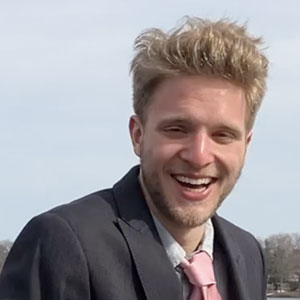
Aaron Anastos

Aaron Anastos is a junior in journalism. Anastos is excited to sharpen his writing skills, work with the other fellows, and give more to the film community on campus. 

“To be able to have this opportunity to meet people with the same passions and get involved, and be able to improve our skills in writing, public discourse, criticism, all that interesting stuff, it meant a lot,” Anastos said. 

He believes that the fellowship will help him marry his passions for journalism, film, and writing. 

On campus, Anastos is involved in the UI7 Newsroom as a host and reporter for Good Morning Illini, an opinion columnist for The Daily Illini, and a residential advisor at Newman Hall. 

Anastos is a fan of the Lord of the Rings trilogy because of the film’s powerful themes.

“I think it’s a story that truly has something for everybody,” Anastos said. “It has themes that everyone can relate to that are powerful, no matter what phase you are in life.”


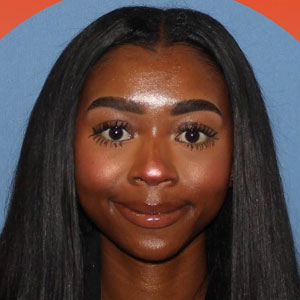
Kennedy Caldwell

Kennedy Caldwell is a junior in journalism. Caldwell became interested in media and production at a young age after being featured in several advertisements as a model. As an Ebert Fellow, she wants to improve her writing skills and learn how to create good stories. 

“I’m really excited to get to know my other fellows. I’m really excited to get to know Michael [Phillips]. And I’m really excited to get to know more about what it means to be a film critic and how to tell people about movies in a vivid, detailed way that makes them want to watch it or makes them not want to watch it,” Caldwell said. 

Caldwell is looking forward to traveling to different film festivals to watch movies and meet new people. 

One of Caldwell’s favorite films is It’s About Time because of the way it mixes drama, comedy, and romance.


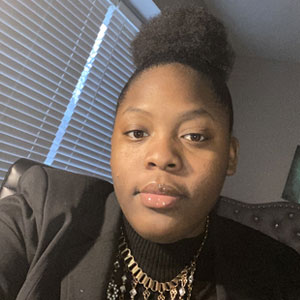
Diamond Steward-Hutton

Diamond Steward-Hutton is a senior in journalism and developed a passion for news while growing up watching ABC7 Chicago and learning the importance of staying informed on certain topics. 

“I always wanted to be able to know how to improve my storytelling as an anchor, as an artist, and just a person who writes on the daily…. [This opportunity] means the world to me,” Steward-Hutton said. 

She is interested in becoming a news anchor and is involved with UI7 Newsroom and the National Association of Black Journalists. 

“[It’s important] to learn how to write, to learn how to connect with people, and also to build that credibility and that trust with people, so that could be carried on throughout my career,” Steward-Hutton said. 

Steward-Hutton’s favorite film is Love Jones because of the realistic storyline and the performances from actors Nia Long and Larenz Tate. 

Share on social

Illinois chapter of National Association of Black Journalists promotes unity among Black Media students


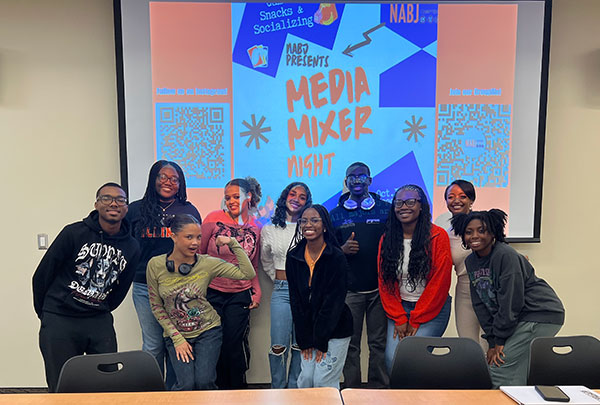
At its first event of the 2024-25 school year, the Illinois chapter of the National Association of Black Journalists hosted “Black on Black Commentary,” where students discussed popular topics involving the Black community in the media, such as election coverage of Vice President Kamala Harris and the failure of cosmetic brands to include Black customers. 

NABJ Media Mixer

It’s an event NABJ, a registered student organization, has held in the past and one that inspires back-and-forth conversations around current events.  

“We talk about different topics on social media that kind of go viral and we discuss the implications that they have on the African American community,” said Faith Lee, president of the NABJ Illinois chapter and senior in journalism. 

The event, which is one of many the NABJ holds on campus throughout the year, is designed to help meet the mission of the local chapter—to promote unity among Black Media students across the University of Illinois. 

“Sometimes it can be hard to meet people in your classes that look like you and that feeling can definitely be isolating,” Lee said. “I know I’ve felt it before, just being in class and on campus, sometimes just in general, being the only person of color.”

That’s why Lee says organizations like NABJ are so important. They not only bring Black students together, but also help to provide professional development and networking opportunities. 

“I’ve learned that while it’s important to network upwards, it’s also important to network across with your peers because they’re going to be the ones who are sitting in those rooms with you in the future,” Lee said. “You never know where we all might end up, so it’s important to make connections now so that in the future we can have each other in mind for jobs.”

We hope to be there to give advice on something as small as what class to take, to recommending internships to each other, to just being that community that I feel like we need.

Recently, the Illinois chapter hosted Leona Towner, author of 23 and on TV, who spoke about the day-to-day life of a multimedia journalist. She shared vital information on overcoming barriers, standing out in the industry, and the importance of telling compelling yet authentic stories. 

They also held a media mixer where all College of Media students were invited to get together and play games, such as a creative advertising competition, Uno, Jenga, and speed networking.

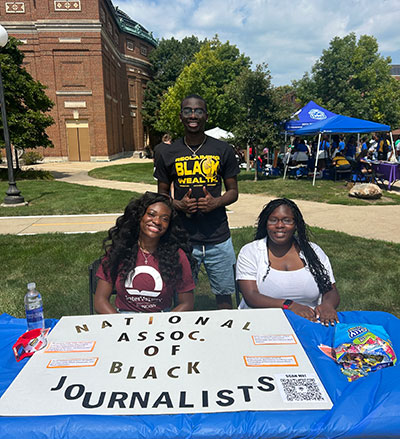
NABJ at Quad Day

Lee said the events are specifically designed for students, intended to provide an environment where everyone feels comfortable being themselves, sharing their passions, and learning from each other.

“We hope to be there to give advice on something as small as what class to take, to recommending internships to each other, to just being that community that I feel like we need,” she said.

The National Association of Black Journalists was founded nearly 50 years ago to advocate for Black journalists and media professionals in the U.S. and worldwide. Leon Dash, Pulitzer Prize winner and Swanlund Chair Professor of Journalism at the College of Media, was one of 44 Black journalists who founded the organization in 1975.

Today, NABJ’s national membership is more than 4,000 strong and includes emerging journalists, professional journalists, student journalists, journalism educators, and media professionals of all kinds.

For Lee, who is a Mark L. Brandt Public Engagement Fellow with the Richard and Leslie Frank Center for Leadership and Innovation in Media, business manager of the Illio yearbook, a College of Media communications intern, and educational chair of the National Association of Colored Women’s Clubs, Inc., serving as president of the Illinois chapter of the NABJ has provided her an opportunity to cultivate her leadership style. 

“One of my personal goals this year was not just to be president for the sake of being president, but also to help those who are coming up behind me to find their footing in the College of Media and be successful, and not feel alone, and find that community that they might be seeking out,” Lee said.

For more information about the Illinois chapter of NABJ or upcoming events, email uofinabj@gmail.com or check out their Instagram account, @nabjuofi.

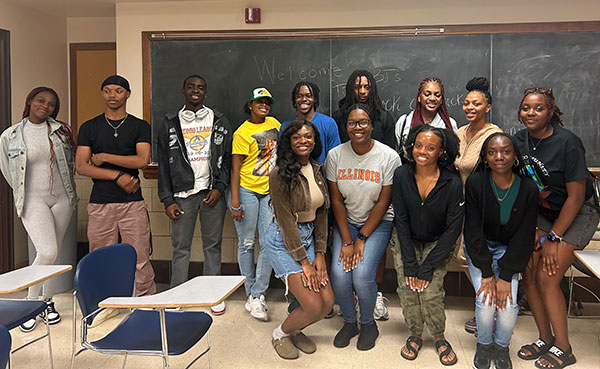
NABJ meeting
Photos provided by Faith Lee, pictured at center in the “Illinois” T-shirt.

Share on social

NBC News’ chief political analyst Chuck Todd to visit the University of Illinois for a conversation on presidential election results


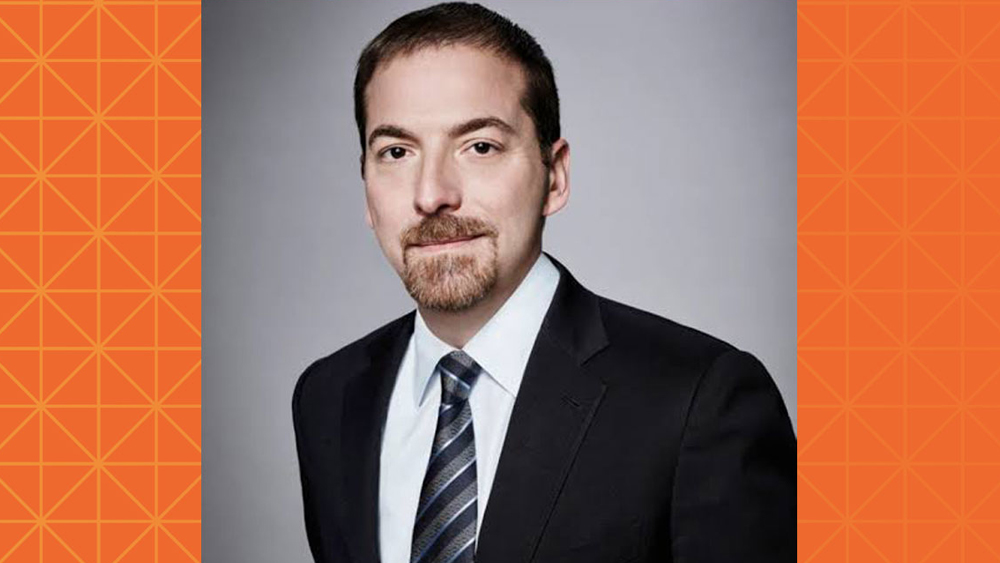
Chuck Todd, NBC News’ chief political analyst and former moderator of the network’s flagship Sunday public affairs program Meet the Press, will be on the University of Illinois Urbana-Champaign campus for a conversation about the presidential election results on Tuesday, Dec. 3, from 5-6 p.m.

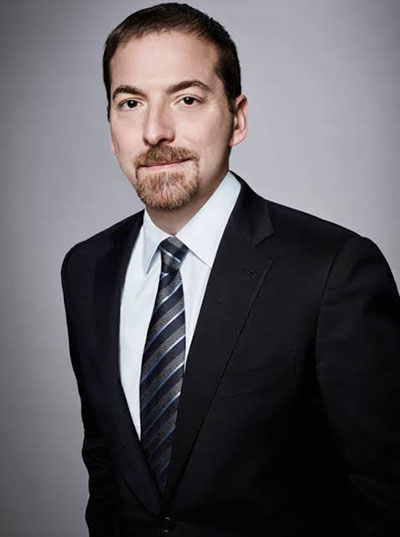
Chuck Todd

Todd will discuss what we can learn about voters and the country following the election results, what kind of messaging we can expect in the president’s first 100 days, the importance of local news, as well as some of his career highlights.

This event is free and open to the public and is presented by the Richard and Leslie Frank Center for Leadership and Innovation in Media at the University of Illinois College of Media. 

Attendees may join the event in the Gregory Hall auditorium (Room 112), 810 S. Wright, Urbana, or register to join via Zoom. The conversation will be led by Colleen King, director of the Frank Center and clinical assistant professor of journalism. 

“There is no one better qualified to help us understand the state of American politics than Chuck Todd,” King said. “For three decades, he has had a front-row seat to American politics and held the country’s top lawmakers accountable week after week. The Frank Center is honored to welcome him to Illinois at such a critical time.” 

Todd, a three-time Emmy Award-winner for his contributions to NBC News’ election night and breaking news coverage, was moderator of Meet the Press from 2014 through 2023. Building on the success of MTP Daily, which Todd anchored for eight seasons on MSNBC, Todd launched Meet the Press NOW in 2022—a daily show on the streaming platform NBC News NOW—that brings the insight and analysis made famous by the Sunday show to a wider audience than ever before. Todd also hosts the seasonal deep-dive show Meet the Press Reports and the weekly podcast Chuck ToddCast.

For more information, please contact Colleen King at cck@illinois.edu. 

Share on social

Journalism alumna Kate McQueen chosen for Henry Fuhrmann Mentor Award

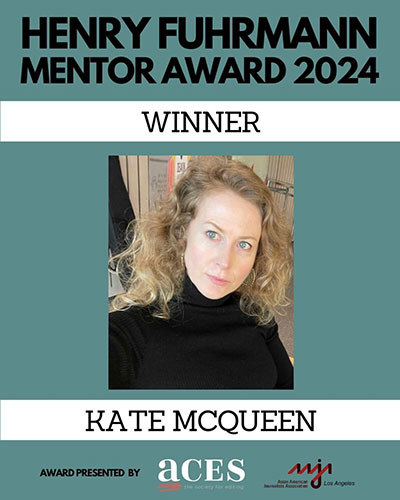
Kate McQueen

Kate McQueen (BA ’02, LAS; MS ’17, journalism) has been named the winner of the 2024 Henry Fuhrmann Mentor Award by ACES: The Society for Editing and the Asian American Journalists Association-Los Angeles.

McQueen, editorial director of the Pollen Initiative, was honored for her work with new and aspiring journalists and nonfiction writers who are incarcerated. 

McQueen, who mentored writers at San Quentin State Prison who were working to tell their stories from behind bars, was awarded a $1,000 prize. 

“No coincidence, my progress as a published writer and, far more importantly, as a better person blossomed since I had the good fortune to cross paths with Kate … I am set to begin a University of California, Berkeley two-year journalism fellowship this fall, which was only possible due to Kate’s coordination and encouragement,” said Joe Garcia, one of Quinn’s proteges.

Before joining the Pollen Initiative, which provides media and leadership training for incarcerated people, McQueen was an editorial adviser for Wall City, San Quentin’s prisoner-run quarterly magazine, and worked with the Prison Journalism Project.  

“When you give incarcerated writers encouragement to try hard and excel at the journalistic practice, it’s amazing what they accomplish, from starting prison media centers to bylines in The New Yorker,” said McQueen. “Thank you, ACES/AAJA, for recognizing that fostering journalists in prison is important. I’m deeply honored that you chose to highlight my work as a mentor inside the walls.”

McQueen is a writer and lecturer at University of California, Santa Cruz, specializing in literary journalism, with a focus on narratives of crime and justice. 

In its second year, the Fuhrmann Mentor Award is given jointly by ACES and AAJA-LA in honor of their late colleague to a journalism mentor who has consistently guided and supported others.

Read more. 

Journalism alum Sal Nudo publishes new guidebook on Champaign-Urbana

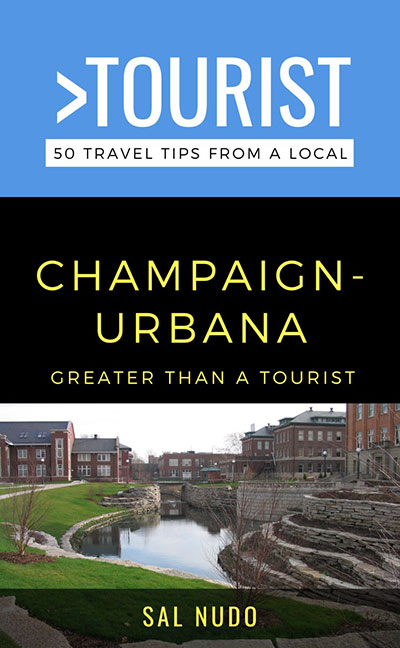
Sal Nudo "Tourist" book

Sal Nudo (MS ’16, journalism) has published a guidebook, Champaign-Urbana Greater than a Tourist, which contains advice on places to eat and visit in C-U and information about the University of Illinois Urbana-Champaign. The book is part of CZYK Publishing’s Greater than a Tourist series. 

The 50 categories in the guidebook include the twin cities’ annual events and many parks and restaurants, interesting C-U facts about the town’s technological innovations, famous past residents, and metro-agricultural landscape. Art, cultural heritage, family activities, and shopping options are among the guidebook’s many other topics.

“From seeking books on the third-floor nooks and crannies of Jane Addams Book Shop to strolling among the sunflowers in the wide-open field of Clearview Farm, writing the C-U version of Greater Than a Tourist brought me closer to my town and gave me a renewed appreciation of our local businesses and residents,” Nudo writes.

Nudo is a writer and communications professional who has worked at the University of Illinois Urbana-Champaign for nearly 20 years. He has published multiple books that are available on Amazon, including  Learning Journalism Where Writers Rise: Four Enlightening Years in Graduate School at the University of Illinois Urbana-Champaign and Far From Mars.

Have newspaper political endorsements outlived their purpose?


Melita Garza, associate professor and Tom and June Netzel Sleeman Scholar in Business Journalism, is a journalism historian who studies news as an agent of democracy. University of Illinois News Bureau editor Lois Yoksoulian discussed the history and future of presidential endorsements with Garza in light of recent nonendorsement decisions within some news organizations.

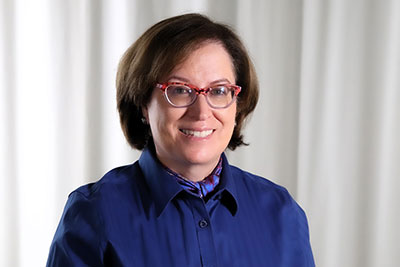
Melita Garza

Melita Garza, associate professor and Tom and June Netzel Sleeman Scholar in Business Journalism, is a journalism historian who studies news as an agent of democracy. University of Illinois News Bureau editor Lois Yoksoulian discussed the history and future of presidential endorsements with Garza in light of recent nonendorsement decisions within some news organizations. 

Why do some newspapers endorse presidential candidates?

In the early days of the republic, newspapers were partisan tools, often funded by politicians. In the early 1800s, it was fairly common to see publishers and editors as leaders of local political parties. Local and national party tickets were printed in newspapers, and the role of editors and publishers in state conventions was announced in the paper, too. 

Such open political involvement today would be seen as unethical and would clearly compromise the news product. As the 19th century progressed, the press became free of party control. By the early 20th century, traditional newspapers pursued the widest audiences possible, emphasizing news that would appeal across the political spectrum. 

Advertising subsidized the news pages—the larger the circulation, the more newspapers could charge advertisers. Journalists bolstered their credibility and high standards through the Society of Professional Journalists Code of Ethics. 

The divide between the owner, the publisher and the newsroom became sacrosanct, so much so that when Chicago’s Tribune Tower was completed in 1925, only the two center elevators in the four-elevator bank serving the Nathan Hale lobby of the newspaper stopped on the 4th and 5th floors—the floors where the editorial department was housed. It wasn’t until decades later that those elevators finally began serving all 24 floors, including the Chicago Tribune’s advertising and circulation departments.

At a completely independent newspaper, even the editorial board would have its say without interference from the owner. More often, the publisher controls the editorial board, including having a final say on political endorsements. Ultimately, however, the owner reserves the right to call the shots. After all, it is their money that backs the newspaper. 

Not all newspapers endorsed presidential candidates in the past, but those that did typically reflected the publisher’s public policy preferences for the country and the world. Embedded in this point of view are the publisher’s values and ideals. While an editorial board typically has crafted the political endorsements, the final word has always been the publisher’s prerogative. The New York Times, the nation’s newspaper of record, first endorsed a presidential candidate in 1860 when it supported Abraham Lincoln. It has endorsed presidential candidates every four years since, including this year.

Why isn’t a newspaper’s endorsement of a candidate seen as a conflict of interest?

Some newspaper readers historically have been well aware of the sharp divide between news and opinion. In an ideal world, opinion and editorial pages would be clearly labeled and set apart, either on the back pages of the main section or, in larger newspapers, in a stand-alone Sunday section. Some news and editorial departments function like church and state, rigidly separated. For instance, at The Wall Street Journal, one side doesn’t talk to the other. But not all newspapers are church and state. Some allow opinion to creep into the news columns by selecting stories they print or by allowing political opinion to surface. 

In the digital era, the distinction between opinion and news has become even more blurred, largely because digital articles tend to come across smartphones, tablets and computers independent of the news “pages.” Content flashes across the screen, and to a scrolling news consumer, it’s not always obvious whether it’s presented as fact or opinion. Even readers who understand this may be skeptical that individual journalists can remain independent of their bosses’ ideas.

What has changed in the newspaper business and political climate that has led papers like The Washington Post and The Los Angeles Times to ditch their endorsements?

The Age of the Internet, the creation of Craigslist, and the concomitant migration of advertisements online broke the newspaper revenue model. While there have always been multimillionaire newspaper owners, like William Randolph Hearst who owned the biggest pile of newspapers in the world in the 1930s, today’s newspaper-owning moguls often have other businesses, creating the potential for additional conflicts. 

That said, what’s changed the most is neither the newspaper business nor “the political climate.” The big change is the casual acceptance and even applause for an ex-president and current presidential candidate who promises retribution against those who exercise the right of the free press to oppose his policies.

What is the value of candidate endorsements? 

Some have said that newspapers as a whole have outlived their purpose. Candidate endorsements offer readers insight into the newspaper’s thinking about the direction and needs of the country and what should be expected from the leader of the world’s oldest constitutional democracy. Readers have always been free to take it or leave it. There is little empirical evidence that these presidential endorsements swayed readers to vote one way or another. 

Will subscription cancellations in the wake of non-endorsements impact the bottom line for papers like The Washington Post and The Los Angeles Times? 

Understandably, neither the business nor newsroom sides benefit when circulation drops. A lower number of subscribers still leads to lost advertising revenue. Meanwhile, journalists find a smaller audience for their work, lessening its reach and impact. Most devastatingly, it holds the journalists responsible for the publisher’s decision and punishes them for it. It also harms news consumers, leaving them less informed. 

You have to ask, however, whether those 250,000 or so people who canceled their Jeff Bezos-owned Washington Post subscription also canceled their Bezos-owned Amazon Prime, Amazon Music and Amazon Cloud accounts—I think not. The only people hurt by the cancellation were the journalists, who probably will face another round of layoffs.

Editor’s note:      

To reach Melita Garza, email melitamg@illinois.edu. 

View original press release.
Share on social

DEV College of Media
119 Gregory Hall
810 S. Wright St.
Urbana, IL 61801
217-333-2350