Journalism alum Doug Isbell combines passion for science, writing as NASA JPL risk communication coordinator


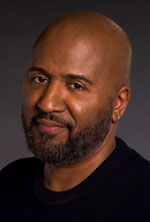
Doug Isbell
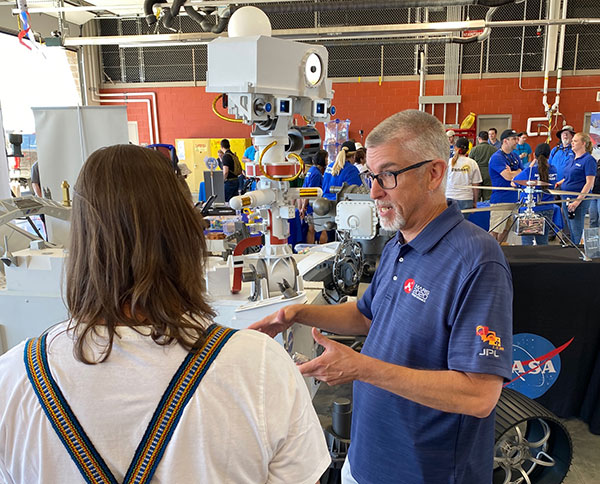
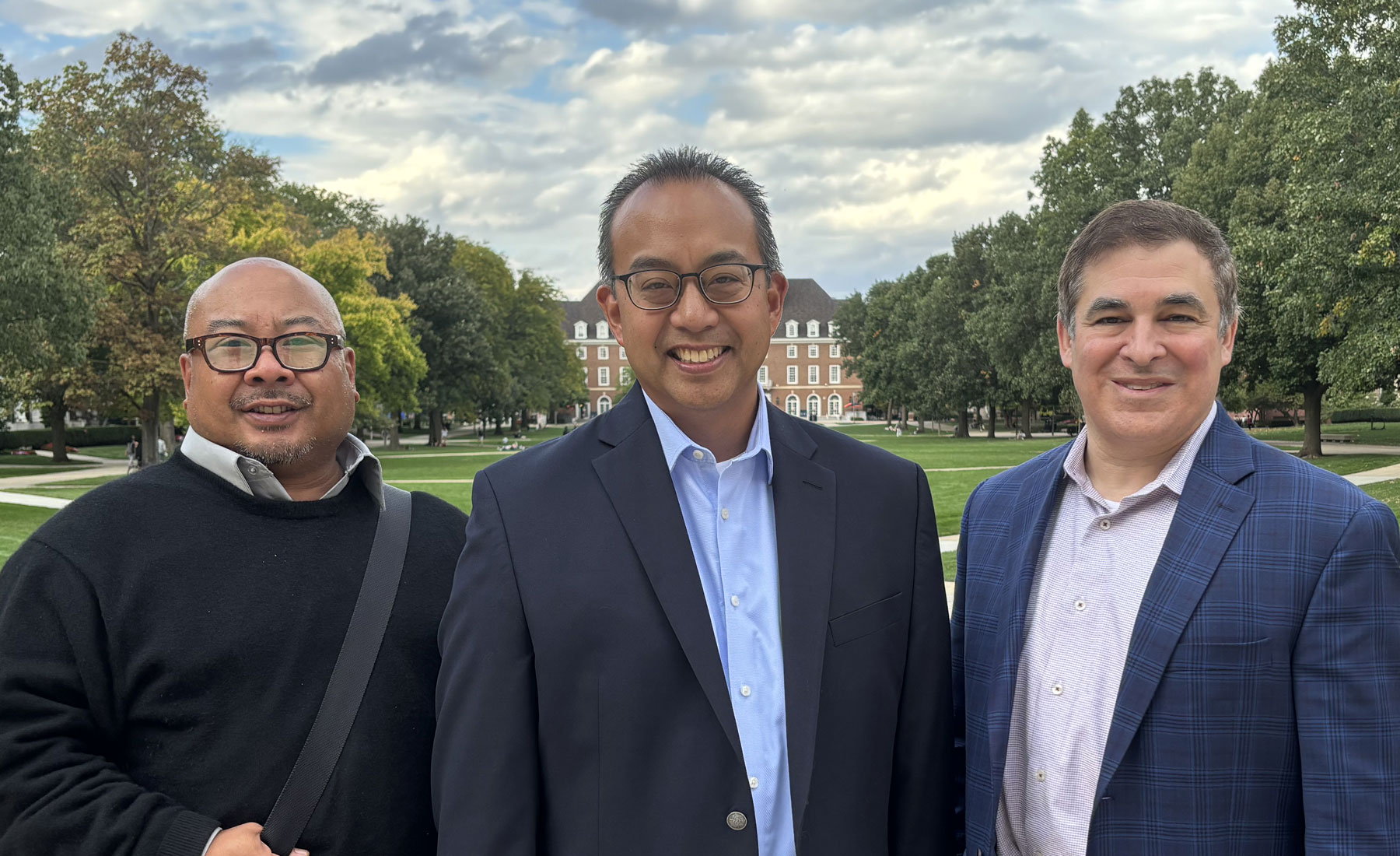
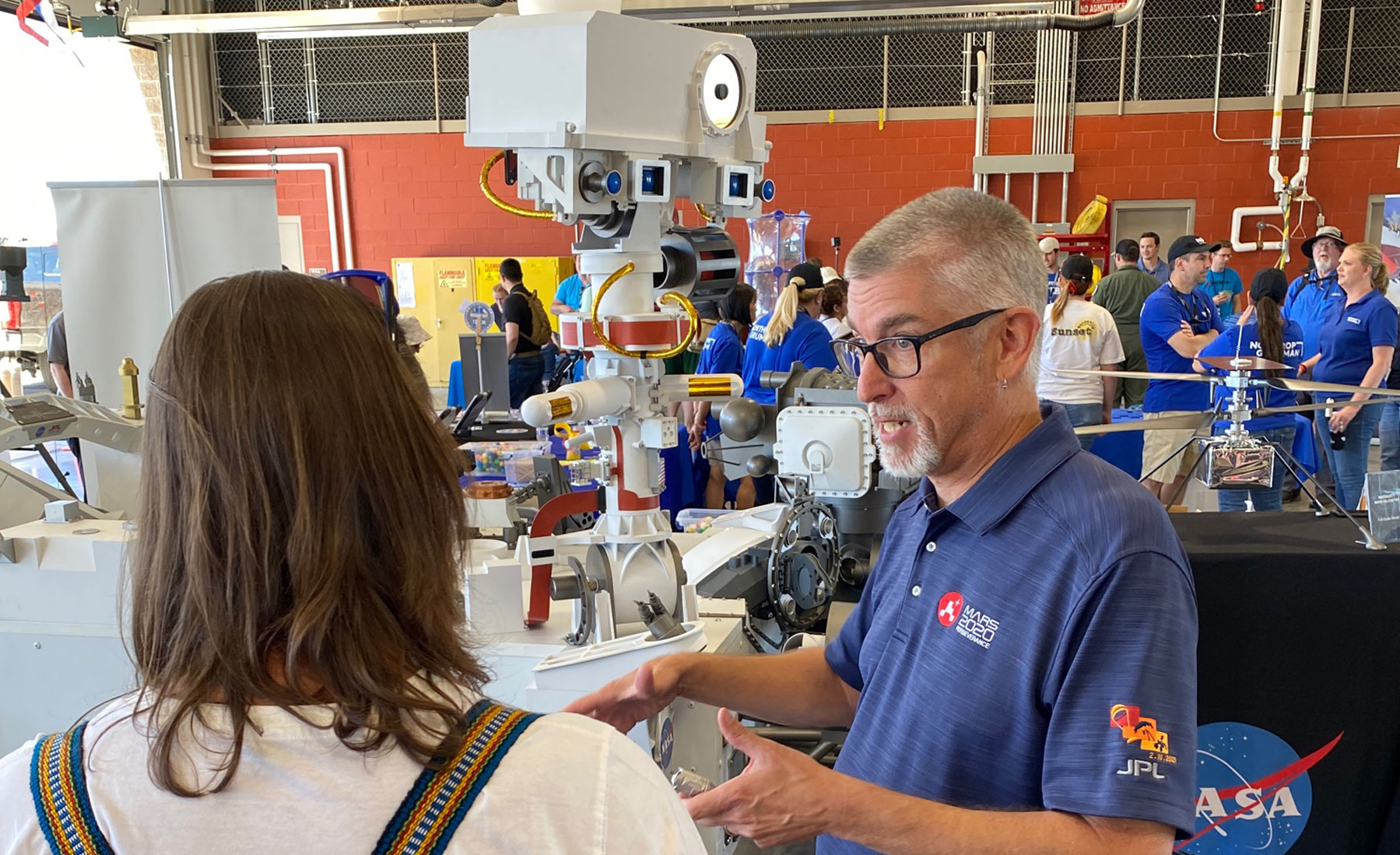
Doug Isbell (BS ’87, Grainger engineering; MS ’88, journalism) looks for opportunities to talk directly with the public whenever possible, such as at this NASA JPL exhibit booth at a popular summer air show at Hill Air Force Base in Utah, near where samples from Mars may one day land on Earth.

After 36 years in aerospace communications, Doug Isbell still thanks those lucky stars he’s always admired for the opportunity to create a successful career that combines his passion for science and his love of writing. 

Isbell’s fascination with space began when he was eight years old, around the time the last few Apollo missions landed on the moon. From then on, Isbell knew he wanted to be involved in space one day.

“Those [missions] made a big impression on me,” said Isbell, who grew up in the suburbs of Chicago.

Isbell (BS ’87, Grainger engineering; MS ’88, journalism) set his sights on becoming an astronautical engineer, but as he worked his way through the program and the upper-level courses, he started to have some doubts.

“I felt a little like I was not going to be an outstanding engineer and I wondered, how can I still be involved in aerospace? And I thought about writing,” he said.

Isbell did finish his bachelor’s degree in aerospace engineering but went on to get a master’s degree in journalism. Moving to Washington, D.C., to seek a start to his career, his first job was working as a writer for a business technology newspaper, Washington Technology, and then a reporter covering NASA for a weekly newspaper, Space News. 

Four years later, he decided to shift from journalism to the communications side and landed a job at NASA headquarters, eventually becoming a public affairs officer for planetary science. 

During that time, he helped with communications surrounding the Mars Pathfinder mission and the launch of the legendary mission of the Cassini spacecraft to Saturn.

“That was in the middle of a sort of renaissance of planetary science,” Isbell said. “[The Mars Pathfinder mission] was a huge global hit and kind of the first mission of the Internet age.” 

Isbell then spent nearly 10 years as a public affairs officer and director of educational outreach for the National Optical Astronomy Observatory in Tucson, Arizona, and the National Solar Observatory when it was in Tucson (now in Boulder, Colorado). 

He also served as the United States single-point-of-contact for the International Year of Astronomy 2009—a global celebration recognizing the first astronomical observation with a telescope by Galileo Galilei more than 400 years ago. 

Since 2010, Isbell has served as the cross-program risk communication coordinator at NASA’s Jet Propulsion Laboratory in Pasadena, California, working on issues related to space nuclear power and sample return, including the most recent two ongoing Mars rover missions, Curiosity and Perseverance. 

Isbell develops communications materials related to “spacecraft that would carry nuclear materials and nuclear power, and then kind of a growing area of interest is something called planetary protection,” he said. 

Planetary protection is the idea of protecting planets from potential biological contamination during a mission so they can be studied in their original state. It also involves protecting Earth’s biosphere when samples are brought back from other planetary bodies. 

“A lot of what we’re working on now is planning for Mars sample return,” he said. “Looking at my career overall, I’ll probably spend almost half of it on Mars missions and leading up to this idea of returning samples, and the value that can be provided by bringing them into Earth-based laboratories.” 

At the Jet Propulsion Laboratory (which is operated for NASA by Caltech), his group focuses on launch approval engineering, which means helping on the front end with aspects of the environmental reviews needed before a project can proceed and, on the back end, sharing public safety information around the launches and landings of missions. 

Whether it’s writing fact sheets about a mission or training spokespeople on how to share information with the public in engaging ways, Isbell said most of his job is behind-the-scenes, preparing for the tough questions and explaining the “why” behind each project.

“A lot of what I do is to try to explain potential hazards and how we’re handling them,” he said. “My job is to frame these things correctly and train people to talk about them effectively, and anticipate what people’s questions might be. It’s a lot of strategy—what might people be concerned about with this mission or this activity, and how can we address those concerns with as much detail as people can absorb.”

It’s been many years since Isbell was a journalism student at Illinois, learning from professors like Bob Reid and Tom Littlewood, but their teachings about investigative reporting and journalism ethics remain useful in his career today. Isbell also credits Michael Lembeck, an associate professor in the University’s Department of Aerospace Engineering, and a graduate student in the department at the time, for helping kickstart his writing career by encouraging a story on a student design project that led to Isbell’s first published story.

Isbell enjoys staying involved with the University, sharing his knowledge with students as a guest panelist for one of the first virtual Media Career Nights in 2020 and consulting with faculty about the structure of the new master’s in journalism track with a focus on science and technology. 

His passion for science doesn’t disappear at the end of a workday. Every couple of months, he hosts a family-friendly “space night” at a nearby brewery, where he brings out a telescope to view the moon and planets with the community. 

Isbell or a colleague talk about recent scientific accomplishments and exciting developments in space. About 30 to 40 people usually show up, filled with excitement and interest about the various topics.  

“I think [space exploration] is inspirational to people. It’s why I have the career that I have, and do what I do,” he said. 

Isbell is still captivated by space and feels grateful his job as a science writer allows him to be immersed in that world every day. 

“It is amazing to be involved in this stuff,” he said. “The science questions are the biggest ones that we can ask. ‘Are we alone in the universe, or least in the solar system?’ It’s kind of an interesting answer either way.”

25th anniversary of Ebertfest announces ‘Star 80’ as opening night film, ‘The Best Man’ as centerpiece

Ebertfest 25th logo

Directors Malcolm D. Lee and Lisa Cortes, actors Eric Roberts and Mariel Hemingway to attend celebration   

Additional filmmaker guests include director Diane Moore with conductor Roderick Cox

Star 80  Eric Roberts Mariel Hemingway

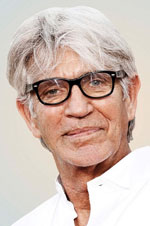
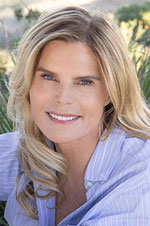
Roger Ebert’s Film Festival, also known as Ebertfest, announced today the 25th anniversary, running April 17-20, 2024, at the Virginia Theatre in downtown Champaign, will kick off with an opening night screening of Bob Fosse’s critically acclaimed film Star 80 with stars Eric Roberts and Mariel Hemingway in attendance. Roger praised the film with a glowing 4-star review, calling it “an important movie…. Devastating, violent, hopeless, and important, because it holds a mirror up to a part of the world we live in, and helps us see it more clearly.”  Roger has praised performances by both Hemingway and Roberts over the years.

The Best Man Malcolm D. Lee

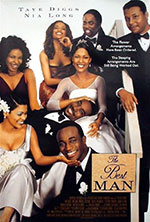
Ebertfest will showcase the 25th anniversary of writer-director Malcolm D. Lee’s wedding-themed, reunion romantic comedy The Best Man as this year’s centerpiece film with Lee coming to celebrate. 

“We are thrilled to welcome Lee with his first film which was produced by his cousin Spike Lee, in 1999, the same year as our inaugural festival,” said Ebertfest co-founder, producer and host, Chaz Ebert. “The Best Man has become a classic and introduced stars we all know today including Taye Diggs, Nia Long, Morris Chestnut, Terrence Howard and Regina Hall, among others.” 

Lee has directed numerous crowd-pleasing comedies including Girls Trip and The Best Man Holiday.

Little Richard Lisa Cortes

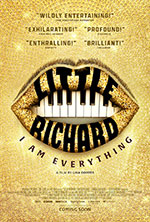
Lisa Cortes, Academy Award-nominated and Emmy-winning producer and director, will attend Ebertfest to discuss her film Little Richard: I Am Everything, a documentary about Little Richard, the unique, flamboyant, rock ‘n’ roll icon who shaped the world of music with hits like “Tutti Frutti” and “Long Tall Sally.”

Ebertfest will continue its illustrious tradition of music in films and on stage. Chaz Ebert reminds us that Ebertfest was born out of Roger’s conviction that movies can be a machine that generates empathy. 

“That conviction has evolved to what I call my FECK Principles: Forgiveness, Empathy, Compassion, and Kindness. Movies, combined with music can have a profound effect on encouraging more compassion in the world,” said Ebert. “The films and musical performances we have chosen for our 25th anniversary are ones that would make Roger proud.”  

She will introduce her new book, It’s Time to Give a FECK: Elevating Humanity Through Forgiveness, Empathy, Compassion and Kindness, which will be released on May 7, 2024.

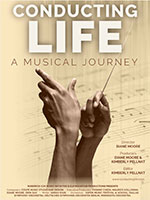
Conducting Life Diane Moore Roderick Cox

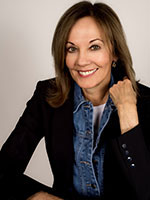
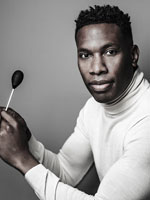
Director Diane Moore, a filmmaker who has worked in the visual arts field for more than 15 years, and Roderick Cox, a world-renowned orchestra conductor and winner of the 2018 Sir Georg Solti Conducting Award, will join the stage to discuss Conducting Life, a documentary that follows the remarkable journey of Cox as he pursues his dream to secure a top position with a major orchestra. Maestro Cox will come in from Berlin to join Ebertfest.

Additional updates to the festival program will be announced in the coming weeks.

Ebertfest passes are currently available to purchase online or by calling the box office at 217-356-9063. Individual festival passes to see all films cost $200, which includes reserved seating. New this year are 4-film passes for $70: choose between an Evening Pass or a Saturday Pass.

Roger Ebert was a Pulitzer Prize-winning film critic for the Chicago Sun-Times, University of Illinois journalism alumnus, and Urbana native. Ebertfest is a collaboration between his widow, Ebert Digital CEO Chaz Ebert, and the University of Illinois College of Media.

For additional information, please visit ebertfest.com and follow Ebertfest on social media:

To become a supporting Festival Sponsor please contact Molly Cornyn, the Festival Coordinator, at mcornyn2@illinois.edu.

###

PRESS CONTACT: Molly Cornyn, mcornyn2@illinois.edu, 217-333-1590 

View Variety’s exclusive coverage.

(Photo of Eric Roberts by Frazer Harrison, Getty Images.)

Amanda Ciafone lends Coca-Cola expertise to new TV series ‘A History of the World in Six Glasses’


Amanda Ciafone filming
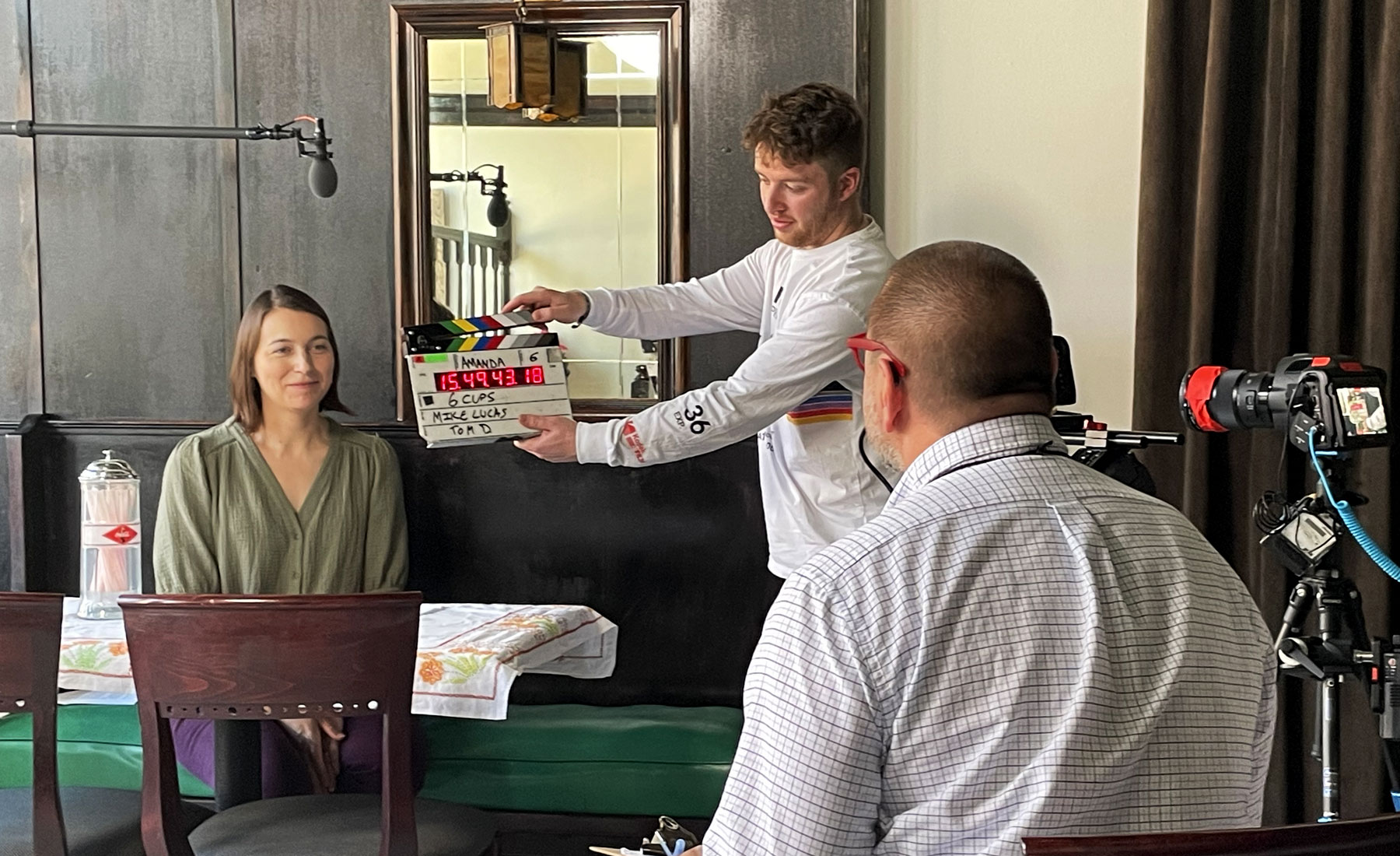
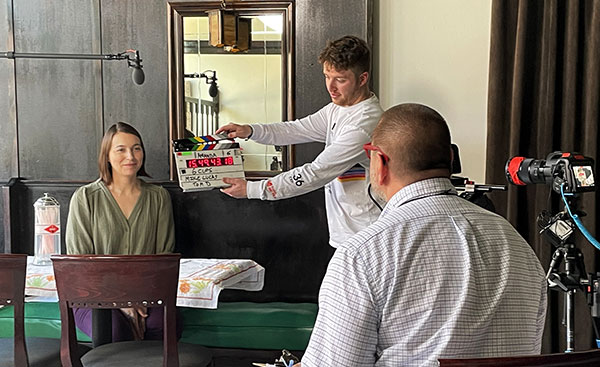
Amanda Ciafone, associate professor of media and cinema studies with an appointment in the Institute of Communications Research, was interviewed on August 19, 2022, at Flesor’s Candy Kitchen in Tuscola, Illinois, for the soda episode of the new TV series ‘A History of the World in Six Glasses.’ 

From a corner table in the Coca-Cola-branded brick building of Flesor’s Candy Kitchen (est. 1901) in Tuscola, Illinois—with a nostalgic Coca-Cola straw canister positioned nearby—Amanda Ciafone, associate professor of media and cinema studies, shared stories about Coca-Cola’s origins with producers of the new TV series A History of the World in Six Glasses.

Streaming on Fox Nation, the six-episode series stars comedians Dan Aykroyd, co-host Jim Belushi, and their friends Kevin Nealon, Jon Lovitz, and George Wendt. It’s based on a book of the same title by Tom Standage, who is interviewed in the broadcast among other authors and historians, where the history of beer, spirits, soda, wine, tea, and coffee are explored. The episodes are peppered with retro stock footage and ads, bubbly animations, as well as anecdotes, trivia, and taste tests around the bar from the chummy cast. 

Ciafone is featured in episode three—”Soda: American Fizz Goes Global”—drawing upon her research of Coke from her first book, Counter-Cola: A Multinational History of the Global Corporation (University of California, 2019). Ciafone’s book examines the Coca-Cola Company and the politics, cultural representations, and social movements around the multinational corporation’s impact on the environment, consumer health, workers’ rights and conditions, and international cultures and economies. She also has an appointment in the Institute of Communications Research and is ICR’s director of graduate studies.

“With the rising temperance movement in the late 19th century, [pharmacist and inventor] John Pemberton realized taking the red wine out will allow his drink to be marketable to a wider consumer base,” Ciafone explained in the episode. “So he’s seeking ingredients that will give you that kind of buzzy uplift without the alcohol, and he turns to coca and kola and puts them together to make this drink: Coca-Cola.”

Ciafone also described how social concerns, such as kids drinking caffeine, affected Coca-Cola.

“While the temperance movement, and eventually Prohibition, was a great boon to Coca-Cola because it didn’t have alcohol, those same forces of concern about people’s consumption of drinks that had ingredients that were potentially risky or unknown eventually brought Coca-Cola under the focus of both popular movements and government regulators.”

But of course, Coca-Cola survived court cases, brand wars, sugar substitutions, and other sticky situations.

Ciafone paraphrased a famous management guru, Peter Drucker, who said that “Coca-Cola is fundamentally an advertiser with access to a distribution system,” she said. “And it’s true. So much of their business is the production of the image around the drinks.”

To learn more about the popularity of soda (or pop), its place in American history, and its global impact, watch A History of the World in Six Glasses on Fox Nation.

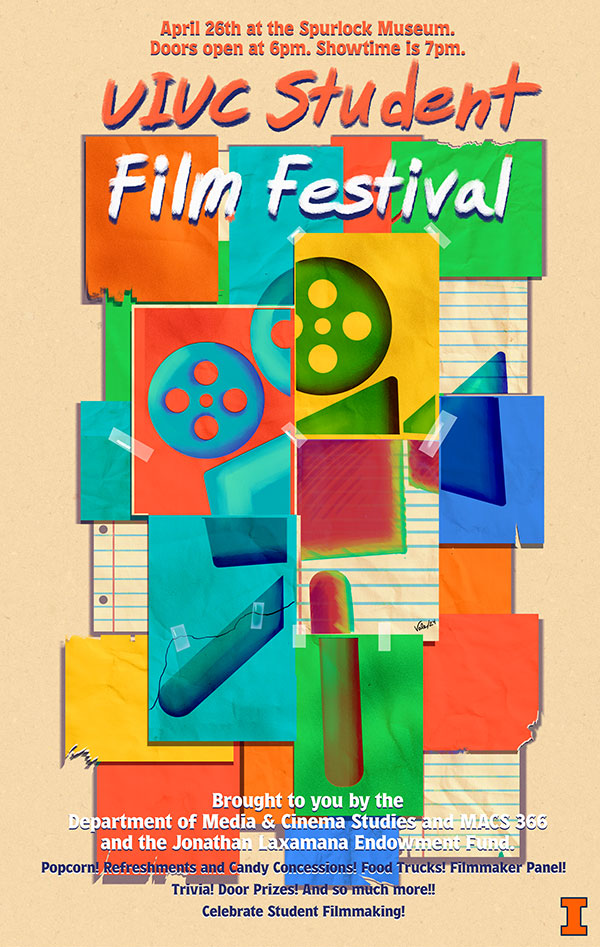
UIUC Student Film Festival 2024


UPDATE: Watch a recording of the 2024 UIUC Student Film Festival, featuring 13 film selections created by students at the University of Illinois. 

UIUC Student Film Fest 2024 poster

Join us for a celebration of student filmmaking at the 15th annual UIUC Student Film Festival, featuring the work of students from across the University of Illinois campus. Programming will include roughly 2 hours of student shorts, a filmmaker panel, and some trivia and door prizes!

Doors open at 6 p.m.

This event is produced, programmed, and curated by students in MACS 366: Film Festivals. 

Sponsored by the Department of Media & Cinema Studies and the Jonathan Laxamana Endowment Fund.


Illinois Public Media to launch new radio station focused on news and culture authentically reflecting the Black experience


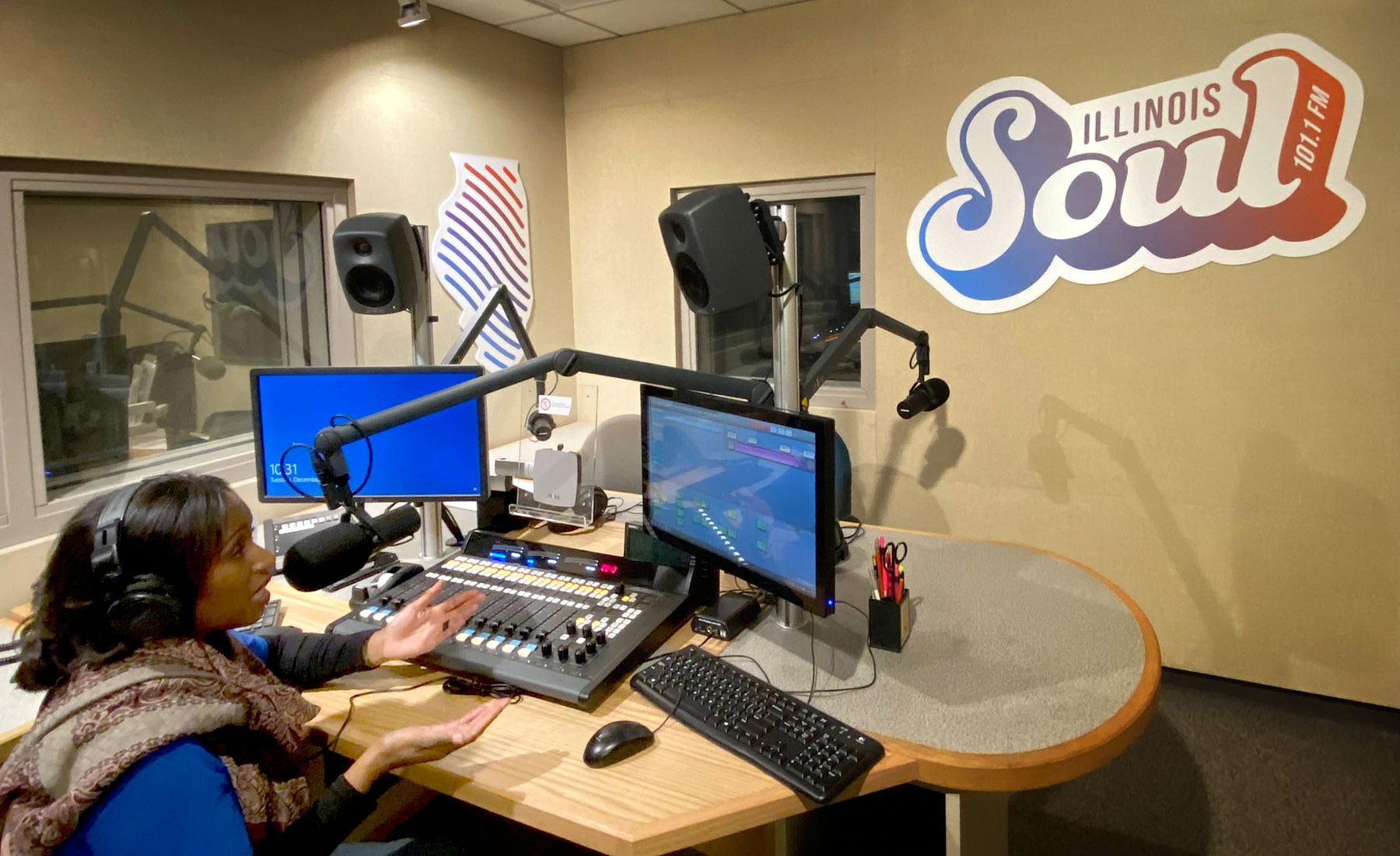
Illinois Soul at IPM

Illinois Public Media is proud to announce the launch of Illinois Soul, a new radio station highlighting Black experiences, celebrating Black culture, elevating Black voices, and showcasing Black music.

“Public media is uniquely positioned in today’s media landscape to meet the needs of its community in ways that commercial media might not, and this new service will not only celebrate Black voices, history, and culture, it will connect listeners to the issues that matter most to those across our region.” said Moss Bresnahan, executive director for Illinois Public Media, a not-for-profit public media service of the College of Media at the University of Illinois. “We are so excited to launch Illinois Soul, bringing the best in jazz, R&B, and gospel to our listeners, with a unique focus on the Black community.”

This new audio service will make its on-air debut February 1, 2024, at the start of Black History Month and will be broadcast on WILL-FM 101.1 and available to stream live at illinoissoul.org. Illinois Soul will bring central Illinois and beyond a new 24/7 public media audio service featuring exceptional, Black-hosted NPR news programs—such as Code Switch and It’s Been a Minute—alongside other popular programs from musicians Will Downing to Robert Glasper, mixed with smooth jazz, neo soul, R&B, and throwback jams.

“On a national level, Illinois Soul will be the ground-breaking format for attracting Black adult audiences to public media by featuring high-quality Black NPR news talk shows married with neo-soul, smooth jazz, and R&B music,” said Jill Clements, assistant corporate support director at Illinois Public Media and internal driving force behind Illinois Soul. “We’re also proud to be a part of the local community engagement efforts for better connecting the University of Illinois and Black communities.”

Most importantly, with the launch of Illinois Soul comes a new local community affairs program, airing each week and highlighting issues important to Black adult audiences in central Illinois.

“I’m very excited to help develop a new weekly broadcast and other programs that bring Black communities together to discuss issues and, more importantly, discuss solutions and ways to empower the community,” said Reginald Hardwick, director of news and public affairs at Illinois Public Media. “We didn’t just create the station inside the walls of IPM. We had important input from community advisors, hundreds of community surveys, and dozens of face-to-face events. We’ve done our homework.”

Illinois Soul logo

Illinois Public Media’s work in creating Illinois Soul is rooted in the idea of intentionally changing the media landscape with the support and guidance from respected Black community leaders and Black University of Illinois professionals who are advocating for the mission of the station and for its listeners. 

“The importance of Black voices and perspectives is more important today than ever. This radio avenue and social media platform are critical life supports to tell the Black communities’ story and builds, empowers, and informs communities of Black values and contributions,” said Tracy Parsons, community advisory member for Illinois Soul and Community Coalition facilitator.

Nielsen research shows Black Americans listen to radio and podcasts longer than other communities. [1-2] Additionally, the Black population is among the fastest growing across the listening area,[3] while Black narratives, images, and culture are not reflected consistently in mainstream media. Over the past two decades, Black-owned media companies have disappeared in central Illinois leaving these communities underserved.

“The contribution of Black People in the media should be affirmed and celebrated in every community. When there is no representation of Black Voice in media, there is a gap in history,” said Shandra Summerville, community advisory member for Illinois Soul and cultural and linguistic competence coordinator at Champaign County Mental Health and Developmental Disabilities.

Illinois Public Media recognizes this media imbalance and sees this as an important opportunity to unapologetically fill the gap by providing a platform that celebrates Black experiences, Black culture, and Black voices.

“After the murder of George Floyd, there was a racial reckoning in America, including the media. It would have been easy to put up a slogan and vow to ‘work on’ more diversity. But here at Illinois Public Media, we’ve put the work into creating an audio service that elevates the voices and culture of central Illinois’ Black community,” continued Hardwick.

According to feedback from more than 350 surveys distributed and filled out locally – along with conversations at nearly 30 public events – a local Black media service will be important for amplifying Black stories, connecting communities, and celebrating Black excellence. Illinois Soul begins broadcasting full time February 1, 2024, on WILL-FM 101.1, and 90.9 HD 2 as well as streaming live at illinoissoul.org. FM 101.1’s current all classical lineup is now available as a 24/7 classical stream at will.illinois.edu.

REFERENCES

[1] Nielsen, “How Black audiences are engaging with audio more than ever”

[2] Inside Radio, “Nielsen’s African American Consumer Study Notes Power Of Audio, Challenges To Advertisers”

[3] Illinois Department of Public Health, “Population by Race for Illinois and its Counties”

View original press release.

Roger Ebert’s Film Festival passes on sale now


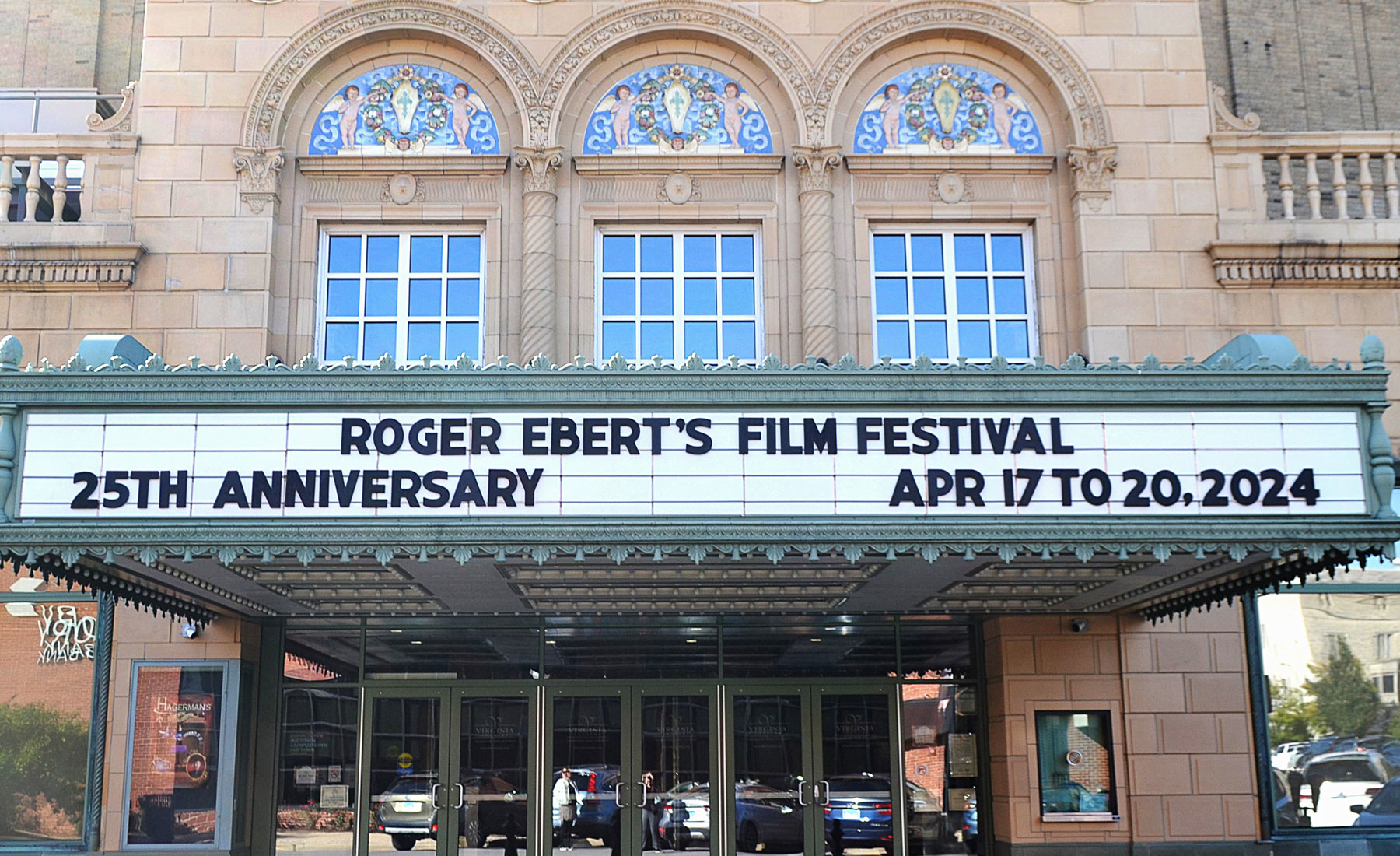
Virginia Theatre marquee

Festival passes for Roger Ebert’s Film Festival, to be held Wednesday, April 17, through Saturday, April 20, 2024, will go on sale Friday, Dec. 1, at 10 a.m. CT. Also known as Ebertfest, the four-day festival—named for the late Pulitzer Prize-winning film critic, University of Illinois journalism alumnus, and Urbana native Roger Ebert—will celebrate its 25th year with more audience participation and two new festival passes to provide flexible options to attend.

In honor of Ebertfest’s silver anniversary, organizers are inviting audience members to suggest films that are 25 years or older that they would like to see on the program. Entries can be submitted to ebertfest@yahoo.com.

Individual festival passes range from $70 to $200. New this year is a 4-Film Pass for $70; choose between a 4-Film Evening Pass (final screenings on Wednesday, Thursday, Friday, and Saturday) or a 4-Film Saturday Pass (all films on Saturday). 

VIP sponsorship packages start at $1,800 and include VIP admission for two, lunch and dinner with the filmmakers, invitations to all festival special parties and events, and much more. All films are shown at the historic Virginia Theatre, 203 W. Park Ave., in downtown Champaign. Passes can be purchased at the Virginia Theatre website, box office, or charged by phone at 217-356-9063.

“Ebertfest was created for people who love movies as much as Roger loved movies,” Chaz Ebert said. “We want our audience members and special guests to truly feel like they are a part of a family as we reach this important milestone more than 10 years after Roger’s passing.” 

The festival celebrates films that encourage the FECK Principles (Forgiveness, Empathy, Compassion, and/or Kindness) and showcases them whether they are independent, international, or studio films, including overlooked formats and genres such as 70mm, documentaries, and musicals. It is hosted by Chaz Ebert and Nate Kohn, the festival director, in collaboration with the College of Media at the University of Illinois Urbana-Champaign, Roger’s alma mater. 

In 2024, the program will feature a diverse slate of films, including a prominent short film lineup. Watch for announcements of films and filmmaker guests over the next few months. The full festival program will be announced in March. 

Roger Ebert’s Film Festival relies on generous gifts from donors and sponsors. Gifts of all sizes are vital to the festival and can be made as an option among the funding choices at the College of Media’s website: media.illinois.edu/giving/give-now. (Click on the orange “Give Online Now” button, and select Roger Ebert’s Film Festival Fund under “Champion Innovation in Media Research & Collaborations.”) For additional sponsorship options, visit the Ebertfest website: ebertfest.com/become-sponsor. 

For more information, please contact Molly Cornyn, project coordinator for Roger Ebert’s Film Festival, at mcornyn2@illinois.edu.

Late ‘Laugh-In’ brothers Arte and Coslough Johnson share comedy history with Illinois


The late comedy legend brothers Arte Johnson (BS ’49, radio journalism) and Coslough Johnson (BS ’52, radio journalism) made sure to invest in the future of media by preserving part of its past. 

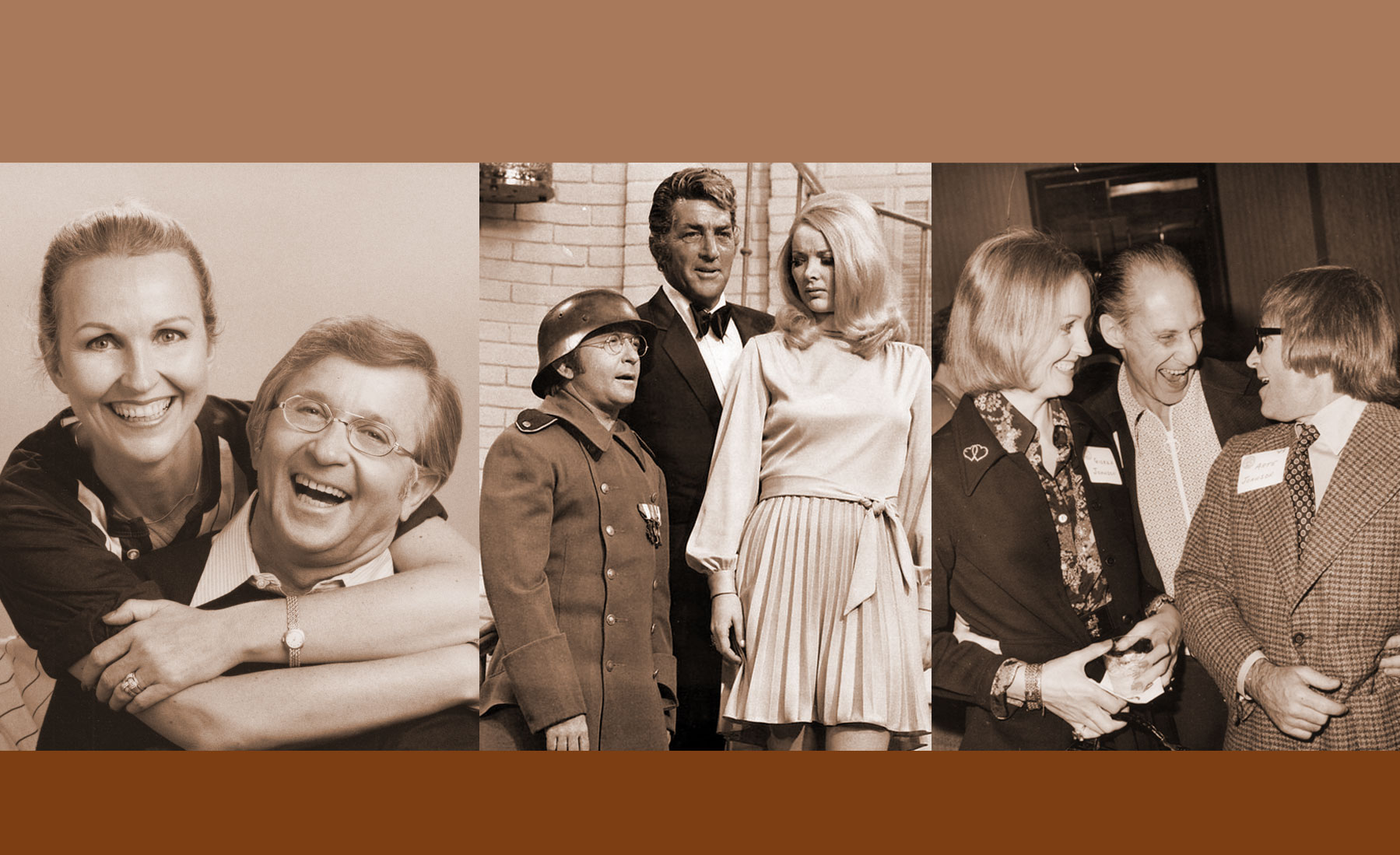
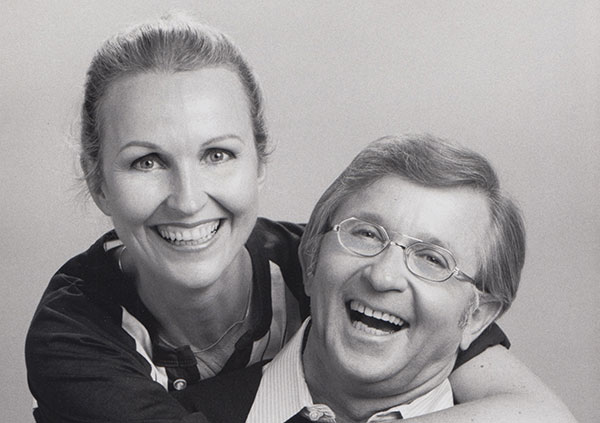
Gisela and Arte Johnson

(Gisela and Arte Johnson by Michael P. Maron Photography.)

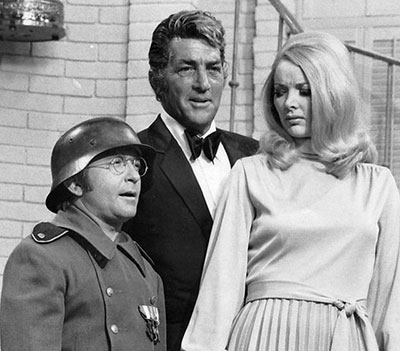
Dean Martin, Arte Johnson, Diane Shatz
Arte Johnson dressed as his German soldier Laugh-In
character, with Dean Martin and Diane Shatz on
The Dean Martin Show. (Wikimedia Commons.)

Both have donated artifacts to the University Library from their most famous collaboration, Rowan and Martin’s Laugh-In, which aired 1968-73 on NBC, in which Arte was an actor and Coslough was a writer. They won Emmy Awards and multiple nominations for their roles on the pioneering comedy sketch show that addressed social and political issues, mixed with one-liners, non-sequitur bits, and jump-cuts at breakneck speed, plus a constant stream of Hollywood cameos. 

Laugh-In brought in the biggest guest stars of the day: Johnny Carson, Carol Burnett, Bob Hope, John Wayne, and Sammy Davis, Jr. Regular cast members included Goldie Hawn and Lily Tomlin. It paved the way for Saturday Night Live, which debuted two years after Laugh-In ended. It was still cemented in TV history three decades after it ended, making TV Guide’s list of 50 greatest shows of all time in 2002.

The Johnson family’s latest gift comes from Arte’s widow, Gisela (pictured above); the couple were married for 51 years until his death in 2019. Earlier this year, Gisela provided the University Library with a wealth of archival materials from Laugh-In and other TV episodes and movies that featured Arte, plus scrapbooks, photographs, and letters. (Learn more about their latest contributions.)

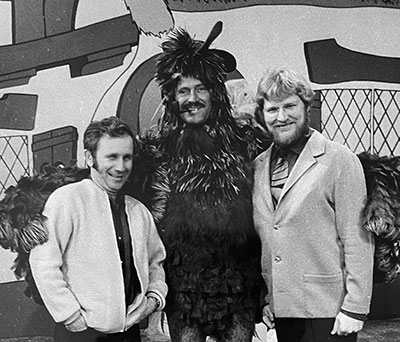
Cos Johnson, Dan Rowan, Chris Bearde
Coslough Johnson, Dan Rowan, and Cos’s writing
partner Chris Bearde. (Photo courtesy of Mary Jane
Ferguson Johnson.)

Coslough previously donated 62 Laugh-In scripts to the University Library. The Library’s 1994 Friendscript newsletter noted its cultural significance: “Whether it’s the satirization of the Vietnam War, the fun poked at politicians and government policies, or the songs sung by the entertainers (all the lyrics are in the scripts), each script gives an interesting snapshot of the issues and tastes of the nation at a particularly unsettled period of our history.” 

By email, Gisela wrote that Arte “loved his University and his years there, and all the friends he made and stayed friends with, all through his time of being famous—it didn’t matter to him, he always was just ARTE.”

During the ’70s, Arte and Gisela visited campus to cheer on the Illini with Arte’s Sigma Alpha Mu fraternity brother and classmate Larry Stewart (BS ’47, journalism). Stewart was a renowned local sports broadcaster, known as the “Voice of the Illini,” calling games for football and basketball, the creator/host of the call-in talk show Penny for Your Thoughts, and general manager of radio station WDWS.

Stewart’s daughter, Debbie, remembers Arte keeping in touch with her dad, calling him and attending Illinois games together. 

“Arte and my dad were great friends till the end of my dad’s life,” Stewart said. “They spoke on the phone frequently and Arte was always sending him postcards. They really enjoyed their friendship.”     

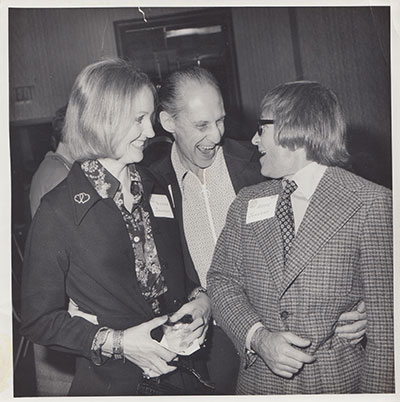
Gisela and Arte Johnson with Larry Stewart
Larry Stewart (BS ’47, journalism), center, greets
Gisela and Arte Johnson at Arte’s Class of 1949
reunion in 1974. (Photo courtesy of Debbie Stewart.)

Arte, who grew up in Chicago, had considered himself a bibliophile and said, “the [University] Library was for me at once a place to escape to, a place of enlightenment, a place of encouragement,” in a 1979-80 Friendscript. Arte was also quoted for his love of libraries, saying in a 1987 issue: “The legacy of the printed word is still one of the greatest gifts one generation can pass on to another.” 

After Arte died, a New York Times obituary described him as “a one-man ensemble on Laugh-In, playing a range of characters with accents, but he was probably best known for the helmeted German soldier who would peer through bushes before slowly uttering, ‘Very interesting.’” He had also starred in episodes of many classic TV shows such as Lost in Space, Bewitched, and Murder, She Wrote, voiced characters in many cartoons such as Animaniacs, The Smurfs, and DuckTales, and narrated dozens of audiobooks including for humor columnist and author Dave Barry.

At the Rare Book and Manuscript Library, historians of popular culture can explore scripts from Laugh-In’s first four seasons, as well as scripts Coslough donated from other 1970s TV variety series that he wrote for, such as the Sonny and Cher Comedy Hour. 

Laugh-In is currently available to watch on streaming platforms including Freevee, Roku, Tubi, and Amazon Prime.

College of Media apparel on sale for limited time


Media apparel shop

Show off your University of Illinois and college pride with branded apparel items featuring the College of Media, Advertising, Journalism, Media & Cinema Studies, and the Institute of Communications Research.

From November 9 through December 4, a College of Media apparel shop will be open with items to purchase including branded sweatshirts, ball caps, T-shirts, beanies, polo shirts, and quarter-zip pullovers. 

Orders will be ready to ship or pick up locally by Monday, Dec. 18. Customers can select shipping via USPS Priority Mail or via UPS Ground shipping, or pick up orders from Dixon Graphics at 312 S. Neil in Champaign (open Monday-Friday, 8 a.m.-5 p.m.). USPS International Priority Mail is available as well.  

To browse the shop, visit https://stores.inksoft.com/ui_media_shop/shop/home. 

The shop will close at 11:59 p.m. on Monday, Dec. 4.

Brother, lifelong friends create first fully endowed MACS fund to honor memory of Jonathan Laxamana


Laxamana donors
Larry Versola, Joe Laxamana, and John Silvestri. (Photo by Kelly Youngblood.)

When Joe Laxamana lost his younger brother Jonathan in December 2022, he and some of their lifelong friends wanted to find a way to honor his memory. 

“We wanted to find something that connected what Jonathan was about and who he was—and one of his greatest passions in life was film,” said Joe (BS ’92, industrial engineering).

A group of family and friends created the first fully endowed fund dedicated to the Department of Media & Cinema Studies. The Jonathan Laxamana Endowment Fund will support media and cinema studies students through scholarships, experiential learning, and internships. It will also support the annual UIUC Student Film Festival that’s produced, programmed, and curated by students in MACS 366: Film Festivals. 

In addition to Joe, close friends including Craig Vodnik (BS ’92, nuclear engineering), Larry Versola (BA ’94, political science), John Silvestri (BA ’92, political science; JD ’95, law), Charlie Lee (BS ’92, finance), and Bonnie (Gorr) Flanagan (BS ’93, MS ’97, education) all contributed to establishing the fund in Jonathan’s honor, knowing that the University of Illinois was instrumental in “creating the guy that we all knew and loved,” Versola said. 

“We deeply appreciate this meaningful gift that will financially and academically support media and cinema studies students in their film-related pursuits,” said Professor CL Cole, head of the Department of Media & Cinema Studies. 

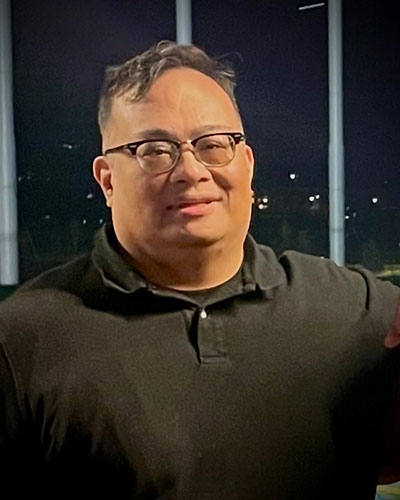
Jonathan Laxamana
Jonathan Laxamana. (Photo courtesy of Joe Laxamana.)

Joe is proud of Jonathan’s contribution to the film community and hopes the fund will help those wanting to pursue the same interests his brother did.

“To be able to help today’s film students is very gratifying and I think he would have liked that,” Joe said.

Silvestri, who was Jonathan’s roommate for three years, shared fond memories of his time on campus with him. Silvestri recalls the two of them constantly going to local theaters to see movies together. He said Jonathan also took several film classes, which contributed to his burgeoning interest in cinema. 

“He didn’t become the person that he was until he came here. The film stuff, it really took off, took hold of him, and he was able to delve into these passions a lot,” Silvestri said. 

Jonathan, who was affectionately called “Lax” (pronounced Lox) by family and friends, graduated with a bachelor’s degree in English from the College of Liberal Arts and Sciences in 1992. 

Professionally, Jonathan worked as a digital project coordinator for the Journal of the American Medical Association and handled location services at 41EIGHTYSEVEN with Versola, providing location scouting and location management services to the film, television, and advertising industries.

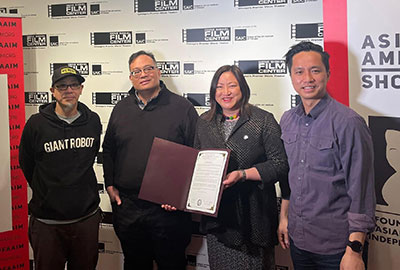
Jonathan Laxamana at Siskel Center
Jonathan Laxamana (second from left) at the
Chicago Asian American Showcase. 
(Photo courtesy of Joe Laxamana.)

Jonathan carried out his love of film and film festivals through many years of volunteer work, most notably as the founder and program director for the Chicago Filipino American Film Festival. He also contributed significantly to the annual Chicago Asian American Showcase at the Gene Siskel Film Center.

Additionally, Jonathan was a board member of Full Spectrum Features, a Chicago-based nonprofit organization committed to driving equity in the independent film industry by producing, exhibiting, and supporting the work of women, BIPOC, disabled, and LGBTQIA+ filmmakers.  

Joe said his brother took great pride in being able to help young filmmakers—especially Filipino and Asian American directors—by giving them a platform at the film festivals.

“He loved film but there was something that spoke to him about helping minority directors and the opportunities they didn’t have to showcase their work, and he was just trying to do his best to give them a pathway,” Joe said. 

Versola worked with Jonathan to put on many film festivals over the years and credits him for delivering a unique, quality program to their audiences. 

“The stellar reputation that we developed among our peers in the film festival circuit worldwide was due to Jonathan and his programming,” Versola said. 

Jonathan was known for having an eye and an ear for human stories that spoke to people and ensuring that all filmmakers, from students to established directors, felt valued and respected. 

Recently, Joe and his family held a birthday memorial for Jonathan. Silvestri and Versola attended, as well as friends who flew in from across the country to celebrate Jonathan’s life.

“I think we can all be judged by our impact on our friends,” Silvestri said. “People love this guy and that’s about the greatest tribute you can have, is friends who love you.” 

DEV College of Media
119 Gregory Hall
810 S. Wright St.
Urbana, IL 61801
217-333-2350