2024-25 Ebert Fellows announced


Each fall, the Roger Ebert Fellows program selects three College of Media undergraduate students to complete a yearlong fellowship that immerses students into the film industry and provides them with opportunities to sharpen their critical writing skills and engage with the film community.

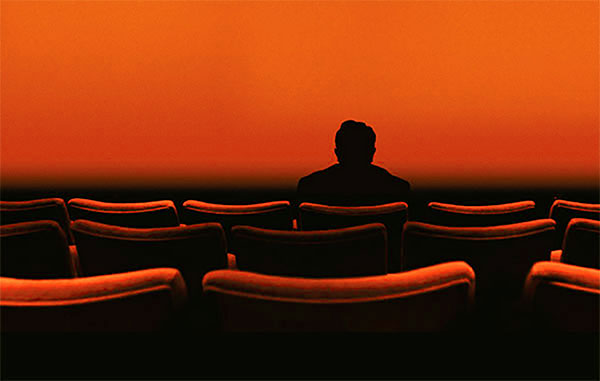
Ebert in theatre- orange

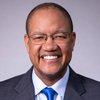
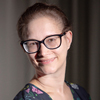
The Roger Ebert Fellows for the 2024-25 academic year are Aaron Anastos, Kennedy Caldwell, and Diamond Steward-Hutton. 

The program, named after the late Pulitzer Prize-winning film critic and University of Illinois journalism alumnus Roger Ebert, allows fellows to work with Chicago Tribune film critic Michael Phillips to hone their skills in writing, critical analysis, and media studies, as well as meeting with various film and media workers in “immersion excursion” days in Chicago.

Phillips, who has been an advisor and mentor for the program since it began in 2015, hopes to teach the Ebert Fellows the principles of becoming effective critics. 

“My job, as I see it, is to kind of take the entire school year to figure out different ways to show them what might help them become more persuasive, more interesting writers,” Phillips said. 

The Ebert Fellows will also attend the True/False Film Festival in Columbia, Missouri, and produce written work for RogerEbert.com. They will also help host and curate screenings for the Roger Ebert Center for Film Studies.

“With all the people we meet over the course of the Ebert Fellowship, I hope each of the fellows finds at least one person, somewhere in the world outside U of I, who speaks directly to their own interests and passions,” Phillips said. “I’m here to help them make connections because we all need them.”

Meet the 2024-25 Ebert Fellows
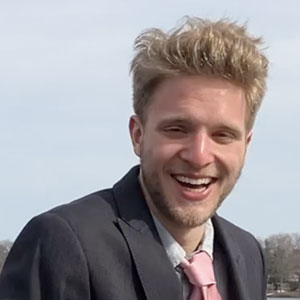
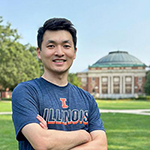
Aaron Anastos

Aaron Anastos is a junior in journalism. Anastos is excited to sharpen his writing skills, work with the other fellows, and give more to the film community on campus. 

“To be able to have this opportunity to meet people with the same passions and get involved, and be able to improve our skills in writing, public discourse, criticism, all that interesting stuff, it meant a lot,” Anastos said. 

He believes that the fellowship will help him marry his passions for journalism, film, and writing. 

On campus, Anastos is involved in the UI7 Newsroom as a host and reporter for Good Morning Illini, an opinion columnist for The Daily Illini, and a residential advisor at Newman Hall. 

Anastos is a fan of the Lord of the Rings trilogy because of the film’s powerful themes.

“I think it’s a story that truly has something for everybody,” Anastos said. “It has themes that everyone can relate to that are powerful, no matter what phase you are in life.”
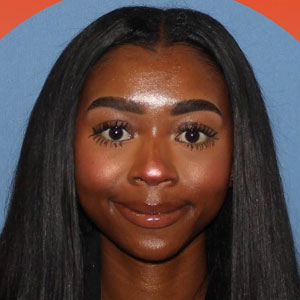

Kennedy Caldwell

Kennedy Caldwell is a junior in journalism. Caldwell became interested in media and production at a young age after being featured in several advertisements as a model. As an Ebert Fellow, she wants to improve her writing skills and learn how to create good stories. 

“I’m really excited to get to know my other fellows. I’m really excited to get to know Michael [Phillips]. And I’m really excited to get to know more about what it means to be a film critic and how to tell people about movies in a vivid, detailed way that makes them want to watch it or makes them not want to watch it,” Caldwell said. 

Caldwell is looking forward to traveling to different film festivals to watch movies and meet new people. 

One of Caldwell’s favorite films is It’s About Time because of the way it mixes drama, comedy, and romance.
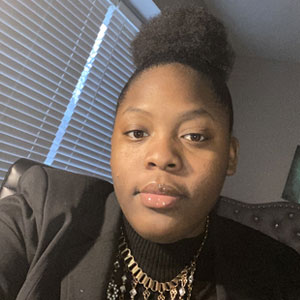

Diamond Steward-Hutton

Diamond Steward-Hutton is a senior in journalism and developed a passion for news while growing up watching ABC7 Chicago and learning the importance of staying informed on certain topics. 

“I always wanted to be able to know how to improve my storytelling as an anchor, as an artist, and just a person who writes on the daily…. [This opportunity] means the world to me,” Steward-Hutton said. 

She is interested in becoming a news anchor and is involved with UI7 Newsroom and the National Association of Black Journalists. 

“[It’s important] to learn how to write, to learn how to connect with people, and also to build that credibility and that trust with people, so that could be carried on throughout my career,” Steward-Hutton said. 

Steward-Hutton’s favorite film is Love Jones because of the realistic storyline and the performances from actors Nia Long and Larenz Tate. 

Share on social
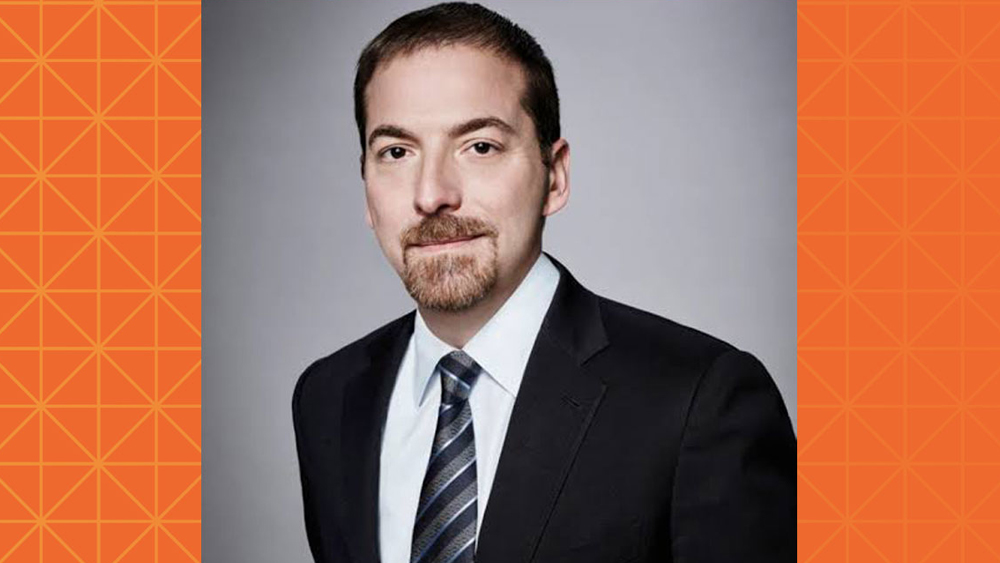
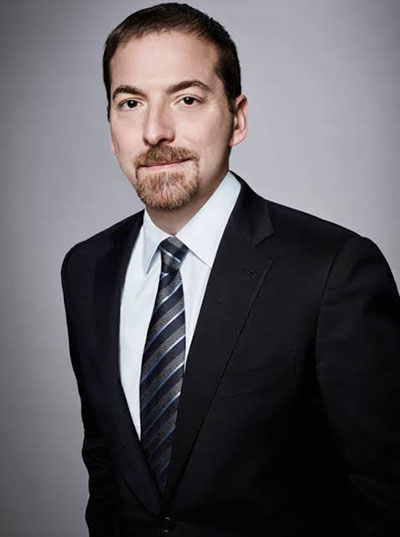
NBC News’ chief political analyst Chuck Todd to visit the University of Illinois for a conversation on presidential election results


Chuck Todd, NBC News’ chief political analyst and former moderator of the network’s flagship Sunday public affairs program Meet the Press, will be on the University of Illinois Urbana-Champaign campus for a conversation about the presidential election results on Tuesday, Dec. 3, from 5-6 p.m.

Chuck Todd

Todd will discuss what we can learn about voters and the country following the election results, what kind of messaging we can expect in the president’s first 100 days, the importance of local news, as well as some of his career highlights.

This event is free and open to the public and is presented by the Richard and Leslie Frank Center for Leadership and Innovation in Media at the University of Illinois College of Media. 

Attendees may join the event in the Gregory Hall auditorium (Room 112), 810 S. Wright, Urbana, or register to join via Zoom. The conversation will be led by Colleen King, director of the Frank Center and clinical assistant professor of journalism. 

“There is no one better qualified to help us understand the state of American politics than Chuck Todd,” King said. “For three decades, he has had a front-row seat to American politics and held the country’s top lawmakers accountable week after week. The Frank Center is honored to welcome him to Illinois at such a critical time.” 

Todd, a three-time Emmy Award-winner for his contributions to NBC News’ election night and breaking news coverage, was moderator of Meet the Press from 2014 through 2023. Building on the success of MTP Daily, which Todd anchored for eight seasons on MSNBC, Todd launched Meet the Press NOW in 2022—a daily show on the streaming platform NBC News NOW—that brings the insight and analysis made famous by the Sunday show to a wider audience than ever before. Todd also hosts the seasonal deep-dive show Meet the Press Reports and the weekly podcast Chuck ToddCast.

For more information, please contact Colleen King at cck@illinois.edu. 

Share on social

Have newspaper political endorsements outlived their purpose?


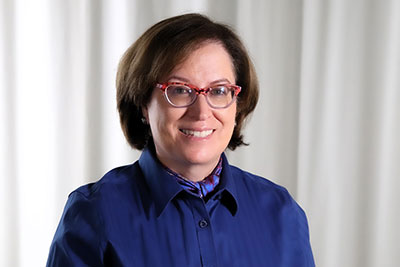
Melita Garza, associate professor and Tom and June Netzel Sleeman Scholar in Business Journalism, is a journalism historian who studies news as an agent of democracy. University of Illinois News Bureau editor Lois Yoksoulian discussed the history and future of presidential endorsements with Garza in light of recent nonendorsement decisions within some news organizations.

Melita Garza

Melita Garza, associate professor and Tom and June Netzel Sleeman Scholar in Business Journalism, is a journalism historian who studies news as an agent of democracy. University of Illinois News Bureau editor Lois Yoksoulian discussed the history and future of presidential endorsements with Garza in light of recent nonendorsement decisions within some news organizations. 

Why do some newspapers endorse presidential candidates?

In the early days of the republic, newspapers were partisan tools, often funded by politicians. In the early 1800s, it was fairly common to see publishers and editors as leaders of local political parties. Local and national party tickets were printed in newspapers, and the role of editors and publishers in state conventions was announced in the paper, too. 

Such open political involvement today would be seen as unethical and would clearly compromise the news product. As the 19th century progressed, the press became free of party control. By the early 20th century, traditional newspapers pursued the widest audiences possible, emphasizing news that would appeal across the political spectrum. 

Advertising subsidized the news pages—the larger the circulation, the more newspapers could charge advertisers. Journalists bolstered their credibility and high standards through the Society of Professional Journalists Code of Ethics. 

The divide between the owner, the publisher and the newsroom became sacrosanct, so much so that when Chicago’s Tribune Tower was completed in 1925, only the two center elevators in the four-elevator bank serving the Nathan Hale lobby of the newspaper stopped on the 4th and 5th floors—the floors where the editorial department was housed. It wasn’t until decades later that those elevators finally began serving all 24 floors, including the Chicago Tribune’s advertising and circulation departments.

At a completely independent newspaper, even the editorial board would have its say without interference from the owner. More often, the publisher controls the editorial board, including having a final say on political endorsements. Ultimately, however, the owner reserves the right to call the shots. After all, it is their money that backs the newspaper. 

Not all newspapers endorsed presidential candidates in the past, but those that did typically reflected the publisher’s public policy preferences for the country and the world. Embedded in this point of view are the publisher’s values and ideals. While an editorial board typically has crafted the political endorsements, the final word has always been the publisher’s prerogative. The New York Times, the nation’s newspaper of record, first endorsed a presidential candidate in 1860 when it supported Abraham Lincoln. It has endorsed presidential candidates every four years since, including this year.

Why isn’t a newspaper’s endorsement of a candidate seen as a conflict of interest?

Some newspaper readers historically have been well aware of the sharp divide between news and opinion. In an ideal world, opinion and editorial pages would be clearly labeled and set apart, either on the back pages of the main section or, in larger newspapers, in a stand-alone Sunday section. Some news and editorial departments function like church and state, rigidly separated. For instance, at The Wall Street Journal, one side doesn’t talk to the other. But not all newspapers are church and state. Some allow opinion to creep into the news columns by selecting stories they print or by allowing political opinion to surface. 

In the digital era, the distinction between opinion and news has become even more blurred, largely because digital articles tend to come across smartphones, tablets and computers independent of the news “pages.” Content flashes across the screen, and to a scrolling news consumer, it’s not always obvious whether it’s presented as fact or opinion. Even readers who understand this may be skeptical that individual journalists can remain independent of their bosses’ ideas.

What has changed in the newspaper business and political climate that has led papers like The Washington Post and The Los Angeles Times to ditch their endorsements?

The Age of the Internet, the creation of Craigslist, and the concomitant migration of advertisements online broke the newspaper revenue model. While there have always been multimillionaire newspaper owners, like William Randolph Hearst who owned the biggest pile of newspapers in the world in the 1930s, today’s newspaper-owning moguls often have other businesses, creating the potential for additional conflicts. 

That said, what’s changed the most is neither the newspaper business nor “the political climate.” The big change is the casual acceptance and even applause for an ex-president and current presidential candidate who promises retribution against those who exercise the right of the free press to oppose his policies.

What is the value of candidate endorsements? 

Some have said that newspapers as a whole have outlived their purpose. Candidate endorsements offer readers insight into the newspaper’s thinking about the direction and needs of the country and what should be expected from the leader of the world’s oldest constitutional democracy. Readers have always been free to take it or leave it. There is little empirical evidence that these presidential endorsements swayed readers to vote one way or another. 

Will subscription cancellations in the wake of non-endorsements impact the bottom line for papers like The Washington Post and The Los Angeles Times? 

Understandably, neither the business nor newsroom sides benefit when circulation drops. A lower number of subscribers still leads to lost advertising revenue. Meanwhile, journalists find a smaller audience for their work, lessening its reach and impact. Most devastatingly, it holds the journalists responsible for the publisher’s decision and punishes them for it. It also harms news consumers, leaving them less informed. 

You have to ask, however, whether those 250,000 or so people who canceled their Jeff Bezos-owned Washington Post subscription also canceled their Bezos-owned Amazon Prime, Amazon Music and Amazon Cloud accounts—I think not. The only people hurt by the cancellation were the journalists, who probably will face another round of layoffs.

Editor’s note:      

To reach Melita Garza, email melitamg@illinois.edu. 

View original press release.

Share on social
College of Media to hold three-part webinar series, ‘Bridging Divides: Conversations on Media and Disagreement’


How are we teaching students, and the broader community, to disagree? It’s a question the College of Media hopes to address in a new three-part series, “Bridging Divides: Conversations on Media and Disagreement.”

Update 11/13/24: Read excerpts from the Q&As:


Bridging Divides banner

Faculty from the Departments of Advertising, Journalism, and Media & Cinema Studies will host free webinars exploring how productive discussions occur across lines of disagreement and difference. All take place on Fridays at noon via Zoom, on October 18, October 25, and November 1.

“The College of Media’s ‘Bridging Divides’ series is an opportunity to foster civic preparedness through expert-led dialogues,” said Dean Tracy Sulkin. “We look forward to welcoming students, faculty, staff, alumni, and community members to these important conversations.” 

The talk topics and panelists include:

Reaching across the Aisle: Advertising and Messaging in an Age of Polarization

October 18, 12-12:45 p.m.
Register to join via Zoom.

Jason P. Chambers

Jason P. Chambers, Associate Dean for Diversity, Equity, and Inclusion; Professor, Charles H. Sandage Department of Advertising; author of Advertising Revolutionary: The Life and Work of Tom Burrell

Michael Strautmanis (BS ’91, advertising; JD ’94, law), Executive Vice President for External Affairs, Obama Foundation 


What Does It Mean to Be an Informed Critic? 

October 25, 12-12:45 p.m.
Register to join via Zoom.
Learn how to give criticism a good name. During this session, the panelists will share a how-to for every kind of writer.

Jenny Oyallon-Koloski, Assistant Professor, Department of Media & Cinema Studies; author of Storytelling in Motion: Cinematic Choreography and the Film Musical

Michael Phillips, Chicago Tribune Film Critic; College of Media Ebert Fellows Mentor


Engaging with People, Perspectives, and Policies When You Don’t Agree: Lessons from Journalism

November 1, 12-12:45 p.m.
Register to join via Zoom.

Leon Dash, Professor and Swanlund Chair, Department of Journalism; 1995 Pulitzer Prize Winner for Explanatory Reporting

Colleen King, Clinical Assistant Professor, Department of Journalism; Director of the Richard and Leslie Frank Center for Leadership and Innovation in Media; former Executive Producer for MSNBC’s The 11th Hour with Brian Williams  

Share on social

Roger Ebert Lecture: “Documentaries on the Frontlines of Democracy: How Kartemquin’s Storytelling Works for Stronger Publics”

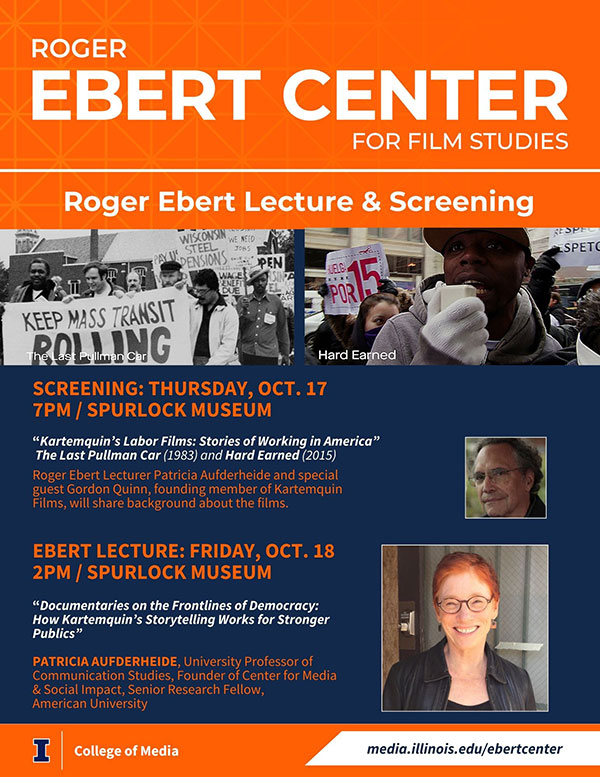
Event flier Ebert Lecture and Screening 2024

10/18/2024
2 p.m.
Knight Auditorium, Spurlock Museum, 600 S. Gregory, Urbana
Or join us via Zoom

The 2024 Roger Ebert Lecture and Screening will be held October 17-18 in the Knight Auditorium of Spurlock Museum.

Join us in person or via Zoom for the Roger Ebert Lecture “Documentaries on the Frontlines of Democracy: How Kartemquin’s Storytelling Works for Stronger Publics,” presented by Patricia Aufderheide, University Professor of Communication Studies at American University in Washington, D.C.

Kartemquin Films, a Chicago media arts legend founded in 1966, has evolved through generations with a consistent claim for its documentary work: honest, experiential stories of real life in America can strengthen the democratic process, by empowering people to see themselves as active members of the public. It’s been a feminist-forward collective, a production center for labor activism, and a home for engaged humanist stories. At a time when democracy itself is at risk, this talk takes a close look at how filmmakers with a passion for their craft, an artistic vision, and a commitment to an open and just society told Midwest-centric stories that won Emmys, duPont-Columbias, Peabodys, Oscar noms, and changed how viewers understood themselves in the world. 

Angela Aguayo, associate professor of media and cinema studies, will provide an introduction, and Raina Politva from the University of California Press will provide a brief statement before the Ebert Lecture by Patricia Aufderheide. Founding member of Kartemquin Films, Gordon Quinn, will also be in attendance. Quinn’s first film, Home for Life, was heralded as “an extraordinarily moving documentary” by Roger Ebert. A Q&A will follow. 

About the Presenter

Aufderheide

Patricia Aufderheide is University Professor of Communication Studies in the School of Communication at American University in Washington, D.C. She founded the School’s Center for Media & Social Impact, where she continues as Senior Research Fellow. Her books include Kartemquin Films: Documentaries on the Frontlines of Democracy (University of California Press), Documentary Film: A Very Short Introduction (Oxford), The Daily Planet (University of Minnesota Press), and Communications Policy in the Public Interest (Guilford Press), as well as co-authoring Reclaiming Fair Use: How to Put Balance Back in Copyright (University of Chicago), with Peter Jaszi.

She has been a Fulbright Research Fellow three times, in Brazil (1994-5), Australia (2017), and South Korea (2024). She is also a John Simon Guggenheim fellow (1994) and has served as a juror at the Sundance Film Festival among others. Aufderheide has received numerous journalism and scholarly awards, including the George Stoney award for service to documentary from the University Film and Video Association in 2015, the International Communication Association’s 2010 for Communication Research as an Agent of Change Award, Woman of Vision award from Women in Film and Video (DC) in 2010, a career achievement award in 2008 from the International Digital Media and Arts Association and the Scholarship and Preservation Award in 2006 from the International Documentary Association.

Presented by the Roger Ebert Center for Film Studies.

Historic gift from Richard and Leslie Frank totals $10.5M for College of Media


With their latest $2.5 million donation, Richard and Leslie Frank increased their historic gift to the College of Media to upgrade classrooms on the lower level of Gregory Hall.

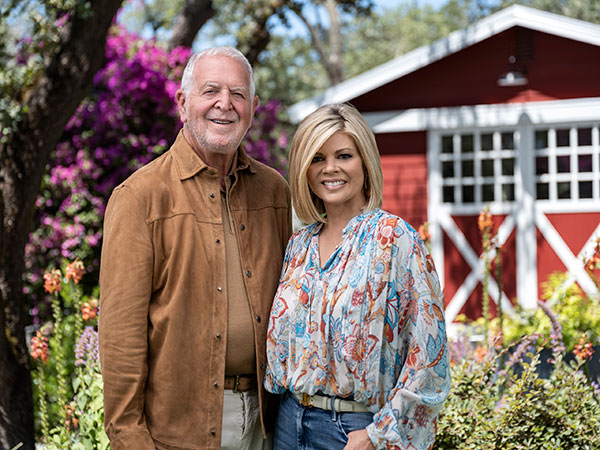
Richard and Leslie Frank
The couple’s latest $2.5 million donation will fund the renovation of classrooms on the lower level of Gregory Hall, located on the University of Illinois Quad, and will create a new hybrid, flexible classroom as the centerpiece.

The new funding will enable a substantial renovation of the lower level of Gregory Hall, with the creation of a new hybrid, flexible, or hyflex, classroom as the centerpiece.

The new multipurpose classroom, which will be constructed in the space that currently houses two smaller classrooms and an office, will boast features that all three departments in the College of Media will be able to take advantage of—such as advertising brand consultations, journalism press conferences, and media and cinema studies production—and enable hybrid teaching and conferencing. 

“Because we believe in the fundamental impact that media has on our society, we want to continue to invest in our future media leaders at the University of Illinois,” said Rich Frank. “We’re excited to establish a new state-of-the-art space that will support the excellence of the College of Media, and we hope to inspire other donors to make gifts that leave a lasting impact on the college.”

The gift will also renovate the lower level, featuring a more modern design such as new flooring, painted walls throughout the entire hallway, including the east and west wings, and digital signage. Substantial work in that part of Gregory Hall has not occurred since the 1990s. The project details are underway; work will begin in summer 2025.

The College of Media is deeply thankful to Richard and Leslie Frank for their generous investments that not only have expanded opportunities for our current students and faculty but will continue to facilitate an enriched experience for those to come.

“This new gift will create a showpiece in Gregory Hall,” said Dean Tracy Sulkin. “The College of Media is deeply thankful to Richard and Leslie Frank for their generous investments that not only have expanded opportunities for our current students and faculty but will continue to facilitate an enriched experience for those to come.”

The Franks’ original gift of $7.5 million in 2020 is the largest gift ever made to the College of Media. That gift enabled the creation of the Frank Newsroom at Richmond Studio, the college’s broadcast teaching facility, and endowed the Richard and Leslie Frank Center for Leadership and Innovation in Media.

Having each experienced professional success in media and entertainment, the Franks are committed to creating a positive impact in media for generations.

Rich Frank, who received his bachelor’s degree in marketing from the University of Illinois, began his career at the advertising agency BBDO in New York City before moving to Los Angeles to work as a Sales Manager at KTLA. He then served as President of Chris-Craft Broadcasting. In 1977 he became President of Paramount Television Group, overseeing the creation and production of such shows as Taxi, Family Ties, and Cheers as well as the creation of the groundbreaking entertainment news show, Entertainment Tonight. In 1985 he became President of Disney Studios. Under his leadership, the studio created iconic sitcoms such as The Golden Girls and Home Improvement, and films including Good Morning Vietnam, Dead Poets Society, and The Lion King. He also oversaw the launch of the Disney Channel. Rich served three terms as President of the Academy of Television Arts and Sciences. In 2007, the Academy of Television Arts and Sciences recognized him with the prestigious Syd Cassyd Founder’s Award. In 2011, Rich received an honorary doctorate from the American Film Institute where he is currently a Vice Chairman on the AFI’s Board of Directors. Rich previously served on the board of the Motion Picture Association of America. His archival interview with the Television Academy provides a fascinating historical perspective of the evolution of modern television: https://bit.ly/3iQvS7s. 

Born in Hamilton, Ontario, Leslie Frank began her career in Canada before crossing the border to work in some of the largest television markets in the United States. She spent more than 25 years covering many major stories including the 9/11 attacks, where she reported live from ground zero in New York City, as well as from the scene of the devastating aftermath of Hurricane Katrina, and inside the courtroom at the Michael Jackson trial. Leslie spent the last nine years of her TV news career reporting and anchoring at the number one rated station, KABC in Los Angeles, where she covered politics, crime, weather calamities, as well as interviewing some of the biggest stars in Hollywood on the red carpet. Prior to Los Angeles, Leslie was the main anchor at KCPQ in Seattle, where she took the 10 pm newscast to number one in its time slot and clinched an Emmy for outstanding news anchor. In 2024, she joined the board of directors of Treasury Wine Estates Ltd.

Leslie and Richard are former owners of Frank Family Vineyards, a highly acclaimed luxury wine business based in the Napa Valley, California, that was acquired by Treasury Wine Estates in 2021.

Under the leadership of its inaugural director, Colleen King, clinical assistant professor of journalism, the Frank Center has brought media industry leaders to campus for free and public events including Steve Kornacki, Brian Williams, and on December 3, NBC News chief political analyst Chuck Todd. The Frank Center has also held virtual Q&As with Kara Swisher, Michael Steele, and Dan Balz. See recordings of these conversations with the Frank Center.

Share on social

Media faculty and TAs make list of teachers ranked as excellent


Congratulations to all the College of Media faculty and teaching assistants who were ranked as excellent by their students!

Congrats image

This list is based on Instructor and Course Evaluation System questionnaire forms completed by students during the Spring 2024 semester. Only those instructors who distributed ICES forms at least once during this time period and who released their data for publication are included in the list. View the complete list.

Note: * denotes that the instructor ratings were outstanding.

ADVERTISING

ANDREW GLEASON – ADV 490

STEVE HALL – ADV 150

TERRY KASDAN – ADV 409

EWA MASLOWSKA – ADV 594

SHACHAR MERON – ADV 250

MICHELLE NELSON – ADV 582

*MARISA PEACOCK – ADV 290, ADV 498

*ALLISON VANCE – ADV 350

CARRIE WILSON-BROWN – ADV 393

KEVIN WISE – ADV 588

*MIKE YAO – ADV 461 


JOURNALISM

*CHRISTOPHER BALL – JOUR 430, JOUR 451

STEPHANIE CRAFT – JOUR 205

*ALISON DAVIS – JOUR 215, JOUR 340

COLLEEN KING – JOUR 313

VINCE LARA-CINISOMO – JOUR 220

CHARLES “STRETCH” LEDFORD – JOUR 335

*CAROL LOMBARDI – JOUR 220

MARGARET NG – JOUR 425


MEDIA & CINEMA STUDIES

ANGELA AGUAYO – MACS 391

VICTOR FONT – MACS 480

JONATHAN KNIPP – MACS 282

SUSAN MUIRHEAD – MACS 372

M. QUINONES-RIVERA – MACS 375


STRATEGIC BRAND COMMUNICATION

EWA MASLOWSKA – SBC 505

RICH PIECZYNSKI – SBC 504


TEACHING ASSISTANTS

K. COOK – ADV 284

X. DONG– ADV 250

W. DU – ADV 150

*N. FAISAL – ADV 250

M. FUKADA – ADV 284 

*Y. LEE – ADV 360

A. LIU – ADV 150

*M. LYERLA – ADV 150

*S. PARK – ADV 360

Z. RANDOLPH – ADV 284 

*J. CINTRON – MACS 100 

Y. GAO – MACS 101

*Y. KANG – MACS 101

J. OH – MACS 100

*J. ZHANG – MACS 260

Share on social
Institute of Communications Research welcomes 2024 cohort of doctoral students


The Institute of Communications Research is excited to announce our newest cohort! Please learn more about the students’ research interests below and join us in welcoming them to the University of Illinois College of Media community this fall. For more information, see full ICR student profiles.

Haochen Ji

Haochen Ji earned her master’s degree in communication from Northwestern University and her bachelor’s degree in public relations from Boston University. Her primary academic interests focus on the impact of emerging technologies on communication, aiming to promote human-centered technology designs and proactively shaping positive digital communication. She is passionate about exploring how technologies like AI, video games, and interactive media influence people’s online behaviors and psychological well-being. She is also highly interested in utilizing mixed methods, especially computational approaches, to investigate specific problems.

Yujin (Floria) Lee

Yujin (Floria) Lee earned her master’s and bachelor’s degrees in advertising from the University of Illinois Urbana-Champaign. Her interests include virtual reality, artificial intelligence, social media marketing, celebrity endorsement, media usage, and cultural analysis.

Gustavo Nery

Gustavo Nery earned a bachelor’s in journalism from the University of Fortaleza and a master’s in theatre studies from Illinois State University. Gustavo has professional experience as a film critic, reporter, and editor for books, magazines, and newspapers. His main area of research is television, film, theatre, and media studies. Interests include coming-of-age and teen cinema, queer cinema, Brazilian cinema, film theory and criticism, popular music, theater professional recordings, film biopics, and narrative theory.

Gillian Paxton

Gillian Paxton is a researcher with interests in media literacy, scholastic journalism, visual communication, and education. She has actively blogged about media, including reviews and analysis, since she was in high school.

Duo Wang

Duo Wang is a researcher and entrepreneur committed to exploring the convergence of mixed reality and generative AI for the next generation of immersive interaction and 3D storytelling. His research interests include virtual/augmented reality (VR/AR), human-AI communication in virtual environments, XR+AI simulation in healthcare, generative AI in immersive media, and human-computer interaction.

Kendra Williams

Kendra Williams is a researcher with interests in critical cultural studies, Black popular culture, television and film, and race and media representation.

Nansong Zhou

Nansong Zhou is interested in the dynamic interactions between games, technology, and society. His research encompasses the global media industry, China studies, and game studies, focusing on two primary research areas including the formation of the global video game industry and how video games integrate with AI and VR technologies, along with their impacts and potential.

Share on social
College of Media welcomes Fall 2024 with faculty promotions, new leadership roles, new faculty


This fall, seven faculty in the College of Media have been promoted, two faculty have taken on new leadership roles, and three new faculty have been hired.

Hallene Gateway

In the Charles H. Sandage Department of Advertising, promotions include Chang-Dae Ham to full professor, Leona Su to associate professor with indefinite tenure, and Dionne Clifton and Marisa Peacock to senior lecturers. Two new assistant professors of advertising, Louvins Pierre and Guolan Yang, joined this fall.

In the Department of Journalism, Margaret Ng has been promoted to associate professor with indefinite tenure. Melita Garza, associate professor and Tom and June Netzel Sleeman Scholar in Business Journalism, will serve as the director of graduate studies. Cassandra L.C. Troy joined as a new assistant professor of journalism.

In the Department of Media & Cinema Studies, promotions include Derek Long to associate professor with indefinite tenure and Victor Font to senior lecturer. Long will also serve as the director of graduate studies for the Institute of Communications Research. Professor Julie Turnock, the inaugural director of the Roger Ebert Center for Film Studies, has returned from sabbatical and will resume the Ebert Center director duties.

Share on social

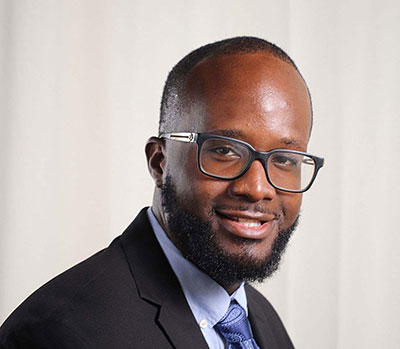
New advertising professor Louvins Pierre centers research on social, psychological consumer factors


Louvins Pierre can trace his interest in advertising back to childhood. 

Louvins Pierre

“As a kid, I often watched advertisements because I found them funny. In hindsight, it may have been my underlying interest in the advertising and how [it was] effective that caused me not to change the channel,” Pierre said. “One ad that comes to mind is Apple’s original iPod commercial with music and dancing silhouettes, which directly influenced me to ask my parents to buy me one for either my birthday or Christmas. Another includes McDonald’s 2005 ad that used humor to communicate when you work hard for your money, you should spend it wisely on their value menu.”

Pierre will bring his long-time advertising interests and expertise to Illinois this fall as an assistant professor in the Charles H. Sandage Department of Advertising with an appointment in the Institute of Communications Research.

Pierre said the reputation of the Sandage Department of Advertising, and the many prominent scholars within, helped inform his research and drew him to pursue a position at Illinois.

“I am looking forward to working with and learning more about the work of others throughout the College of Media and the university,” he said. 

The advertising department is well known nationally and internationally as a major outlet for advertising research. Being in an environment filled with bright and motivated students and faculty will be a truly rewarding opportunity.

This fall, Pierre, who earned a BA in communication at Tuskegee University in Alabama, and an MA and PhD in communication at the University of Connecticut, will be teaching ADV 284: Consumer Insight, a class designed to teach students how to build a brand strategy that puts the desires and needs of the consumers first—a subject with which he’s very familiar. 

Pierre’s dissertation examined how consumer evaluations of advertising about two similar, yet different, social issues, “Black Lives Matter” and “Stop AAPI Hate” could vary. 

Using both an in-person laboratory experiment with Gen Z consumers—who are believed to highly value brand activism—and a follow-up online experiment with older consumers from the general population, Pierre explored whether consumers evaluate advertising about these social issues differently; what multimedia components of the advertisement affect consumer evaluations; and what internal factors influence consumer evaluations.

One of his key insights included “evidence that when you visually feature people who are adversely affected by the movement, it can improve consumer evaluations of the ad.” He also found that brand authenticity mattered, and ads that facilitated a sense of transportation or immersion were viewed more positively. Learn more about Pierre’s research.

Pierre is equally passionate about the research process and his teaching, and he considers the opportunity to make an impact on students amongst the most fulfilling aspects of a career in academia. 

“It is humbling and rewarding to know I helped [former students] gain either some practical experience as a research assistant or conceptual knowledge in the classroom. I look forward to being able to continue these efforts and more with the talented students at Illinois,” he said. 

Pierre says his teaching objectives are to guide students to understand the “why” behind advertising before showing them how they may apply concepts, and he aims to make the classroom experience interactive and relevant. 

He also encourages students to share their interests and career goals, which helps him to make adjustments to lectures and classroom activities to meet students’ needs. 

At Illinois, Pierre will continue his research on how brands influence consumer decision-making through advertising, with a focus on the social and psychological consumer factors.

Some of his potential projects include studying how consumer attitudes and knowledge about new technologies that more precisely target them (AI, algorithms, machine learning, etc.) relate to their consumption decision-making. 

For now, he’s most looking forward to working with fellow thought leaders in the Sandage Department of Advertising, as well as the students.

“The advertising department is well known nationally and internationally as a major outlet for advertising research,” Pierre said. “Being in an environment filled with bright and motivated students and faculty will be a truly rewarding opportunity.”

Share on social

DEV College of Media
119 Gregory Hall
810 S. Wright St.
Urbana, IL 61801
217-333-2350